WOFAN, PDS-UK delegates explore Rwanda’s peacebuilding, digital governance model

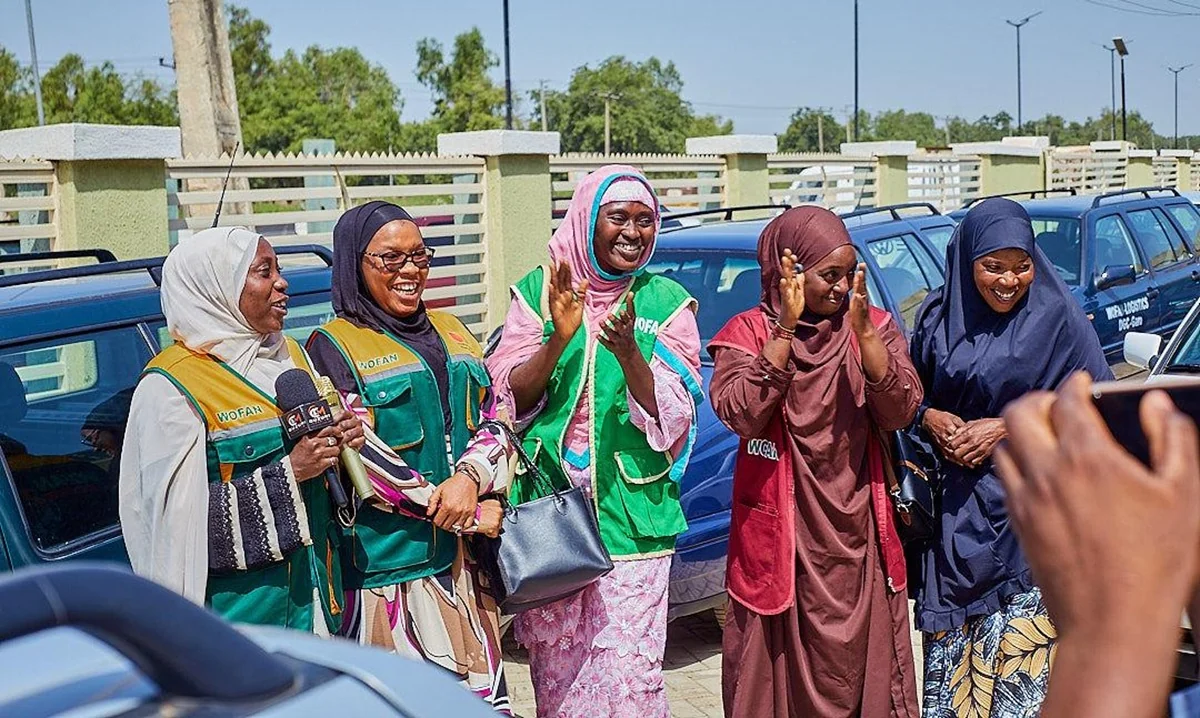
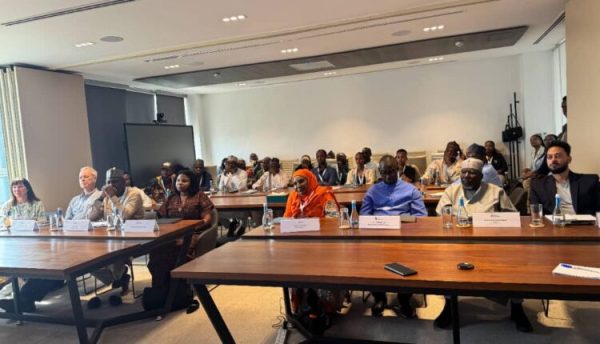
A delegation participating in a strategic communication training programme organised by the Women Farmers Advancement Network (WOFAN) and Prospects Development Services (PDS-UK) has studied Rwanda’s post-genocide recovery, national unity and digital governance systems as part of a three-day study tour in Kigali. SolaceBase reports that the second-day engagement took the participants to the Rwanda Cooperation Initiative (RCI), where they examined how Rwanda rebuilt social cohesion after the 1994 Genocide against the Tutsi and transformed its institutions through reforms in governance, justice, citizenship education and digital service delivery. The study visit was part of the training on “Strategic Communication: Integrating Digital and AI-Driven Innovation for Sustainable Leadership and Peacebuilding,” which seeks to expose participants to practical approaches to leadership, communication, peacebuilding and institutional development. Presentations by officials of Rwanda’s Ministry of National Unity and Civic Engagement (MINUBUMWE) focused on the policies and institutions established to strengthen national unity and prevent a recurrence of genocide ideology. The officials highlighted initiatives such as Ndi Umunyarwanda, Itorero civic education, community dialogue and the Gacaca courts, describing them as among the mechanisms used to rebuild trust and promote social cohesion. Speaking during the study visit, WOFAN Founder and Global Advocate, Dr. Salamatu Garba, commended RCI for sharing Rwanda’s experience with the delegation. She observed that several of the issues discussed during the engagement were similar to challenges confronting Nigeria, stressing the importance of mindset change, accountability, policy reform and responsible followership in achieving sustainable development. Dr. Garba said teachers were deliberately included in the delegation so they could transfer lessons from the study tour to younger generations. She expressed optimism that continued engagement between WOFAN, PDS-UK, the Nigeria High Commission and RCI would help turn the knowledge gained into practical policy actions and sustainable strategies. On his part, the Chief Executive Officer of RCI, Richard Niwenshuti, said Rwanda’s recovery was guided by the need to move beyond its darkest chapter, strengthen institutional accountability and pursue reforms on a large scale. According to him, the reforms have contributed to about 92 per cent health insurance coverage, universal access to primary and secondary education, and the digitisation of more than 240 public services through the Irembo platform. SolaceBase reports that the delegation was also briefed on Rwanda’s governance architecture, decentralisation, coordination and accountability mechanisms, as well as its digital transformation agenda. In his remarks, the Nigerian’s acting High Commissioner in Republic of Rwanda, Ambassador Ibrahim G. Zanna, represented by the First Secretary, Political Information and Culture, Zerah Yemilo Waminaje, described the engagement as an opportunity for participants to gain practical insight into how strategic communication, digital innovation and sustainable leadership can contribute to national development. The High Commission reaffirmed its commitment to strengthening institutional cooperation between Nigeria and Rwanda. The Nigeria High Commission also urged the participants to translate lessons from the study tour into practical efforts to strengthen institutions, promote digital transformation and advance peacebuilding in Nigeria. Unity and Social Cohesion Promotion Analyst, Donatien Nikuze, said Rwanda’s progress was supported by political will, inclusive leadership and sustained investment in peacebuilding and good governance. Nikuze disclosed that the country recorded a 95.3 per cent National Unity Barometer score in 2025, while noting that challenges, including genocide ideology, hate speech, trauma and the pursuit of fugitives, remained. He encouraged the visiting delegation to draw practical lessons from Rwanda’s experience while considering the realities of their own countries. The second-day engagement ended with a vote of thanks delivered by WOFAN Technical Board Member, Professor Mahmoud Daneji, who appreciated RCI, the facilitators, the Nigeria High Commission, PDS-UK, WOFAN and the participants for the successful engagement.
WOFAN, PDS-UK delegation study Rwanda’s reconciliation, governance model

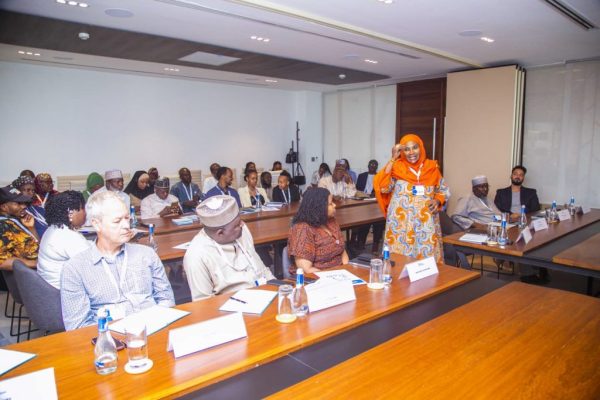
A delegation of Nigerian professionals participating in an international capacity-building programme in Kigali, Rwanda, has examined the country’s approach to national reconciliation, institutional governance and digital transformation. The programme is organised by the Women Farmers Advancement Network (WOFAN), a strategic partner of Bayero University, Kano, in collaboration with Prospects Development Services (PDS)-UK. The participants, drawn from government, academia, media, education, business and other professional sectors, visited the Rwanda Cooperation Initiative (RCI) on the second day of their study tour. The visit provided an opportunity for the delegation to gain insights into Rwanda’s efforts to rebuild national cohesion, strengthen public institutions and promote digital transformation following the 1994 Genocide against the Tutsi. The engagement focused on the policies, institutional frameworks and strategies adopted by Rwanda in its post-genocide reconstruction and development process. The training, titled “Strategic Communication: Integrating Digital and AI-Driven Innovation for Sustainable Leadership and Peacebuilding,” is focused on equipping participants with practical knowledge of strategic communication, inclusive governance, digital innovation, leadership and post-conflict reconstruction. During the engagement, officials of Rwanda’s Ministry of National Unity and Civic Engagement (MINUBUMWE) explained the policies and institutional measures adopted by the country to promote reconciliation and prevent a recurrence of genocide. They identified reforms in the justice system, inclusive governance, citizenship education, the promotion of a common national identity and measures to counter genocide ideology as central to Rwanda’s reconciliation process. The delegation was also briefed on initiatives such as Ndi Umunyarwanda, Itorero civic education, community dialogue programmes and the Gacaca courts, which officials said played important roles in restoring trust and rebuilding relationships within communities. Unity and Social Cohesion Promotion Analyst at MINUBUMWE, Donatien Nikuze, said Rwanda’s progress over the years was made possible by political commitment, inclusive leadership and sustained investment in peacebuilding and good governance. According to him, the country recorded a 95.3 per cent score in the National Unity Barometer in 2025. Nikuze, however, said Rwanda still grapples with challenges such as genocide ideology, hate speech, trauma and the continued search for genocide fugitives. He urged the Nigerian participants to draw relevant lessons from Rwanda’s experience while taking into consideration Nigeria’s peculiar political, social and institutional circumstances. Welcoming the delegation, Chief Executive Officer of RCI, Richard Niwenshuti, said Rwanda’s recovery was driven by a determination to move beyond its tragic past, build accountable institutions and develop solutions capable of delivering results on a large scale. Niwenshuti said the reforms had translated into improvements in social services and the deployment of technology in public administration. He said health insurance coverage had reached about 92 per cent, while the country had achieved universal access to primary and secondary education. He added that more than 240 public services had been digitised through Irembo, enabling citizens to access government services electronically. Participants were further taken through Rwanda’s governance structure, decentralisation framework, institutional coordination and accountability mechanisms, as well as its digital transformation programme. The sessions featured presentations from officials of MINUBUMWE, the Ministry of Justice (MINIJUST), Ministry of ICT and Innovation and the Rwanda Information Society Authority. In a goodwill message delivered on behalf of Nigeria’s Acting High Commissioner to Rwanda, Ambassador Ibrahim Zanna, the Nigeria High Commission challenged participants to ensure that lessons from the programme were translated into practical initiatives capable of strengthening Nigerian institutions. The mission said the study tour offered practical examples of how strategic communication, technology-driven innovation and sustainable leadership could be deployed to advance national development. It also pledged to continue supporting stronger institutional cooperation and knowledge exchange between Nigeria and Rwanda. Founder and Global Advocate of WOFAN, Hajia Dr Salamatu Garba, said the similarities between some of Rwanda’s past challenges and issues confronting Nigeria made the study visit particularly relevant. Garba commended RCI and other Rwandan institutions for sharing their experiences with the delegation, noting that sustainable development requires more than government action alone. She stressed the need for a change in mindset, stronger accountability, effective policy reforms and responsible followership. According to her, teachers were deliberately selected as part of the delegation because of their critical role in shaping younger generations and passing knowledge acquired from the programme to students. Garba expressed hope that collaboration among WOFAN, the Nigeria High Commission and RCI would continue beyond the study tour and lead to practical policy initiatives and sustainable development strategies. She said the lessons gathered should be applied gradually and consistently, stressing that meaningful transformation could be achieved “step by step.” WOFAN Technical Board member, Professor Mahmoud Daneji, who delivered the vote of thanks on behalf of the participants, commended RCI, the facilitators, the Nigeria High Commission, PDS-UK and WOFAN for facilitating the programme. He described the second-day engagement as productive and appreciated members of the delegation for their participation. The Kigali study tour is part of the wider international training programme designed to strengthen participants’ capacity in strategic communication, digital and artificial intelligence-driven innovation, sustainable leadership and peacebuilding.

Kano LG council honours WOFAN founder, Salamatu Garba, for community development

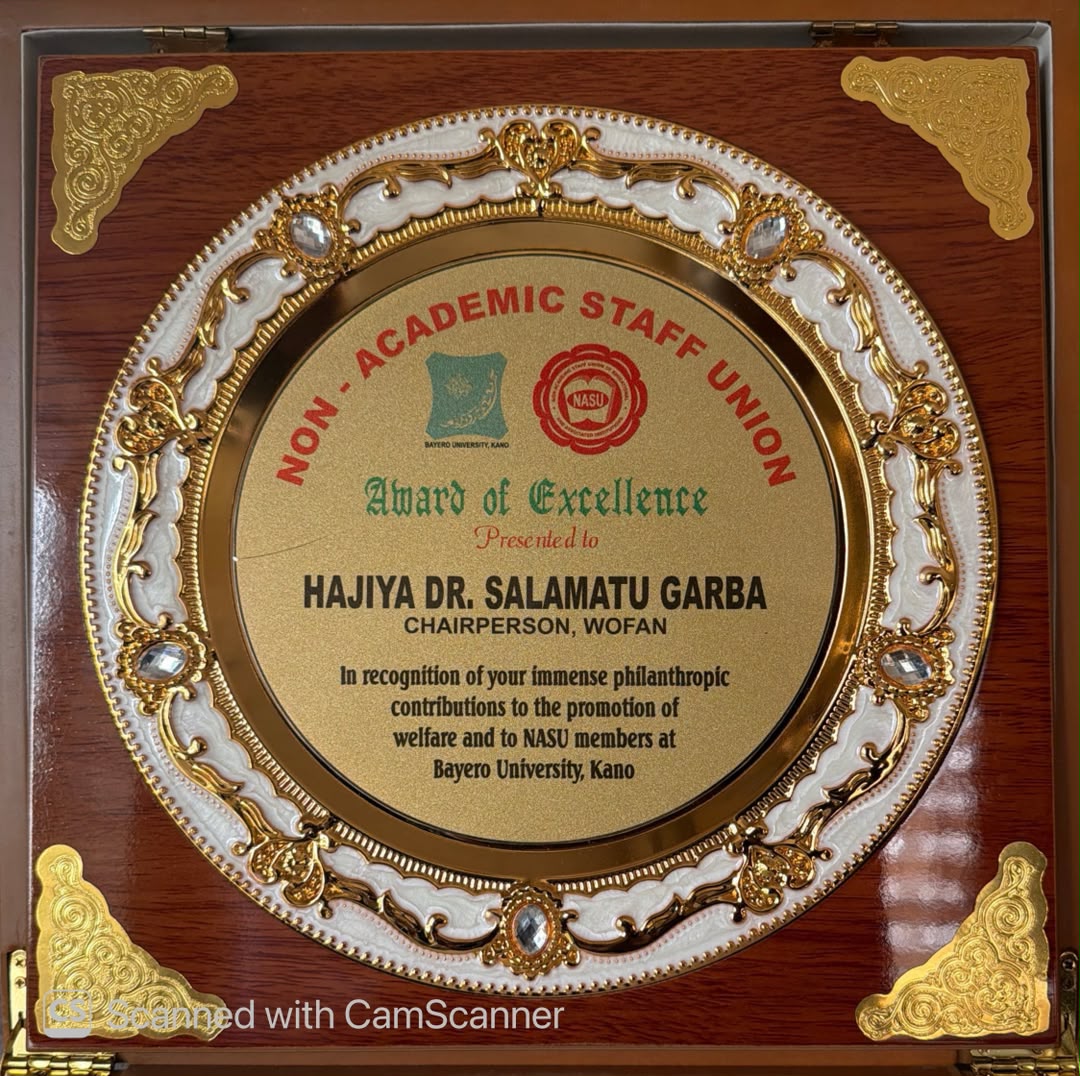
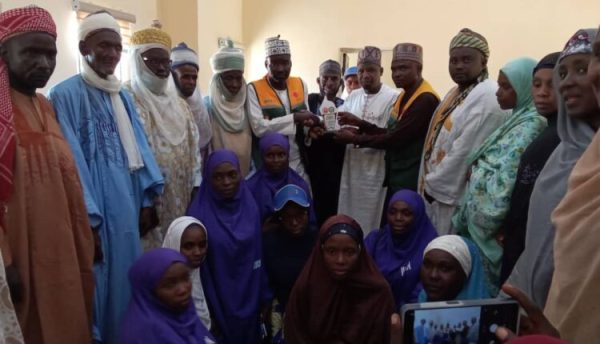
Kabo Local  Government Council of Kano State has honoured Founder and Group Board Chair of  Women Farmers Advancement Network (WOFAN), Dr Salamatu Garba, for her sustained contributions to improving livelihoods and supporting communities across the area. The recognition was presented during a ceremony held on Monday at the Kabo Local Government Secretariat, in acknowledgement of Dr Salamatu’s humanitarian interventions, particularly her support for women & youths, farmers and other members of the community. The Director of Administration of the local  government, Alhaji Nazifi Ado Shitu Makoda, presented the award on behalf of the Chairman, Comrade Lawan Najume Kabo, to Dr Salamatu’s representative, Alhaji Abubakar Usman Garo. The ceremony brought together district and village heads, representatives of WOFAN, local government officials and other stakeholders. In a message delivered on his behalf,  Lawan Kabo expressed appreciation for the contributions of Dr Salamatu Garba to the development and welfare of residents. According to him, her interventions were consistent with the objectives of the local government, particularly in supporting vulnerable people, empowering farmers and improving the livelihoods of residents. The chairman commended her commitment to community development, describing her interventions as a valuable contribution to the socio-economic well-being of people in Kabo. Also speaking, the Head of Women Affairs Development in the local government, Hajia Mariya Yusuf Garo, described Dr Salamatu as a committed woman leader who had demonstrated strong dedication to improving the lives of women and other members of society. She said the interventions had provided meaningful support to beneficiaries while creating hope and improving the welfare of communities. Responding through her representative, Alhaji Abubakar Usman Garo, Dr Salamatu Garba expressed appreciation to the Kabo Local Government for recognising her efforts. She said the recognition would further encourage her and her organisation to intensify efforts aimed at supporting communities and improving livelihoods. Dr Salamatu assured the people of Kabo that she would continue to support initiatives capable of improving their living conditions and creating sustainable opportunities. She further disclosed that additional interventions were being planned for the area. “This is the beginning of what we are going to do,” she said, indicating that more projects and support programmes would be implemented to further improve the lives of residents. The District Head of Garo, Alhaji Yusuf, also commended Dr Salamatu for her humanitarian activities. Similarly, the Head of Social Welfare and Community Development of Kabo Local Government, Isah Sulaiman Shanono, described Dr Salamatu’s interventions as significant acts of philanthropy that deserved recognition and appreciation. He called on residents to continue praying for her good health, long life and protection so that she could sustain her humanitarian activities and continue supporting people across the community.

London Halal Forum: ”We’re supporting over 1.2m rural farmers in Northern Nigeria” – WOFAN

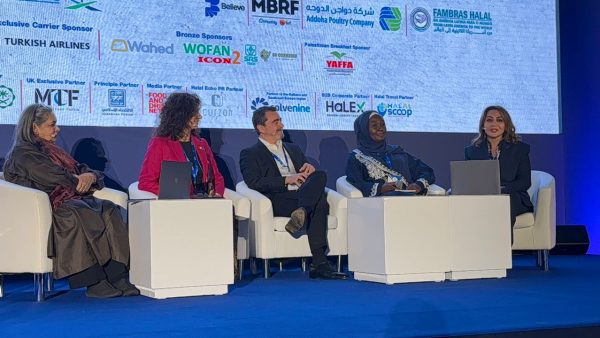
The Women Farmers Advancement Network (WOFAN), established in 1993, supports over 1.2 million rural farmers across 10 northern states in Nigeria.Additionally, over 80 per cent of the members of the nongovernmental organisation are women. WOFAN Director of Strategies, Innovation and Sustainability, Hajia Maimuna Lawal, stated this on Thursday at the London Halal Forum, during a panel discussion. Hajia Lawal said the organisation works with rural farmers’ groups, who are merged into functional commodities groups as processors, producers and aggregators with a large team that is working to support them in order to see farming as a business. ‘’One intresting thing about us is that 80 percent of our members are women, because you know women feels most of the marginalisation, and so what we’ve done in order to promote equity is to bring out this women and we also have groups that are physically challenged, we have about 60,000 of them and they are also put together into functional groups wher they can also earn income,’’ she said. She appreciated the opportunity to participate in the panel discussion with a theme Women, Leadership, and Cultural Diplomacy- The Art of Driving Inclusive Growth, moderated by Mrs. Natavan Mammadova, the Secretary General of Maida Nazir Organisation for Women Empowerment. SolaceBase reports that other panellists include Mrs Noorjehan Bilgrami, owner of KOEL, Mrs Rasamina Gurbatova, owner and designer at RESM and Mr Kerim Ture, Founder of Modanisa and SalamBooking. Maimuna explained that several crops are produced by the organisation members, and those that are ready for export are Sesame, Groundnut, Rossel, Soya bean, Garlic and Ginger. She noted that WOFAN works with over 1, 560 extension workers who also educate the farmers to produce qualitative crops using innovations and good agricultural practices. ‘’ I want to assure you all that we are ready for partnership in terms of export.’’ Gurbatova, the designer at RESM, the first Azerbaijani national jewelry brand, said the aim of her collection is to present and exhibit the beauty and cultural diversity of every region of her country, noting that her work presents a modernist interpretation of ancient Azerbaijani ornamental patterns and symbols.  

Rice Council Development bill to save Nigeria $2bn annually from imports -Senate committee

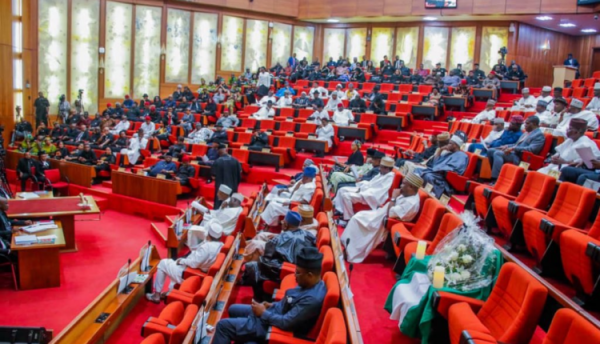
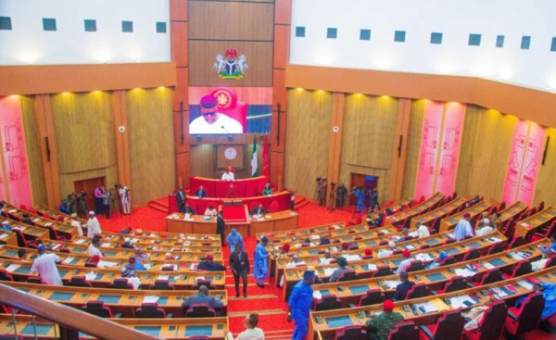
Nigeria may soon cut down its $2 billion annual rice import bill as the Senate Committee on Agricultural Production, Services, and Rural Development advanced deliberations on the proposed Rice Council Development Bill, aimed at transforming the nation’s rice industry and driving food self-sufficiency. SolaceBase reports that the bill, sponsored by Senator Adamu Aliero, seeks to establish the Rice Development Council of Nigeria, which would coordinate research, regulate production standards, support farmers, and promote innovations across the rice value chain. Stakeholders say the Council could turn Nigeria into Africa’s rice powerhouse, create millions of jobs, and strengthen national food security. Speaking at the public hearing on the bill and two others, the Cassava Inclusion and Flour Production Bill and the National Food Reserve Agency Bill, on Monday, Senate President Godswill Akpabio, represented by Senator Mohammed Monguno, said the initiatives align with President Bola Tinubu’s Renewed Hope Agenda for agricultural and economic transformation. “The Rice Development Council of Nigeria Bill represents our economic firepower, poised to create millions of jobs, reduce foreign exchange spending on importation, and make Nigeria Africa’s rice powerhouse. “By passing this bill, we will drive research, innovation, and value chain development, ensuring our children inherit a prosperous future”, Akpabio said. Akpabio emphasized that the three agricultural bills under consideration have the potential to reshape Nigeria’s food system. The cassava inclusion bill, he said, would create employment opportunities and stimulate agro-industrial growth, while the food reserve agency bill would serve as a critical buffer against food shortages caused by climate change, insecurity, and global economic disruptions. Chairman of the Senate Committee, Senator Salihu Mustapha, described rice as the staple that graces nearly every Nigerian table, yet lamented that the sector remains beset by inefficiencies despite the country’s capacity to produce more than seven million metric tonnes annually. “This bill heralds the birth of a dedicated council to orchestrate research, extension services, and value chain innovations, from flood-resistant seeds to modern milling technologies,” Mustapha said. “It promises to slash our $2 billion import dependence, ignite agro-industrial hubs across the North and South, and elevate our farmers from subsistence to commercial stardom”, he noted. Mustapha added that the Rice Council would foster inclusivity by ensuring the active participation of women and youth in agribusiness. “In essence,” he said, “it is a blueprint for turning paddy fields into prosperity engines and positioning Nigeria as Africa’s rice powerhouse.” The proposal received strong backing from industry stakeholders, including the Women Farmers Advancement Network (WOFAN). WOFAN expressed strong support for the Rice Council bill, stressing that it will create millions of job opportunities for women and youth. Hajia Maryam Lawal, who spoke on behalf of the organization, enjoined the Senate to pass the Rice Council bill to grow the rice value chain and enhance food security. Hajia Lawal noted that WOFAN had strongly supported the bill since 2020, when stakeholders along the rice value chain first proposed it  . “WOFAN worked with CARF, RIMAN, RIPAIN and other stakeholders on the Rice Council bill from 2020 to 2023 when the bill was passed by the 9th Senate. However, the President’s assent was delayed until the bill lapsed, and it had to be re-presented in 2024. We are therefore confident that the 10th Senate will pass it again and this time around, it will be signed into law accordingly”, she said. Also, the Rice Millers Association of Nigeria (RIMAN), whose National Chairman, Peter Dama, called the bill a “timely intervention” that could unlock Nigeria’s untapped potential in rice production. Dama, in a detailed presentation, said establishing the Rice Council would help address systemic challenges across the sector, from inadequate irrigation and insecurity in farmlands to price instability and lack of mechanization. He recommended a holistic review of the production system backed by large-scale government and private sector investments in irrigation infrastructure, input subsidies, mechanization, and market regulation to prevent exploitation during scarcity. “There should be deliberate promotion of climate-smart agricultural production innovations, including research for high-yield resilient seeds and renewable energy to power irrigation,” Dama added. He stressed that rice’s global importance, as both a food staple and economic commodity, makes it imperative for Nigeria to prioritize the sector. “Rice is not just a meal on the table; it is a political and economic staple. It plays a role in palliatives for distressed communities, contributes to national GDP, and provides livelihoods for millions”, he said. Dama outlined multiple advantages that would flow from the bill’s passage, including increased food security, economic growth, support for farmers, improved quality standards, reduced import dependence, and enhanced competitiveness in both local and international markets. “A Rice Council will bring about coordination and collaboration in the absence of a properly structured rallying point for rice value chain actors in Nigeria,” he said. “It will encourage private sector engagement, facilitate training for farmers and millers, and enhance fortification programs to address micronutrient deficiencies” he noted. RIMAN also proposed several amendments to strengthen the bill. One key recommendation is the inclusion of financial institutions such as NIRSAL, Bank of Agriculture (BOA), Bank of Industry (BOI), National Agricultural Insurance Corporation (NAIC), and the National Agricultural Development Fund (NADF) on the Rice Council’s governing board. “Since the Central Bank of Nigeria has moved out of agricultural development financing, it should be removed from the board, and these specialized financial institutions should be included to ensure sustainable funding,” Dama said. The association further recommended the creation of six geopolitical zonal offices for the Rice Council to enhance regional representation, program implementation, and stakeholder engagement. “Decentralized offices will facilitate the council’s ability to implement programs, monitor progress, and respond to regional issues promptly. It will also foster collaboration, improve data collection, and ensure policies are tailored to the unique needs of each zone”, Dama noted. RIMAN proposed the establishment of seven technical committees within the Council, including units for Industry Development, Research and Development, Quality Control, Marketing and Trade, Rice Fortification, Donor Alignment and Finance, and Women, Youth, and Gender Equity. These, the group said, will ensure inclusivity and operational efficiency. Dama…

Senate moves to slash $2 billion rice import bill

Nigeria may soon reduce its $2 billion annual rice import bill as Senate Committee on Agricultural Production, Services, and Rural Development advanced deliberations on the Rice Council Development Bill, a proposal to transform the sector and achieve food self-sufficiency. Sponsored by Senator Adamu Aliero, the bill seeks to establish Rice Development Council of Nigeria, to coordinate research, regulate production standards, support farmers, and promote innovations across the rice value chain. Experts say the initiative could make Nigeria Africa’s rice powerhouse, create jobs, and strengthen food security. Speaking at a public hearing on the bill with the Cassava Inclusion and Flour Production Bill and National Food Reserve Agency Bill, Senate President, Godswill Akpabio, represented by Senator Mohammed Monguno, said the measures align with President Bola Tinubu’s Renewed Hope Agenda for agricultural and economic transformation. “The bill represents our economic firepower, poised to create millions of jobs, reduce foreign exchange spending on importation, and make Nigeria Africa’s rice powerhouse. By passing this bill, we will drive research, innovation, and value chain development, ensuring our children inherit a prosperous future,” he said. He added that the three agricultural bills can reshape Nigeria’s food system. While the cassava inclusion bill would stimulate agro-industrial growth and employment, food reserve agency bill would provide a safety net against shortages caused by climate change and global disruptions. Committee Chair, Salihu Mustapha said rice is a staple on every table but lamented inefficiencies in the sector despite capacity to produce over seven million metric tonnes annually. “This bill heralds a dedicated council to orchestrate research, extension services, and value chain innovations, from flood-resistant seeds to modern milling technologies. “It promises to slash our $2 billion import dependence, ignite agro-industrial hubs in North and South, and elevate our farmers from subsistence to commercial stardom.” Mustapha also noted that the council would ensure inclusivity by engaging women and youth in agribusiness. “It is a blueprint for turning paddy fields into prosperity engines and positioning Nigeria as Africa’s rice powerhouse,” he added. He however called for collective commitment among all stakeholders, government, private sector, and local farmers to ensure the bill’s success. The Rice Millers Association of Nigeria (RIMAN) backed the proposal, describing it as a timely intervention that could unlock Nigeria’s full potential in rice production. He emphasised that rice is both a food and an economic staple. “Rice is not just a meal on the table; it is a political and economic staple. It plays a role in palliatives for distressed communities, contributes to national GDP, and provides livelihoods for millions.” RIMAN proposed key amendments, including the inclusion of financial institutions like NIRSAL, Bank of Agriculture (BOA), Bank of Industry (BOI), NAIC, and the National Agricultural Development Fund (NADF) on the Council’s governing board, replacing the Central Bank of Nigeria, which no longer funds agricultural development directly. The association also recommended six zonal offices to enhance regional program delivery and seven technical committees for areas such as research, quality control, marketing, rice fortification, and gender equity. Dama aligned the initiative with the National Rice Development Strategy II (2020–2030) and urged the conversion of the existing Rice Desk in the Federal Ministry of Agriculture and Food Security into a full-fledged council for stronger coordination. The Women Farmers Advancement Network (WOFAN), also reiterated its support for the proposed Rice Council Development Bill, describing it as a game-changer that will generate millions of job opportunities for women and youth across the rice value chain. Speaking on behalf of the organisation, Hajia Maryam Lawal urged the Senate to ensure the bill’s swift passage, noting that it would not only strengthen the rice industry but also enhance national food security. Hajia Lawal recalled that WOFAN had been actively involved in developing the bill since 2020, working alongside key stakeholders including CARF, RIMAN, and RIPAIN. “WOFAN worked with CARF, RIMAN, RIPAIN, and other stakeholders on the Rice Council Bill from 2020 to 2023 when it was passed by the 9th Senate. However, the President’s assent was delayed until the bill lapsed and had to be re-presented in 2024. We are therefore confident that the 10th Senate will pass it again, and this time around, it will be signed into law accordingly,” she said. She emphasised that the establishment of the Rice Council would help drive inclusive growth by empowering women and youth to take on active roles in agribusiness and value chain development.

Rice Council Development Bill to slash $2bn import bill — Senate Committee

Nigeria may soon cut down its $2 billion annual rice import bill as the Senate Committee on Agricultural Production, Services, and Rural Development advanced deliberations on the proposed Rice Council Development Bill, aimed at transforming the nation’s rice industry and driving food self-sufficiency. The bill, sponsored by Senator Adamu Aliero, seeks to establish the Rice Development Council of Nigeria, which would coordinate research, regulate production standards, support farmers, and promote innovations across the rice value chain. As part of activities marking the International Day of Rural Women and World Food Day, the Women Farmers Advancement Network (WOFAN) has called on women across Nigeria’s rural communities to embrace modern agriculture as a pathway to self-reliance and national food security. Speaking on Thursday during a joint commemoration organized by WOFAN members in Bagauda, Bebeji Local Government Area of Kano State, the Executive Director of WOFAN, Dr. Salamatu Garba, represented by Abdul Rashid Abdul Aziz, Finance Manager of the WOFAN-ICON2 Project, urged rural women to take advantage of WOFAN’s agricultural initiatives implemented in partnership with the Mastercard Foundation. “My call to rural women is simple: embrace WOFAN and the modern techniques we are teaching. Become independent and contribute meaningfully to your family and your community,” he said. Stakeholders say the Council could turn Nigeria into Africa’s rice powerhouse, create millions of jobs, and strengthen national food security. Speaking at the public hearing on the bill and two others, the Cassava Inclusion and Flour Production Bill and the National Food Reserve Agency Bill, Senate President Godswill Akpabio, represented by Senator Mohammed Monguno, said the initiatives align with President Bola Tinubu’s Renewed Hope Agenda for agricultural and economic transformation. “The Rice Development Council of Nigeria Bill represents our economic firepower, poised to create millions of jobs, reduce foreign exchange spending on importation, and make Nigeria Africa’s rice powerhouse. “By passing this bill, we will drive research, innovation, and value chain development, ensuring our children inherit a prosperous future,” Akpabio said. Akpabio emphasised that the three agricultural bills under consideration have the potential to reshape Nigeria’s food system. The cassava inclusion bill, he said, would create employment opportunities and stimulate agro-industrial growth, while the food reserve agency bill would serve as a critical buffer against food shortages caused by climate change, insecurity, and global economic disruptions. Chairman of the Senate Committee, Senator Salihu Mustapha, described rice as the staple that graces nearly every Nigerian table, yet lamented that the sector remains beset by inefficiencies despite the country’s capacity to produce more than seven million metric tonnes annually. “This bill heralds the birth of a dedicated council to orchestrate research, extension services, and value chain innovations, from flood-resistant seeds to modern milling technologies,” Mustapha said. “It promises to slash our $2 billion import dependence, ignite agro-industrial hubs across the North and South, and elevate our farmers from subsistence to commercial stardom”, he noted. Mustapha added that the Rice Council would foster inclusivity by ensuring the active participation of women and youth in agribusiness. “In essence,” he said, “it is a blueprint for turning paddy fields into prosperity engines and positioning Nigeria as Africa’s rice powerhouse.” The proposal received strong backing from industry stakeholders, including the Rice Millers Association of Nigeria (RIMAN), whose National Chairman, Peter Dama, called the bill a “timely intervention” that could unlock Nigeria’s untapped potential in rice production. Dama, in a detailed presentation, said establishing the Rice Council would help address systemic challenges across the sector, from inadequate irrigation and insecurity in farmlands to price instability and lack of mechanisation. He recommended a holistic review of the production system backed by large-scale government and private sector investments in irrigation infrastructure, input subsidies, mechanisation, and market regulation to prevent exploitation during scarcity. “There should be deliberate promotion of climate-smart agricultural production innovations, including research for high-yield resilient seeds and renewable energy to power irrigation,” Dama added. He stressed that rice’s global importance, as both a food staple and economic commodity, makes it imperative for Nigeria to prioritise the sector. “Rice is not just a meal on the table; it is a political and economic staple. It plays a role in palliatives for distressed communities, contributes to national GDP, and provides livelihoods for millions”, he said. Dama outlined multiple advantages that would flow from the bill’s passage, including increased food security, economic growth, support for farmers, improved quality standards, reduced import dependence, and enhanced competitiveness in both local and international markets. “A Rice Council will bring about coordination and collaboration in the absence of a properly structured rallying point for rice value chain actors in Nigeria,” he said. “It will encourage private sector engagement, facilitate training for farmers and millers, and enhance fortification programs to address micronutrient deficiencies” he noted. RIMAN also proposed several amendments to strengthen the bill. One key recommendation is the inclusion of financial institutions such as NIRSAL, Bank of Agriculture (BOA), Bank of Industry (BOI), National Agricultural Insurance Corporation (NAIC), and the National Agricultural Development Fund (NADF) on the Rice Council’s governing board. “Since the Central Bank of Nigeria has moved out of agricultural development financing, it should be removed from the board, and these specialised financial institutions should be included to ensure sustainable funding,” Dama said. The association further recommended the creation of six geopolitical zonal offices for the Rice Council to enhance regional representation, program implementation, and stakeholder engagement. “Decentralised offices will facilitate the council’s ability to implement programs, monitor progress, and respond to regional issues promptly. It will also foster collaboration, improve data collection, and ensure policies are tailored to the unique needs of each zone”, Dama noted. RIMAN proposed the establishment of seven technical committees within the Council, including units for Industry Development, Research and Development, Quality Control, Marketing and Trade, Rice Fortification, Donor Alignment and Finance, and Women, Youth, and Gender Equity. These, the group said, will ensure inclusivity and operational efficiency. Dama also aligned the bill with the National Rice Development Strategy II (NRDS II 2020–2030), which provides a roadmap for upgrading the rice sector. He…

WOFAN celebrates rural women, promotes modern farming as key to self-reliance, food security

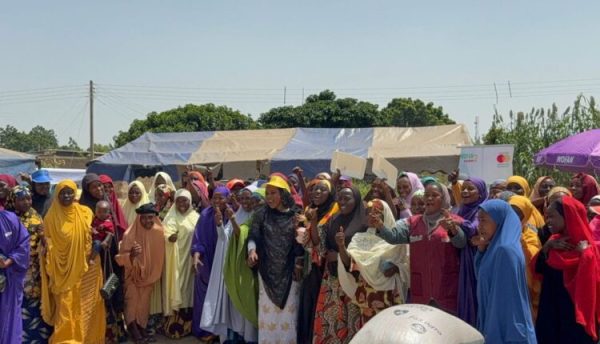
As part of activities marking the International Day of Rural Women and World Food Day, the Women Farmers Advancement Network (WOFAN) has called on women across Nigeria’s rural communities to embrace modern agriculture as a pathway to self-reliance and national food security. Speaking on Thursday during a joint commemoration organized by WOFAN members in Bagauda, Bebeji Local Government Area of Kano State, the Executive Director of WOFAN, Dr. Salamatu Garba, represented by Abdul Rashid Abdul Aziz, Finance Manager of the WOFAN-ICON2 Project, urged rural women to take advantage of WOFAN’s agricultural initiatives implemented in partnership with the Mastercard Foundation. “My call to rural women is simple: embrace WOFAN and the modern techniques we are teaching. Become independent and contribute meaningfully to your family and your community,” he said. “This does not mean disobeying or disrespecting your husbands; rather, it means complementing their efforts and contributing to family growth.” He noted that the celebration of both International Day of Rural Women and World Food Day serves as a reminder that women are central to achieving global food security. “These women are not just sitting at home; they are farming, producing food, and proving that they can do what men can do. It’s time the world recognizes their contributions,” he added. This year’s World Food Day, themed “Water is Life, Water is Food — Leave No One Behind,” and the International Day of Rural Women, themed “Rural Women Cultivating Good Food for All,” align directly with WOFAN’s mission to empower rural women and enhance food production through technology, training, and access to finance. “The themes of these two global days speak to our work at WOFAN. When women gain access to modern tools, digital knowledge, and improved farming practices, their role in ensuring food security becomes stronger and more visible,” Abdul Aziz said. He emphasized that WOFAN’s approach goes beyond providing traditional tools. “We are not giving them hoes and cutlasses; we are providing power tillers, planters, and threshers that make farming more efficient and profitable. One power tiller can do the work of ten men in an hour — that’s real transformation,” he explained. Also speaking, Sadiya Abubakar, a Super Trainer in the Bagauda cluster, described the dual celebration as a special opportunity for rural women to reflect on their contributions to food security and rural development. “These days are very special to us. We celebrate ourselves and the transformation WOFAN has brought through the ICON2 Project, supported by the Mastercard Foundation. Many of us have gained employment, created businesses, and even become employers,” she said. She added that WOFAN has established marketing hubs that connect women farmers directly to markets, increasing their income and reducing post-harvest losses. SolaceBase reports that another beneficiary, Rukayya Uba, expressed gratitude to WOFAN and the Mastercard Foundation for empowering women to become active contributors to the economy. “Before WOFAN came, we were just sitting at home doing nothing. Today, we farm, run our own businesses, and even employ others. Alhamdulillah, Women Farmers Advancement Network changed our lives,” she said. Similarly, Sadiya Bala Ibrahim noted that Women Farmers Advancement Network has played a vital role in educating rural women and equipping them with modern agricultural tools that have reduced physical stress and increased productivity. “Rural women are no longer secondary players in agriculture. With access to training and technology, they are now key drivers of sustainable development,” she emphasized. The event, attended by women farmers, agricultural stakeholders, and community leaders, highlighted the shift from traditional subsistence farming to modern agribusiness led by women. Through the WOFAN-ICON2 Project, supported by the Mastercard Foundation, over 675,000 young people, particularly women, across nine Nigerian states are being empowered through agricultural transformation, mechanization, digital inclusion, agribusiness training, and financial access. As the world celebrates the International Day of Rural Women and World Food Day, WOFAN’s efforts continue to stand as a model of how empowering rural women can drive food security, economic growth, and sustainable development in Nigeria.

Emir of Zazzau commends WOFAN- ICON2 project for community service interventions

The Emir of Zazzau, Ambassador Nuhu Bamalli, has commended the Women Farmers Advancement Network (WOFAN) for its community-led entrepreneurial activities, youth engagement, and contributions to empowering women and people living with disabilities. Ambassador Bamalli made the commendation on Friday during a courtesy visit by the WOFAN-ICON2 Project, led by its Country Director and United Nations POLAC Peace Ambassador, Dr. Salamatu Garba. SolaceBase reports that the visit followed the commissioning of a fully constructed women’s side Jumaat mosque, complete with toilets, solar-powered boreholes, and the renovation of a school where both men and women access knowledge. The Emir praised WOFAN’s efforts, describing the projects as a source of peace, food security, and poverty reduction. “I am very happy with the activities of WOFAN. My people keep updating me on the positive impact you are making. I want to thank you for your commitment personally,” he said. “We must also thank God for people like you. There are many wealthier individuals who have benefited from society, yet they do not give back. Your investment in humanity is remarkable. Building this female worship center came at a time we needed it most, and I know it will not only serve as a mosque but also as a place for knowledge sharing, unity, and community growth.” The Emir further stated that WOFAN’s interventions would help in creating job opportunities, thereby giving hope, dignity and self-reliance for young people. He urged district heads in his emirate to ensure the facilities are well-maintained. On her part, Dr. Garba thanked the Emir for his support and recalled the history of WOFAN having originated from Zaria and therefore appealed to the Emir to keep his doors open to WOFAN whenever guidance and policy support are needed. Speaking further at the handover of the facilities, Dr. Garba explained that the solar-powered boreholes, each equipped with 21 water points, will provide safe water for households and schools. “This intervention will reduce the hardship families once faced, particularly children who often missed school due to water scarcity. It will not only improve sanitation and hygiene but also help reduce the number of out-of-school children, while benefiting millions of people in the communities,” she said. Other dignitaries at the event include Alhaji Rabiu Sule Garo, board member of the WOFAN community development initiative, who commended the Emir and Sarkin Dogon Bauchi for honoring Dr. Garba and pledged that both WOFAN and community members will continue to put in place sustainability strategies, thereby asking both committee representatives of WOFAN and Dogon Bauchi to put heads together towards completing the propised shops at Iya Bashir Central Jumaat Mosque in Sabon Gari, which will generate income for the mosque’s maintenance. Professor Sani Miko, Chair of WOFAN’s Technical Advisory Board, represented by Professor MK Othman, stressed that agriculture cannot thrive without peace and urged communities to use the facilities to promote harmony. The WOFAN-ICON2 Project, funded by the Mastercard Foundation, focuses on supporting communities with vital interventions such as potable water, sanitation, renovated schools, markets, and community centers to promote development and well-being.

Happy Father’s Day!

Happy Father’s Day! Today, we celebrate the vital roles men play in supporting women and fostering collective economic growth and food security. At WOFAN, we recognize the positive impact of men who have actively engaged with women, highlighting that collaboration and inclusivity yield more significant results than working in isolation or suppressing women’s contributions. This day is dedicated to honouring fathers and male figures especially our traditional leaders, husbands, dads, grand- dads, mom’s who are heading households, foster dads, father in- laws and dads who are no more, by appreciating and who recognising how they’ve upheld women’s dignity through the WOFAN- ICON2 project. They have viewed and respected women as essential builders of our nation. https://wofan.org/wp-content/uploads/2025/06/WhatsApp-Video-2025-06-15-at-4.34.38 PM.mp4 Their commitment to sustainable economic growth, community unity, and amplifying their voices have positioned them as change agents in their communities. Together, we can achieve greater success through teamwork and mutual support. Happy FATHERS DAY!!!