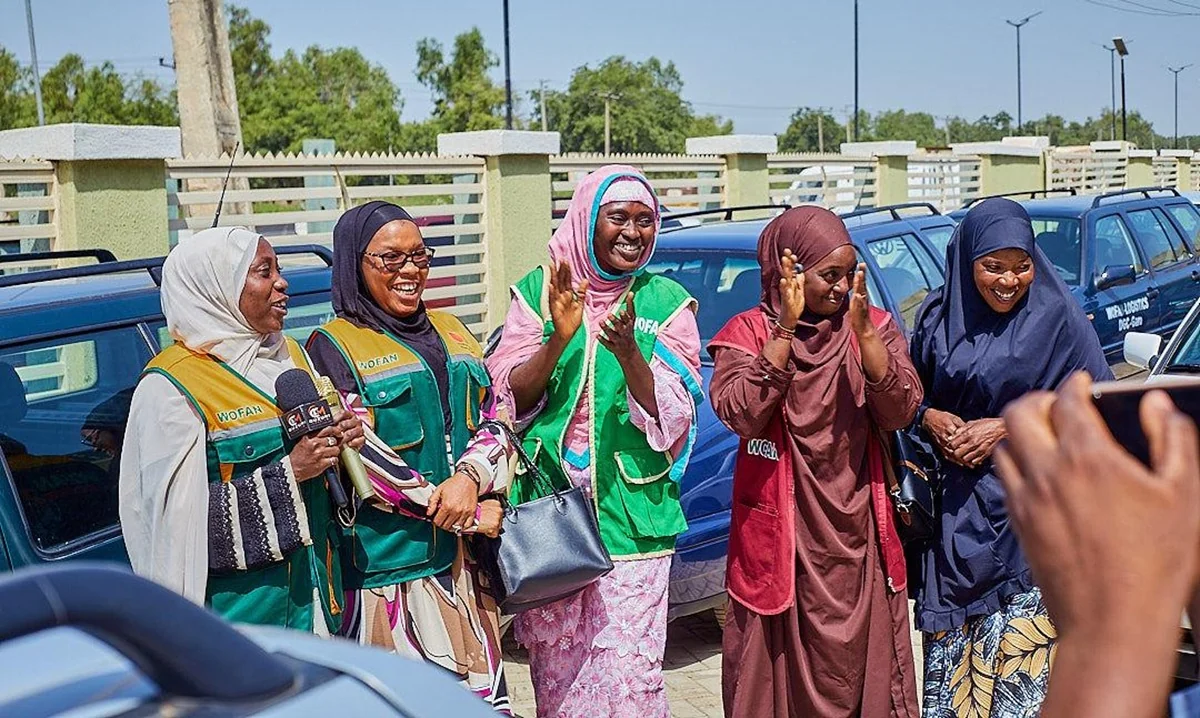
The Women Farmers Advancement Network (WOFAN) has paid an advocacy visit to the newly appointed Director of the Federal Department of Agricultural Extension, Dr. Samaila Taye, to brief him on the progress of the Agricultural Extension Bill and seek the department’s support for its speedy passage into law.
The visit brought together key stakeholders in Nigeria’s agricultural sector to review the status of the proposed legislation, which they described as a critical instrument for revitalising the country’s agricultural extension system, improving food production and strengthening national food security.
Recall that the the draft policy was approved and turned into a national document during the African Forum on Extension 2023.
Speaking during the meeting, WOFAN-Group Chair and Global Advocate ( Africa, Europe and Arab region), Dr. Salamatu Garba, informed the new director that the draft bill has reached its final stage after undergoing legal scrutiny and extensive consultations with stakeholders across the country.
She explained that although the legal team had completed its review, stakeholders agreed to undertake one final assessment to identify and address any outstanding gaps before forwarding the bill for further legislative action.
Garba said the proposed legislation has enjoyed broad stakeholder participation, with no fewer than 14 consultation meetings involving commissioners of agriculture, the Federal Ministry of Agriculture and Food Security, development partners, research institutions and other relevant organisations.
According to her, the consultations were designed to ensure that every critical stakeholder contributed to developing a comprehensive legal framework for agricultural extension services in Nigeria.
Updating the new director on the legislative process, Garba disclosed that the bill has already passed its first reading in both the Senate and the House of Representatives and is awaiting the next stage of consideration.
She acknowledged concerns over the limited legislative calendar ahead of the next general election but expressed confidence that the bill could still be passed before the expiration of the current National Assembly.
She added that even if the process extends beyond the current assembly, the broad ownership of the bill by stakeholders would ensure continuity.
Garba also commended President Bola Tinubu’s commitment to agriculture and food security, expressing optimism that the administration would support the legislation because of its potential to improve farmers’ productivity and guarantee sustainable food production.
She stressed that strengthening agricultural extension services deserves the same level of national attention as security matters, noting that food security and national security are inseparable.
The WOFAN WOFAN-Group Chair and Global Advocate lamented that Nigeria’s agricultural extension system has deteriorated over the years, leaving farmers without adequate technical support, training and access to improved farming technologies.
She explained that the proposed legislation would establish a legal framework for rebuilding extension services, clearly define the responsibilities of the federal, state and local governments, specify the roles of farmers and research institutions, improve coordination and equip extension workers to promote climate-smart agriculture at the grassroots.
Garba further noted that the bill aligns with the recently approved National Agricultural Policy, describing it as a major reform that would modernise agricultural advisory services across the country.
Responding, Dr. Taye commended WOFAN for its sustained advocacy and described the organisation as a strategic partner in Nigeria’s agricultural transformation.
He assured the delegation that the Federal Department of Agricultural Extension would fully support the process, noting that the proposed legislation falls squarely within the department’s statutory mandate.
Describing the bill as potentially historic, Taye said Nigeria could become one of the first countries to enact a dedicated law governing agricultural extension service delivery.
According to him, the legislation will clearly define the responsibilities of the three tiers of government, eliminate overlaps, professionalise extension services and ensure that only qualified personnel provide advisory services to farmers.
“The impact of this bill will be enormous. It will provide direction for extension delivery, improve coordination and ensure that only qualified personnel provide these services to farmers,” he said.
Also speaking, Chairman of WOFAN’s Technical Advisory Board, Professor Sani Miko, described the draft bill as the product of extensive collaboration among government agencies, academia, research institutions, development partners, private sector organisations and extension practitioners nationwide.
Similarly, WOFAN Director of Strategies, Innovation and Sustainability, Hajia Maimuna Lawal, said the bill contains provisions promoting Information and Communication Technology (ICT), e-extension platforms and other digital innovations that will make agricultural advisory services more efficient, sustainable and responsive to farmers’ needs.
She urged lawmakers to prioritise the legislation, expressing confidence that its eventual passage would strengthen knowledge transfer, expand farmers’ access to innovation and significantly boost agricultural productivity and food security across Nigeria.