Year 2: WOFAN Begins ICON2 Project With Onboarding Of 500 New Extension Workers

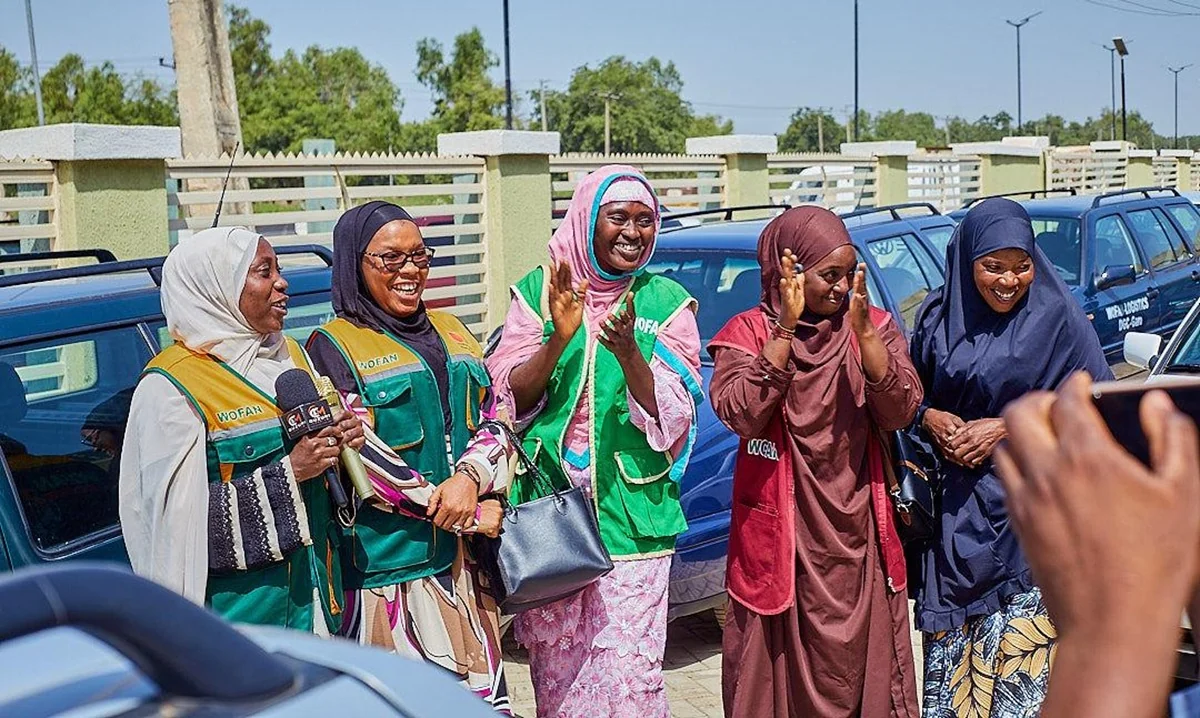
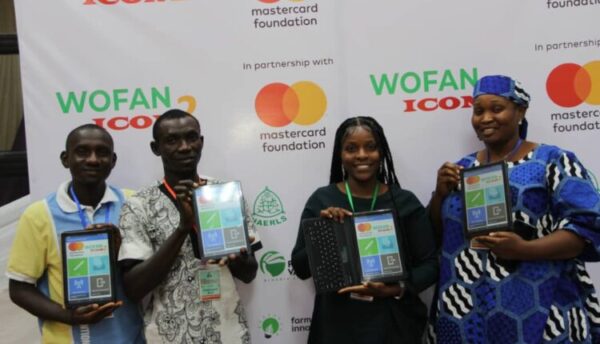
Women Farmers Advancement Network (WOFAN) has flagged off the implementation of Year 2 of the WOFAN-ICON2 Project with the onboarding of 500 new Extension Workers (EWs) and distribution of 500 Android Tablets and Power Banks to the EWs for knowledge management. SOLACEBASE reports that the Android Tablets, which will be used by the EWs to collect all Project implementation data, are preloaded with software that will aid crop production and processing as well as knowledge management by WOFAN and its partners during and after the implementation. Speaking during the launch, the Chairman of WOFAN’s Technical Advisory Board, Professor Sani Miko informed the EWs that they are critical to the attainment of Nigeria’s food security targets because they are the ones who take capacity building from source to the farmers while supporting the farmers to adopt best practices for improved outputs. In a remark,  the Executive Director of WOFAN, Hajia Salamatu Garba, explained that the EWs will receive training on different areas of production, processing, and enterprise development and their roles will be to mobilize smallholder youth farmers to form cooperative groups, training the farmers and support them with provision of extension services. “To be successful, you must not make money your priority. Instead, you need to be passionate about working with farmers. If you have that passion and work hard, you will be successful. Money will come naturally”, she said. The official launch of Year 2 was attended by stakeholders from across the agricultural value chain, including government, tertiary and research institutions, service providers, financial institutions, the private sector, and non-governmental organizations. The occasion was chaired sector. The WOFAN-ICON2 Project is a 5-year intervention funded by the Mastercard Foundation to enhance the quality of life and economic empowerment of 675,000 young small-scale farmers and agripreneurs and their families across nine states in Nigeria. The states are Adamawa, Bauchi, Benue, Gombe, Jigawa, Kaduna, Kano, Nasarawa, and the Federal Capital Territory (FCT), Abuja. The Project is part of the Mastercard Foundation’s Young Africa Works (YAW) strategy which aims to enable 30 million young people in Africa, especially young women, to secure employment they see as dignified and fulfilling by 2030. The new EWs will join the 500 EWs already working with community partners to increase the outreach to young smallholder farmers and processors from 225,000 onboarded in the first year to 450,000 by the end of Year 2 with each EW working with 450 community partners who will be supported to form groups of 30 members each. Each of the EWs will also receive training on Good Agronomic Practices (GAP), ICT-led production technologies, improved processing technologies, financial literacy and linkages to markets, and waste-to-wealth management. The EWs will then go on to step down all the training to the community partners. They will follow up the training with effective and efficient extension service delivery, including demonstration of the application of inputs and use of labor-saving production and processing equipment to be provided for the community partners by the Project.

Stakeholders strategise on implementation of agric extension policy

Stakeholders from various agricultural value chains across the nation have charted the way forward for the new federal government policy on agricultural extension services, developing strategies for improving extension service delivery in the country.  Speaking during the one-day summit held in Abuja on the new policy, the Executive Director of the Women Farmers Advancement Network (WOFAN), Hajia (Dr) Salamatu Garba said the stakeholders are taking up the policy so that everyone will understand it to ensure successful implementation at all levels.   While noting that the policy comes with the rights of farmers and opportunities, she said WOFAN will further contribute to the implementation of the policy by joining hands with relevant bodies in translating it into three or four local languages so that the people for whom it is meant would have a clearer understanding on how the policy will help in enhancing food security in Nigeria.  She noted that the policy is also in line with what the Mastercard Foundation is doing in its Young Africa Works (YAW) strategy which aims at enabling 30 million young people in Africa, especially young women, to secure employment they see as dignified and fulfilling.  She added that as part of the YAW strategy, the foundation will deepen its engagement in uplifting the living conditions of ultra-poor people, including the physically challenged, to better proffer support towards the economic aspirations of the young people between 18 and 35 years and identify priority sectors for their growth.  Garba said the strategy will include working with all stakeholders, research institutions, policy makers, financial institutions, and farmer organizations to build their capacity with vocational training, and access to simple agricultural equipment so that they can equip young people with the skills employers need. She further stated that the vision of the Mastercard Foundation aligns with that of WOFAN in improving the capacity of extension workers as such, putting all partners on the same page.  The business manager of WOFAN, Mr. Taiwo Olawale, explained that Mastercard Foundation and WOFAN are working to improve the lives of 627,000 people in a 5 years project branded as WOFAN- ICON2. He further re-iterated that the Mastercard Foundation’s vision of uplifting the status of these people and giving them a sustainable capacity that will make them live a fulfilled life on their own aligns with WOFAN’s business model. Areas that the new agricultural policy addresses are challenges such as reviewing the ratio of extension workers to farmers.  As is obvious, at present there is an estimate of one extension worker to about 10,000 farmers in Nigeria, but with the WOFAN ICON2 project, it is one extension worker to 15 groups and each group is made up of 30 people. So, you see, we have bridged the gap that the new agricultural policy is also proposing.  Another problem is that there are fewer women in extension service, so we are trying to change that as well by engaging 80% of the total extension workers to be females. The WOFAN – ICON2 project, in addition to building the capacity of the farmers and processors, is giving targeted farmers agricultural tools and improved seed approved for the seed council and fertilizers.   The ICON2 project also delivers its input way ahead of the season in January before the rains as such also aligning the new agricultural policy proposed and in line with Mastercard Foundation’s effort in ensuring the rural farmers access timely and quality inputs to enhance the farming locations.  The Chairman, of the WOFAN Technical Advisory Board on Policy Change and Advisory Services, Professor Sani Miko said funding is critical in the area of extension services. Professor Miko, who noted that youths and women must be considered in the area of extension services, said the private sector is needed to tackle the opportunity and complement the efforts of the government. “We need to key in the private sector to tackle that opportunity and resources to complement the government effort.” “This is one of the biggest opportunities we have, and I know there are some pessimistic people who keep saying the farmers are not ready to pay for extension service, and it’s not true because we have seen where farmers pay for services”.  “Now that we have a policy on the ground and the enabling environment, and the private sector is there, what is left now is to coordinate it”, he further added.  In his contribution, the Executive Director, National Extension and Research Liaison Services (NAERLS), Professor Emmanuel Ikani, said the policy is a guideline of action that the content is going to bring about positive changes. He said the policy is looking at harmonizing extension service delivery with a focus and not just anybody doing it anyhow. 

Rice millers and marketers now collaborators instead of competitors

Although the rice crop is a staple food and an essential part of the diet for millions of people in Nigeria,  every year, many rice farmers/millers especially in the rural areas are not equipped with the right knowledge, skills, and machinery to properly steam and mill their rice. This has resulted in lower-quality products, reduced market value, lessened profitability, and unfavorable competition between the farmers and the marketers/retailers. This is because the retailers would prefer to patronize others for the same produce (to resell them in the markets), rather than partner with the rural rice farmers due to the poor quality of their grains. To combat these issues, the Women Farmers Advancement Network (WOFAN) in partnership with Mastercard Foundation set out on a visionary assignment to provide comprehensive rice processing training to rice millers, and farmers in rural regions across nine (9) different states in Nigeria. This life-transforming innovation also reached some communities in Kano State, Nigeria such as Tofa, Garun Mallam, and  Bebeji local government areas, to mention but a few. The training focused on demonstrating to the processors and millers how to properly steam and mill rice while preserving the nutritional value, quality, and consistency of the grains. The training was backed up with grant support for processing and milling equipment given to the women groups. A few of the processing machinery distributed during this training include rice polishers and designers, chimney stoves, force bottom pots and so much more. By properly steaming and milling the grains, the farmers have been able to remove impurities, resulting in cleaner, more polished rice. The improved appearance and texture of the rice attract far more customers and collaborations with marketers/retailers thereby increasing their market competitiveness. The women farmers have undergone a remarkable transformation in their rice business since the training. Women like Rukayya Uba from the Kadawa community, Fatima Abubakar from the Chiromawa community, and Rafaatu Garba from the Bagauda community all in Kano state are only a few examples of the many women who have been equipped to produce high-quality, market-ready rice and who are now being heavily patronized by marketers/retailers. Their lives have been exceptionally touched by the outreach of the WOFAN-ICON2 empowerment project in partnership with Mastercard Foundation, and their now improved skill due to the training has resulted in a mighty turnover of sales upon sales. What was once an unfavorable competition between the farmers and retailers of the rice produce has now become a strong chain of partnerships amongst hundreds of them across the different communities in Kano State, Nigeria, as most rice aggregators, millers, and marketers now troop into the WOFAN trained parboilers to off-take their rice and even provide raw paddy rice to process for them for a fee. Customers and retailers have recognized and now appreciate the superior quality of the rice products the farmers deliver to the markets and are willing to pay a premium price for it. This has therefore increased the market value of their rice and allows the women more profit and dignity in their community.   Capacity building of this nature through training programs has not only empowered these individuals but also contributed to the overall growth and development of the rice industry in Nigeria. The farmers and marketers are indeed grateful to WOFAN and Mastercard Foundation for this great opportunity.