Education minister commends WOFAN–CDA SIBLING Project, applauds intervention targeted for practical skills for agriculture students
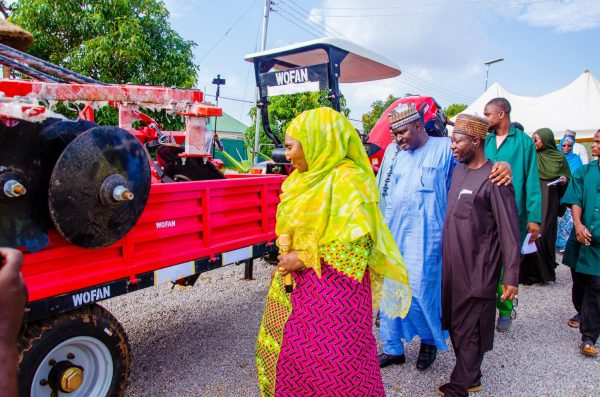
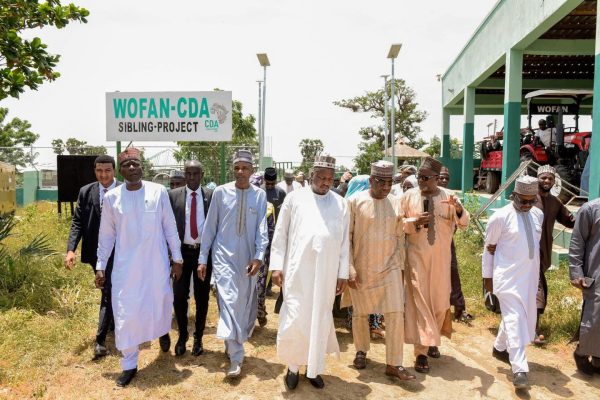
The Minister of Education, Dr Tunji Maruf Alausa, has commended the Women Farmers Advancement Network (WOFAN) and the Centre for Dryland Agriculture (CDA), Bayero University, Kano, for investing in practical agricultural training aimed at equipping students with employable skills and promoting entrepreneurship. Dr Alausa gave the commendation on Tuesday, 21-7-2026, during an inspection visit to the WOFAN–CDA SIBLING Project site at Bayero University, Kano. He was accompanied by the Minister of State for Education, Professor Suwaiba Sa’id Ahmad. SolaceBase reports that the ministers were received by the Director of the Centre for Dryland Agriculture, Professor Sanusi Gaya Mohammed, who briefed them on the objectives of the SIBLING (Skills Improvement to Boost Livelihood and Nurture Growth) initiative and conducted them round the Centre’s screen house and practical training facilities. The Vice-Chancellor of Bayero University, Professor Haruna Musa, alongside other principal officers of the university, also joined the inspection. Meanwhile when contacted by journalists on the target of the project and importance of the minister’s visit, on Wednesday, WOFAN Founder and Group Executive Board Chair, Dr. Salamatu Garba, described the project as a practical response to the proposed National Agricultural Extension Bill currently before the National Assembly, which has passed through the first and second reading and supported by all stakeholders of agricultural institutions, development practitioners, Farmers sponsored by WOFAN. Garba emphasised that the visit shows the symbiotic relations and collaboration of the Ministry of Agriculture and Education in improving agriculture as a course of study. She said WOFAN and its partners decided to commence implementation of the proposed legislation’s vision while remaining hopeful for its final passage, stressing that the initiative demonstrates how collaboration among the private sector, public institutions, and universities can strengthen Nigeria’s agricultural extension system. According to her, the project is designed to bridge the gap between classroom learning and practical experience by exposing students to modern agricultural technologies, mechanisation and agribusiness value chains. “We are giving students hands-on experience across integrated farming systems, including crop production, poultry, fisheries, waste-to-wealth initiatives, fabrication and value addition. Our goal is to produce agricultural graduates who will become job creators and agripreneurs, rather than job seekers. Moreso she further stated that it will also provide skilled agricultural extension service providers that will heavily reduce the huge challenges of shortage of extension workers facing the agricultural sector, she said. Garba noted that WOFAN had invested in agricultural equipment, processing centres, poultry and fishery sections, including providing facilities for climate-smart, integrated farming systems, logistics and linkages to markets to boost productivity and train students in sustainable ways of addressing problems of climate change-related issues She expressed optimism that the ministers’ visit would further strengthen support for the Agricultural Extension Bill, which she described as critical to improving food production and agricultural advisory services across the country. Also speaking, former Dean of the Faculty of Agriculture at Bayero University, Kano and Chairman of the Elders Forum for the SIBLING Programme, Prof. Muhammad Auwalu Hussaini, said the partnership had addressed longstanding funding constraints affecting practical agricultural training in universities. He explained that WOFAN’s support has enabled students to access modern equipment such as solar-powered sprayers and other farm implements that universities could hardly procure through conventional funding. “The partnership has significantly improved the practical learning environment for our students by providing facilities that enhance their knowledge and technical competence,” he said. Chairman of WOFAN’s Technical Board, Prof. Sani Miko, described the collaboration as a model for integrating academic knowledge with practical industry experience. He said the project combines the strengths of universities in manpower development with the private sector’s expertise in investment and resource management. According to him, demonstration farms and commercial production units established under the initiative will expose students to real-life agricultural production systems and address the skills gap identified among agricultural graduates. “This partnership is bringing life into the training system. It provides students with opportunities to learn by doing, while also supporting efforts to ensure the Agricultural Extension Bill becomes law,” he said. Prof. Mahmoud Ibrahim Daneji of Bayero University’s Department of Agricultural Extension, who serves as Climate Change Desk Officer for the WOFAN ICON2 Project, urged students participating in the programme to embrace climate-smart agriculture. He said changing weather patterns have made it necessary for future farmers and extension workers to adopt environmentally sustainable farming practices. Daneji noted that the equipment provided under the SIBLING initiative would enable students to combine classroom knowledge with practical skills while promoting responsible environmental management. He also called on relevant stakeholders to expedite the passage of the Agricultural Extension Bill, saying the legislation would clearly define the roles of government, educational institutions and the private sector in strengthening Nigeria’s agricultural extension services. The WOFAN–CDA SIBLING Project, which was flagged off on 17 February 2026 and provided input support to commence 50 hectares wet season farming by agriculture students of Bayero University, Kano, is a collaborative initiative designed to provide practical agricultural training, promote agripreneurship and prepare students for careers in modern agriculture through hands-on learning and access to mechanised farming technologies.