WOFAN Founder, Salamatu Garba Crowned Daughter of Ladi Kwali to Carry on her Legacy
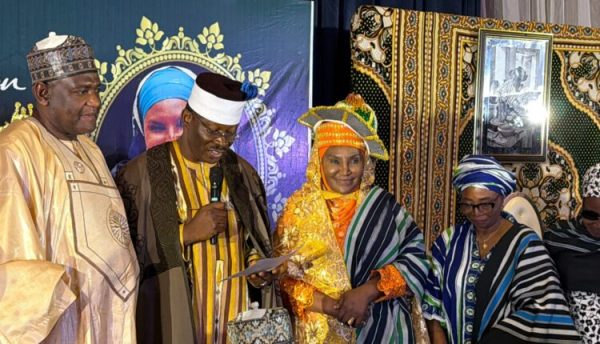
The ancient Kwali Chiefdom, in Kwali Area Council of the Federal Capital Territory (FCT), has officially adopted the founder of the Women Farmers Advancement Network (WOFAN), Hajiya Salamatu Garba, into its royal family. During the coronation ceremony in Abuja on Tuesday, the Etsu Kwali and Chairman of the Kwali Council of Chiefs, Luka Nizassan III, conferred upon Garba the revered title of Ladi Kwali Bi’iye, meaning “beloved daughter of Ladi Kwali.” Nizassan said that the move was for the agricultural icon to carry on the global legacy of the late legendary Gbari potter, Dr Ladi Kwali. He explained that the honour connects the late legendary Gbari potter with Garba, a Kano State-born community development practitioner who has spent decades shaping rural livelihoods and empowering farmers across Northern Nigeria. He argued that while Ladi Kwali mastered clay, water, and fire without machinery, carrying indigenous Nigerian artistry to Britain and Germany, Garba shapes rural ecosystems, food security and financial independence. “Garba is doing this by building systemic doors of opportunity for thousands of women farmers and youth through WOFAN,’ Nizassan said. He acknowledged challenges facing the ancestral home of Ladi Kwali, his family, despite her international status. According to him, in spite of membership in the Order of the British Empire, an officer of the Order of the Federal Republic, an officer of the Order of the Niger, and honorary doctorates, her local community and legacy have suffered neglect. He said that the council of chiefs had deliberately looked far beyond immediate primordial and geographic lines to find someone capable of keeping the pioneering flame alive. “If we were to be primordial, we’d look for a Gbari woman to continue this legacy. If we want to be sentimental, we’ll look for someone within FCT. “But we have checked over and over, and I found within my earnest conviction, that Hajia Salamatu is writing a legacy in the pattern of Dr Ladi Kwali. “Legacies are not merely to be remembered in history books or currency notes; they are meant to be actively continued,” he said. He praised WOFAN’s grassroots footprint, noting that unlike many urban-centric NGOs that congregate safely in city centres for statistics and funding, Garba’s organisation dives deep into remote communities across Kwali, Kuje, Gwagwalada, and Abaji to uplift the vulnerable through sustainable agriculture and financial inclusion. Performing the coronation rites, the Etsu declared Garba an official daughter of the land. “By the reason of this conferment today, you have been officially admitted as a daughter into the family of Dr Ladi Kwali and into Kwali Chiefdom and the Gbari race entirely. “You will enjoy every privilege of sons and daughters of our land and every blessing our ancestors have left behind will follow you,” he added. Giving his royal blessings, the Sarkin Jiwa, Idris Musa, reflected on the gentle and humble nature of the late Ladi Kwali, lamenting the erosion of indigenous traditions and urging a revival of local heritage, craftsmanship, and sustainable practices. Also, the Sa’Karuyi (Chief) of Karu, Mr Joseph Narai, described the coronation as “a historical rebirth” and congratulated the Kwali Chiefdom for embracing a guardian of development. “Instead of you being adopted, you have been born in Kwali Chiefdom, and I urge you to extend her developmental footprint to other area councils,” he said. Echoing these sentiments, Alhaji Ibrahim Pada, the Sa’Rubochi (Chief) of Rubochi Chiefdom, reminded the new titleholder that her mandate now spans the entire FCT and beyond. In her response, Garba described the honour as humbling, saying it demonstrated that recognition was not determined by wealth or privileged background but by commitment, patience, persistence and service to humanity. “When I started the journey of WOFAN, I never advocated for this. I didn’t know anything about NGO. I was just delivering whatever my heart told me about working with humanity,” she said. She dedicated the recognition to rural women, peasant farmers, widows, single mothers and other vulnerable groups whose contributions to society, particularly food production, often go unrecognised. Garba called on Nigerians to reject poverty and embrace collective action, stressing that communities must take responsibility for determining their development priorities. She cited WOFAN’s intervention in Bagauda community in Kano State, where residents pooled resources with the organisation to improve agricultural production and rebuild a dilapidated school, as an example of how community participation could transform rural settlements. She also disclosed that WOFAN had facilitated the acquisition of two tractors in the Federal Capital Territory through collective contributions by community members. According to her, the initiatives demonstrated that communities could overcome developmental challenges through unity, trust and the pooling of available resources. “No nation grows when you abandon the lower cadre. Nobody wins the race when you run on one leg. You only win when your two legs are running together. Nigeria, if we really want to progress, both the poor and the rich must work together,” she said The WOFAN founder further called for a rethink of agriculture, leadership and development strategies to ensure that rural communities and vulnerable populations were not left behind. She also highlighted WOFAN’s construction of an accessible bridge designed to accommodate wheelchair users, describing the initiative as one of the projects that had given her particular satisfaction. Garba urged Nigerians to identify disadvantaged people within their communities and support them, noting that meaningful development did not always require huge financial resources but collective commitment and simple acts of assistance