Excitement in BUK as Women Farmers Partner CDA on Agribusiness, Skills for Livelihood Initiative

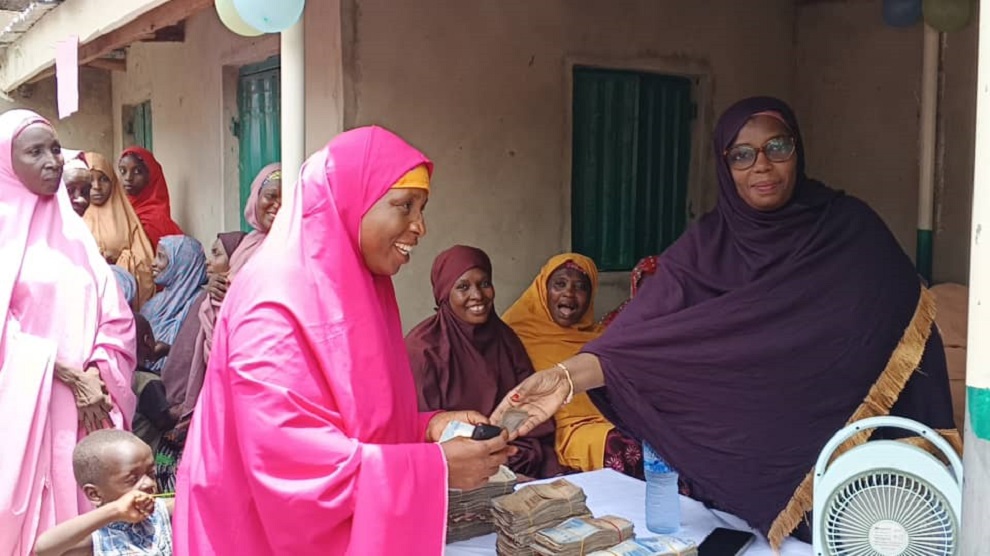
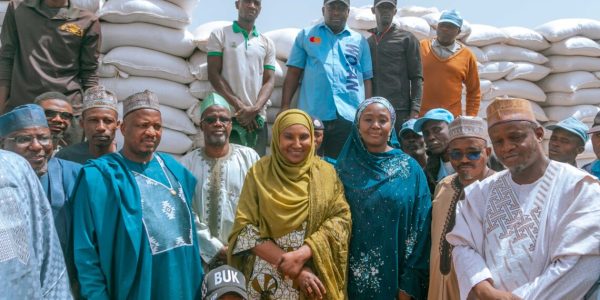
By Nura Garba and Hamza Usman Smiles, relief, and heartfelt prayers from beneficiaries filled the air as Women Farmers Advancement Network (WOFAN), in a strategic collaboration with the Centre for Dryland Agriculture (CDA) and the Faculty of Agriculture, Bayero University, Kano (BUK), launched the Skills Improvement to Boost Livelihood and Nurture Growth (SIBLING) Initiative. This ambitious intervention aims at repositioning agricultural education, strengthening livelihoods, and accelerating youth-driven agribusiness development. The initiative, which was formally unveiled on Tuesday by the Vice-Chancellor, Professor Haruna Musa, fsi, marked a significant milestone in WOFAN’s expanding footprint from rural communities into academic and research ecosystems, while reinforcing CDA’s mandate of translating research into real-world impact. Designed as a two-year pilot programme, SIBLING seeks to strengthen agribusiness training, promote climate-smart agriculture, stimulate innovative student research, and encourage specialisation across key agribusiness value chains. Central to the programme is its livelihood component, which targets neighbouring communities and micro-agro marketers within and outside the university environment. As a first-line intervention under the SIBLING framework, WOFAN distributed 560 bags of rice to 2,617 identified beneficiaries, mainly junior, casual, and outsourced low-ranking staff, prioritising women between the ages of 18 and 35 under its ICON2 initiative. The gesture was aimed at supporting small businesses, easing household food pressure, and reinforcing economic resilience, particularly ahead of the Ramadan season. Declaring the initiative open, the Vice-Chancellor of Bayero University, Kano, Professor Haruna Musa, described SIBLING as a transformative programme for the university community. He said the initiative directly addresses the long-standing gap between theory and practice in agricultural education. “Today marks the beginning of a transformative journey for our students and junior staff,” the Vice-Chancellor said. “This partnership equips our graduates with hands-on skills, improves employability, and makes agribusiness more attractive as a dignified and profitable vocation.” He disclosed that facilities commissioned under the project include rice milling and processing units, briquette-making machines for converting rice husks into fuel, compost production units, and fisheries training sections. These innovations, he said, would promote value addition, youth participation, and sustainable agriculture. Professor Musa commended WOFAN for providing equipment, inputs, and technical expertise, describing the collaboration with CDA as a model for effective university development and organisation partnerships with measurable social impact. In her remarks, the WOFAN Group Executive Board Chair and United Nations POLAC Peace Ambassador, Dr Salamatu Garba, said SIBLING represents a deliberate scaling of WOFAN’s ICON2 project beyond rural communities into centres of learning, innovation, and research. According to her, the initiative is built on a dual focus: empowering students through entrepreneurship-driven agricultural training and strengthening livelihoods among vulnerable groups. “Our students study agriculture, but many lack entrepreneurial exposure. We want to change that,” she said. “Young people between 18 and 35 are the backbone of the economy, and they must be prioritised if agriculture is to become a tool for wealth creation.” She explained that SIBLING would promote climate-smart agriculture, compost and biochar production, briquette making, rainwater harvesting, and circular-economy practices. The programme, she added, would also deploy climate information services, decision-support tools, and artificial intelligence applications to guide precision farming and improve soil management. “At WOFAN, we only take tested and proven innovations to farmers. The time has come to transform agriculture sustainably,” Dr Garba said. Earlier, the Chairman of the Local Organising Committee and Chairman of the Technical Board of Advisers for the WOFAN ICON2 Project, Professor Sani Miko, described the launch as a historic milestone for the university. “In a rapidly changing economy, the gap between skills and market demand determines whether people thrive or struggle,” he said, describing SIBLING as a strategic investment in human capital aligned with the Mastercard Foundation’s vision of creating over 10 million dignified jobs in Nigeria by 2030. On his part, the Director of the Centre for Dryland Agriculture, Professor Sanusi Muhammad Gaya, said the initiative reflects a deepened partnership between WOFAN and CDA rooted in shared vision and collective responsibility. “Our goal is not to train job seekers, but to nurture innovators and entrepreneurs who will strengthen food systems and drive sustainable economic growth,” he said, adding that the rice distribution underscores the partners’ commitment to inclusivity and compassion. The Dean of the Faculty of Agriculture, Professor Aminu Sulaiman, said the initiative aligns with the faculty’s goal of producing job creators rather than job seekers. He noted that students would receive end-to-end practical exposure across the rice, maize, and groundnut value chains from production to processing, packaging, and marketing. “These facilities are not just machines; they are platforms for enterprise development,” he said. Also speaking, the Chairman of the Non-Academic Staff Union (NASU), BUK branch, Comrade Abdullahi Nasiru Abdulrafiu, expressed appreciation to WOFAN, noting that nearly 90 per cent of the beneficiaries were NASU members.   Goodwill messages were presented by the former Vice-Chancellor, Aliko Dangote University of Science and Technology, Professor Shehu Alhji Musa, the immediate past Director of CDA, Professor Jibrin Mohammed Jibrin and NASU-BUK Chairman, Comrade Abdullahi Nasiru Abdulrafiu. According to many beneficiaries, this intervention came at a critical moment in their lives. “This support came at the right time, especially with Ramadan approaching,” said Zainab Umar, a junior staff member. “It has reduced the burden on my family in ways words can’t explain.” Aisha Ismaila, a cleaner with one of the outsourced companies, admitted she was initially sceptical. “I thought it was just talk,” she said. “But when we heard Dr Salamatu Garba speak during the launch and we then received the rice, I realised this empowerment is real. This is help we can feel.” A group of five female junior staff members of the Non-Academic Staff Union (NASU) described the distribution as a lifeline, noting that it would significantly bridge food gaps in their households during the fasting period. From neighbouring communities, Saratu Abubakar and Umma Sani could not hide their joy. “We may not have big words,” they said, “but may Allah continue to bless Dr Salamatu Garba for remembering people like us”. The SIBLING launch ceremony drew university management, academic and non-academic staff,…
WOFAN Rewards Loyalty, Appoints Dayyab Umar to Lead Communication Drive

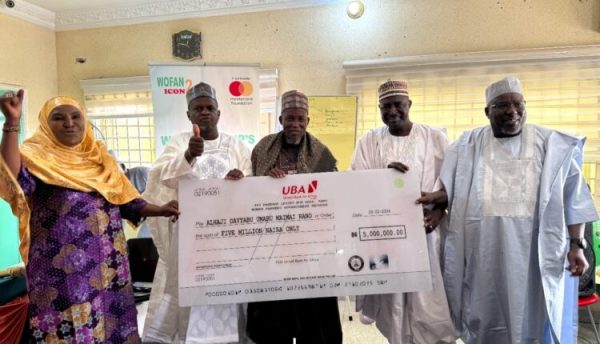
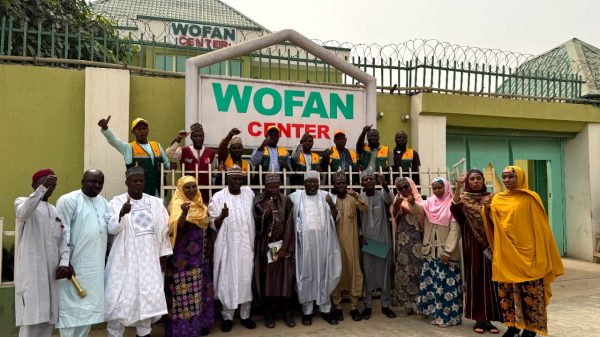
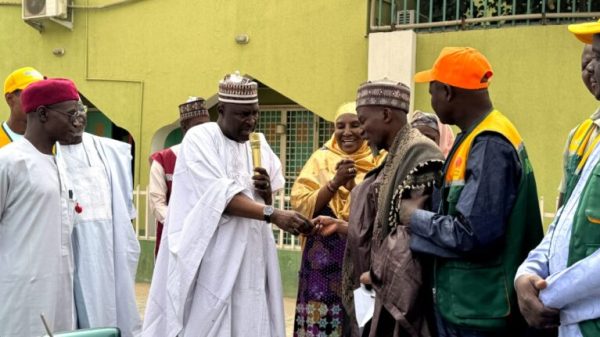
The Women Farmers Advancement Network (WOFAN) has appointed former Director of News at Radio Kano, Dayyab Umar Mai Mai Rano, as its Volunteer Consultant on Communications and Special Duties, marking a new chapter in his career following his retirement from public broadcasting. Dayyab, who spent more than two decades in the media industry, is widely known for his distinguished broadcasting career and his role as a Friday mosque imam in Rano. His appointment was approved by WOFAN’s leadership and governing board in recognition of his 26 years of consistent support in strengthening the organisation’s communication efforts and public image since 2001. At a brief ceremony held on Friday, February 20, 2026, to formally receive him into the new role, the organisation announced start-up support to help him establish a personal office and also presented him with a vehicle to facilitate his official responsibilities, according to SOLACEBASE.‎‎Leadership Praises His Contributions‎Speaking at the event, WOFAN Executive Chair and Peace Ambassador of the United Nations POLAC, Salamatu Garba, described Dayyab as a seasoned professional who has played a vital role in strengthening the organisation’s engagement with the public. She explained that he would serve on a volunteer basis under a performance-based remuneration structure for an initial two-year term, focusing on strengthening communication strategies and expanding the impact of WOFAN’s programmes within communities.‎Chairman of the Technical Advisory Committee of WOFAN ICON 2, Sani Miko, commended Dayyab’s years of dedication, noting that the organisation’s thoughtful transition plan for him reflects its foresight and commitment to supporting long-standing partners.‎Board member Muhamud Daneji said he first came to know Dayyab through his voice on Radio Kano, where he consistently demonstrated professionalism and adherence to journalistic ethics.‎Similarly, former Head of the Department of Agriculture at Bayero University Kano, Muhammad Auwal Hussain, attributed Dayyab’s achievements to dedication, integrity, and strong moral values.‎‎Expression of Gratitude‎In his acceptance remarks, Dayyab expressed deep appreciation to Salamatu Garba, whom he credited with playing a significant role in his academic and professional growth.‎He said her support enabled him to obtain both his first and master’s degrees, and that he is currently pursuing a PhD, pledging to use his new role to further strengthen WOFAN’s communication capacity and community outreach.

From Imam And Broadcaster To Development Advocate: Dayyab Umar’s New Mission At WOFAN

The Women Farmers Advancement Network (WOFAN) has appointed former Director of News at Radio Kano, Dayyab Umar Mai Mai Rano, as its Volunteer Consultant on Communications and Special Duties, marking a new chapter in his career following his retirement from public broadcasting. ‎Dayyab, who spent more than two decades in the media industry, is widely known for his distinguished broadcasting career and his role as a Friday mosque imam in Rano. His appointment was approved by WOFAN’s leadership and governing board in recognition of his 26 years of consistent support in strengthening the organisation’s communication efforts and public image since 2001. ‎At a brief ceremony held on Friday, February 20, 2026, to formally receive him into the new role, the organisation announced start-up support to help him establish a personal office and also presented him with a vehicle to facilitate his official responsibilities, according to SOLACEBASE.‎‎Leadership Praises His Contributions‎Speaking at the event, WOFAN Executive Chair and Peace Ambassador of the United Nations POLAC, Salamatu Garba, described Dayyab as a seasoned professional who has played a vital role in strengthening the organisation’s engagement with the public. She explained that he would serve on a volunteer basis under a performance-based remuneration structure for an initial two-year term, focusing on strengthening communication strategies and expanding the impact of WOFAN’s programmes within communities.‎‎Chairman of the Technical Advisory Committee of WOFAN ICON 2, Sani Miko, commended Dayyab’s years of dedication, noting that the organisation’s thoughtful transition plan for him reflects its foresight and commitment to supporting long-standing partners.‎‎Board member Muhamud Daneji said he first came to know Dayyab through his voice on Radio Kano, where he consistently demonstrated professionalism and adherence to journalistic ethics.‎‎Similarly, former Head of the Department of Agriculture at Bayero University Kano, Muhammad Auwal Hussain, attributed Dayyab’s achievements to dedication, integrity, and strong moral values.‎‎Expression of Gratitude‎‎In his acceptance remarks, Dayyab expressed deep appreciation to Salamatu Garba, whom he credited with playing a significant role in his academic and professional growth.‎‎He said her support enabled him to obtain both his first and master’s degrees, and that he is currently pursuing a PhD, pledging to use his new role to further strengthen WOFAN’s communication capacity and community outreach.

WOFAN engages retired broadcaster Dayyab Mai Mai Rano, supports continuity in service

An international non-for profit organization, the Women Farmers Advancement Network (WOFAN) has appointed Mallam Dayyab Umar Mai Mai Rano as its Communication and Special Duties( volunteer)  Consultant, marking the beginning of a new chapter in his career following his retirement from Kano State Radio Corporation, Radio Kano, after putting in over two decades of service in the broadcasting industry. SolaceBase reports that the appointment, approved by WOFAN’s Management and Board, comes after Dayyab’s 26 years of dedicated and continuous service in supporting the organisation’s communication efforts and enhancing its visibility across numerous programs and events since 2001 to date. At a brief ceremony held on Friday, 20th February 2026, to mark his assumption of duty, WOFAN announced a startup grant to enable him establish a personal office that will support his new responsibilities. In addition, the organization presented him with a car to facilitate his official engagements. Speaking at the event, WOFAN Group Executive Board chair and United Nations POLAC peace ambassador, Dr Salamatu Garba, described Mallam Dayyab as a committed and experienced professional whose contributions over the years have significantly strengthened the organisation’s outreach and public engagement. “Under the new arrangement, he will serve on a volunteer, pay-as-you-work basis for an initial period of two years. His role will focus on boosting WOFAN’s visibility, supporting communication strategies, and assisting in activities involving Dattawan WOFAN and the Group Executive Board Chair.” She expressed confidence that his wealth of experience will continue to add value to WOFAN’s programs and help amplify the impact of its initiatives across communities. She also urged other journalists to emulate Dayyab’s exemplary conduct and professionalism. In his remarks, the Chairman of the Technical Board of Advisers for the WOFAN ICON 2 Project, Professor Sani Miko, commended Dayyab Maimai Rano for his unwavering dedication and selfless service to WOFAN over the years. He also expressed deep appreciation to Dr Salamatu Garba for her humanitarian efforts, noting that her passion for helping others remains exceptional. “Whenever I speak about good people I know, the first person that comes to mind is Hajiya. She is a remarkable woman. While retirement is often a time of celebration in many countries, the situation is quite different in Nigeria, where many civil servants fear life after retirement. However, with the dimension taken by WOFAN,  Dayyab has been prepared for retirement well in advance, which demonstrates  WOFAN’S  foresight and compassion in building its personnel growth and organizational stability” We cannot thank you enough for all the good you have done for us,” he said. Also speaking at the event, a Board Member of WOFAN, Professor Muhamud Daneji, praised Dr Garba for her continued support to Dayyab Rano and described him as a humble and humane individual. “I first knew Dayyab through his voice on Radio Kano, particularly in the popular program Taskar Labarai, but I later met him in person at a WOFAN function. He is a thorough professional who ensures his reports are well verified before going on air. As he assumes his new role in WOFAN, I wish him continued success,” Daneji said. In a similar vein, the immediate past Dean of the Faculty of Agriculture at Bayero University Kano, Professor Muhammad Auwal Hussain, noted that Dayyab’s success over the past 26 years with WOFAN was driven by his strong sense of responsibility, dedication, and fear of God. He advised him to judiciously utilise the grant provided and invest it wisely for a sustainable future. While receiving his letter of appointment, Mallam Dayyab Maimai Rano expressed profound gratitude to Dr. Salamatu Garba, whom he described as a mother figure in his life. He recounted her immense support throughout his personal and professional journey. “When I first met Hajiya, I only had a diploma. With her support, I obtained my degree, a master’s degree, and I am currently pursuing my PhD,” he said. “If I begin to list everything Hajiya has done for me over the years, time will not permit. I truly consider her my mother because she has played that role in my life.” He concluded with prayers for her continued wellbeing. “May God grant her good health, long life, and reward her with Jannatul Firdaus.”

BUK VC inaugurates advisory board to drive dryland agriculture, food security

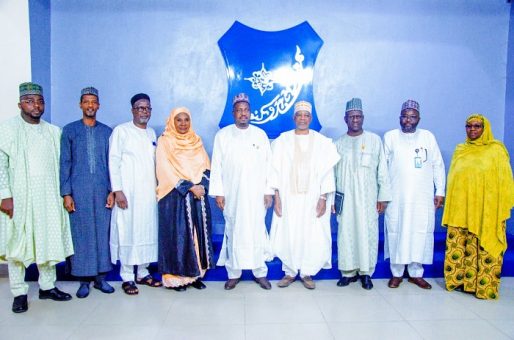
The Vice-Chancellor of Bayero University, Kano (BUK) has inaugurated the Sectoral Industry Advisory Board (SIAB) of the Centre for Dryland Agriculture (CDA), appointing Hajiya Dr Salamatu Garba, Chairperson of Women Farmers Advancement Network (WOFAN) International, as Chair of the Board to advance food security in Nigeria. The inauguration is aimed at strengthening industry collaboration and enhancing the Centre’s role in driving sustainable agricultural development and food security in the country. In his remarks, the Vice-Chancellor said the calibre of professionals appointed to the Board would significantly boost the capacity of the CDA to deliver on its mandate. He prayed for divine guidance for members as they undertake what he described as a demanding and strategic responsibility. He also congratulated WOFAN, the Centre for Dryland Agriculture and Bayero University, Kano on the successful launch of the SIBLING Project.  The Vice-Chancellor expressed appreciation for the distribution of rice palliatives to 2,617 junior staff members of the university, describing the gesture as timely and impactful, noting that the institution was deeply grateful for the support. Earlier, the Director of the Centre for Dryland Agriculture, Professor Sanusi Gaya Mohammed, formally introduced members of the Board and disclosed that the SIAB had been reconstituted. According to him, the 12-member Board comprises seven external and five internal members, carefully selected to provide industry-driven guidance and strategic oversight for the Centre. Speaking on behalf of the Board, the Chairperson, Dr Salamatu Garba, said members were honoured to be entrusted with such an important responsibility. She pledged the Board’s commitment to giving its best in support of the Centre’s mandate. Describing the assignment as both a privilege and a challenge, she said serving in a highly reputable institution with abundant talent demands teamwork and mutual support. “As the only female on the Board, the responsibility is even greater, but I seek the cooperation and guidance of my colleagues to help move this University to greater heights beyond our imagination,” she said. Other external members of the Board include Alhaji Nasiru Wada (Magajin Garin Kano) and Managing Director of Esoterra Investment Ltd; Alhaji Ali Safiyanu Madugu, mni, Managing Director/Chief Executive Officer of Dala Foods Nigeria Limited; Mohammed Salasi Kibiya, Country Representative of IFDC; Alhaji Yusuf Ado Kibiya, Managing Director/Chief Executive Officer of Chimande Nigeria Limited; Dr Donald Madukwe of OCP; and Abubakar Garba Ibrahim of SILVEX International Limited. Internal members are the Director of CDA, Professor Sanusi Gaya Mohammed; the immediate past Director, Professor Jibrin Mohammed Jibrin; the Deputy Director (Training), Professor Murtala Mohammad Badamasi; the Deputy Director (Research), Dr Mustapha Mohammed Bello; and the Deputy Director (Outreach and Publication), Dr Amina Lawan Mustapha. Following the inauguration, the Board held its maiden meeting at the Centre for Dryland Agriculture, where members deliberated on key issues, including strategies for sustaining the Centre beyond the expiration of World Bank funding. The meeting was chaired by Hajiya Dr Salamatu Garba.

BUK inaugurates Salamatu Garba as Chair, CDA Advisory Board

The Vice-Chancellor of Bayero University, Kano (BUK), Professor Haruna Musa, on Wednesday inaugurated the Sectoral Industry Advisory Board (SIAB) of the Centre for Dryland Agriculture (CDA), with WOFAN International Group Chairperson, Dr Salamatu Garba, as  Chair of the Board. Speaking during the ceremony, the Vice-Chancellor said the calibre of professionals appointed to the Board would significantly strengthen the Centre’s capacity to advance food security and agricultural innovation in Nigeria. Professor Musa described the assignment as both demanding and strategic, praying for divine guidance for members as they undertake the responsibility. The Vice-Chancellor also congratulated WOFAN, the CDA and the University community on the successful launch of the SIBLING Project. He expressed appreciation for the distribution of rice palliatives to 2,617 junior staff members of the University, describing the gesture as timely and impactful. According to him, the University is deeply grateful for the support extended to its workforce. Earlier, the Director, Centre for Dryland Agriculture, Professor Sanusi Gaya Mohammed, introduced members of the reconstituted Board. He explained that the SIAB comprises 12 members—seven external and five internal—carefully selected to provide industry-driven guidance and strategic oversight for the Centre’s programmes and long-term sustainability. In her remarks on behalf of the Board, Dr Salamatu Garba said members were honoured to be entrusted with such an important assignment. She pledged the Board’s commitment to supporting the Centre’s mandate and ensuring it achieves greater impact. Describing the role as both a privilege and a challenge, she noted that serving in a highly reputable institution with abundant talent requires teamwork and mutual support. “As the only female on the Board, the responsibility is even greater, but I seek the cooperation and guidance of my colleagues to help move this University to greater heights beyond our imagination,” she said. SolaceBase reports that other external members of the Board include Alhaji Nasiru Wada, Managing Director of Esoterra Investment Ltd and Magajin Garin Kano; Alhaji Ali Safiyanu Madugu, mni, Managing Director/Chief Executive Officer of Dala Foods Nigeria Limited; Mohammed Salasi Kibiya, Country Representative of IFDC; Alhaji Yusuf Ado Kibiya, Managing Director/Chief Executive Officer of Chimande Nigeria Limited; Dr Donald Madukwe of OCP; and Abubakar Garba Ibrahim of SILVEX International Limited. Internal members are Professor Sanusi Gaya Mohammed, Director of CDA; Professor Jibrin Mohammed Jibrin, immediate past Director of CDA; Professor Murtala Mohammad Badamasi, Deputy Director (Training); Dr Mustapha Mohammed Bello, Deputy Director (Research); and Dr Amina Lawan Mustapha, Deputy Director (Outreach and Publication). Following the inauguration, the Board held its maiden meeting at the Centre, where members deliberated on key issues, including strategies for sustaining the Centre’s activities beyond the expiration of World Bank funding. The meeting was chaired by the Board Chairperson, Dr Salamatu Garba.

WOFAN partners BUK to train students, empower women in agribusiness skills

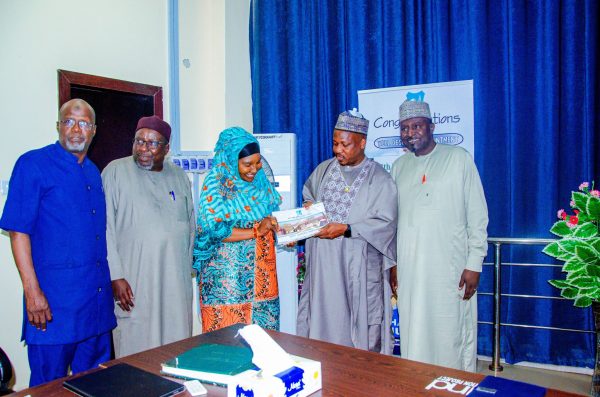
The Women Farmers Advancement Network (WOFAN), in collaboration with the Centre for Dryland Agriculture (CDA) and the Faculty of Agriculture, Bayero University, Kano (BUK), have entered into a partnership to train 300 agriculture students annually in agribusiness, value addition, processing, and production under the SIBLING Project. The partnership was disclosed on Wednesday during a courtesy visit to the Vice-Chancellor of Bayero University, Kano, Professor Haruna Musa, by a joint delegation from WOFAN, CDA, and the Faculty of Agriculture. The delegation was led by the Executive Director of WOFAN, Dr Salamatu Garba; the Director of CDA, Professor Sanusi Gaya Mohammed; and the Dean of the Faculty of Agriculture, Professor Muhammad Auwal Hussain. SolaceBase reports that the initiative targets 300- and 400-level students of the Faculty of Agriculture and is designed to provide them with hands-on experience across agricultural value chains, as well as entrepreneurship training, making them professionally ready to plunge into the agribusiness world. Speaking during the visit, Dr Salamatu Garba explained that the initiative aims to change the narrative around women and youth participation in agriculture by equipping them with practical skills, access to land, farm inputs, financial inclusion and guaranteed markets. She revealed plans to introduce processing and packaging of agricultural produce, including a proposed “CDA/WOFAN Rice” brand to be marketed within the university community. She further disclosed that the initiative which is tagged “ skills improvement to boost livelihood & nuture growth ( SIBLING)  would prioritize women participants who would be allocated plots from the designated 25 hectares farmland, while WOFAN would support them with relevant portable equipment and tools for land preparation as well as subsidized inputs, and thereafter link them to markets for immediate purchase of harvested produce. According to her, outstanding students would also receive start-up support, including equipment, storage facilities, and small grants and opportunities to link them to viable agriculture-related businesses. On his part, the Chairman of the WOFAN Board, Professor Sani Miko, expressed appreciation to the Vice-Chancellor for supporting what he described as a credible and sustainable partnership. He noted that the SIBLING Project is driven by research outputs aimed at scaling up and transforming livelihoods through community and rural-based agriculture, transforming into viable commercial agribusiness ventures. Receiving the delegation, Professor Haruna Musa,  the vice-chancellor of Bayero University, commended the initiative, describing it as a strategic intervention for youth and women empowerment that will meaningfully encourage more youths, women and even persons with disability to value agriculture as the backbone of the economic growth of any nation. He noted and commended the fact that out of the 300 proposed trainees, 180 would be women, and stressed the need to prioritise the less privileged and host communities, adding that the project would strengthen town-and-gown relations and promote inclusive development. In his remarks, the Director of CDA, Professor Sanusi Gaya Mohammed, highlighted the long-standing collaboration between CDA and WOFAN, noting that the partnership has recently expanded to include access to a national storage facility secured through the National Storage Productivity Institute of Nigeria. He added that WOFAN has also committed to providing processing machinery to support practical training for students. He further disclosed that CDA has allocated a two-hectare demonstration plot for the project, while the Faculty of Agriculture has provided 25 hectares of land for large-scale production and training activities. Also speaking, the Dean of the Faculty of Agriculture, Professor Muhammad Auwal Hussain, expressed optimism that the partnership would yield positive results. He said the initiative would empower and equip many students with relevant skills and thanked WOFAN for its unwavering support.

CDA, WOFAN Partner to Train 300 Agric Students Annually, Empower Women in Agribusiness

The Centre for Dryland Agriculture (CDA), Bayero University, Kano, in collaboration with the Women Farmers Advancement Network (WOFAN) and the Faculty of Agriculture, has concluded plans to train 300 Agriculture students annually in agribusiness, value addition, processing, and production under the SIBLING Project. The initiative, which targets 300–400 level students of the Faculty of Agriculture, was disclosed during a courtesy visit to the Vice-Chancellor, Professor Haruna Musa, fsi, by a joint delegation from WOFAN, CDA and the Faculty of Agriculture, led respectively by WOFAN’s Executive Director, Dr Salamatu Garba, the CDA Director, Professor Sanusi Gaya Mohammed, and the Dean of Agriculture, Professor Muhammad Auwal Hussain. Under the project, CDA has allocated a two-hectare demonstration plot, while the Faculty of Agriculture has provided 25 hectares for large-scale production and training activities. The programme also includes practical exposure to agricultural value chains and entrepreneurship. Receiving the delegation, the Vice-Chancellor commended the partnership, describing it as a strategic intervention for youth and women empowerment, particularly noting that 180 out of the 300 trainees are women. He emphasized the need to prioritise wives of junior staff, the less privileged, and surrounding communities, adding that the initiative would strengthen town-and-gown relations and promote inclusive development. Earlier, Professor Sanusi Gaya Mohammed highlighted the long-standing collaboration between CDA and WOFAN, noting that the partnership had recently expanded to include access to a national storage facility secured through the National Storage Productivity Institute of Nigeria. He added that WOFAN has also committed to providing processing machinery to support hands-on training for students. In her remarks, Dr Salamatu Garba said the initiative was designed to change the narrative of women and youth participation in agriculture through practical skills, access to land, inputs, and guaranteed markets. She revealed plans to introduce processing and packaging of agricultural produce, including a proposed “CDA/WOFAN Rice” brand for sale within the university community. She explained that women participants would be allocated plots from the designated farmland, with WOFAN providing land preparation, inputs at subsidised rates, and immediate purchase of harvested produce. Outstanding students, she added, would receive start-up support, including equipment, storage facilities, and small grants. The Chairman of the WOFAN Board, Professor Sani Miko, thanked the Vice-Chancellor for supporting what he described as a credible and sustainable partnership, noting that the SIBLING initiative is driven by research outputs aimed at transforming livelihoods through commercial agriculture.

Salamatu-WOFAN on Carbon Financing: Turning adversity into prosperity-Prof. M.K. Othman

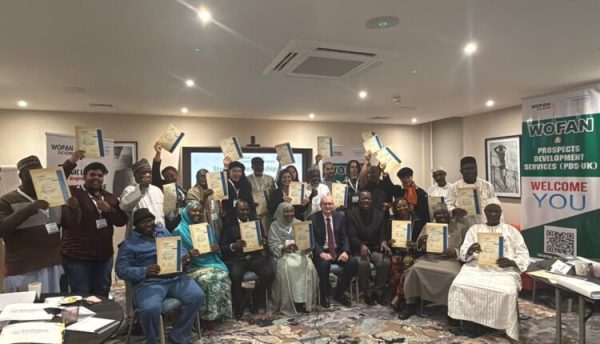
This is a follow-up to my article published on August 20th, 2025, with a slightly different title, “Salamatu-WOFAN on Climate Change: Turning Adversity into Prosperity,” featured in this column. WOFAN, under the ICON 2 project funded by the Mastercard Foundation, organized a high-level training workshop for selected key stakeholders at the Hyatt Place Hotel on Whitechapel Road, East London, United Kingdom, from 18th to 21st November 2025. The training was conducted by Prospects Development Services, a well-regarded UK-based capacity-building and educational consultancy firm, proudly owned by Nigerian Dr. Bayode T. Hambolu. The stakeholders from the private and public sectors in Nigeria, China, the UK, and India included academia- and university-based experts, legal and financial specialists, agriculturalists, interns, and a leading media expert. The theme of the training was “Strategic Leadership in Regenerative Agriculture and Positioning for Carbon Credit and Financing.” The team of stakeholders was carefully chosen to address the complex needs of the carbon market and financing. The researchers are responsible for providing the essential technologies (smart agricultural practices) to reduce carbon emissions, combat the effects of climate change, and enhance resilience and adaptation. Legal experts will develop the legal and policy framework needed for the market to succeed, while financial experts will create methods for buying and selling carbon credits. Media specialists will promote awareness and educate the public about the availability of the carbon market and its potential to help farmers earn extra income as bonuses. They will also aim to improve farmers’ productivity and profitability by adopting smart agricultural practices. The interns are to study the complexity of the carbon market to become experts and facilitators of carbon trade, provide the necessary support to the public, and become future experts in the carbon market. What is the carbon market and how does it work? Carbon market is a hybrid marketing system – virtual and physical; carbon markets are trading systems in which carbon credits are sold and bought. Companies or individuals can use carbon markets to offset their greenhouse gas emissions by purchasing carbon credits from entities that reduce or remove greenhouse gas emissions. Farmers can reduce or eliminate greenhouse gas emissions by adopting climate-smart agricultural (CSA) practices, which can also increase their productivity and profit margins. Adoption of CSA practices can generate carbon offsets through carbon dioxide sequestration, resulting in carbon credits that are valued in US dollars. One tradable carbon credit equals one tonne of carbon dioxide or the equivalent amount of a different greenhouse gas reduced, sequestered, or avoided. When a credit is used to reduce, sequester, or avoid emissions, it becomes an offset and is no longer tradable. Climate change is real, and its effects have no borders, just as wind naturally blows in all directions. However, the leading causes of climate change are greenhouse gas emissions and poor agricultural practices, which can be controlled or regulated. Developed countries are the major culprits in greenhouse gas emissions, driven by their heavy industries and technological advancement. For these countries to be considered “developed countries,” they cannot forgo their activities to lose their status and are thus ready to pay for carbon credits. In contrast, citizens of developing nations, who remain customers of the high technologies produced by developed countries, may not even benefit from reductions in carbon footprints, as they rarely engage in practices that mitigate greenhouse gas emissions. It is based on this premise that WOFAN, under the ICON 2 project with financial support from the MasterCard Foundation, organized two high-level workshops in France and the United Kingdom, and key stakeholders’ interaction in Nigeria, from July to November 2025. The UK workshop focused on strengthening Participants’ understanding of carbon markets, climate-smart agriculture (CSA), and how WOFAN can position itself to generate certified carbon credits using international best practice and the emerging Nigerian Carbon Market framework. At the workshop, stakeholders identified WOFAN to. be a champion and advocate of climate change resilience and adaptation in Nigeria, and thus, its strengths were identified: an extensive network of large farmers across many states, a functional extension system, strong digital tools, extensive experience, and access to improved or climate-smart agricultural technologies such as regenerative agriculture, compost, and tree planting. Similarly, additional gaps requiring attention for WOFAN to succeed in empowering farmers to be involved in carbon market were also identified: lack of baseline carbon data (such as soil carbon, methane profile, water use, and farming practices), enforcement of farmer compliance, negotiation skills in the carbon market to protect farmers’ interests when working with developers, verifiers, and buyers of carbon credits, and other technical skill gaps. A few case studies of efforts and success stories made by organizations and countries across the globe in establishing carbon markets and financing were discussed and analyzed. The Green Hydrogen – DRI-Steel Project, Stegra, Sweden, was among the case studies. The project objective was to develop a renewable, near-zero-emissions iron and steel plant. The project started in 2022, was validated in 2023, was in the developmental phase from 2023 to 2024, and is currently being executed through 2026. The financing model comprises a 4.2 billion Euro loan, 2.1 billion Euro in equity, and 350 million Euro in public grants. They will produce 2.5 million metric tons of steel per year, create over 5,000 jobs, and achieve a 95% reduction in carbon emissions. Another case study was “Valuing the forest,” a global capital coalition project. The goal is to provide a worldwide framework to measure, value, and report the natural carbon capital within the forestry sector, enabling the creation of natural capital as an asset class and nature-linked financial instruments. The stakeholders involved in this project included 18 forestry companies covering 22 million hectares, as well as small and medium-sized enterprises. A financing model comprises a grant from the Global Secretariat of the Taskforce for Nature-Related Financial Disclosures (TNFD), contributions from each participating forest owner through the International Sustainable Forestry Coalition, and other sources. Where are we in Nigeria? Nigeria, with over 30 million hectares of forested area, can make a case…

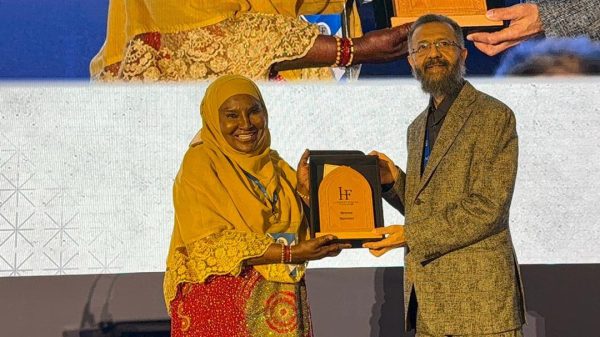
WOFAN joins global networks in driving strategic leadership in Regenerative Agriculture, positioning for Carbon Revenue

Women Farmers Advancement Network (WOFAN) has joined a global network in driving Strategic Leadership in Regenerative Agriculture and positioning for Carbon Revenue at a four-day training in London. The training attended by WOFAN board members, strategic partners that include a global network of CSOs,  academia, policy makers, national assembly members, private sectors, media and entrepreneurs, focused on strengthening capacity to drive regenerative agriculture, climate-smart innovation, and carbon market readiness. Also on the sidelines of the training, participants took part in the London Halal Forum with WOFAN having a pavilion at the venue, with  Director of Strategies, Innovation and Sustainability ( SIS), Hajia Maimuna Lawal, was among the panellists, on a discussion that centred on ‘’Women, Leadership and Cultural Diplomacy, The Art of Driving Inclusive Growth.’’ Similarly, the London Halal Forum honoured WOFAN, considering its activities targeted towards human development, especially support to rural farmers, women, youth and people with disabilities and the award was received by the WOFAN-ICON2 Project Country Director, Dr Salamatu Garba. SolaceBase reports that throughout the four days, participants engaged in deep discussions, hands-on group work, and scenario-based exercises that clarified how WOFAN and relevant stakeholders can position themselves as national trailblazer in climate action, food security, and rural transformation. Ford poised that some of the consideration in adopting this initiative of regenerative agriculture are evidence based practices design, whereby one needs to select practices with proven results, carbon focused energy, this addresses baseline measurement for emission, economic transformation which translate to shifting farmers from raw output to value added product, governance and accountability, which is all about building systems for monitoring, reporting and verification, so that soil carbon, water use, biodiversity and emissions can be tracked. In addition, he talked about scaling, which is the use of farmers cooperatives, digital tools, micro finance, and extension services to grow adoption rapidly that align with intervention with national food security and climate policies. Also, a multidisciplinary consultant and trainer, Prof. Abe Abrahami, dwells on Regenerative Agriculture, Possible Partnership, Opportunities and Way forward for Nigeria. Prof. Abrahami gave a comparison and study of Regenerative Agriculture development in Nigeria with Morocco, Egypt, Israel and Turkey Speaking at the end of the sessions, Country Director, WOFAN-ICON2 Project, Dr. Salamatu Garba said the training has increased the understanding of many of the participants on Regenerative Agriculture, Climate Change adaptation and Carbon Revenue, with the need to set baseline in commencing the process and creating awareness. ‘’With the intensive training we had, I am sure we would pick from most of the ideas postulated and look at what best suit our own environment for the betterment of our farmers, ‘’Garba said. ‘’Also part of our efforts is to look at how we are going to drive the awareness and sensitize stakeholders on Regenerative Agriculture, Climate Change Adaptation and the Carbon Revenue.’’ ‘’Our vision and values at WOFAN are in line with what the Halal objectives are with what was read out  during the London Hala Forum we attended yesterday, when you look at organic farming, if you put the two side by side, both Halal and organic farming, that has to do with standardization, which is what we stand for, henceforth, WOFAN will be pro Halal as well as pro organic farming to save the environment, that will be our slogan.’’ ‘’Therefore, we have decided we have some very important steps to take and then continue to talk to our own facilitators, consultants and enablers on how we need to go about the process.’’ Dr Salamatu Garba, a UN Peace Ambassador, used the occasion to appreciate the participation of the professors from academia, the National Assembly members, policy makers, media team for their commitment to the training, the training coordinator, Prospects Development Services and the facilitators who made understanding of the sessions seamless. Also speaking, the Dean, Faculty of Agriculture, Bayero University Kano, Prof. Muhammad Auwal Hussain, said the training has opened a new frontier, which will be thoroughly examined on how it can be scaled down to the benefit of farmers through agricultural extension workers. On his part, WOFAN Board Chairman, Prof Sani Miko, said the training, which is a follow-up to the sessions had in Paris, France, in July 2025, has created a strategy and plan to capture carbon, food security and influence policy makers on carbon reduction financing ‘’Some of the knowledge acquired at this training would be used to support the government in the policy formulation and to making the law that will guide Regenerative Agriculture, Climate Smart Agriculture and the issue of Carbon Revenue, ‘’Miko noted. On his part, an environmental expert and director of climate change, Kano State Ministry of Environment and Climate Change, Dr. Saleh Anka said the four-day engagement significantly strengthened WOFAN’s capacity to lead the transition to regenerative, climate-smart agriculture across Nigerian communities, build sustainable revenue streams through high-integrity carbon markets and enhance food security, water resilience, and climate readiness at community level. The participating countries include participants from India, Tunisia, Algeria, UK, Malaysia, Egypt and Nigeria. The training was organized by Prospects Development Services, UK and sponsored by WOFAN/ICON2 Project with the support of Master Card Foundation.