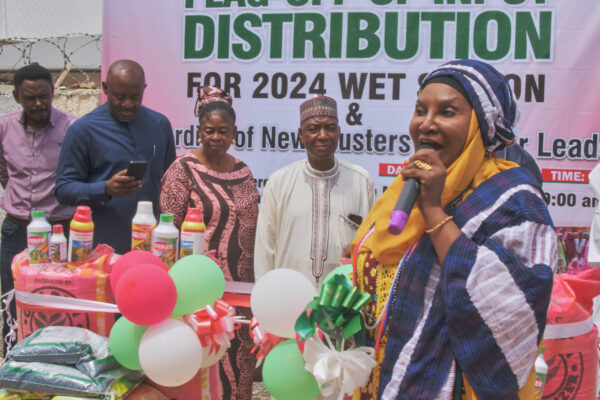
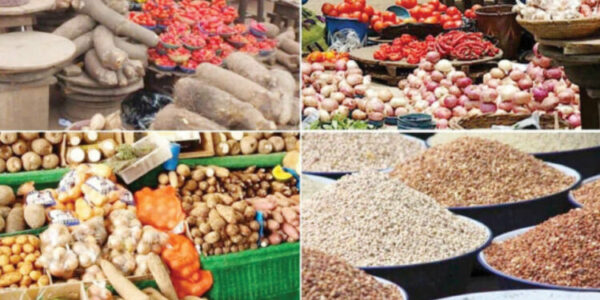
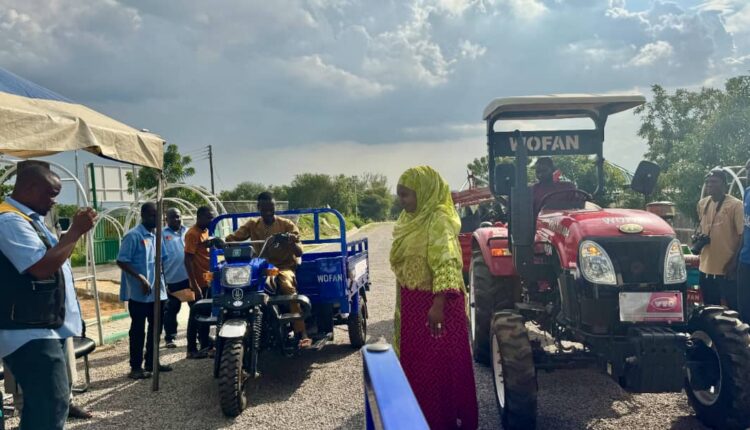
No fewer than 52,000 women and youth farmers have received agro inputs from the Women Farmers Advancement Network (WOFAN), in collaboration with Palm Valley Nigeria Limited (PVNL) for the 2024 wet season farming on Thursday in Lafia, Nasarawa State. The beneficiaries were drawn from Nasarawa, Benue and Kaduna States. The gesture, which was in collaboration with the Integrated Community-led Network of Hope (ICON2), Project, targeted 1,733 groups across the affected states. The items donated at the event, which also included the onboarding of 420 new cluster and peer leaders, were UREA, NPK Golden Fertiliser 20-10-10; Faro 67; Aflatoxin; Samaz 55 Maize; Pre and Post emergence Herbicides, among others in the three target states. The groups are expected to produce 1,733 hectares of rice and maize in the ongoing bid to ensure food sufficiency in the target states. Recall that WOFAN had partnered PVNL to implement its ICON2 project funded by the Mastercard Foundation, which is designed to provide decent and fulfilling job opportunities to 10 million youth farmers and processors between 18 and 35 years in the next five years through a sustainable agricultural growth and economic development in Nigeria. Speaking at the occasion, founder and executive director of WOFAN, Hajia Salamatu Garba said that the ICON2 project is a five years initiative aimed at strengthening agricultural enterprise value chains, generating employment opportunities for 675,000 youths and enhancing income for women and youth farmers and processors. She noted that the agro inputs being provided started with the initial flag off for 65,000 hectares in Nasarawa but in total it will reach a total of 1,733 hectares under the Palm Valley support to farmers in three states. “My advice to the farmers is to appreciate supports like this and make good use of them to increase their means of livelihood,” she said. Salamatu further stated that “ if any farmer uses these inputs properly, the farmer is going to get improved yields because we have provided all they need to have a successful wet season farming,” she said. On his part, the project manager and chief executive officer of Palm Valley Nigeria Limited, Ezekiel Jatau, urged the women to always prioritise their self-development and that of the children. He called on the husbands to always support their wives in any endeavours they find themselves in.
The Women Farmers Advancement Network in collaboration with Palm Valley Nigeria Limited, through the Integrated Community-led Network of Hope project, has empowered no fewer than 52,000 women and youth farmers resident in Nasarawa, Benue and Kaduna States with farming inputs to ensure food sufficiency in the three northern states of the country. Our correspondent reports that WOFAN had partnered PVNL to implement its ICON2 project funded by the Mastercard Foundation, which is designed to provide decent and fulfilling job opportunities to 10 million farmers and processors between the ages of 18 and 35 years in the next five years. The Founder and Executive Director of WOFAN, Salamatu Garba, made the disclosure at the flag-off of input distribution for the 2024 wet season and onboarding of 420 new clusters and peer leaders in Lafia on Thursday as part of its activities for the year. Garba explained that the ICON2 project was a five-year project aimed at strengthening agricultural enterprise value chains, generate employment opportunities for 675,000 youths and enhance income for women farmers and processors. The founder of WOFAN further disclosed that the association started with the initial flag-off of 65,000 hectares of land in Nasarawa State, adding that it aims to cultivate a total of 1,733 hectares of land with the support of PVNL in Nasarawa, Benue and Kaduna states. She listed the inputs being distributed to the project partners to include urea, NPK golden fertilizer 20-10-10; Faro 67; Aflatoxin; Samaz 55 Maize; pre and post-emergency herbicides, among others. “My advice to the farmers is to appreciate supports like this and make good use of them to increase their means of livelihood. If the farmers use these inputs properly, they would get improved yields because we have provided all they need to have a successful wet season farming,” Garba said. Also speaking at the event, the Project Manager and Chief Executive Officer of Palm Valley Nigeria Limited, Ezekiel Jatau, urged the women to prioritise their self development, while calling on the men to support them to grow beyond where the society had placed them. He further stated the commitment of the organisation to inclusivity, stating that they had included persons with disabilities and other marginalised groups in the country in their empowerment schemes. The Nasarawa State Commissioner for Agriculture, Umar Abubakar Dan’akano, called on the beneficiaries to utilise the inputs to achieve the best results, while commending WOFAN and PVNL for the empowerment programme. Dan’akano, who was represented by one of his political allies, Hudu Iliyasu, pledged the state government’s commitment to continue to give the needed support to all agriculturalists in order to ensure food sufficiency in the state.
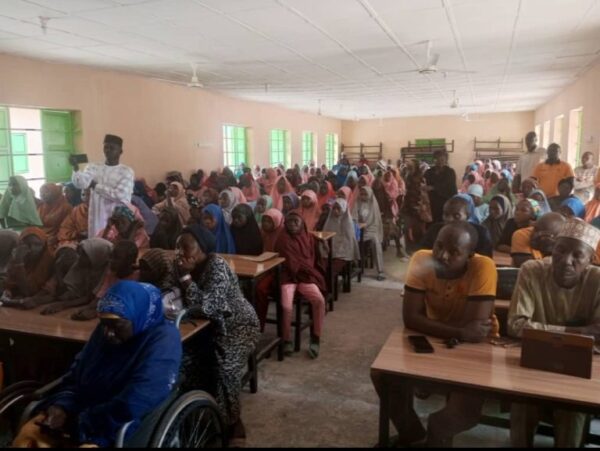
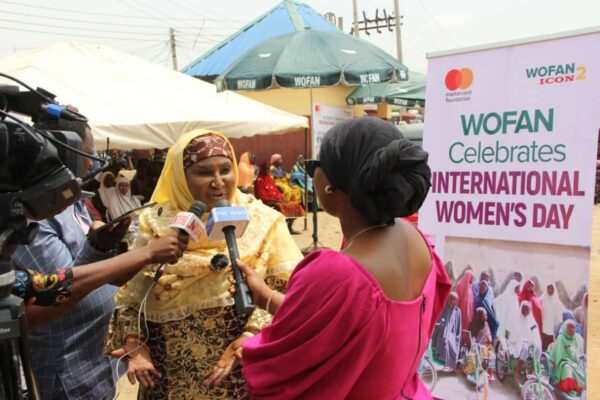
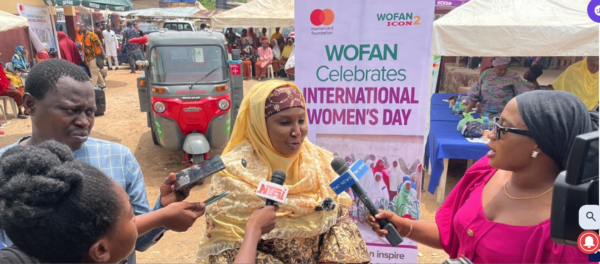
Amidst the celebrations of international women’s day, Malam Akilu Ishaq Abdulkarim, the program manager of the Bauchi State Agricultural Development Program (BSADP), urged persons living with disabilities in Bauchi State to embrace farming as a means of livelihood. Speaking at an event to commemorate International Women’s Day, organized by the Women Farmers Advancement Network (WOFAN) at the Special Education Center in Bauchi, Malam Akilu emphasized the potential for disabled individuals to thrive in farming with support from government and non-governmental organizations. Malam Akilu remarked that if persons living with disability are provide with interest-free loans and capacity-building opportunities, they can sustain themselves and also contribute significantly to society. He further highlighted the importance of ending discrimination against people with disabilities, suggesting that addressing their needs could help alleviate the issue of street begging. On his part, Shafi’u Haladu Babaji, the program manager of WOFAN ICON 2 Project in Bauchi State, emphasized the theme of this year’s International Women’s Day, “Inspire Inclusion. which in line with the theme, WOFAN is dedicated to promoting inclusivity by empowering people with special needs. He outlined WOFAN’s efforts, including the construction of facilities and plans to establish a skill acquisition center at the Special Education Center in Bauchi aimed to equip students with disabilities with practical skills for self-reliance. The village head of Yelwan MuAllayidi in Bauchi, Malam Garba Isah Ibrahim, lauded WOFAN’s initiatives, emphasizing the importance of bringing programs to the Special Education Center. Malam Garba opined that the initiative not only fosters a sense of belonging but also equips students with the confidence to overcome life’s challenges. Also, a lecturer with the Federal Polytechnic Bauchi Malam Aminu Mijinyawa has emphasized the indispensable contributions of women in the agricultural sector, citing that over 80% of women in farming communities across Nigeria rely on agriculture for sustenance, yet many struggle to escape poverty. Malam Aminu Mijinyawa stressed that Women are the backbone of agriculture, actively participating in every aspect of food production, underscoring the critical need for comprehensive support. He delivered these insights during a lecture at an event organized by the Women Farmers Advancement Network at the Special Education Center in Bauchi. Our agriculture correspondent, Muhammad Sani Mu’azu, caught up with Malam Aminu Mijinyawa for an exclusive interview to delve deeper into the importance of involving women and individuals with special needs in agriculture. Malam Aminu Mijinyawa, also shed light on the imperative to empower women and individuals with special needs to actively participate in agriculture, fostering enhanced productivity and sustainable food systems for Nigeria’s future.
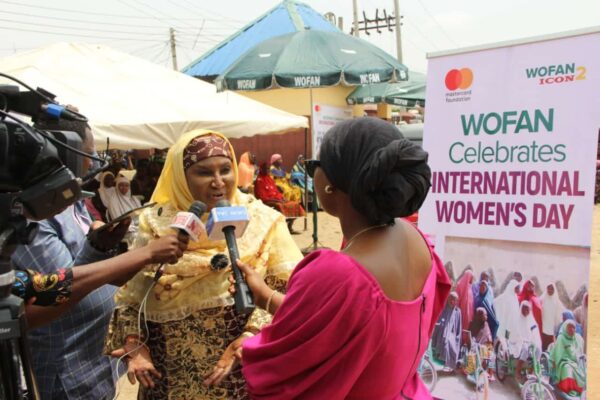
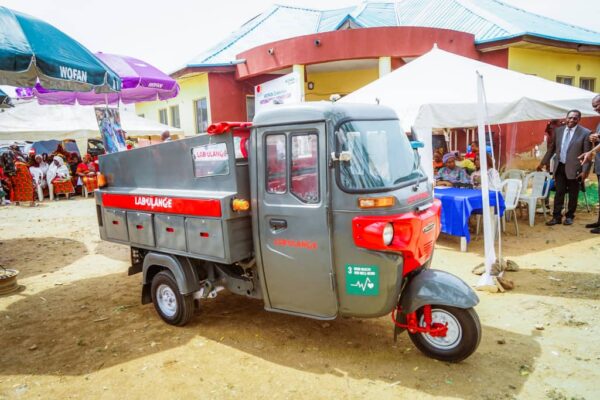
Women in Gwarimpa Village and environs in the Federal Capital Territory (FCT) could not contain their joy today as they celebrated the 2024 International Women’s Day (IWD) with the launch of an innovative portable ambulance to promote inclusive access to healthcare in underserved communities by WOFAN-ICON2 Project and some of the organisation’s partners. The portable ambulance, known as Labulance is an ambulance on three wheels (tricycle) which also serves as a mobile laboratory and a clinic on wheels. The Lanbulance, which is an invention of Sonivsage, a youth led WOFAN affiliate, is expected to impact maternal mortality positively as it has facilities for supporting pregnant women during emergencies. In addition to the Labulance, a Clinic-in-a-bag concept was also presented at the IWD to the women by Benson Cole and Associates, another WOFAN partner. The Clinic-in-a-bag is a small bag which contains equipment and tools for a portable clinic which can provide mobile or on the spot primary healthcare services to families. Together, the Labulance and the Clinic-in-a-bag, are WOFAN-ICON2’s livelihood improvement intervention in Gwarimpa, aimed at improving the quality of lives of the women who are farmers and agricultural produce marketers by extending primary healthcare and emergency service delivery to them, their families and communities. Speaking after seeing the demonstration of the Labulance and Clinic-in-a-bag, Zeenat Lamishi, one of the women who received care at the IWD event, expressed delight with the facilities available through the Lanbulance and Clinic-in-a-bag. “This morning, I didn’t feel well but I had to come to the celebration of women’s day because, as a leader of the WOFAN-ICON2 groups, I had to see the venue and make sure everything was in place. Then, I met the staff of the Clinic-in-a-bag to complain. They took my blood, ran some tests on the spot and told me I had malaria. They gave me an injection and some drugs, and I felt well enough to join the celebration. I am very happy with the services provided from the bag”, Lamishi averred. “And when I saw how the Labulance worked, I became even happier. With bag and the Labulance, I am confident that no child will die from malaria and no woman will die during childbirth again in our community. This is the best women’s day for us, and we are very grateful to WOFAN, all their partners and the Mastercard Foundation for bringing so much improvement to our lives in Gwarimpa,” she added. Speaking earlier, the Country Programme Director of the WOFAN-ICON2 Project and Founder of the Women Farmers Advancement Network (WOFAN), Hajia Salamatu Garba explained that the Clinic-in-a-bag and Labulance are part of the WOFAN-ICON2 Project’s community growth initiative which is aimed at not just touching the lives of project participants but also making an impact on the whole community. She said, “This initiative is not just for ICON2 participants, it is available to all members of the community. So, everyone in the community will be part of this as they will all benefit and enjoy improved access to primary healthcare and emergency services.” Hajia Salamatu further explained that all participants will make a monthly contribution of N1,000.00 to make the portable primary healthcare extension services sustainable. With this fee, she explained, participants will have access to basic primary healthcare, including basic drugs. “However, with N2,500.00 monthly contribution, a whole family can have access to the services. This ensures that families have access to primary healthcare, and it will insulate them from the current high cost of medical care in the country. And, as we all know, with good health, productivity will increase, income will be enhanced and livelihoods will be lifted,” she said.
Following the need to strengthen the extension service system in Nigeria, stakeholders including Commissioners of Agriculture, Permanent Secretaries in State Ministries of Agriculture and some key Heads of government agencies on Wednesday met on the updated Draft Agricultural Extension Service Delivery Revitalization Bill. According to the stakeholders at the Women Farmers Advancement Network (WOFAN-ICON) Project, this move will be a pillar to economic growth and livelihood improvement in Nigeria. The Executive Director of WOFAN, Hajia Salamatu Garba, while at the Stakeholders meeting, said there are Commissioners of Agriculture from 11 states present, some Permanent Secretaries and value chain key players to look at agricultural policy and translate it into bill hoping that it will be passed by the National Assembly. She said a lot of research works have been done but they have not been translated into action, “we need all the inputs we can get from various stakeholders to make a successful bill so as not to be turned down. “We have reached a stage where we look indepthly at the agricultural policy and have translated it into a bill which we are hoping to pass to the National Assembly”, Salamatu said. Salamatu further said the reason for involving stakeholders was for them to claim ownership of the bill, “that is why the commissioners are here and the suggestions of the technical committee on agriculture and the three tiers of government is needed.” Also, the Commissioner for Agriculture in Kebbi state, Maigari Dakingari, said ” Nigeria is passing through a shortage of food, the ADPS before made agriculture successful because of the type of extension services delivery they provided. “Now the problem agriculture is having is poor funding, there is need to improve on this. We need to allow private extension services to play and contribute to the agricultural sector and boost food sufficiency,” he said. He pledged the support of the state government to domesticate the bill and ensure its speedy passage. In the same vein, the Commissioner of Agriculture from Bauchi State, Professor Simon Yalams, advocated capacity building and inclusiveness to promote the agriculture sector. Johnson Ebokpo, Commissioner for Agriculture and Irrigation Development, Cross River State said that Nigeria has about 70 percent of farmers that cannot meet up 50 percent of food demand in the country. Ebokpo said the problem of Agriculture in Nigeria is extension, adding that in the United kingdom, extension service has legislative backing. He stated that the effect of not having a clear legal framework around the extension service delivery was apparent. According to him, extension bridges the gap between research and the farmers “in terms of funding and other forms of resources required to drive extension in Nigeria we will continue to face food insecurity challenge.”
Following the need to strengthen the extension service system in Nigeria, stakeholders including Commissioners of Agriculture, Permanent Secretaries in State Ministries of Agriculture and some key Heads of government agencies on Wednesday met on the updated Draft Agricultural Extension Service Delivery Revitalization Bill. According to the stakeholders at the Women Farmers Advancement Network (WOFAN-ICON) Project, this move will be a pillar to economic growth and livelihood improvement in Nigeria. The Executive Director of WOFAN, Hajia Salamatu Garba, while at the Stakeholders meeting, said there are Commissioners of Agriculture from 11 states present, some Permanent Secretaries and value chain key players to look at agricultural policy and translate it into bill hoping that it will be passed by the National Assembly. She said a lot of research works have been done but they have not been translated into action, “we need all the inputs we can get from various stakeholders to make a successful bill so as not to be turned down. “We have reached a stage where we look indepthly at the agricultural policy and have translated it into a bill which we are hoping to pass to the National Assembly”, Salamatu said. Salamatu further said the reason for involving stakeholders was for them to claim ownership of the bill, “that is why the commissioners are here and the suggestions of the technical committee on agriculture and the three tiers of government is needed.” Also, the Commissioner for Agriculture in Kebbi state, Maigari Dakingari, said ” Nigeria is passing through a shortage of food, the ADPS before made agriculture successful because of the type of extension services delivery they provided. “Now the problem agriculture is having is poor funding, there is need to improve on this. We need to allow private extension services to play and contribute to the agricultural sector and boost food sufficiency,” he said. He pledged the support of the state government to domesticate the bill and ensure its speedy passage. In the same vein, the Commissioner of Agriculture from Bauchi State, Professor Simon Yalams, advocated capacity building and inclusiveness to promote the agriculture sector. Johnson Ebokpo, Commissioner for Agriculture and Irrigation Development, Cross River State said that Nigeria has about 70 percent of farmers that cannot meet up 50 percent of food demand in the country. Ebokpo said the problem of Agriculture in Nigeria is extension, adding that in the United kingdom, extension service has legislative backing. He stated that the effect of not having a clear legal framework around the extension service delivery was apparent. According to him, extension bridges the gap between research and the farmers “in terms of funding and other forms of resources required to drive extension in Nigeria we will continue to face food insecurity challenge.”
Women in Gwarimpa Village and environs in the Federal Capital Territory (FCT) could not contain their joy on Thursday as they celebrated the 2024 International Women’s Day (IWD) with the launch of an innovative portable ambulance to promote inclusive access to healthcare in underserved communities by WOFAN-ICON2 Project and some of the organization’s partners. SOLACEBASE reports that the portable ambulance, known as Lanbulance is an ambulance on three wheels (tricycle) which also serves as a mobile laboratory and a clinic on wheels. The Lanbulance, which is an invention of Sonivsage, a youth-led WOFAN affiliate, is expected to impact maternal mortality positively as it has facilities for supporting pregnant women during emergencies. In addition to the Lanbulance, a Clinic-in-a-bag concept was also presented at the IWD to the women by Benson Cole and Associates, another WOFAN partner. The Clinic-in-a-bag is a small bag which contains equipment and tools for a portable clinic which can provide mobile or on the spot primary healthcare services to families. Together, the Lanbulance and the Clinic-in-a-bag, are WOFAN-ICON2’s livelihood improvement intervention in Gwarimpa, aimed at improving the quality of lives of the women who are farmers and agricultural produce marketers by extending primary healthcare and emergency service delivery to them, their families and communities. Speaking after seeing the demonstration of the Lanbulance and Clinic-in-a-bag, Zeenat Lamishi, one of the women who received care at the IWD event, expressed delight with the facilities available through the Lanbulance and Clinic-in-a-bag. “This morning, I didn’t feel well but I had to come to the celebration of women’s day because, as a leader of the WOFAN-ICON2 groups, I had to see the venue and make sure everything was in place. Then, I met the staff of the clinic in a bag to complain. They took my blood, ran some tests on the spot and told me I had malaria. They gave me an injection and some drugs, and I felt well enough to join the celebration. I am very happy with the services provided from the bag”, Lamishi enthused. “And when I saw how the Lanbulance worked, I became even happier. With bag and the Lanbulance, I am confident that no child will die from malaria and no woman will die during childbirth again in our community. This is the best women’s day for us, and we are very grateful to WOFAN, all their partners and the Mastercard Foundation for bringing so much improvement to our lives in Gwarimpa.” Speaking earlier, the Country Program Director of the WOFAN-ICON2 Project and Founder of the Women Farmers Advancement Network (WOFAN), Hajia Salamatu Garba explained that the Clinic-in-a-bag and Lanbulance are part of the WOFAN-ICON2 Project’s community growth initiative which is aimed at not just touching the lives of project participants but also making an impact on the whole community. The Clinic-in-a-bag is a small bag which contains equipment and tools for a portable clinic which can provide mobile or on the spot primary healthcare services to families. Together, the Lanbulance and the Clinic-in-a-bag, are WOFAN-ICON2’s livelihood improvement intervention in Gwarimpa, aimed at improving the quality of lives of the women who are farmers and agricultural produce marketers by extending primary healthcare and emergency service delivery to them, their families and communities. Speaking after seeing the demonstration of the Lanbulance and Clinic-in-a-bag, Zeenat Lamishi, one of the women who received care at the IWD event, expressed delight with the facilities available through the Lanbulance and Clinic-in-a-bag. “This morning, I didn’t feel well but I had to come to the celebration of women’s day because, as a leader of the WOFAN-ICON2 groups, I had to see the venue and make sure everything was in place. Then, I met the staff of the clinic in a bag to complain. They took my blood, ran some tests on the spot and told me I had malaria. They gave me an injection and some drugs, and I felt well enough to join the celebration. I am very happy with the services provided from the bag”, Lamishi enthused. “And when I saw how the Lanbulance worked, I became even happier. With bag and the Lanbulance, I am confident that no child will die from malaria and no woman will die during childbirth again in our community. This is the best women’s day for us, and we are very grateful to WOFAN, all their partners and the Mastercard Foundation for bringing so much improvement to our lives in Gwarimpa.” Speaking earlier, the Country Program Director of the WOFAN-ICON2 Project and Founder of the Women Farmers Advancement Network (WOFAN), Hajia Salamatu Garba explained that the Clinic-in-a-bag and Lanbulance are part of the WOFAN-ICON2 Project’s community growth initiative which is aimed at not just touching the lives of project participants but also making an impact on the whole community. She said, “This initiative is not just for ICON2 participants, it is available to all members of the community. So, everyone in the community will be part of this as they will all benefit and enjoy improved access to primary healthcare and emergency services.” Hajia Salamatu further explained that all participants will make a monthly contribution of N1,000.00 to make the portable primary healthcare extension services sustainable. With this fee, she explained, participants will have access to basic primary healthcare, including basic drugs. “However, with N2,500.00 monthly contribution, a whole family can have access to the services. This ensures that families have access to primary healthcare, and it will insulate them from the current high cost of medical care in the country. And, as we all know, with good health, productivity will increase, income will be enhanced and livelihoods will be lifted”, she said.
The Women Farmers Advancement Network (WOFAN-ICON) has provided Lab-ulance, a novel healthcare solution for Gwarimpa village’s farming community in the Federal Capital Territory (FCT). The project is supported by MasterCard Foundation and in collaboration with Benson Colman and Associate Limited as gesture in celebration of International Women’s Day. The ‘Lab-ulance,’ a tricycle equipped with medical and laboratory equipment, midwifery tools, and a solar-powered refrigerator, aims to bridge the healthcare gap in rural areas. The Lab-ulance, an innovative and cost-effective transport system, is designed to bring medical services directly to the community, ensuring farmers and their families receive the care they need. The initiative also introduces an affordable health insurance scheme, where families can secure coverage for a nominal fee, fostering a community-driven approach to healthcare. WOFAN’s executive-director, Hajia Salamatu Garba at a briefing in Abuja emphasised the critical need for farmers’ health in ensuring sustainable food production, while she highlighted that the lack of infrastructure often hinders access to essential services. She said that WOFAN remains committed to subsidizing the insurance for the initial six months for 450 women across three clusters, setting a precedent for community empowerment and self-sufficiency. The village head of Gwarimpa, Yakubu Bayaro, praised the initiative for its potential to significantly improve healthcare accessibility for the community.
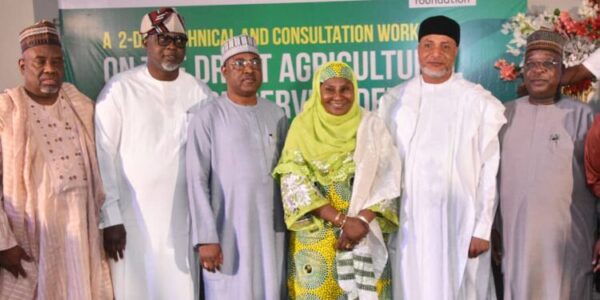
Some agricultural stakeholders on Wednesday validated the Draft Agricultural Extension Service Delivery Revitalisation Bill to strengthen the extension service system in the country. The stakeholders made their inputs at a one-day Technical and Consultation Workshop in Abuja. The participants at the workshop include State Commissioners for Agriculture, Permanent Secretaries in State Ministries of Agriculture and some key heads of government agencies. In her remarks, Hajia Salamatu Garba, the Executive Director, Women Farmers Advancement Network (WOFAN) described the development of the bill as a pillar to economic growth and livelihood improvement in Nigeria. She said that the purpose of the workshop was to bring relevant stakeholders together to look at agricultural policy and translate it into bill. “A lot of research works have been done but they have not been translated into action. So, we need all these inputs from various stakeholders to make a successful bill. “We have reached a stage where we look indepth at the agricultural policy and we have translated it into a bill which we are hoping to pass the bill to the National Assembly”, WOFAN boss said. According to her, the reason for involving stakeholders is for them to claim ownership of the bill. “That is why state Commissioners for Agriculture, technical committee on agriculture are here and their suggestions are needed.” Also speaking, Commissioner for Agriculture, Kebbi state, Hon. Maigari Dakingari said that the country was having shortage of food due to the type of extension services delivery it provided. “We need to allow private extension services to contribute to the agricultural sector and boost food sufficiency. ” he said. The commissioner pledged the state government’s to domesticate the bill and speed up its passage. Also, the Commissioner for Agriculture, in Bauchi State, Prof. Simon Yalams, advocated capacity building and inclusiveness to promote the agriculture sector. Mr Johnson Ebokpo, Commissioner for Agriculture and Irrigation Development, Cross River, said that the problem of agriculture in Nigeria was extension service delivery. “In the UK, extension service has legislative backing, while in Nigeria, there is no clear legal framework around the extension service delivery. “There is need for us to validate this bill. So, for us at Cross Rivers, we have developed a robust programme to bridge the gaps for extension services, we are here to support the bill. ” he said.
Following the need to strengthen the extension service system in Nigeria, stakeholders including Commissioners of Agriculture, Permanent Secretaries in State Ministries of Agriculture and some key Heads of government agencies on Wednesday met on the updated Draft Agricultural Extension Service Delivery Revitalization Bill. According to the stakeholders at the Women Farmers Advancement Network (WOFAN-ICON) Project, this move will be a pillar to economic growth and livelihood improvement in Nigeria. The Executive Director of WOFAN, Hajia Salamatu Garba, while at the Stakeholders meeting, said there are Commissioners of Agriculture from 11 states present, some Permanent Secretaries and value chain key players to look at agricultural policy and translate it into bill hoping that it will be passed by the National Assembly. She said a lot of research works have been done but they have not been translated into action, “we need all the inputs we can get from various stakeholders to make a successful bill so as not to be turned down. “We have reached a stage where we look indepthly at the agricultural policy and have translated it into a bill which we are hoping to pass to the National Assembly”, Salamatu said. Salamatu further said the reason for involving stakeholders was for them to claim ownership of the bill, “that is why the commissioners are here and the suggestions of the technical committee on agriculture and the three tiers of government is needed.” Also, the Commissioner for Agriculture in Kebbi state, Maigari Dakingari, said ” Nigeria is passing through a shortage of food, the ADPS before made agriculture successful because of the type of extension services delivery they provided. “Now the problem agriculture is having is poor funding, there is need to improve on this. We need to allow private extension services to play and contribute to the agricultural sector and boost food sufficiency,” he said. He pledged the support of the state government to domesticate the bill and ensure its speedy passage. In the same vein, the Commissioner of Agriculture from Bauchi State, Professor Simon Yalams, advocated capacity building and inclusiveness to promote the agriculture sector. Johnson Ebokpo, Commissioner for Agriculture and Irrigation Development, Cross River State said that Nigeria has about 70 percent of farmers that cannot meet up 50 percent of food demand in the country. Ebokpo said the problem of Agriculture in Nigeria is extension, adding that in the United kingdom, extension service has legislative backing. He stated that the effect of not having a clear legal framework around the extension service delivery was apparent. According to him, extension bridges the gap between research and the farmers “in terms of funding and other forms of resources required to drive extension in Nigeria we will continue to face food insecurity challenge.”