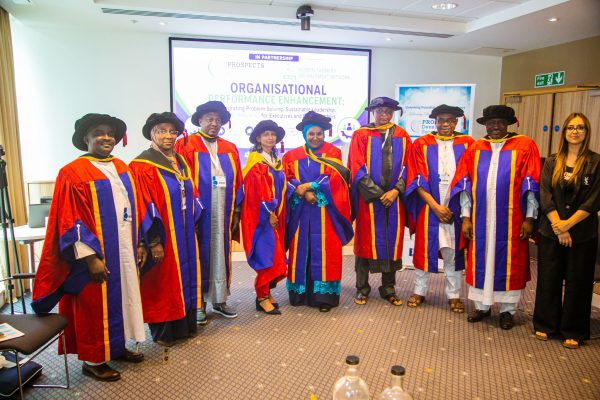
Congratulations to the Vice-Chancellor of Bayero University, Kano, Professor Haruna Musa, FSI, the Pro-Chancellor, AVM Saddik Ismaila Kaita (Rtd.), the Deputy Vice-Chancellor (Academics), Professor Ahmad Muhammad Tsauni, and the Head of the Digital Media Unit, Dr. Nura Garba, on the successful completion of a one-week intensive executive training on Artificial Intelligence, Organisational Performance Enhancement and Sustainable Leadership in London, organised by Prospects Development Services (PDS), United Kingdom, in collaboration with the Women Farmers Advancement Network (WOFAN). Also participating in the high-level programme were the Vice-Chancellor of Northwest University, Kano, Professor Amina Salihi Bayero, the Vice-Chancellor of Capital City University, Professor Yusuf Bala Daraja, Chairman of WOFAN Board, Professor Sani Miko, Dr Saleh Umar Anka, publisher of Solacebase Newspapers, Abdullatif Abubakar Jos and Madam Iyabo, as well as WOFAN team members. We celebrate this remarkable achievement and are confident that the knowledge and skills acquired will contribute significantly to strengthening institutional leadership, advancing innovation and accelerating the responsible adoption of artificial intelligence in higher education and beyond. Special thanks to the Executive Director and Global Advocate of WOFAN, Hajiya Dr Salamatu Garba
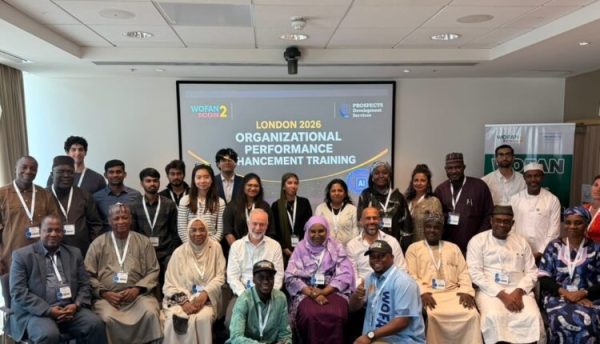
The five-day Executive Training on Organisational Performance Enhancement: Integrating Problem Solving, Sustainable Leadership and Artificial Intelligence Innovation for Executives and Board Members, organised by Prospects Development Services (PDS), United Kingdom, in collaboration with the Women Farmers Advancement Network (WOFAN), concluded in London on Friday with participants committing to translate the knowledge acquired into practical reforms across their institutions. The closing ceremony marked not only the end of an intensive week of learning but also the beginning of a coordinated effort to strengthen organisational performance through leadership development, innovative problem-solving approaches and the responsible adoption of artificial intelligence. Participants drawn from youths with leadership focus within the ages of 18- 35yrs , headship and managerial leadership of universities, government ministries and WOFAN’s international internship programme pledged to cascade the knowledge gained to colleagues within their organisations, creating a multiplier effect that would extend the benefits of the training beyond those who attended. As part of the implementation strategy, WOFAN announced how it would followup on the established monitoring framework to track the progress of each participating group and assess how the lessons from the programme are being applied within their respective institutions. One of the immediate outcomes of the training is an agreement by participants from Bayero University, Kano, Capital City University and Northwest University, Kano, to organise a one-day workshop on organisational performance enhancement, leadership and artificial intelligence for headship of various segments of their Universities in collaboration with WOFAN. The initiative is expected to *acquaint* more university staff to emerging AI tools and leadership practices can enhance organisational performance and decision making processes, while promoting institutional innovation and Inclusivity. The internship participants, comprising postgraduate students from different countries such as Turkiye, Bangladesh, United Kingdom, Saudi Arabia, Paskistan, etc, also resolved to continue developing their leadership capacities and deepen their knowledge of artificial intelligence to enhance their leadership journeys. They expressed appreciation to WOFAN for the opportunity and pledged to remain engaged with the organisation’s future capacity-building initiatives. Participants from government ministries equally committed to introducing the concepts of organisational performance enhancement, AI-driven productivity and problem-solving techniques within their various ministries to improve service delivery. In her closing remarks, the Group Board Chair and Global Advocate of WOFAN, Hajiya Dr. Salamatu Garba, described the five-day programme as an intensive and rewarding learning experience that brought together participants especially young dynamic youths with a shared vision of strengthening leadership capacity and transforming workplaces through innovation. Dr. Garba also revealed plans to establish a WOFAN Alumni Network for all its international professional development programmes so that it would bring together beneficiaries of the organisation’s various training programmes to encourage continuous learning, collaboration and mentorship. She explained that the deliberate inclusion of university vice-chancellors in the training was aimed at ensuring that the knowledge gained would be institutionalised through staff development programmes and replicated across Nigerian universities. She expressed profound appreciation to Prospects Development Services for partnering with WOFAN to deliver the programme and paid special tribute to the facilitators for their inspiring and practical presentations. Speaking on behalf of the participating Vice-Chancellors, the Vice-Chancellor of Bayero University, Kano, Professor Haruna Musa, fsi, described the training as highly impactful and intellectually enriching. He observed that developing countries such as Nigeria require stronger collaboration among academia, industry and government, noting that the programme had reinforced the importance of the Triple Helix model in addressing contemporary development challenges. Professor Musa commended the facilitators for delivering practical and evidence-based sessions and expressed optimism about future advanced courses on artificial intelligence. He expressed profound appreciation to Hajiya Dr. Salamatu Garba for her visionary leadership, invaluable contributions and results-driven strategy, which he said were instrumental to the successful organisation of the programme and its anticipated long-term impact. Chairman of the Technical Advisory Board of WOFAN , Professor Sani Miko, said the programme had significantly enhanced the capacity of participants from universities, government ministries and the internship programme. According to him, the leadership component would strengthen strategic decision-making among senior university administrators, including vice-chancellors, deputy vice-chancellors and governing council members, while the artificial intelligence sessions would enable institutions to streamline workflows, improve efficiency, reduce operational costs and optimise the use of available resources. Professor Miko noted that participants had been assigned practical post-training responsibilities, particularly the obligation to transfer the knowledge acquired to colleagues within their organisations, thereby ensuring a sustainable multiplier effect. Lead facilitator for AI concept of the training, Dr. Katrina Beta, expressed appreciation to Prospects Development Services and WOFAN for the opportunity to facilitate the artificial intelligence sessions. She praised participants for their enthusiasm, curiosity and active engagement throughout the programme. Dr. Beta observed that the practical examples contributed by participants from their respective organisations enriched discussions and demonstrated how artificial intelligence can be adapted to different institutional contexts. She encouraged participants to continue learning, noting that AI is evolving rapidly and requires continuous professional development. The interns also expressed gratitude to WOFAN for the opportunity to participate in the programme and pledged to share the knowledge gained with their colleagues.
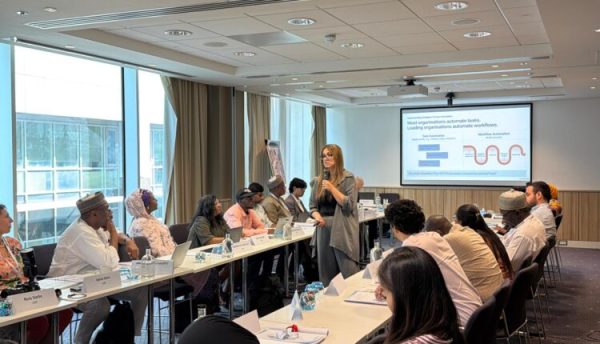
Artificial Intelligence (AI) emerged as a defining theme of the Executive Training on Organisational Performance Enhancement: Integrating Problem Solving, Sustainable Leadership and Artificial Intelligence Innovation for Executives and Board Members, as participants acquired practical knowledge and hands-on skills to transform organisational performance through responsible AI adoption. The AI sessions, held on Wednesday, 8th and Thursday, 9th July 2026, formed part of the week-long executive programme organised by Prospects Development Services (PDS), United Kingdom, in partnership with the Women Farmers’ Advancement Network (WOFAN), at the Royal Institution, London. The participants were conducted on a tour of the Royal Institution of London, an organisation for scientific education and research, based in the City of Westminster, which was founded in 1799 by the leading British scientists of the age, including Henry Cavendish and its first president, George Finch. SolaceBase reports that, facilitating the sessions, digital transformation and business management expert, Dr Ketrina Beta, challenged participants to see Artificial Intelligence not as a replacement for human intelligence but as a powerful assistant capable of enhancing decision-making, increasing productivity and improving service delivery across public and private sector organisations. She explained that institutions which strategically integrate AI into their operations can complete tasks that once took hours or days within minutes, enabling leaders to devote greater attention to innovation, strategic planning and value creation. Dr Beta also emphasised that the success of AI depends on its responsible and ethical application. She warned against uploading sensitive organisational information into AI platforms, noting that poor data governance could expose institutions to privacy and security risks. She further stressed that AI-generated outputs should never be implemented without critical human review, reminding participants that while AI may generate recommendations, accountability ultimately rests with the user and the organisation. Using practical demonstrations, case studies, live AI applications and group assignments, Dr. Beta guided participants through six key modules designed to equip executives with practical competencies for AI-driven organisational transformation. She explained AI-Driven Organisational Performance and Decision-Making by demonstrating how AI can analyse information, identify patterns and support leaders in making faster, evidence-based decisions. The Intelligent Process Automation and Performance Improvement module showed how repetitive administrative tasks can be automated to improve efficiency, reduce errors and free employees for higher-value responsibilities. During the Responsible AI, Fairness and Trust session, participants explored how organisations can minimise bias, ensure transparency and build public confidence through ethical AI practices. On Data Governance, Privacy and Accountability, the trainer highlighted the importance of protecting organisational information, complying with data governance principles and maintaining human responsibility for every AI-assisted decision. The AI Agents for Workflow Automation module demonstrated how intelligent AI assistants can automate routine workflows, coordinate multiple tasks and significantly improve operational efficiency. Throughout the training, participants carried out practical exercises using a range of AI platforms, including ChatGPT, Microsoft Copilot, Gemini, DeepSeek and NotebookLM, where they developed prompts, tested AI capabilities and explored real-life organisational applications. Speaking during the session, the Executive Director and Global Advocate of WOFAN, Dr Salamatu Garba, described the facilitator, Dr Beta, as an accomplished expert in digital transformation whose practical approach to AI would equip participants with skills that could immediately improve performance within their respective organisations. She encouraged participants to fully engage in the interactive exercises, expressing confidence that the knowledge acquired would translate into improved productivity, innovation and service delivery. The Vice-Chancellor of Bayero University, Kano, Professor Haruna Musa, said the training broadened his understanding of how AI can be strategically deployed to improve institutional efficiency and organisational performance, particularly within the realities of resource-constrained universities. Similarly, the Deputy Vice-Chancellor (Academics), Bayero University, Kano, Professor Ahmad Muhammad Tsauni, said the practical sessions provided valuable insights into how AI could simplify institutional processes and enhance productivity. Deputy Director at the Federal Ministry of Agriculture and Food Security, Iyabo Lawal Mustapha, said the training equipped her with practical AI skills that would improve efficiency and service delivery in the Ministry. Editor-inChief, SolaceBase Online newspapers, Abdullateef Abubakar Jos, noted that sessions afforded participants the opportunity to understand how AI contributes to organisational performance and its usage for forecasting, planning and decision-making. An intern, Sekina Sahin, described the prompt engineering sessions as particularly valuable, saying they had deepened her understanding of how to maximise the capabilities of AI tools. Dr Nura Garba, Communication Specialist at the Centre for Dryland Agriculture, Bayero University, Kano, said the sessions strengthened his understanding of the ethical application of AI in organisational communication, digital media and strategic decision-making. Data analyst Verni Vijayarajah said the training expanded her knowledge of Microsoft Copilot and AI-powered analytical tools for validating and interpreting complex datasets more efficiently. Mr Rajan Naibagkar described the sessions as enlightening and inspiring, noting that the practical exposure to AI tools would significantly enhance his academic work and professional practice. Also contributing to the sessions, Dr Matthew Bennett emphasised that universities must prioritise teaching the ethical use of Artificial Intelligence. He argued that as AI becomes more accessible, higher education institutions must redesign their assessment methods to evaluate students’ critical thinking and originality rather than their ability to generate AI-produced content. The sessions also attracted the participation of representatives of the Accreditation Service for International Schools, Colleges and Universities (ASIC), one of the regulatory bodies associated with Prospects Development Services. Mr Sue Huggard and Dr Lawrence Watson visited the training and interacted with participants. By the end of the two-day intensive programme, participants agreed that the training had fundamentally reshaped their understanding of Artificial Intelligence, exposing them to practical tools, ethical considerations and innovative applications capable of transforming organisational workflows, leadership effectiveness and institutional performance.
Prospects Development Services (PDS), United Kingdom, an outstanding training and leadership organisation, has partnered with WOFAN to commence a week-long executive training programme on “Organisational Performance Enhancement: Integrating Problem Solving, Sustainable Leadership and Artificial Intelligence Innovation for Executives and Board Members.” Delivering the course overview on Monday, the Founder and Chief Executive Officer of PDS UK, Bayode Tokumbo Hambolu, said the training aims to equip participants with a deeper understanding of the key drivers of organisational performance and institutional effectiveness, while exposing them to structured problem-solving approaches for addressing complex strategic and operational challenges. He added that participants would also explore how AI can be leveraged to enhance organisational innovation, productivity, risk management and service delivery across both public and private institutions. Hambolu noted that PDS had assembled a team of highly experienced facilitators to deliver the programme and congratulated participants who travelled from different countries such as Turkiye, India, Pakistan, Saudi Arabia, the United States and other countries to attend the international training. SolaceBase reports that the Executive Director of WOFAN, Dr Salamatu Garba, welcomed participants from diverse professional and institutional backgrounds, describing the programme as a unique opportunity for knowledge sharing, networking and cross-cultural collaboration. She urged participants to actively engage in all sessions to maximise the benefits of the training. Also speaking, the Vice-Chancellor of Bayero University, Kano, Professor Haruna Musa, described Artificial Intelligence as one of the defining technologies shaping the future of higher education and institutional management. He said he looked forward to gaining practical insights into the opportunities and challenges associated with AI and how it can be harnessed to improve organisational performance. The Vice Chancellor expressed optimism that the knowledge acquired during the programme would be shared with staff and students of the University to enhance teaching, research and administrative efficiency. Earlier, the Director of Strategy, Innovation and Sustainability at WOFAN, Hajiya Maimuna El-Labib Lawal, welcomed participants and introduced members of the WOFAN delegation.
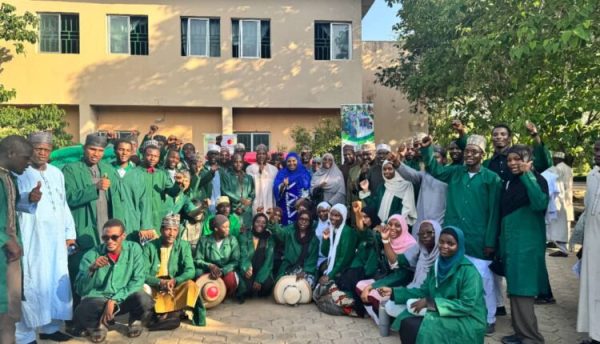
A Nigerian non-profit organisation, the Women Farmers Advancement Network (WOFAN), has provided a N28 million start-up agricultural input grant to support the take-off of the Centre for Dryland Agriculture (CDA) SIBLING Students’ Wet Season Farming Production Unit at Bayero University Kano (BUK), in a move aimed at closing the long-standing gap between classroom learning and practical agricultural experience. The intervention, which covers 50 hectares of farmland, is designed as a revolving support scheme to ensure sustainability within the university while equipping agriculture students with practical skills in farming, mechanisation, food processing and agribusiness across the entire agricultural value chain. SolaceBase reports that the initiative is part of the SIBLING Initiative (Skills Improvement to Boost Livelihood and Nurture Growth) -a strategic programme flagged off in February 2026, which was established by Bayero University and WOFAN to strengthen agribusiness training, climate-smart agriculture and livelihood support. The initiative also promotes innovative student research, encourages specialisation in different agribusiness landscapes and seeks to improve the livelihoods of neighbouring communities, particularly women, micro-enterprises and agro-marketers within and outside the university. The two-year pilot programme is expected to train 300 students annually, especially women and junior staff, in practical agro-processing, value addition and agribusiness management as part of WOFAN’s scalability and sustainability strategy under its ICON2 Project. Speaking during the flag-off ceremony in Kano on Thursday, the WOFAN Group Executive Board Chair, Dr Salamatu Garba, said the organisation introduced the initiative to address one of the major challenges facing higher education, where many graduates leave university with strong theoretical knowledge but limited practical experience. She said the programme would expose agricultural students to integrate agricultural production by combining experienced extension service providers needed to bridge the shortfall of extension workers in the agricultural work space, which will ultimately boost farmers’ crop cultivation capabilities, processing, entrepreneurship and value chain development, ensuring that every stage of production adds value while minimising waste. According to her, the initiative embraces a “zero waste” approach through backward integration across the agricultural value chain, enabling students to acquire hands-on skills that would prepare them for self-employment and agribusiness after graduation. She added that while Bayero University allocated 25 hectares for practical farming, WOFAN financed the required agricultural inputs before extending support to another 25 hectares, bringing the total intervention to 50 hectares valued at N28 million, so that research will effectively be transformed to sustainable livelihood improvement. “The inputs are being provided as a revolving scheme. WOFAN has donated them to the university as a grant so the agricultural students from their 4th and 5th year in the university will design an input repayment system to revolve and sustain the initiative. It will also boost an open market for access to farm input and promote the from-farm-to-table initiative of enhancing food security in Nigeria. Dr In his remarks, the Vice-Chancellor of Bayero University Kano, Professor Haruna Musa, described the initiative as a strategic intervention that would significantly improve practical agricultural education, enhance climate-smart farming and contribute to national food security. According to him, no country can achieve sustainable development without guaranteeing food security, noting that agriculture remains central to achieving the Sustainable Development Goals, including poverty reduction, zero hunger, improved health and economic growth. He urged students to take full advantage of the opportunity by combining classroom knowledge with practical experience. “With hard work, perseverance, dedication and sincerity of purpose, the sky will be your limit,” he said. Professor Musa also assured WOFAN that the university would sustain the initiative and announced a N1 million contribution from the university management to support the project. Earlier, the Director of the Centre for Dryland Agriculture, Professor Sanusi Gaya, described the launch of the crop production component as another milestone following the inauguration of the SIBLING Initiative in February 2026. He said students participating in the programme had made the right decision by embracing practical agriculture and pledged the Centre’s full support to ensure the initiative’s success and sustainability. The Dean of the Faculty of Agriculture, Professor Aminu Sulaiman, said the programme would produce graduates with practical agricultural and entrepreneurial skills capable of becoming employers of labour instead of job seekers. He disclosed that the faculty had developed a SIBLING Sustainable Business Management Model, built around a revolving fund and strategic partnerships, to ensure the project’s long-term sustainability. Also speaking, the Chairman of the WOFAN Board, Professor Sani Miko, described the initiative as a unique platform that would equip students with practical agricultural skills alongside their academic training. He said the project was developed through consultations involving WOFAN, the Centre for Dryland Agriculture, the Faculty of Agriculture and students, assuring that the organisation would continue supporting its implementation. According to him, proceeds from the demonstration farms would sustain the programme under a cost-recovery model while also providing financial returns to participating students. Speaking on behalf of the students, the President of the Faculty of Agriculture Students Association, Umar Kabir Bello, thanked WOFAN for initiating the programme and pledged that students would justify the confidence reposed in them by ensuring the success of the project.