WOFAN’s Crowdfunding Model Targets Improved Agricultural Extension Delivery

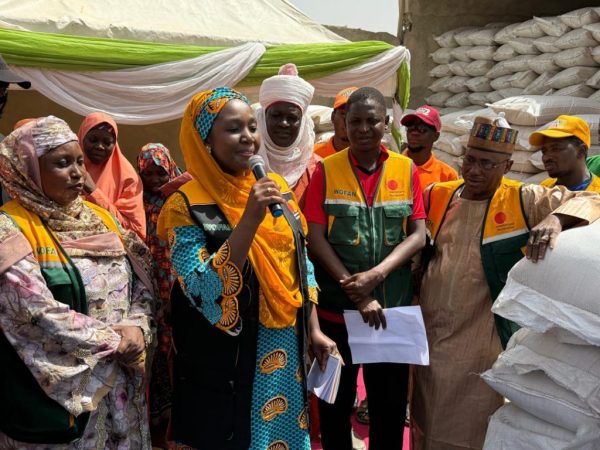
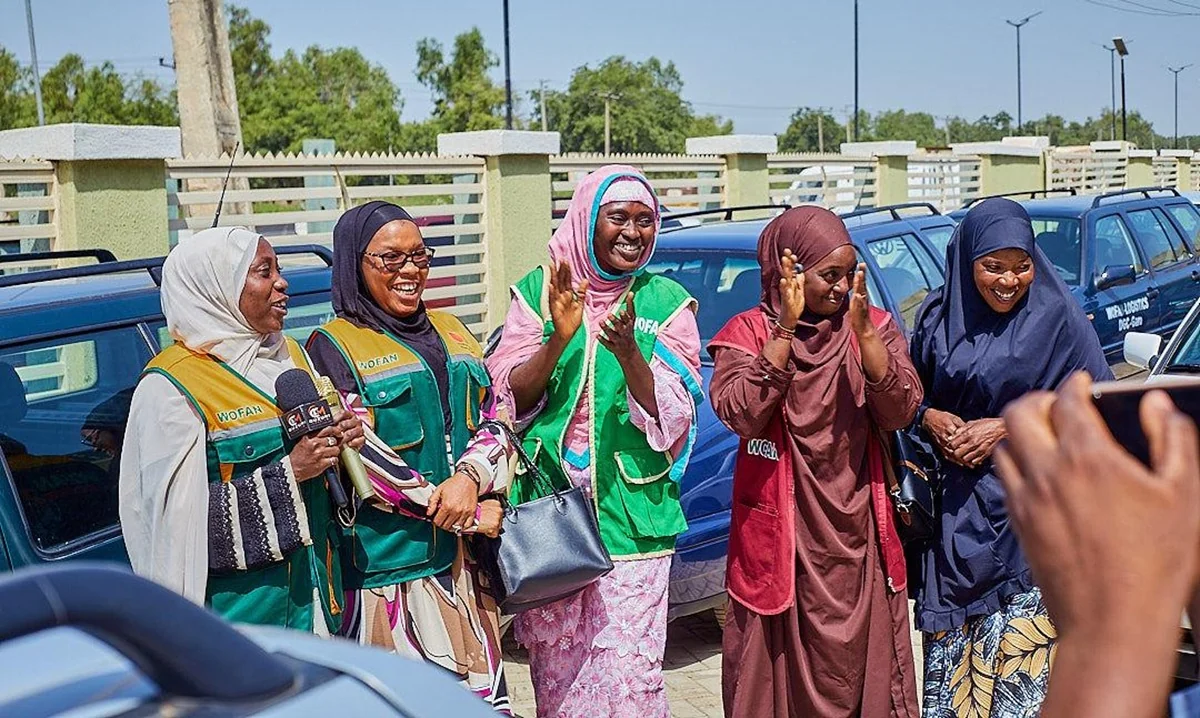
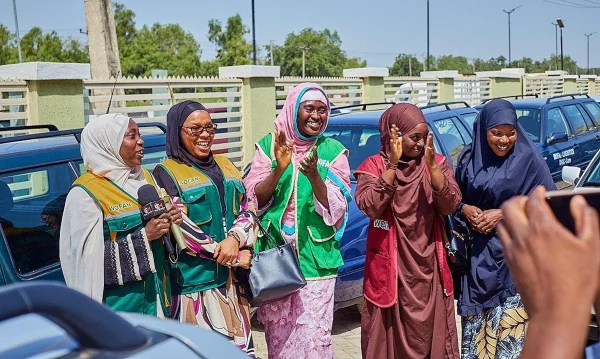
The Women Farmers Advancement Network (WOFAN) has demonstrated how crowdfunding and community-based savings can improve agricultural extension delivery with the provision of 15 Volkswagen Golf vehicles to super trainers implementing its ICON2 project in Kano and Jigawa states. Under the financing arrangement, beneficiaries contributed 50 per cent of the cost of the vehicles, while WOFAN provided the remaining half through its revolving support model, giving extension workers improved mobility to reach farming communities, access markets and generate additional income. The initiative seeks to address transportation challenges that often limit the reach of agricultural extension services, particularly in rural communities where farmers depend on extension workers for technical guidance, training and information on improved farming practices. WOFAN Founder and Global Advocate, Dr Salamatu Garba, said the intervention was designed to equip super trainers, extension workers and community leaders with the means to reach more farmers and improve agricultural service delivery. “We are commissioning batch one of logistic vehicles for our super trainers, extension workers and community leaders. Through their own savings and our complementary support, they now have the mobility needed to reduce the gap farmers face at harvest, move produce to markets, and carry out their extension work more effectively,” Garba said. She explained that the vehicles would serve both operational and commercial purposes, enabling beneficiaries to discharge their extension responsibilities while generating additional income through the transportation of goods and passengers. According to her, improved mobility would ease the difficulties associated with reaching remote farming settlements and reduce beneficiaries’ dependence on commercial transportation when moving between farms, communities and markets. The crowdfunding model requires super trainers to organise themselves into groups, typically comprising seven or eight members, and save half the cost of the vehicles over an agreed period. WOFAN then provides the balance through its revolving support arrangement. The scheme builds on the organisation’s experience in providing productive assets, including tractors, threshers and other equipment, to women farmers, youths and agricultural marketers under the WOFAN ICON2 project. By combining beneficiaries’ contributions with institutional support, the model promotes financial discipline, collective responsibility and ownership while expanding access to productive assets that individual rural workers might otherwise struggle to afford. The initiative also reinforces the role of super trainers in agricultural extension delivery. Having progressed from the ranks of extension workers through commitment and performance, they train other extension personnel, community leaders and cluster leaders, who subsequently replicate the training in their communities. Their responsibilities include promoting financial inclusion and encouraging savings among rural households, making the vehicle scheme an opportunity to demonstrate the benefits of the financial practices they teach. The additional mobility is expected to strengthen this training network, improve the frequency of community engagements and facilitate the transfer of agricultural knowledge between extension personnel and farmers. Chairman of WOFAN’s Technical Board, Professor Sani Miko, described the initiative as a demonstration of how collective savings and shared responsibility could expand economic opportunities for vulnerable groups. He urged the beneficiaries to use the vehicles responsibly and serve as good ambassadors of the organisation, while commending WOFAN’s crowdfunding approach to productive asset ownership. The vehicles will complement existing transportation options used by beneficiaries, including two-wheel and three-wheel tricycles, tauraruwa pickups and other vehicles supporting agricultural and value-chain activities. Beneficiaries, including Sadiya Ibrahim, Hajiya Bilkisu from Jigawa State and Isyaku Yahaya from Garun Mallam in Kano State, expressed appreciation for the intervention, describing it as a boost to their work and the services they provide to farming communities. They said the vehicles would improve their ability to reach farmers, conduct training activities and explore additional income-generating opportunities. WOFAN said it planned further distributions of vehicles and pickups to extend the scheme to more participating clusters. The commissioning of the first 15 vehicles in Kano and Jigawa states highlights the potential of crowdfunding and community savings as alternative mechanisms for financing agricultural development, particularly when beneficiaries’ contributions are matched with institutional support. Beyond addressing transportation constraints, the initiative places agricultural extension workers at the centre of efforts to improve farmers’ access to knowledge, technical assistance and improved farming practices. WOFAN is a Nigerian non-governmental organisation working in partnership with the Mastercard Foundation to empower women farmers, youths and persons with disabilities through agricultural training, capacity building, financial inclusion and community-based livelihood initiatives.
WOFAN’S crowdfunding model: Turning Rural Women into Investment-Ready Entrepreneurs

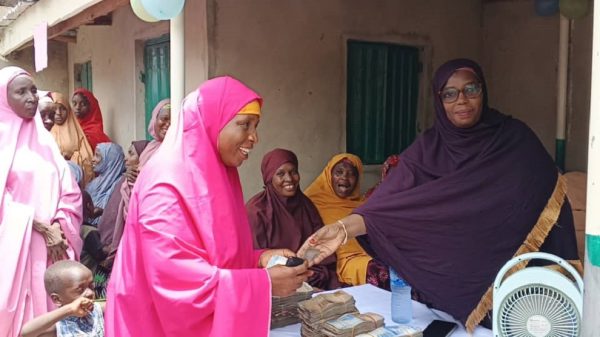
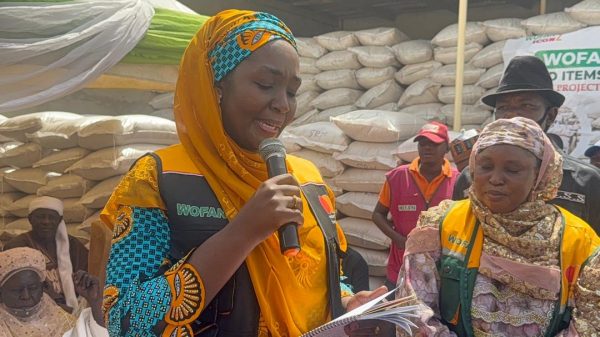
For decades, financial exclusion has remained one of the less visible barriers limiting the economic potential of rural women, smallholder farmers and persons with disabilities in northern Nigeria. Although they play important roles in farming, food processing, trading and other forms of rural enterprise, many have operated largely outside the formal financial system. Their businesses have often depended on cash transactions, informal savings and low-return labour, leaving them with little financial history to present to banks or other formal investors. The Women Farmers Advancement Network (WOFAN) is seeking to change that narrative with a financial inclusion model that goes beyond handing out grants. At the heart of its approach is a simple but potentially transformative proposition: vulnerable entrepreneurs should not remain permanent recipients of development assistance. They should be prepared to save, manage capital, build viable businesses and ultimately attract larger pools of finance. WOFAN’s model combines savings, cooperative structures, grants, revolving funds and financial literacy, with crowdfunding and formal credit envisioned as the next steps in the financing journey. Its experience between 2025 and 2026 offers an emerging case study of how community-based financing could create a bridge between informal economic activity and the formal financial sector. According to a WOFAN financial inclusion briefing, the organisation has disbursed N207.58 million to 147 women’s cooperative clusters across Kano, Kaduna, Jigawa, the Federal Capital Territory, Bauchi and Gombe. The programme has also facilitated more than 90,000 bank accounts for previously unbanked women, while 12,750 persons with disabilities are targeted under the broader ICON2 programme. But the bigger story is not necessarily the amount of money distributed. It is the financial structure WOFAN is building around the beneficiaries. Traditional development interventions often face a familiar problem. Beneficiaries receive grants, establish or expand small businesses and, when the money is exhausted, return to the cycle of seeking another intervention. Its approach begins with groups of about 30 people and places emphasis on savings, bookkeeping, bank accounts and collective responsibility before beneficiaries progress to larger financial support. The grant, therefore, becomes more than financial assistance. It becomes part of a process through which beneficiaries demonstrate their capacity to manage money, maintain records and operate collectively. That distinction is particularly important to WOFAN’s crowdfunding ambitions. Crowdfunding is unlikely to work for an entrepreneur who cannot demonstrate a viable business, transparent financial records, sound management and a convincing investment proposition. A rural woman who has never operated a bank account or kept proper business records may struggle to convince formal lenders or potential investors to provide capital. WOFAN is attempting to build that evidence before beneficiaries approach the next level of financing. Of the N207.58 million disbursed, N154.35 million, representing 74.4 per cent, went to all 147 clusters in the first round. A second round of N28.03 million was provided to 33 clusters, while 12 high-performing clusters received a further N25.20 million in the third round. The structure introduces an important principle into community financing: capital follows performance. Rather than automatically increasing grants for every beneficiary, the model rewards savings discipline, record keeping, collective enterprise and the ability to manage additional capital. The 12 clusters that completed the three-stage process accumulated approximately N4.35 million each, representing a combined N49.3 million, or 23.7 per cent of the entire portfolio. This is where the intervention begins to move beyond conventional grant-making and towards investment readiness. On August 21, 2026, the 12 high-performing clusters received UBA presentation cheques of N2.1 million each, issued in the legal names of their cooperatives under the WOFAN-ICON2 programme. The significance goes beyond the value written on the cheques. For a woman who previously survived as a farm labourer, roadside trader, food processor or small-scale vendor, moving from daily cash transactions to managing capital through a registered cooperative account represents a fundamental shift in economic identity. She is no longer simply a recipient of assistance. She is becoming a participant in the formal financial system. Why crowdfunding matters That transition could eventually create a pipeline of rural borrowers whose savings patterns, business records and repayment behaviour can be assessed by banks and other financiers. The most intriguing part of the model is WOFAN’s recognition that grants alone cannot finance sustained enterprise growth. The organisation says beneficiaries are being prepared for crowdfunding and formal credit through training in business pitching, savings, bookkeeping and financial management. The progression is deliberate: organise beneficiaries into groups and clusters; establish bank accounts; develop savings habits; demonstrate financial discipline through staged grants; access revolving capital; and eventually pitch for crowdfunding or approach formal lenders. This represents a potentially significant shift in development finance. Crowdfunding could offer rural businesses an additional source of capital at a point where conventional bank lending remains difficult to access. It can also provide something else: market validation. An enterprise capable of attracting people willing to invest in or support its proposition has demonstrated a level of demand that may strengthen its case before other financiers. But crowdfunding should not be confused with grants. Depending on the platform and regulatory structure, crowdfunding can involve donations, rewards, pre-orders, equity or other forms of financial participation. WOFAN’s current programme should therefore be understood as preparing beneficiaries for crowdfunding, rather than suggesting that the N207.58 million already represents crowdfunding capital. That distinction matters when assessing the long-term sustainability of the model. From individual businesses to collective investment One of the strongest elements of the WOFAN approach is its emphasis on collective enterprise. An individual rural entrepreneur may struggle to raise enough money to purchase a tractor, harvester or processing equipment. But when hundreds or thousands of farmers pool their resources, the equation changes. The WOFAN briefing cites mega-clusters involving about 3,000 farmers who have pooled N27 million towards a multi-crop harvester, representing half of the machine’s cost, while another N9 million was pooled towards tractors, with WOFAN providing matching support. The example demonstrates how financial inclusion can move beyond simply opening bank accounts. An account by itself does not transform an enterprise. Its real value emerges when it…

WOFAN Marketing Hubs Create Jobs, Expand Opportunities For Women, Youths

The Women Farmers Advancement Network (WOFAN), through its WOFAN-ICON2 Project, has established more than 105 marketing hubs across Nigeria, creating thousands of jobs and expanding economic opportunities for women, youths and persons with disabilities. The initiative, supported by the Mastercard Foundation, is designed to connect smallholder farmers and processors to structured markets while promoting value addition, financial inclusion and sustainable employment in rural communities. Speaking on the impact of the hubs, WOFAN Group Executive Board Chair and Country Director of the WOFAN-ICON2 Project, Dr Salamatu Garba, said the facilities were more than trading centres, describing them as development platforms that connect farmers to reliable markets and create dignified employment. Garba, who was represented at the inauguration by WOFAN Finance Officer, Abdulrasheed Abdulazeez, said the hubs had opened opportunities for women processors who previously depended on middlemen to sell their products, often receiving limited profits and having little influence over the value chains. “Today, these hubs have become vibrant centres of economic activity where youths work as traders, loaders and service providers, while women are deeply involved in processing and value addition,” she said. She spoke during the inauguration of a new marketing hub for women processors in Chiromawa, Garun Mallam Local Government Area of Kano State. The Chiromawa facility is the fourth WOFAN marketing hub in Kano State, following similar interventions in Tudun Wada, Kura and Karfi. The hubs have become centres for the trading of agricultural commodities, with the Tudun Wada hub reportedly facilitating the movement of more than 50 trailers of goods daily to other parts of Nigeria and neighbouring Niger Republic. Also, Hajia Maimuna Lawal Strategies, Innovation and Sustainability SIS) at WOFAN, said the new hub would enable women to take greater control of their marketing activities and apply negotiation skills acquired through WOFAN programmes. She said the initiative would improve women’s profitability, strengthen their participation in decision-making and contribute to the development of local economies and food systems. The Chiromawa Market leader, Mustapha Haruna, welcomed the intervention, saying it would benefit not only women beneficiaries but the wider community. WOFAN Kano State Desk Officer, Dayyabu Abubakar, said the hub was designed to promote economic inclusion by providing accessible infrastructure for women-led businesses. He explained that the facility comprises three shops, with one serving as an office where members can discuss challenges and develop business strategies, while the other two are dedicated to commercial activities. Meanwhile, youth leaders and community partners said the marketing hubs had helped reduce idleness among young people by providing legitimate employment opportunities. A youth mega-cluster leader, Tasiu Ibrahim, said the provision of modern rice and grain-processing machines, coupled with solar-powered lighting, had enabled women and youths to work in shifts during the day and at night. Community partners also said women had become increasingly involved in both farming and processing, while persons with disabilities were engaged in activities such as jute-bag production. The WOFAN-ICON2 Project has also provided improved seeds, fertilisers, agro-chemicals, processing equipment and starter packs to beneficiaries across Adamawa, Bauchi, Benue, Gombe, Jigawa, Kaduna, Kano, Nasarawa and the Federal Capital Territory. The five-year project aligns with the Mastercard Foundation’s Young Africa Works–Nigeria Strategy and seeks to create sustainable employment opportunities, particularly for women, youths and persons with disabilities.

WOFAN marketing hubs boost rural jobs, market access for women, youths

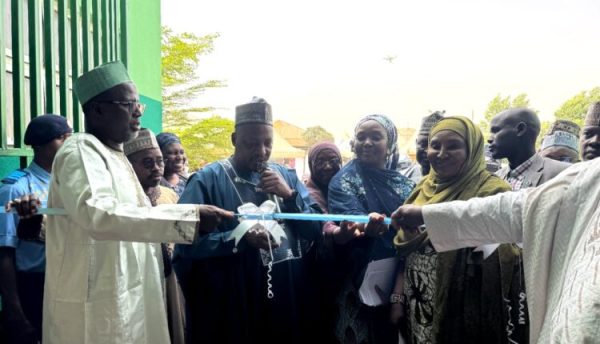
The Women Farmers Advancement Network (WOFAN) has disclosed that more than 105 marketing hubs established under its WOFAN-ICON2 Project are creating jobs, improving market access and strengthening income opportunities for women, young people and persons with disabilities across Nigeria. Supported by the Mastercard Foundation, the initiative provides smallholder farmers and agro-processors with organised platforms to sell their produce, undertake value addition and participate more effectively in agricultural value chains. Speaking at the inauguration of a marketing hub for women processors in Chiromawa, Garun Mallam Local Government Area of Kano State, WOFAN Group Executive Board Chair and Country Director of the WOFAN-ICON2 Project, Dr Salamatu Garba, said the facilities were designed to go beyond conventional marketplaces. Garba, who was represented by WOFAN Finance Officer, Abdulrasheed Abdulazeez, said the hubs were increasingly serving as economic centres where farmers, processors, traders and service providers could earn sustainable livelihoods. She noted that many women processors previously relied heavily on middlemen to dispose of their products, a situation that reduced their earnings and limited their bargaining power within agricultural value chains. “Today, these hubs have become vibrant centres of economic activity where youths work as traders, loaders and service providers, while women are deeply involved in processing and value addition,” she said. The newly inaugurated Chiromawa facility brings the number of WOFAN marketing hubs in Kano State to four, with similar facilities already operating in Tudun Wada, Kura and Karfi. WOFAN said the hubs have grown into important agricultural trading points, connecting producers and processors with buyers within and outside their communities. At the Tudun Wada hub, for instance, more than 50 trailers of agricultural commodities are reportedly transported daily to different parts of Nigeria and the neighbouring Niger Republic. Also speaking, WOFAN’s Strategies, Innovation and Sustainability representative, Hajia Maimuna Lawal, said the Chiromawa hub would give women greater control over the sale of their products and provide an opportunity to put into practice the business and negotiation skills acquired through WOFAN programmes. Lawal said improved access to markets would help women secure better returns for their products, participate more actively in economic decision-making and contribute to stronger local food systems. Chiromawa Market leader, Mustapha Haruna, described the establishment of the facility as a significant intervention that would have an impact beyond its direct beneficiaries. He said increased commercial activities generated by the hub would also create opportunities for other residents and businesses within the community. WOFAN Kano State Desk Officer, Dayyabu Abubakar, said the facility was specifically structured to encourage economic inclusion and provide accessible business infrastructure for women entrepreneurs. According to him, the hub has three shops, including an office where members can meet to identify challenges, exchange ideas and develop strategies to improve their businesses. The remaining two shops are dedicated to commercial activities. Youth representatives and community partners also said the intervention was contributing to efforts to tackle unemployment and idleness among young people by creating productive economic opportunities. A youth mega-cluster leader, Tasiu Ibrahim, said modern rice and grain-processing equipment provided through the project, alongside solar-powered lighting, had made it possible for women and young people to operate in shifts during both daytime and evening hours. Community partners said the intervention had also encouraged more women to participate in farming, processing and other agricultural businesses, while persons with disabilities were being supported to engage in income-generating activities, including jute-bag production. Beyond the establishment of marketing hubs, the WOFAN-ICON2 Project has distributed improved seeds, fertilisers, agrochemicals, processing machinery and business starter packs to beneficiaries. The intervention currently covers Adamawa, Bauchi, Benue, Gombe, Jigawa, Kaduna, Kano and Nasarawa states, as well as the Federal Capital Territory. The five-year WOFAN-ICON2 Project is aligned with the Mastercard Foundation’s Young Africa Works–Nigeria Strategy and focuses on expanding sustainable livelihood and employment opportunities, particularly for women, youths and persons with disabilities.

SIBLING Project: A national model for revitalising agricultural education through public–private partnership

At a time when Nigeria is searching for practical solutions to youth unemployment, food insecurity and the widening gap between classroom learning and industry realities, the Skills Improvement to Boost Livelihood and Nurture Growth (SIBLING) Project at Bayero University, Kano (BUK), has emerged as a compelling example of what can be achieved when academia and the private sector work together with a shared vision. The initiative, spearheaded by the Women Farmers Advancement Network (WOFAN) in partnership with Bayero University through the Centre for Dryland Agriculture (CDA) and the Faculty of Agriculture, is redefining agricultural education by moving beyond theory to practical and from farm gates to the corridors of industries, thereby transforming agricultural theories, upscaling from classroom learnings to hands-on, simple, modern technologies that promote enterprise development. Rather than limiting students to conventional classroom instructions. The project immerses them in modern farming techniques, agribusiness management, value addition and entrepreneurship, equipping them with skills that can translate directly into sustainable livelihoods, labour employers and dignified agribusiness owners after graduation. The significance of the SIBLING Project extends far beyond the boundaries of Bayero University. It presents a practical roadmap for addressing some of Nigeria’s most pressing challenges: graduate unemployment, low agricultural productivity, poor agricultural extension services and inadequate exposure of students to real-world enterprise.  This approach will further make agribusiness a pathway to attracting our youths, especially to get attracted to farming and see it beyond tilling the soil with hoes and cutlasses. Moreso, this will attract Financial institutions into supporting more of agribusiness since the returns will be more profitable with a high turnover rate at this time when agriculture remains one of Nigeria’s greatest economic opportunities. According to Dr Salamatu, “universities must become centres of innovation, production and entrepreneurship rather than institutions that merely award certificates”. One of the defining strengths of the initiative is the depth of commitment demonstrated by its partners. Through the collaboration, WOFAN has invested substantially in agricultural inputs, mechanisation, infrastructure and technical support, while Bayero University has provided land, technical expertise, institutional backing and academic integration, a model that brings together research institutions, private and public sectors that eventually will attract the financial institutions to rally round the initiative. The result is a partnership where both institutions contribute mutually and complementary strengths, share risks and profits towards a common objective—developing graduates who are capable of creating jobs rather than merely seeking them. Such exposure builds confidence, enhances employability and encourages graduates to view agriculture as a profitable business venture instead of a last resort. It is therefore unsurprising that the project has attracted widespread recognition from government officials, educational stakeholders and professional bodies. The visit by the Honourable Minister of  Education, Dr Tunji Alausa, alongside the Honourable Minister of State for Education, Professor Suwaiba Said Ahmad, underscored the Federal Government’s appreciation of the project’s enormous potential. Their commendation reflected growing national recognition that innovative partnerships such as SIBLING can significantly strengthen Nigeria’s higher education system and agricultural value chain. Similarly, the Bayero University Alumni Association deserves recognition for publicly applauding the initiative. The Association’s endorsement reflects the confidence of graduates who appreciate the value of practical education and understand the importance of preparing today’s students for tomorrow’s economic realities. Alumni support further reinforces the credibility and sustainability of such transformative programmes. Read Also:BUK receives N40m agricultural mechanization equipment to boost practical skills under WOFAN-CDA SIBLING project {PHOTOS} The success of the SIBLING Project offers an important lesson for universities across Nigeria. Higher education institutions should actively pursue strategic partnerships with credible private sector organisations, development agencies and agricultural enterprises to bridge the persistent gap between academic learning and practical application. While government funding remains indispensable, sustainable development increasingly depends on collaborative models that combine public institutions’ intellectual resources with private sector innovation, investment and implementation capacity. Every federal, state and private university with programmes in agriculture, environmental sciences or related disciplines should study the SIBLING model with a view to adapting it to their local contexts. Such partnerships have the potential to transform university farms into thriving centres of research, commercial production, innovation and entrepreneurship while producing graduates who possess marketable skills and practical experience. The National Universities Commission (NUC), relevant ministries and university governing councils should also encourage policies that reward institutions capable of establishing productive partnerships with industry. Academic excellence today must not be measured solely by publications and graduation statistics but also by the capacity of universities to solve societal problems, stimulate economic growth and empower graduates with practical skills. As Nigeria continues to seek lasting solutions to food insecurity and youth unemployment, there is another urgent policy issue that deserves immediate legislative attention. The National Assembly should expedite action on the Agricultural Extension Bill. A modern and comprehensive legal framework for agricultural extension services would strengthen collaboration among universities, research institutions, extension professionals, farmers and private sector organisations. Passage of the bill would provide a stronger institutional foundation for initiatives such as the SIBLING Project by promoting knowledge transfer, improving access to agricultural innovations, encouraging technology adoption and creating structured mechanisms for scaling successful models across the country. It would also reinforce the role of universities as active contributors to national agricultural development rather than passive centres of instruction. Read Also:Agriculture Extension Services bill is designed to promote agric development in Nigeria-Minister Agricultural extension remains the bridge between research findings and practical application. Without an effective extension system supported by law and adequate funding, many groundbreaking innovations developed by universities and research institutions fail to reach farmers and rural communities where they are needed most. Strengthening this system would multiply the impact of initiatives like SIBLING and ensure that successful innovations are replicated nationwide. Special commendation must go to the Founder, Chief Executive Officer and Global Advocate of WOFAN, Dr Salamatu Garba, whose vision, commitment and unwavering belief in the transformative power of agriculture continue to inspire meaningful change. Through WOFAN, she has consistently championed programmes that empower women, youths and vulnerable communities while promoting sustainable agricultural development across Nigeria and beyond. The SIBLING Project…

Beyond Boundaries of Charity: Dr. Salamatu Garba’s Quiet Revolution of Compassion, Partnership and Shared Prosperity

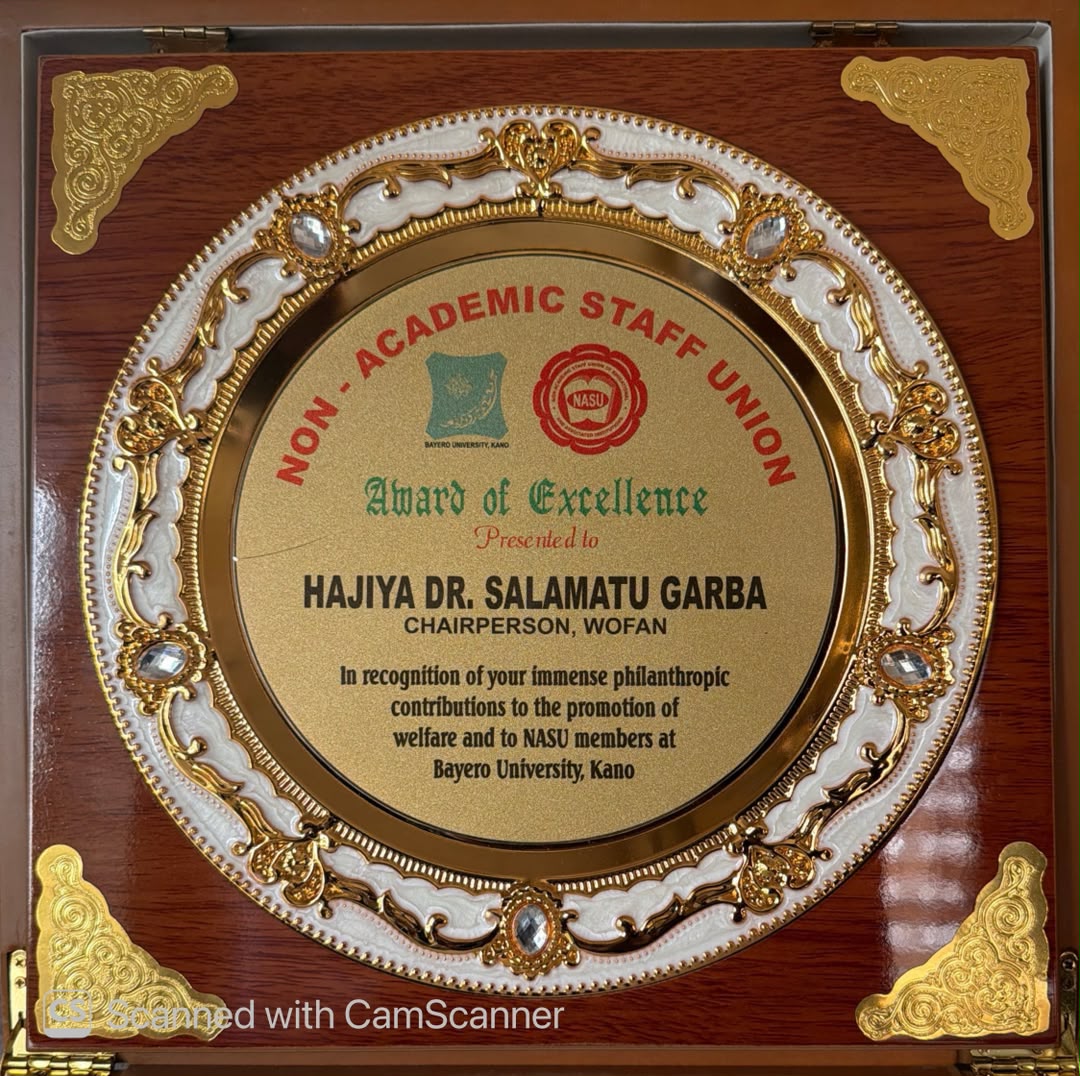
In every generation, society is blessed with individuals who understand that true greatness is measured not by what one possesses but by what one gives. Dr. Salamatu Garba, the visionary founder and Director of Women Farmers Advancement Network (WOFAN), has continued to demonstrate that development is most meaningful when it uplifts institutions and communities alike. Through the Sibline Integrated Farms and Innovation Limited (SIBLINE) Project, her interventions have strengthened Bayero University, Kano by providing modern agricultural equipment worth millions of naira, supporting practical training for students, sponsoring senior management staff to the United Kingdom for advanced training on Artificial Intelligence, and extending life changing infrastructure to neighbouring communities through the provision of water facilities, road networks and a pedestrian bridge across the ever bust Gwarzo Road. These initiatives portray a philosophy that sees education, innovation and community welfare as inseparable pillars of sustainable development. There are people who speak about changing the world, and there are those who quietly change it one life, one institution and one community at a time. Their names are not merely written in reports or commemorative plaques. They become woven into the daily experiences of ordinary people whose lives are transformed by simple but meaningful acts of kindness.   Such individuals understand a timeless truth that civilisation advances not only through governments and public policies but also through the generosity of men and women who recognise that every neighbour deserves an opportunity to flourish. Dr. Salamatu Garba, the Director of Women Farmers Advancement Network (WOFAN), belongs to this rare class of visionary leaders whose philosophy of development extends beyond organisational success into the wider society. Her approach reflects the enduring belief that prosperity becomes meaningful only when it is shared and that institutions grow stronger when communities grow alongside them. For years, WOFAN has earned national and international recognition for empowering women, strengthening agricultural value chains and creating economic opportunities for thousands of families. Yet behind these remarkable achievements lies a deeper conviction that development should never stop at the boundaries of a project. It should flow naturally into schools, universities, neighbourhoods and every place where hope seeks a helping hand. That conviction has found practical expression through the Sibline Integrated Farms and Innovation Limited (SIBLINE) Project, whose interventions have continued to strengthen Bayero University, Kano while simultaneously improving the lives of neighbouring communities. Universities occupy a unique place in every society. They are the workshops where ideas are refined, discoveries are made and future leaders are prepared. Supporting a university therefore means investing in generations yet unborn. Recognising this reality, the SIBLINE Project provided Bayero University with modern farming implements worth millions of naira to strengthen practical agricultural education and research. In an era where agriculture is increasingly driven by technology, mechanisation and innovation, such intervention represents much more than the donation of equipment. It is an investment in knowledge. It is an investment in food security. It is an investment in the young minds who will one day transform Nigeria’s agricultural landscape. For students of the Faculty of Agriculture, learning extends beyond lecture halls. Every practical demonstration, every experiment conducted on the farm and every opportunity to handle modern agricultural equipment enriches their understanding and prepares them for real life challenges. Knowledge becomes more meaningful when theory meets practice. Seeds planted in classrooms blossom into innovation only when nurtured by practical experience. By supporting practical agricultural training, Dr. Salamatu Garba has helped create an environment where students are better equipped to develop solutions for contemporary agricultural challenges. The beneficiaries are not merely today’s undergraduates but countless farmers and communities who will benefit from their knowledge in years to come. Education, however, does not remain static. The world is experiencing a technological revolution powered by Artificial Intelligence, digital innovation and data driven decision making. Institutions that fail to embrace these changes risk falling behind in a rapidly changing global environment. Understanding this emerging reality, the SIBLINE Project sponsored senior management staff of Bayero University to participate in a specialised workshop on Artificial Intelligence in the United Kingdom. The significance of this gesture extends beyond international travel. It demonstrates confidence in the capacity of Nigerian universities to compete on the global stage. It acknowledges that university leaders must continuously acquire new knowledge if they are to provide effective leadership in an increasingly digital world. Artificial Intelligence is redefining education, research, governance, agriculture, healthcare and industry. Exposing university administrators to international best practices creates opportunities for institutional transformation and encourages fresh thinking capable of positioning Bayero University among globally competitive institutions. Great institutions are built by leaders who never stop learning. Just as rivers remain fresh because they continue to flow, leadership remains relevant because it continually embraces new knowledge. Dr. Salamatu Garba understands this enduring principle. Yet perhaps the greatest beauty of her philosophy lies in the refusal to separate the university from its surrounding communities. Too often, institutions of higher learning exist beside communities that struggle with inadequate infrastructure and limited social amenities. Sustainable development demands a different approach. Communities and universities are partners in progress. Each depends on the other. A university cannot thrive where neighbouring communities suffer neglect, just as communities benefit immensely when educational institutions flourish. It is within this philosophy of shared prosperity that the SIBLINE Project extended its humanitarian interventions to Danbare community. Access to clean water remains one of humanity’s most fundamental needs. Water sustains life, preserves health and restores dignity. Every drop supplied to a household represents relief for families who would otherwise travel long distances in search of this precious resource. By providing water facilities to Danbare, Dr. Salamatu Garba transformed what many often consider an ordinary infrastructure project into an extraordinary investment in human wellbeing. Children now have more time for school instead of spending hours searching for water. Women are relieved of daily burdens that consume valuable time and energy. Families enjoy healthier living conditions. Entire communities experience renewed hope. The intervention did not stop there. Road infrastructure remains one of the strongest…

WOFAN partners BUK, supports N28m start-up input grant for CDA SIBLING Students’ wet season farming {PHOTOS}

A Nigerian non-profit organisation, the Women Farmers Advancement Network (WOFAN), has provided a N28 million start-up agricultural input grant to support the take-off of the Centre for Dryland Agriculture (CDA) SIBLING Students’ Wet Season Farming Production Unit at Bayero University Kano (BUK), in a move aimed at closing the long-standing gap between classroom learning and practical agricultural experience. The intervention, which covers 50 hectares of farmland, is designed as a revolving support scheme to ensure sustainability within the university while equipping agriculture students with practical skills in farming, mechanisation, food processing and agribusiness across the entire agricultural value chain. SolaceBase reports that the initiative is part of the SIBLING Initiative (Skills Improvement to Boost Livelihood and Nurture Growth) -a strategic programme flagged off in February 2026, which was established by Bayero University and WOFAN to strengthen agribusiness training, climate-smart agriculture and livelihood support. The initiative also promotes innovative student research, encourages specialisation in different agribusiness landscapes and seeks to improve the livelihoods of neighbouring communities, particularly women, micro-enterprises and agro-marketers within and outside the university. The two-year pilot programme is expected to train 300 students annually, especially women and junior staff, in practical agro-processing, value addition and agribusiness management as part of WOFAN’s scalability and sustainability strategy under its ICON2 Project. Speaking during the flag-off ceremony in Kano on Thursday, the WOFAN Group Executive Board Chair, Dr Salamatu Garba, said the organisation introduced the initiative to address one of the major challenges facing higher  education, where many graduates leave university with strong theoretical knowledge but limited practical experience. She said the programme would expose agricultural students to integrate agricultural production by combining experienced extension service providers needed to bridge the shortfall of extension workers in the agricultural work space, which will ultimately boost farmers’ crop cultivation capabilities,  processing, entrepreneurship and value chain development, ensuring that every stage of production adds value while minimising waste. According to her, the initiative embraces a “zero waste” approach through backward integration across the agricultural value chain, enabling students to acquire hands-on skills that would prepare them for self-employment and agribusiness after graduation. She added that while Bayero University allocated 25 hectares for practical farming, WOFAN financed the required agricultural inputs before extending support to another 25 hectares, bringing the total intervention to 50 hectares valued at N28 million, so that research will effectively be transformed to sustainable livelihood improvement. “The inputs are being provided as a revolving scheme. WOFAN has donated them to the university as a grant so the agricultural students from their 4th and 5th year in the university will design an input repayment system to revolve and sustain  the initiative. It will also boost an open market for access to farm input and promote the from-farm-to-table initiative of enhancing food security in Nigeria. Dr In his remarks, the Vice-Chancellor of Bayero University Kano, Professor Haruna Musa, described the initiative as a strategic intervention that would significantly improve practical agricultural education, enhance climate-smart farming and contribute to national food security. According to him, no country can achieve sustainable development without guaranteeing food security, noting that agriculture remains central to achieving the Sustainable Development Goals, including poverty reduction, zero hunger, improved health and economic growth. He urged students to take full advantage of the opportunity by combining classroom knowledge with practical experience. “With hard work, perseverance, dedication and sincerity of purpose, the sky will be your limit,” he said. Professor Musa also assured WOFAN that the university would sustain the initiative and announced a N1 million contribution from the university management to support the project. Earlier, the Director of the Centre for Dryland Agriculture, Professor Sanusi Gaya, described the launch of the crop production component as another milestone following the inauguration of the SIBLING Initiative in February 2026. He said students participating in the programme had made the right decision by embracing practical agriculture and pledged the Centre’s full support to ensure the initiative’s success and sustainability. The Dean of the Faculty of Agriculture, Professor Aminu Sulaiman, said the programme would produce graduates with practical agricultural and entrepreneurial skills capable of becoming employers of labour instead of job seekers. He disclosed that the faculty had developed a SIBLING Sustainable Business Management Model, built around a revolving fund and strategic partnerships, to ensure the project’s long-term sustainability. Also speaking, the Chairman of the WOFAN Board, Professor Sani Miko, described the initiative as a unique platform that would equip students with practical agricultural skills alongside their academic training. He said the project was developed through consultations involving WOFAN, the Centre for Dryland Agriculture, the Faculty of Agriculture and students, assuring that the organisation would continue supporting its implementation. According to him, proceeds from the demonstration farms would sustain the programme under a cost-recovery model while also providing financial returns to participating students. Speaking on behalf of the students, the President of the Faculty of Agriculture Students Association, Umar Kabir Bello, thanked WOFAN for initiating the programme and pledged that students would justify the confidence reposed in them by ensuring the success of the project.

WOFAN, CDA launch SIBLING initiative in BUK, distribute 560 bags of rice within the university environs

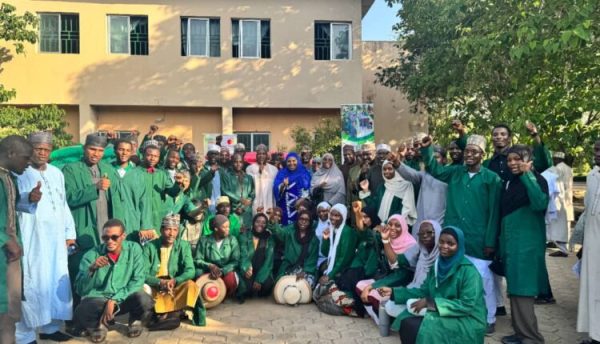
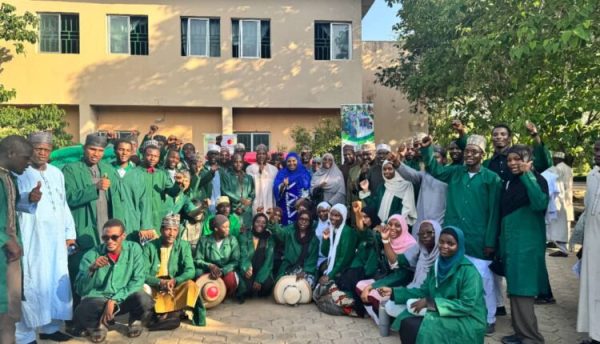
The Women Farmers Advancement Network (WOFAN), in collaboration with the Centre for Dryland Agriculture (CDA) and the Faculty of Agriculture, Bayero University Kano (BUK), on Tuesday launched its SIBLING Initiative – a strategic program aimed at strengthening agribusiness training, climate-smart agriculture and livelihood support, promoting innovative student research, encouraging specialisation in specific agribusiness landscapes, as well as improving the livelihoods of its neighbouring communities, especially micro and agro-marketers within and outside the university community. As part of the flag-off, junior, casual and outsourced low-ranking staff were prioritised to receive the first intervention of the SIBLING initiative by distributing 560 bags of rice to 2,617 identified women between the ages of 18 and 35 years under its ICON2 initiative to support small businesses and improve household incomes. SolaceBase reports that the SIBLING Initiative, which stands for Skills Improvement to Boost Livelihood and Nurture Growth, is a two-year pilot programme designed to train 300 students annually – particularly women and junior staff – in practical agro-processing, value addition and agribusiness management as part of WOFAN’s scalability and sustainability drive of the ICON2 project. Declaring the initiative open, the Vice-Chancellor of Bayero University Kano, Professor Haruna Musa, described the programme as a transformative intervention for the university community. “Today marks the beginning of what I believe will be a transformative journey for our students and junior staff,” he said. According to him, the initiative is carefully structured to bridge the gap between theoretical knowledge and practical skills, enabling students to graduate with hands-on experience and improved employability. He noted that the facilities commissioned include rice milling and processing units, briquette-making machines to convert rice husks into fuel, compost production areas and fisheries training sections, which will serve as innovative ways of adding value and making farming more lucrative and attractive to youths in their bid to make agribusiness a vocation of dignity and wealth creation. Professor Musa commended WOFAN and its leadership for providing equipment, agricultural inputs and technical support, describing the partnership as a model of how universities and development organisations can collaborate for societal impact. In her remarks, the WOFAN Group Executive Board Chair and United Nations POLAC Peace Ambassador, Dr. Salamatu Garba, said the SIBLING Initiative is a two-faceted project focusing on scaling the ICON2 beyond rural communities and bringing it to the doorsteps of research and development, with a long-standing approach to promoting youth empowerment and livelihood improvement. She further explained that the first component targets students by combining innovation, entrepreneurship and sustainability to create dignified employment. “Our students study agriculture, but often lack entrepreneurial exposure. We want to change that,” she said. “Young people between the ages of 18 and 35 are the heartbeat of the economy. We must prioritise them.” “SIBLING means Skills Improvement to Boost Livelihood and Nurture Growth. We want beneficiaries to grow, remain productive and economically independent,” she added, noting that a dedicated youth arm of the project would soon be unveiled. Also speaking at the event, WOFAN Strategy, Innovation and Sustainability Director, Hajiya Maimuna Lawal, emphasised that the partnership is designed to promote sustainable and regenerative agricultural practices. She said WOFAN is committed to practicalising innovations before introducing them to farmers. “At WOFAN, we only approach farmers with tested and proven innovations,” she stated. According to her, the programme will promote climate-smart agriculture, compost production, biochar and briquette making, rainwater harvesting and circular economy practices. She added that the initiative would integrate climate information services and decision-support tools, including artificial intelligence applications, to guide precision farming and improve soil management. “The time has come to transform agriculture in our communities,” she said. Earlier, in his address, the Chairman of the Local Organising Committee and Chairman of the Technical Board of Advisers for the WOFAN ICON 2 Project, Professor Sani Miko, described the initiative as a historic milestone in the university’s journey. “We are at a critical juncture in enhancing education and improving livelihoods,” he said. “In a rapidly changing economy, the gap between the skills people have and the skills the market demands can determine whether one lives in poverty or prosperity.” He described the project as more than a training programme, calling it a strategic investment in human capital aimed at equipping individuals with high-demand skills that lead to sustainable income, in line with the Mastercard Foundation’s vision of creating over 10 million dignified jobs in Nigeria by 2030. On his part, the Director of the Centre for Dryland Agriculture, Professor Sanusi Muhammad Gaya, said the collaboration represents a deepened alliance rooted in shared vision and collective responsibility. He explained that the initiative prioritises climate-smart agriculture to address climate variability and strengthen food systems. “Our goal is to equip students not merely to seek jobs, but to become innovators, entrepreneurs and drivers of sustainable economic growth,” he said. He described the rice distribution as a gesture of compassion, particularly significant during Ramadan, and added that it affirms that every member of the university community is valued. The Dean of the Faculty of Agriculture, Professor Aminu Sulaiman, said the initiative aligns with the faculty’s vision of producing graduates who are job creators. “For years, we prepared students for careers in established institutions. Today, we are nurturing entrepreneurs,” he said. He explained that students will engage in practical training across the full value chain of rice, maize and groundnut production — from cultivation to processing, packaging and marketing. “These facilities are not just machines; they are platforms for enterprise development,” he added. Also speaking at the event, Chairman of the Non-Academic Staff Union (NASU), BUK branch, Comrade Abdullahi Nasiru Abdulrafiu, expressed appreciation to WOFAN, noting that about 90 per cent of the beneficiaries are NASU members. The launch ceremony attracted members of the university management, academic and non-academic staff, students and development partners, marking a significant step toward deepening partnerships between institutions and the private sector for result-based impact, as well as strengthening agricultural education, youth empowerment and sustainable livelihoods in Kano State.

Salamatu – WOFAN on Climate Change: Turning adversity into posperity – M. K. Othman

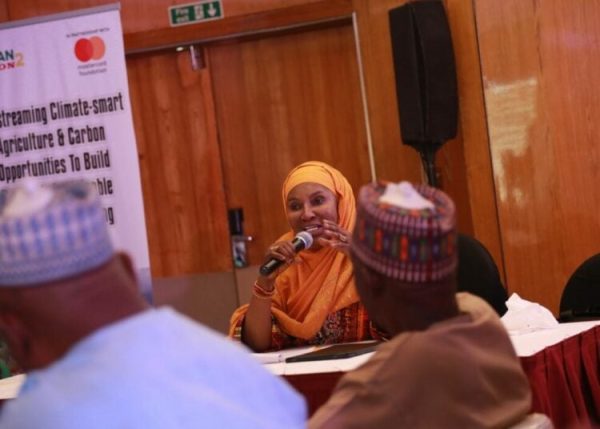
By Prof. M. K. Othman The reality of climate change and its consequences in Nigeria are indisputable, and the only option for the country is to have a sustainable mitigation strategy in place. Climate change has threatened Nigeria’s development trajectory, environmental stability, and human security. The impacts are multifaceted, affecting every sector from agriculture to infrastructure, and exacerbating existing socioeconomic vulnerabilities. In recent years, the consequences on agriculture have had devastating effects, resulting in significant losses of lives and property and severely impacting Nigerian food security. Climate change has worsened resource competition, causing pastoralists to migrate south and sparking violent clashes with farmers, which have evolved into banditry and insurgency—an ongoing national disaster. It has caused devastating floods in many communities. In 2022 and 2023, Nigeria experienced its worst flooding in over a decade, displacing more than 2 million people across 34 states in 2022 and affecting 4.2 million people in 2023. The floods resulted from heavier rainfall linked to climate change, combined with the release of excess water from neighbouring countries—Cameroon and the Niger Republic. According to experts, some states are already experiencing about a 20% decrease in growing days due to changing climate patterns. Climate change impacts such as unpredictable rainfall, heatwaves, biodiversity loss, and soil degradation require urgent adaptation measures. Nigeria’s climate crisis represents a complex, multifaceted challenge that threatens to undo development gains and exacerbate existing vulnerabilities. The 2021 Notre Dame Global Adaptation Index ranks Nigeria as the 53rd most vulnerable country and the 6th least ready nation to adapt to climate change. While Nigeria contributes less than one percent of global greenhouse gas emissions, it faces disproportionate impacts that require both domestic action and international support. Addressing these challenges requires concerted efforts from stakeholders to implement existing government policy while developing new, innovative solutions tailored to Nigeria’s diverse ecological zones and populations. The attempt to address the climate change challenges in Nigeria, with its devastating impact on agriculture, is a strong motivation that attracts WOFAN’s intervention. Dr. Salamatu Garba Kano, a visionary and persistent leader, founded the Women Farmers Advancement Network (WOFAN) as a non-governmental organization in the early 1990s. WOFAN has positively impacted the lives of over seven million Nigerians through capacity building and entrepreneurship along the agricultural value chains across ten states in Nigeria. It has achieved numerous successes in eradicating hunger, reducing poverty, and economically empowering youth, vulnerable groups, and people with special needs under the ICON 2 Project, funded by the Mastercard Foundation. Therefore, addressing the effects of climate change is a key element in reaching WOFAN’s goals. The goal of WOFAN is to help improve the quality of life for rural communities sustainably through effective partnerships, sourcing and promoting innovative, demand-driven, and affordable technologies, and by training trainers on skills and knowledge sharing at the village and community project levels. From the outset, WOFAN identified climate-smart agricultural (CSA) practices and the opportunities offered by carbon markets as a comprehensive and sustainable strategy to address climate change challenges in Nigeria. Under the WOFAN-ICON 2 project, experts were supported with an intensive capacity building on CSA and carbon credits in Paris, France, in July 2025. The workshop was tagged: “Green Gold: Climate-Smart Agriculture (CSA) and Carbon Credit Opportunities”.   The Paris Workshop increased awareness among experts about the potential of CSA practices—such as improved crop varieties, soil health management, agroforestry, and water conservation—to boost productivity, resilience, and climate change adaptation. It also highlighted new opportunities for smallholder farmers to access carbon markets, providing financial incentives to adopt sustainable practices. It offers a dual benefit for farmers: higher productivity and access to economic rewards through the sale of carbon credits. However, WOFAN acknowledged the need for better coordination among stakeholders, supportive policies, and greater awareness to promote widespread adoption of these practices for the benefit of both farmers and the nation. Without much delay, WOFAN organized a high-level, one-day multi-stakeholder meeting to discuss “Climate-Smart Agriculture and Carbon Opportunities to Build Resilient, Sustainable Smallholder Farming in Nigeria,” held at Transcorp Hilton Hotels in Abuja. About eighty carefully selected stakeholders, including representatives from academia, policymakers, industries, NGOs, farmers, and the National Assembly, participated in the meeting. The participants were fully informed about the urgent need to develop a concrete plan of action for encouraging smallholder farmers to adopt CSA and benefit from the carbon market. Three papers were presented, followed by group sessions and deliberations with fruitful outcomes. During the meeting, the WOFAN-ICON2 Project Country Director, Dr.Salamatu  Garba, said, “We decided to organize this multi-stakeholder meeting because many farmers in Nigeria do not understand what Climate-Smart Agriculture is all about and how to access Carbon Credit, which can boost agricultural development in the country.” She added, “For every action you take in addressing climate change, there’s a bonus, there’s a credit that is supposed to be given. So we need to create awareness, train people to understand what this is, get the right policy framework, talk to policymakers so that we understand these things, review our existing climate change policies, and partner with the National Council on Climate Change and others so that all of us can integrate our work.” she noted “At present, everyone is working in isolation. We must consolidate efforts, assign clear roles, and leverage each organisation’s strengths “. The two main issues of the meeting are CSA and the carbon market, which are relatively unfamiliar to farming communities across the country. What is CSA? It is a practice that sustainably boosts productivity, improves adaptive capacity to climate change, and cuts carbon emissions. CSA is more than just a set of practices; it’s an integrated approach to achieving sustainable agricultural development. Nigerian farmers use several CSA practices, such as integrated soil fertility management, water harvesting techniques, conservation agriculture, agroforestry, forestry, and post-harvest and value addition. While some Nigerian farmers are already familiar with these practices, they primarily use them to increase productivity rather than for financial incentives through carbon credits. How can smallholder farmers benefit from the carbon market when using CSA? Many adopted…

SALAMATU-WOFAN ON CLIMATE CHANGE: Turning Adversity into Prosperity

Dr. Salamatu Garba The Country Director, WOFAN-ICON2 Project The reality of climate change and its consequences in Nigeria are indisputable, and the only option for the country is to have a sustainable mitigation strategy in place. Climate change has threatened Nigeria’s development trajectory, environmental stability, and human security. The impacts are multifaceted, affecting every sector from agriculture to infrastructure, and exacerbating existing socioeconomic vulnerabilities. In recent years, the consequences on agriculture have had devastating effects, resulting in significant losses of lives and property and severely impacting Nigerian food security. Climate change has worsened resource competition, causing pastoralists to migrate south and sparking violent clashes with farmers, which have evolved into banditry and insurgency—an ongoing national disaster. It has caused devastating floods in many communities. In 2022 and 2023, Nigeria experienced its worst flooding in over a decade, displacing more than 2 million people across 34 states in 2022 and affecting 4.2 million people in 2023. The floods resulted from heavier rainfall linked to climate change, combined with the release of excess water from neighboring countries—Cameroon and the Niger Republic. According to experts, some states are already experiencing about a 20% decrease in growing days due to changing climate patterns. Climate change impacts such as unpredictable rainfall, heatwaves, biodiversity loss, and soil degradation require urgent adaptation measures. Nigeria’s climate crisis represents a complex, multifaceted challenge that threatens to undo development gains and exacerbate existing vulnerabilities. The 2021 Notre Dame Global Adaptation Index ranks Nigeria as the 53rd most vulnerable country and the 6th least ready nation to adapt to climate change. While Nigeria contributes less than one percent of global greenhouse gas emissions, it faces disproportionate impacts that require both domestic action and international support. Addressing these challenges requires concerted efforts from stakeholders to implement existing government policy while developing new, innovative solutions tailored to Nigeria’s diverse ecological zones and populations. The attempt to address the climate change challenges in Nigeria, with its devastating impact on agriculture, is a strong motivation that attracts WOFAN’s intervention. Dr. Salamatu Garba Kano, a visionary and persistent leader, founded the Women Farmers Advancement Network (WOFAN) as a non-governmental organization in the early 1990s. WOFAN has positively impacted the lives of over seven million Nigerians through capacity building and entrepreneurship along the agricultural value chains across ten states in Nigeria. It has achieved numerous successes in eradicating hunger, reducing poverty, and economically empowering youth, vulnerable groups, and people with special needs under the ICON 2 Project, funded by the Mastercard Foundation. Therefore, addressing the effects of climate change is a key element in reaching WOFAN’s goals. The goal of WOFAN is to help improve the quality of life for rural communities sustainably through effective partnerships, sourcing and promoting innovative, demand-driven, and affordable technologies, and by training trainers on skills and knowledge sharing at the village and community project levels. From the outset, WOFAN identified climate-smart agricultural (CSA) practices and the opportunities offered by carbon markets as a comprehensive and sustainable strategy to address climate change challenges in Nigeria. Under the WOFAN-ICON 2 project, experts were supported with an intensive capacity building on CSA and carbon credits in Paris, France, in July 2025. The workshop was tagged: “Green Gold: Climate-Smart Agriculture (CSA) and Carbon Credit Opportunities”. The Paris Workshop increased awareness among experts about the potential of CSA practices—such as improved crop varieties, soil health management, agroforestry, and water conservation—to boost productivity, resilience, and climate change adaptation. It also highlighted new opportunities for smallholder farmers to access carbon markets, providing financial incentives to adopt sustainable practices. It offers a dual benefit for farmers: higher productivity and access to economic rewards through the sale of carbon credits. However, WOFAN acknowledged the need for better coordination among stakeholders, supportive policies, and greater awareness to promote widespread adoption of these practices for the benefit of both farmers and the nation. Without much delay, WOFAN organized a high-level, one-day multi-stakeholder meeting to discuss “Climate-Smart Agriculture and Carbon Opportunities to Build Resilient, Sustainable Smallholder Farming in Nigeria,” held at Transcorp Hilton Hotels in Abuja. About eighty carefully selected stakeholders, including representatives from academia, policymakers, industries, NGOs, farmers, and the National Assembly, participated in the meeting. The participants were fully informed about the urgent need to develop a concrete plan of action for encouraging smallholder farmers to adopt CSA and benefit from the carbon market. Three papers were presented, followed by group sessions and deliberations with fruitful outcomes. During the meeting, the WOFAN-ICON2 Project Country Director, Dr.Salamatu  Garba, said, “We decided to organize this multi-stakeholder meeting because many farmers in Nigeria do not understand what Climate-Smart Agriculture is all about and how to access Carbon Credit, which can boost agricultural development in the country.” She added, “For every action you take in addressing climate change, there’s a bonus, there’s a credit that is supposed to be given. So we need to create awareness, train people to understand what this is, get the right policy framework, talk to policymakers so that we understand these things, review our existing climate change policies, and partner with the National Council on Climate Change and others so that all of us can integrate our work.” she noted “At present, everyone is working in isolation. We must consolidate efforts, assign clear roles, and leverage each organisation’s strengths “. The two main issues of the meeting are CSA and the carbon market, which are relatively unfamiliar to farming communities across the country. What is CSA? It is a practice that sustainably boosts productivity, improves adaptive capacity to climate change, and cuts carbon emissions. CSA is more than just a set of practices; it’s an integrated approach to achieving sustainable agricultural development. Nigerian farmers use several CSA practices, such as integrated soil fertility management, water harvesting techniques, conservation agriculture, agroforestry, forestry, and post-harvest and value addition. While some Nigerian farmers are already familiar with these practices, they primarily use them to increase productivity rather than for financial incentives through carbon credits. How can smallholder farmers benefit from the carbon market when…