Beyond Boundaries of Charity: Dr. Salamatu Garba’s Quiet Revolution of Compassion, Partnership and Shared Prosperity
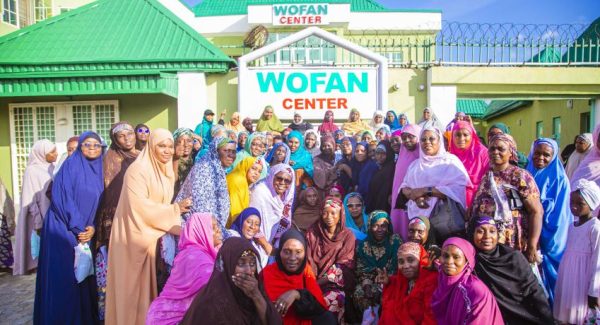
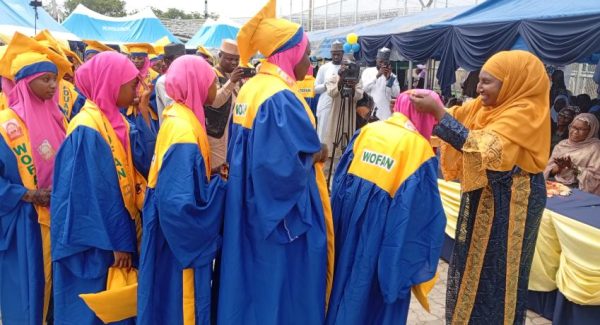
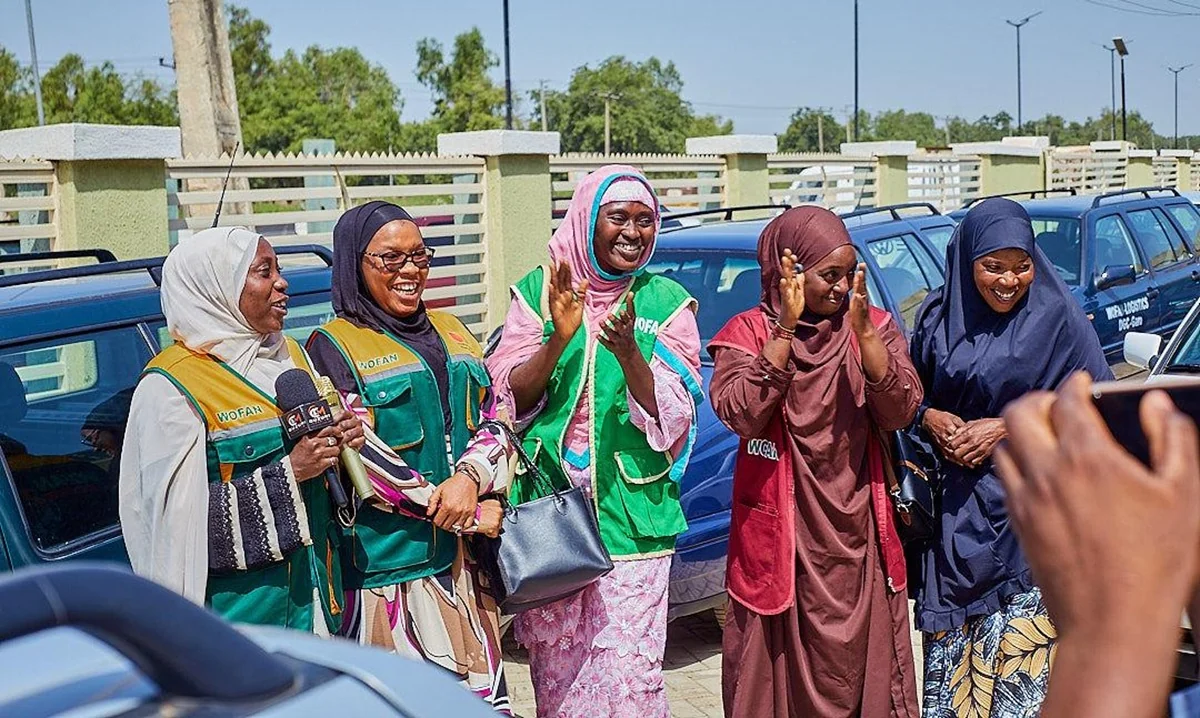
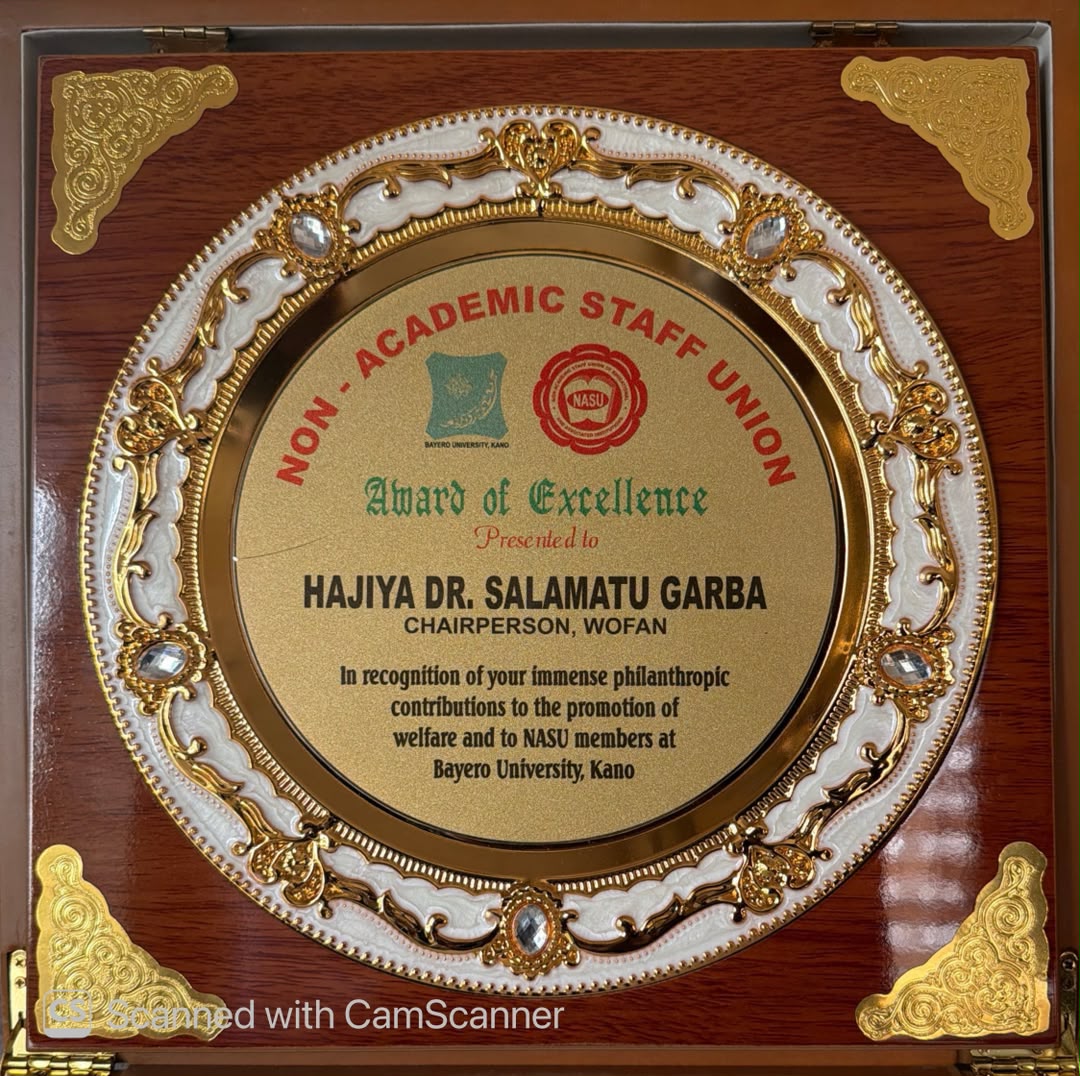
In every generation, society is blessed with individuals who understand that true greatness is measured not by what one possesses but by what one gives. Dr. Salamatu Garba, the visionary founder and Director of Women Farmers Advancement Network (WOFAN), has continued to demonstrate that development is most meaningful when it uplifts institutions and communities alike. Through the Sibline Integrated Farms and Innovation Limited (SIBLINE) Project, her interventions have strengthened Bayero University, Kano by providing modern agricultural equipment worth millions of naira, supporting practical training for students, sponsoring senior management staff to the United Kingdom for advanced training on Artificial Intelligence, and extending life changing infrastructure to neighbouring communities through the provision of water facilities, road networks and a pedestrian bridge across the ever bust Gwarzo Road. These initiatives portray a philosophy that sees education, innovation and community welfare as inseparable pillars of sustainable development. There are people who speak about changing the world, and there are those who quietly change it one life, one institution and one community at a time. Their names are not merely written in reports or commemorative plaques. They become woven into the daily experiences of ordinary people whose lives are transformed by simple but meaningful acts of kindness. Such individuals understand a timeless truth that civilisation advances not only through governments and public policies but also through the generosity of men and women who recognise that every neighbour deserves an opportunity to flourish. Dr. Salamatu Garba, the Director of Women Farmers Advancement Network (WOFAN), belongs to this rare class of visionary leaders whose philosophy of development extends beyond organisational success into the wider society. Her approach reflects the enduring belief that prosperity becomes meaningful only when it is shared and that institutions grow stronger when communities grow alongside them. For years, WOFAN has earned national and international recognition for empowering women, strengthening agricultural value chains and creating economic opportunities for thousands of families. Yet behind these remarkable achievements lies a deeper conviction that development should never stop at the boundaries of a project. It should flow naturally into schools, universities, neighbourhoods and every place where hope seeks a helping hand. That conviction has found practical expression through the Sibline Integrated Farms and Innovation Limited (SIBLINE) Project, whose interventions have continued to strengthen Bayero University, Kano while simultaneously improving the lives of neighbouring communities. Universities occupy a unique place in every society. They are the workshops where ideas are refined, discoveries are made and future leaders are prepared. Supporting a university therefore means investing in generations yet unborn. Recognising this reality, the SIBLINE Project provided Bayero University with modern farming implements worth millions of naira to strengthen practical agricultural education and research. In an era where agriculture is increasingly driven by technology, mechanisation and innovation, such intervention represents much more than the donation of equipment. It is an investment in knowledge. It is an investment in food security. It is an investment in the young minds who will one day transform Nigeria’s agricultural landscape. For students of the Faculty of Agriculture, learning extends beyond lecture halls. Every practical demonstration, every experiment conducted on the farm and every opportunity to handle modern agricultural equipment enriches their understanding and prepares them for real life challenges. Knowledge becomes more meaningful when theory meets practice. Seeds planted in classrooms blossom into innovation only when nurtured by practical experience. By supporting practical agricultural training, Dr. Salamatu Garba has helped create an environment where students are better equipped to develop solutions for contemporary agricultural challenges. The beneficiaries are not merely today’s undergraduates but countless farmers and communities who will benefit from their knowledge in years to come. Education, however, does not remain static. The world is experiencing a technological revolution powered by Artificial Intelligence, digital innovation and data driven decision making. Institutions that fail to embrace these changes risk falling behind in a rapidly changing global environment. Understanding this emerging reality, the SIBLINE Project sponsored senior management staff of Bayero University to participate in a specialised workshop on Artificial Intelligence in the United Kingdom. The significance of this gesture extends beyond international travel. It demonstrates confidence in the capacity of Nigerian universities to compete on the global stage. It acknowledges that university leaders must continuously acquire new knowledge if they are to provide effective leadership in an increasingly digital world. Artificial Intelligence is redefining education, research, governance, agriculture, healthcare and industry. Exposing university administrators to international best practices creates opportunities for institutional transformation and encourages fresh thinking capable of positioning Bayero University among globally competitive institutions. Great institutions are built by leaders who never stop learning. Just as rivers remain fresh because they continue to flow, leadership remains relevant because it continually embraces new knowledge. Dr. Salamatu Garba understands this enduring principle. Yet perhaps the greatest beauty of her philosophy lies in the refusal to separate the university from its surrounding communities. Too often, institutions of higher learning exist beside communities that struggle with inadequate infrastructure and limited social amenities. Sustainable development demands a different approach. Communities and universities are partners in progress. Each depends on the other. A university cannot thrive where neighbouring communities suffer neglect, just as communities benefit immensely when educational institutions flourish. It is within this philosophy of shared prosperity that the SIBLINE Project extended its humanitarian interventions to Danbare community. Access to clean water remains one of humanity’s most fundamental needs. Water sustains life, preserves health and restores dignity. Every drop supplied to a household represents relief for families who would otherwise travel long distances in search of this precious resource. By providing water facilities to Danbare, Dr. Salamatu Garba transformed what many often consider an ordinary infrastructure project into an extraordinary investment in human wellbeing. Children now have more time for school instead of spending hours searching for water. Women are relieved of daily burdens that consume valuable time and energy. Families enjoy healthier living conditions. Entire communities experience renewed hope. The intervention did not stop there. Road infrastructure remains one of the strongest…