WOFAN’S crowdfunding model: Turning Rural Women into Investment-Ready Entrepreneurs
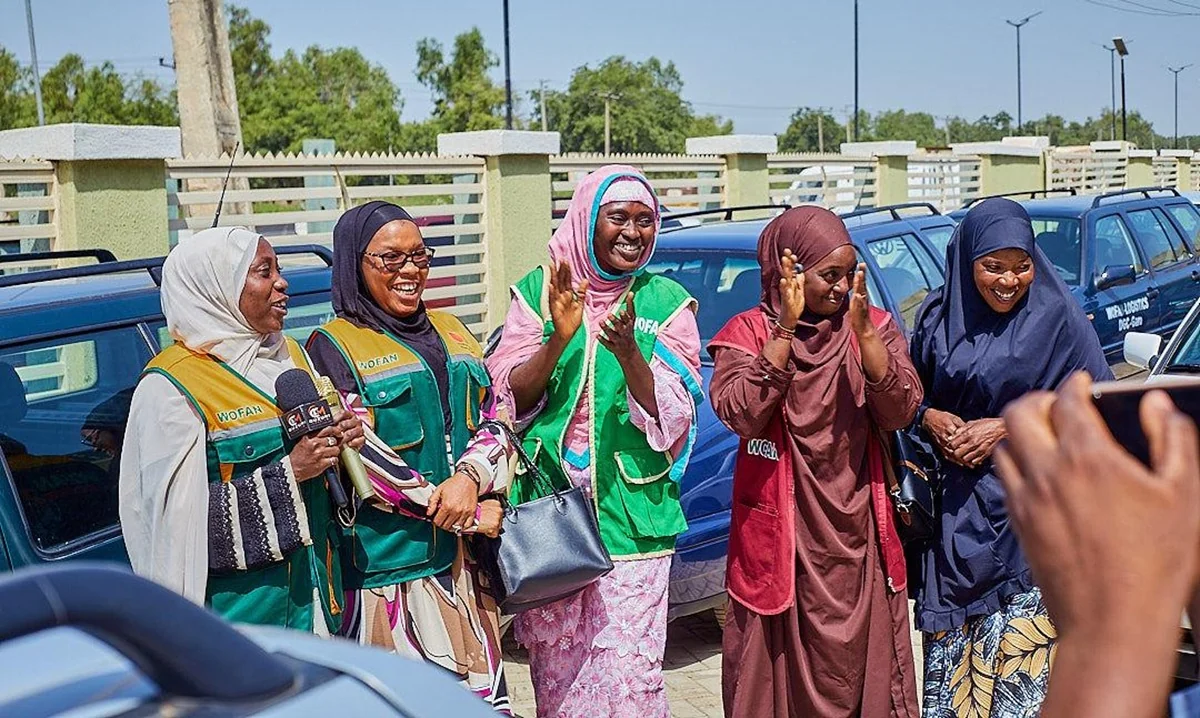
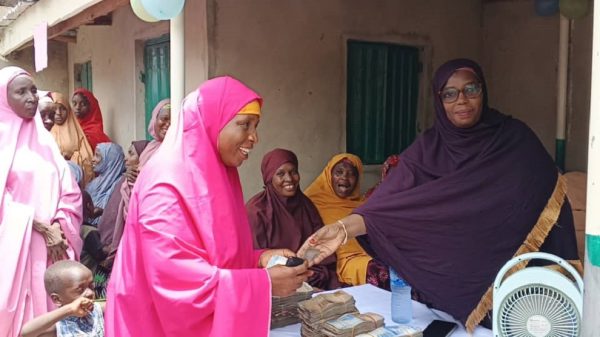
For decades, financial exclusion has remained one of the less visible barriers limiting the economic potential of rural women, smallholder farmers and persons with disabilities in northern Nigeria. Although they play important roles in farming, food processing, trading and other forms of rural enterprise, many have operated largely outside the formal financial system. Their businesses have often depended on cash transactions, informal savings and low-return labour, leaving them with little financial history to present to banks or other formal investors. The Women Farmers Advancement Network (WOFAN) is seeking to change that narrative with a financial inclusion model that goes beyond handing out grants. At the heart of its approach is a simple but potentially transformative proposition: vulnerable entrepreneurs should not remain permanent recipients of development assistance. They should be prepared to save, manage capital, build viable businesses and ultimately attract larger pools of finance. WOFAN’s model combines savings, cooperative structures, grants, revolving funds and financial literacy, with crowdfunding and formal credit envisioned as the next steps in the financing journey. Its experience between 2025 and 2026 offers an emerging case study of how community-based financing could create a bridge between informal economic activity and the formal financial sector. According to a WOFAN financial inclusion briefing, the organisation has disbursed N207.58 million to 147 women’s cooperative clusters across Kano, Kaduna, Jigawa, the Federal Capital Territory, Bauchi and Gombe. The programme has also facilitated more than 90,000 bank accounts for previously unbanked women, while 12,750 persons with disabilities are targeted under the broader ICON2 programme. But the bigger story is not necessarily the amount of money distributed. It is the financial structure WOFAN is building around the beneficiaries. Traditional development interventions often face a familiar problem. Beneficiaries receive grants, establish or expand small businesses and, when the money is exhausted, return to the cycle of seeking another intervention. Its approach begins with groups of about 30 people and places emphasis on savings, bookkeeping, bank accounts and collective responsibility before beneficiaries progress to larger financial support. The grant, therefore, becomes more than financial assistance. It becomes part of a process through which beneficiaries demonstrate their capacity to manage money, maintain records and operate collectively. That distinction is particularly important to WOFAN’s crowdfunding ambitions. Crowdfunding is unlikely to work for an entrepreneur who cannot demonstrate a viable business, transparent financial records, sound management and a convincing investment proposition. A rural woman who has never operated a bank account or kept proper business records may struggle to convince formal lenders or potential investors to provide capital. WOFAN is attempting to build that evidence before beneficiaries approach the next level of financing. Of the N207.58 million disbursed, N154.35 million, representing 74.4 per cent, went to all 147 clusters in the first round. A second round of N28.03 million was provided to 33 clusters, while 12 high-performing clusters received a further N25.20 million in the third round. The structure introduces an important principle into community financing: capital follows performance. Rather than automatically increasing grants for every beneficiary, the model rewards savings discipline, record keeping, collective enterprise and the ability to manage additional capital. The 12 clusters that completed the three-stage process accumulated approximately N4.35 million each, representing a combined N49.3 million, or 23.7 per cent of the entire portfolio. This is where the intervention begins to move beyond conventional grant-making and towards investment readiness. On August 21, 2026, the 12 high-performing clusters received UBA presentation cheques of N2.1 million each, issued in the legal names of their cooperatives under the WOFAN-ICON2 programme. The significance goes beyond the value written on the cheques. For a woman who previously survived as a farm labourer, roadside trader, food processor or small-scale vendor, moving from daily cash transactions to managing capital through a registered cooperative account represents a fundamental shift in economic identity. She is no longer simply a recipient of assistance. She is becoming a participant in the formal financial system. Why crowdfunding matters That transition could eventually create a pipeline of rural borrowers whose savings patterns, business records and repayment behaviour can be assessed by banks and other financiers. The most intriguing part of the model is WOFAN’s recognition that grants alone cannot finance sustained enterprise growth. The organisation says beneficiaries are being prepared for crowdfunding and formal credit through training in business pitching, savings, bookkeeping and financial management. The progression is deliberate: organise beneficiaries into groups and clusters; establish bank accounts; develop savings habits; demonstrate financial discipline through staged grants; access revolving capital; and eventually pitch for crowdfunding or approach formal lenders. This represents a potentially significant shift in development finance. Crowdfunding could offer rural businesses an additional source of capital at a point where conventional bank lending remains difficult to access. It can also provide something else: market validation. An enterprise capable of attracting people willing to invest in or support its proposition has demonstrated a level of demand that may strengthen its case before other financiers. But crowdfunding should not be confused with grants. Depending on the platform and regulatory structure, crowdfunding can involve donations, rewards, pre-orders, equity or other forms of financial participation. WOFAN’s current programme should therefore be understood as preparing beneficiaries for crowdfunding, rather than suggesting that the N207.58 million already represents crowdfunding capital. That distinction matters when assessing the long-term sustainability of the model. From individual businesses to collective investment One of the strongest elements of the WOFAN approach is its emphasis on collective enterprise. An individual rural entrepreneur may struggle to raise enough money to purchase a tractor, harvester or processing equipment. But when hundreds or thousands of farmers pool their resources, the equation changes. The WOFAN briefing cites mega-clusters involving about 3,000 farmers who have pooled N27 million towards a multi-crop harvester, representing half of the machine’s cost, while another N9 million was pooled towards tractors, with WOFAN providing matching support. The example demonstrates how financial inclusion can move beyond simply opening bank accounts. An account by itself does not transform an enterprise. Its real value emerges when it…