WOFAN briefs agric ministry on extension bill
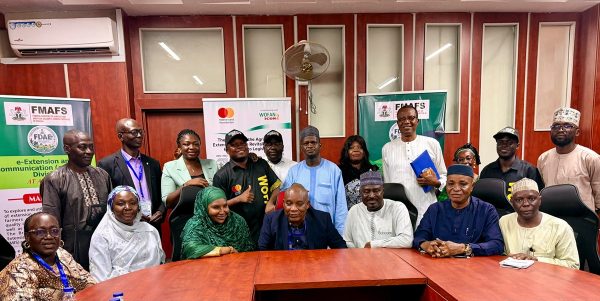
The Women Farmers Advancement Network (WOFAN) briefed the newly appointed Director of the Federal Department of Agricultural Extension at the Federal Ministry of Agriculture and Food Security, Dr. Samaila Taye, on the progress of the proposed Agricultural Extension Bill and called on the department to support ongoing efforts to ensure its passage into law. The advocacy meeting brought together stakeholders in the agricultural sector, who reviewed the bill’s status and described it as a key legislative framework for repositioning Nigeria’s agricultural extension system, increasing farm productivity and enhancing national food security. The stakeholders recalled that the agricultural extension policy was endorsed and adopted as a national document during the African Forum on Extension in 2023, paving the way for the development of the bill. Addressing the meeting, WOFAN Group Chair and Global Advocate for Africa, Europe and the Arab Region, Dr. Salamatu Garba, said the proposed legislation has reached its final phase after undergoing legal reviews and extensive stakeholder consultations across the country. She explained that although legal experts had completed their work, stakeholders resolved to conduct a final review to identify and address any outstanding issues before the bill proceeds to the next stage of the legislative process. Garba noted that the bill was developed through an inclusive process involving at least 14 consultative meetings with state commissioners of agriculture, the Federal Ministry of Agriculture and Food Security, research institutions, development partners and other relevant organisations. She said the broad consultations were aimed at ensuring that the proposed law reflects the collective input of key actors responsible for agricultural extension and rural development. Legal Providing an update on the legislative process, she disclosed that the bill had successfully passed its first reading in both chambers of the National Assembly and is awaiting further legislative consideration. While acknowledging concerns over the limited time available before the end of the current legislative session, Garba expressed optimism that the bill could still be enacted before the present National Assembly expires. She added that even if the process extends into the next assembly, the widespread support already secured from stakeholders would guarantee continuity. Garba also praised President Bola Ahmed Tinubu’s administration for placing agriculture and food security among its priorities, expressing confidence that the government would back the legislation because of its potential to transform extension service delivery and improve farmers’ productivity. Government She stressed that strengthening agricultural extension should receive the same national attention as security, insisting that sustainable food production is fundamental to national stability. The WOFAN Group Chair lamented the decline of extension services in Nigeria, saying many farmers have been left without adequate technical guidance, modern farming knowledge and access to improved technologies. Africans& Diaspora She explained that the bill would provide a legal framework to revitalise extension services by clearly defining the responsibilities of federal, state and local governments, outlining the roles of farmers and research institutions, improving coordination and equipping extension workers to promote climate-smart agricultural practices. Garba further stated that the proposed legislation complements the recently approved National Agricultural Policy and would modernise agricultural advisory services nationwide. Responding, the Director of the Federal Department of Agricultural Extension, Dr. Samaila Taye, commended WOFAN for its sustained advocacy on agricultural reforms, describing the organisation as a valuable partner in advancing Nigeria’s agricultural development agenda. He assured the delegation of the department’s full commitment to supporting the legislative process, noting that the proposed law aligns with its core responsibilities. LegislativeBranch Taye said the bill has the potential to become a landmark piece of legislation, adding that Nigeria could emerge as one of the first countries to establish a dedicated legal framework for agricultural extension service delivery. He noted that the legislation will clarify the responsibilities of the three tiers of government, eliminate duplication of roles, professionalise extension services and ensure that only qualified personnel provide advisory support to farmers. “The impact of this bill will be far-reaching. It will strengthen coordination, provide a clear direction for extension delivery and ensure that farmers receive quality advisory services from competent professionals,” he said. Also speaking, Chairman of WOFAN’s Technical Advisory Board, Professor Sani Miko, described the draft legislation as the outcome of wide-ranging collaboration involving government institutions, universities, research organisations, development partners, private sector operators and extension professionals across the country. In her remarks, WOFAN Director of Strategies, Innovation and Sustainability, Hajia Maimuna Lawal, said the bill includes provisions for Information and Communication Technology (ICT), e-extension platforms and other digital tools aimed at making extension services more efficient, accessible and sustainable. She urged lawmakers to give priority to the bill, expressing confidence that its passage would strengthen agricultural knowledge transfer, improve farmers’ access to innovation and contribute significantly to increased agricultural productivity and food security in Nigeria.