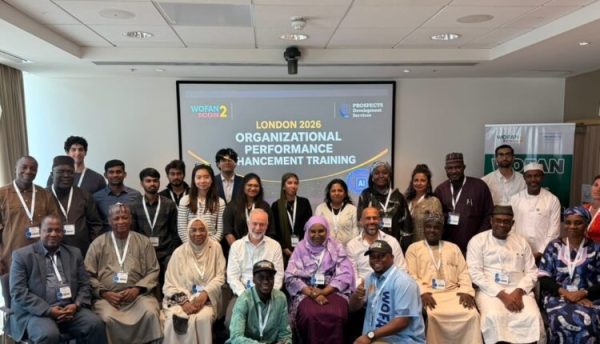
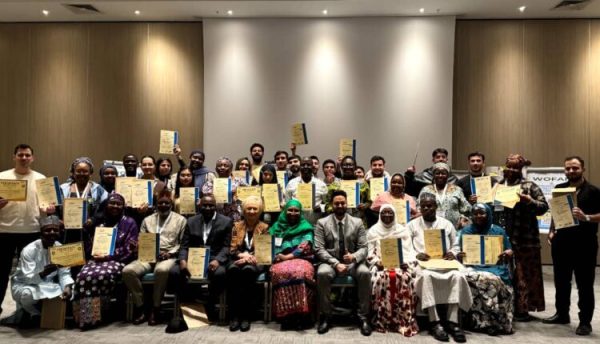
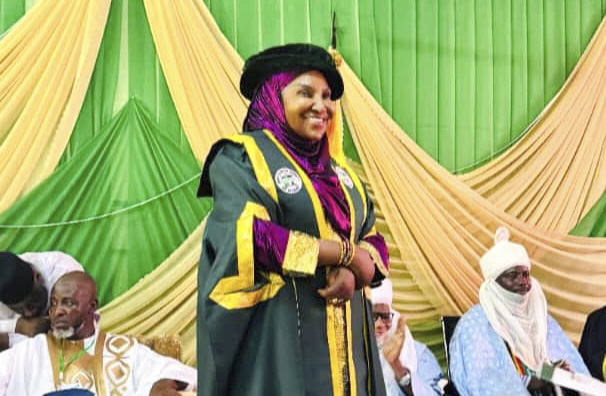
Prospects Development Services (PDS), United Kingdom, an outstanding training and leadership organisation, has partnered with WOFAN to commence a week-long executive training programme on “Organisational Performance Enhancement: Integrating Problem Solving, Sustainable Leadership and Artificial Intelligence Innovation for Executives and Board Members.” Delivering the course overview on Monday, the Founder and Chief Executive Officer of PDS UK, Bayode Tokumbo Hambolu, said the training aims to equip participants with a deeper understanding of the key drivers of organisational performance and institutional effectiveness, while exposing them to structured problem-solving approaches for addressing complex strategic and operational challenges. He added that participants would also explore how AI can be leveraged to enhance organisational innovation, productivity, risk management and service delivery across both public and private institutions. Hambolu noted that PDS had assembled a team of highly experienced facilitators to deliver the programme and congratulated participants who travelled from different countries such as Turkiye, India, Pakistan, Saudi Arabia, the United States and other countries to attend the international training. SolaceBase reports that the Executive Director of WOFAN, Dr Salamatu Garba, welcomed participants from diverse professional and institutional backgrounds, describing the programme as a unique opportunity for knowledge sharing, networking and cross-cultural collaboration. She urged participants to actively engage in all sessions to maximise the benefits of the training. Also speaking, the Vice-Chancellor of Bayero University, Kano, Professor Haruna Musa, described Artificial Intelligence as one of the defining technologies shaping the future of higher education and institutional management. He said he looked forward to gaining practical insights into the opportunities and challenges associated with AI and how it can be harnessed to improve organisational performance. The Vice Chancellor expressed optimism that the knowledge acquired during the programme would be shared with staff and students of the University to enhance teaching, research and administrative efficiency. Earlier, the Director of Strategy, Innovation and Sustainability at WOFAN, Hajiya Maimuna El-Labib Lawal, welcomed participants and introduced members of the WOFAN delegation.
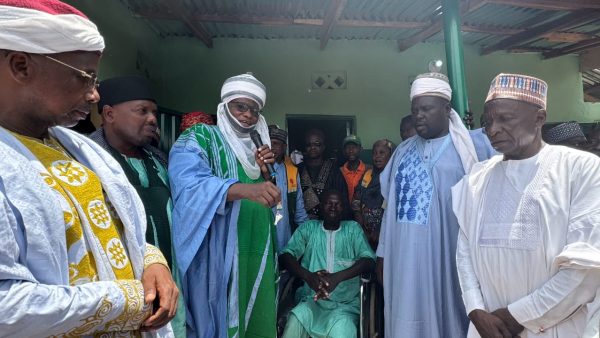
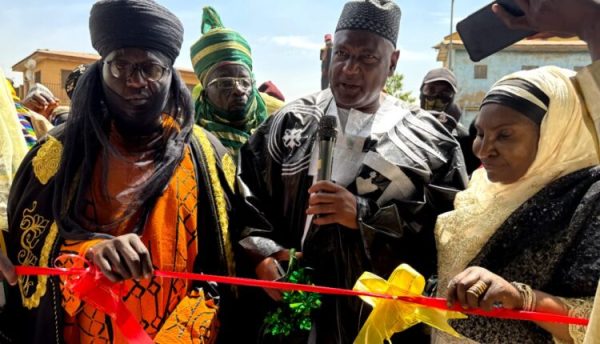
A humanitarian intervention by the Women Farmers Advancement Network (WOFAN) has transformed the life of a spinal cord patient and brought critical development projects to Warwade community in Birnin Kudu Local Government Area of Jigawa State. The intervention, which followed the public exposure of the patient’s condition through a radio programme aired on Aminci Radio Kano, culminated in the reconstruction of his dilapidated home, the commissioning of a borehole with more than six water collection points, and the inauguration of five new WOFAN groups comprising four women’s groups and one men’s group, forming a cluster in the community. SolaceBase reports that the beneficiary, Zuladaini Attahir, called into a radio programme focused on Persons With Disabilities (PWDs), where he lamented his health condition and the daily challenges he’s facing. Speaking during the commissioning ceremony on Monday, Aminu Adam Gama, a journalist with Aminci Radio Kano and anchor of the PWD programme, explained how the intervention came about. According to him, Zuladaini called into the live programme and revealed that he had been battling a spinal cord condition for more than 16 years. “He explained that he had no means of livelihood and that his elderly mother was forced to beg in neighbouring villages to feed him. He appealed for assistance during the programme. “The following day, I travelled to Birnin Kudu, met him, conducted an interview, and documented his situation through videos and photographs. “I used my contacts as a journalist to reach out to many individuals and organisations that I believed could assist him, but none did anything beyond making promises. “However, when I contacted the Board Chair of WOFAN Group, Dr Salamatu Garba, describing the situation, she immediately agreed to help. She connected me with her representatives, who visited the community and assessed the situation. “Today, we are witnessing the outcome of that intervention. WOFAN rebuilt his home, installed solar power to enable him to generate income by charging mobile phones, provided food items for him, and also constructed a borehole for the community, which had long suffered from a lack of access to clean water,” he said. Moved by the situation Board Chair of WOFAN Group, Dr Salamatu Garba, directed immediate intervention to improve the welfare of the patient and address some of the pressing needs of the community. Represented at the event by the District Head of Aujara, Alhaji Aminu Dan Mallam, Dr Garba said the organisation’s response was driven by its commitment to supporting vulnerable persons and promoting sustainable community development. He noted that while the initial intervention focused on providing decent shelter for the spinal cord patient, WOFAN also identified the need for improved access to clean water and economic empowerment opportunities for women in the area. As part of the intervention, WOFAN rebuilt Zuladaini’s house, replacing the old structure that had become unsafe and unsuitable for habitation. The organisation also installed a solar power system to enable him to earn income through mobile phone charging services. Geographic Reference In addition, WOFAN constructed a borehole equipped with more than six water collection points to provide clean and safe drinking water for residents, reducing the burden of water scarcity and improving public health in the community. The water supply was also connected directly to Zuladaini’s residence. The organisation further inaugurated five new community groups, four for women and one for men, to strengthen participation in its empowerment programmes. The groups are expected to benefit from capacity-building initiatives, financial inclusion programmes, and livelihood support designed to improve household incomes and promote self-reliance. Speaking at the event, the Chairman of Persons with Disabilities in Birnin Kudu Local Government Area, Mallam Adamu Abdullahi, commended WOFAN’s support for PWDs. Health According to him, WOFAN had previously provided members of the association with 30 bags of fertiliser and other farming equipment to support their agricultural activities. He also praised the organisation for assisting Zuladaini and constructing the borehole, noting that the community had suffered for years from inadequate access to water. Abdullahi prayed for God’s continued blessings upon the founder of WOFAN and the organisation’s members. Also speaking, the Chairperson of Small-Scale Traders in Birnin Kudu Local Government Area, Sadiya Ibrahim, said WOFAN had supported members of her association with rice and start-up capital. “WOFAN supported us with rice and business capital, which enabled us to start our businesses. Today, we are self-reliant and able to support ourselves,” she said. Newspapers She described the intervention as life-changing and expressed gratitude to WOFAN for its continued support to vulnerable groups. In his remarks, Aminu Siraj, Chairman of Logistics Operators and Tricycle Riders in Birnin Kudu Local Government Area, highlighted how WOFAN’s intervention had improved the livelihoods of members of his association. Anatomy “WOFAN supported us by providing logistics tricycles. Each tricycle costs more than N3 million in the market. We were asked to contribute only a small percentage of the amount as a group before receiving the machines. “Today, these tricycles are operating effectively and generating at least N30,000 daily. The proceeds are being deposited into our group account, which has 30 members. We have recovered our initial investment and are now making profits,” he said. Siraj prayed for God’s continued guidance and support for WOFAN and its founder, noting that the organisation had positively changed many lives. He also commended the role of the media in bringing attention to Zuladaini’s plight, saying the report served as the catalyst for the interventions now benefiting both the patient and the wider community. Hospitals & Treatment Centers Speaking emotionally at the event, Zuladaini Ibrahim expressed gratitude to WOFAN and all those who contributed to the intervention. “I am very proud and happy today. I am overwhelmed by what has happened. We have nothing to offer the Founder of WOFAN except prayers. I urge everyone here to continue praying for her and the organisation,” he said. He thanked the WOFAN team, Aminu Adam Gama of Aminci Radio Kano, his ward head, and other traditional leaders for their support. In her remarks, Zuladaini’s mother, Rakiya Ibrahim, thanked the WOFAN Founder…
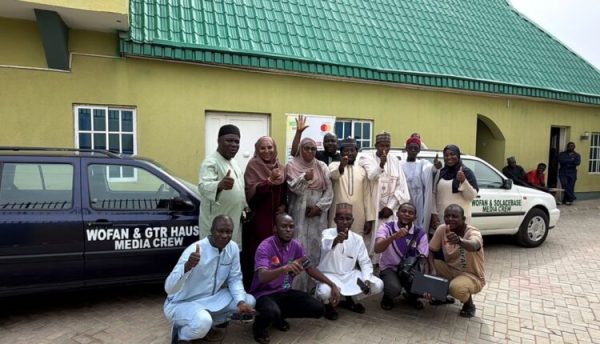
As part of its commitment to strengthening partnerships and enhancing media coverage of development initiatives in conducive and dignifying situations, the Women Farmers Advancement Network (WOFAN) has donated two vehicles to both SolaceBase and GTR Hausa online newspapers. Speaking during the presentation of the vehicles in Kano on Wednesday, the Board Chair of WOFAN Group, Dr Salamatu Garba, described journalists as critical partners in societal development who carry out their daily functions under harsh and difficult circumstances, of which such contributions are often underappreciated. Speaking further, she noted that the media plays a vital role in informing the public with vital awareness messages, promoting accountability, and amplifying the impact of development programmes. According to her, the token gesture was aimed at easing the transportation challenges faced by journalists and improving their efficiency in carrying out their duties. “We are proud of the work journalists do. They are our friends and partners whom society deeply relies on while they help in giving visibility to our activities and the impact we create in communities. We understand the mobility challenges many journalists face, and this is our own way of supporting them. We pray that God continues to guide, protect and assist them in their service to society,” she said. Dr Garba further highlighted WOFAN’s contributions to improving livelihoods across Nigeria through women and youth empowerment, agricultural development, financial inclusion, skills acquisition programmes, and initiatives aimed at reducing poverty and creating sustainable economic opportunities for rural communities. Receiving the vehicle on behalf of SolaceBase, the CEO and Publisher of the newspaper, Alhaji Abdullateef Abubakar Jos, expressed appreciation to WOFAN for its continued support and partnership over the years. “We have always felt the positive impact of WOFAN’s interventions. Our company has benefited from WOFAN’s support in many ways, such as capacity trainings within and outside Nigeria, and we are deeply grateful for this generous gesture. “This vehicle will significantly enhance our operations and encourage us to do even more in serving the public. May Almighty Allah reward Hajiya Salamatu Garba abundantly,” he said. Also speaking, the Publisher of GTR Hausa, Bashir Ahmad Rigasau, thanked WOFAN for its unwavering support to the image of the media personalities. He said WOFAN had stood by his media outfit during its growth journey, including supporting its efforts to establish an office and expand its operations. “We sincerely appreciate WOFAN’s countless support and commitment to our growth. This donation will further strengthen our capacity to deliver quality journalism to our audience,” he said. SolaceBase reports that WOFAN, in another event, presented vehicles to three other journalists who are members of its media team in recognition of their long-serving partnership and contributions to promoting the organisation’s outreach and extension service delivery activities and developmental programmes.
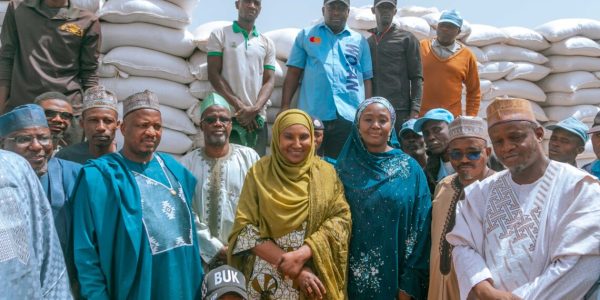
By Nura Garba and Hamza Usman Smiles, relief, and heartfelt prayers from beneficiaries filled the air as Women Farmers Advancement Network (WOFAN), in a strategic collaboration with the Centre for Dryland Agriculture (CDA) and the Faculty of Agriculture, Bayero University, Kano (BUK), launched the Skills Improvement to Boost Livelihood and Nurture Growth (SIBLING) Initiative. This ambitious intervention aims at repositioning agricultural education, strengthening livelihoods, and accelerating youth-driven agribusiness development. The initiative, which was formally unveiled on Tuesday by the Vice-Chancellor, Professor Haruna Musa, fsi, marked a significant milestone in WOFAN’s expanding footprint from rural communities into academic and research ecosystems, while reinforcing CDA’s mandate of translating research into real-world impact. Designed as a two-year pilot programme, SIBLING seeks to strengthen agribusiness training, promote climate-smart agriculture, stimulate innovative student research, and encourage specialisation across key agribusiness value chains. Central to the programme is its livelihood component, which targets neighbouring communities and micro-agro marketers within and outside the university environment. As a first-line intervention under the SIBLING framework, WOFAN distributed 560 bags of rice to 2,617 identified beneficiaries, mainly junior, casual, and outsourced low-ranking staff, prioritising women between the ages of 18 and 35 under its ICON2 initiative. The gesture was aimed at supporting small businesses, easing household food pressure, and reinforcing economic resilience, particularly ahead of the Ramadan season. Declaring the initiative open, the Vice-Chancellor of Bayero University, Kano, Professor Haruna Musa, described SIBLING as a transformative programme for the university community. He said the initiative directly addresses the long-standing gap between theory and practice in agricultural education. “Today marks the beginning of a transformative journey for our students and junior staff,” the Vice-Chancellor said. “This partnership equips our graduates with hands-on skills, improves employability, and makes agribusiness more attractive as a dignified and profitable vocation.” He disclosed that facilities commissioned under the project include rice milling and processing units, briquette-making machines for converting rice husks into fuel, compost production units, and fisheries training sections. These innovations, he said, would promote value addition, youth participation, and sustainable agriculture. Professor Musa commended WOFAN for providing equipment, inputs, and technical expertise, describing the collaboration with CDA as a model for effective university development and organisation partnerships with measurable social impact. In her remarks, the WOFAN Group Executive Board Chair and United Nations POLAC Peace Ambassador, Dr Salamatu Garba, said SIBLING represents a deliberate scaling of WOFAN’s ICON2 project beyond rural communities into centres of learning, innovation, and research. According to her, the initiative is built on a dual focus: empowering students through entrepreneurship-driven agricultural training and strengthening livelihoods among vulnerable groups. “Our students study agriculture, but many lack entrepreneurial exposure. We want to change that,” she said. “Young people between 18 and 35 are the backbone of the economy, and they must be prioritised if agriculture is to become a tool for wealth creation.” She explained that SIBLING would promote climate-smart agriculture, compost and biochar production, briquette making, rainwater harvesting, and circular-economy practices. The programme, she added, would also deploy climate information services, decision-support tools, and artificial intelligence applications to guide precision farming and improve soil management. “At WOFAN, we only take tested and proven innovations to farmers. The time has come to transform agriculture sustainably,” Dr Garba said. Earlier, the Chairman of the Local Organising Committee and Chairman of the Technical Board of Advisers for the WOFAN ICON2 Project, Professor Sani Miko, described the launch as a historic milestone for the university. “In a rapidly changing economy, the gap between skills and market demand determines whether people thrive or struggle,” he said, describing SIBLING as a strategic investment in human capital aligned with the Mastercard Foundation’s vision of creating over 10 million dignified jobs in Nigeria by 2030. On his part, the Director of the Centre for Dryland Agriculture, Professor Sanusi Muhammad Gaya, said the initiative reflects a deepened partnership between WOFAN and CDA rooted in shared vision and collective responsibility. “Our goal is not to train job seekers, but to nurture innovators and entrepreneurs who will strengthen food systems and drive sustainable economic growth,” he said, adding that the rice distribution underscores the partners’ commitment to inclusivity and compassion. The Dean of the Faculty of Agriculture, Professor Aminu Sulaiman, said the initiative aligns with the faculty’s goal of producing job creators rather than job seekers. He noted that students would receive end-to-end practical exposure across the rice, maize, and groundnut value chains from production to processing, packaging, and marketing. “These facilities are not just machines; they are platforms for enterprise development,” he said. Also speaking, the Chairman of the Non-Academic Staff Union (NASU), BUK branch, Comrade Abdullahi Nasiru Abdulrafiu, expressed appreciation to WOFAN, noting that nearly 90 per cent of the beneficiaries were NASU members. Goodwill messages were presented by the former Vice-Chancellor, Aliko Dangote University of Science and Technology, Professor Shehu Alhji Musa, the immediate past Director of CDA, Professor Jibrin Mohammed Jibrin and NASU-BUK Chairman, Comrade Abdullahi Nasiru Abdulrafiu. According to many beneficiaries, this intervention came at a critical moment in their lives. “This support came at the right time, especially with Ramadan approaching,” said Zainab Umar, a junior staff member. “It has reduced the burden on my family in ways words can’t explain.” Aisha Ismaila, a cleaner with one of the outsourced companies, admitted she was initially sceptical. “I thought it was just talk,” she said. “But when we heard Dr Salamatu Garba speak during the launch and we then received the rice, I realised this empowerment is real. This is help we can feel.” A group of five female junior staff members of the Non-Academic Staff Union (NASU) described the distribution as a lifeline, noting that it would significantly bridge food gaps in their households during the fasting period. From neighbouring communities, Saratu Abubakar and Umma Sani could not hide their joy. “We may not have big words,” they said, “but may Allah continue to bless Dr Salamatu Garba for remembering people like us”. The SIBLING launch ceremony drew university management, academic and non-academic staff,…
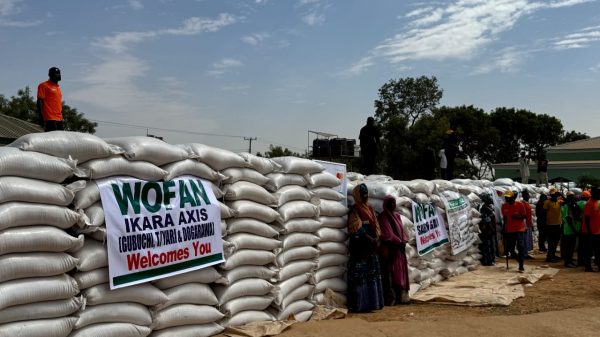
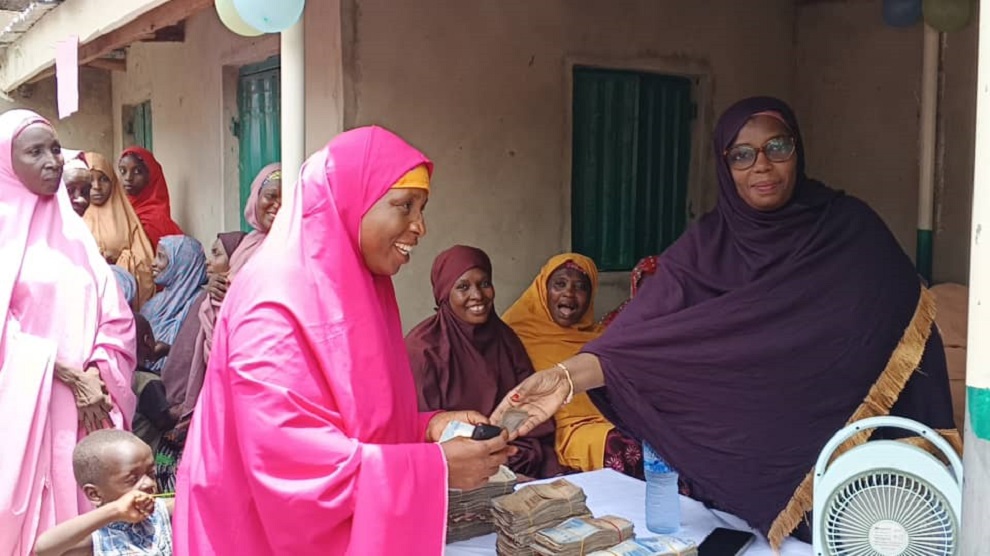
The Women Farmers Advancement Network (WOFAN), under its ICON2 project initiative, has inaugurated three new marketing hubs comprising 15 shops and also distributed 5,000 bags of processed rice. The processed rice was part of the rice produced by the farmers with the input support and processed by the women group processors, then off- taken from the processors for onward support to over 25,000 women agro-processors in Zaria and Ikara axis of Kaduna state as part of efforts to strengthen women-led businesses and support vulnerable groups. The initiative, launched on Saturday in Sabon Gari, Zaria, is designed to improve the livelihoods of underserved women engaged in agro-produce marketing across the Ikara axis, Tashar Yari, Dogarawa, Sabon Gari, Kasuwar Amaru, Zazzau emirate area and surrounding communities. The facility is equipped with solar-powered boreholes to ensure access to clean water and provide a conducive environment for business, congregational and community engagement areas. SolaceBase had earlier reported in August 2025 that WOFAN commissioned the fully completed solar-powered boreholes fitted with 21 water points to provide safe water for households and nearby schools. The organisation also renovated a school in the community to enhance access to education for both men and women as part of its vision of providing dignified opportunities to improve the livelihood of vulnerable communities. Speaking at the inauguration ceremony on Saturday, WOFAN Group Executive Board Chair, Dr Salamatu Garba, said the marketing hub fulfils the MasterCard Foundation and WOFAN’s vision of boosting economic opportunities, peaceful coexistence among the people and dignified jobs for women and persons living with disabilities (PWDs) who are within their productive years of 18- 35 years old. “Out of the 15 shops, three will be allocated to persons living with disabilities, intentionally dedicated to solar charging systems of phones, electric motorbikes to promote green energy and support their businesses,” she said. Speaking on the rice distribution initiative, Dr Garba explained that the intervention was expanded this year to reach more vulnerable women- led households to boost their mini marketing businesses that sustain their families. ” We want you to use this support to boost your businesses and improve your livelihoods,” she said. In his remarks, the WOFAN- ICON2 finance manager, Abdulrasheed Abdulazeez, stated that “The Ikara axis, which includes Dogarawa, Tashar Yari and Gubuchi, will receive 1,025 bags. The Sabon Gari axis, comprising Basawa, Dutsen Abba, Gyallesu, Hanwa, Jama’a and Kaura, will receive 1,075 bags. The Kasuwar Amaru axis, including Kwarbai A, Kwarbai B and Muchia/Chikaji, will receive 1,200 bags. Similarly, the Kasuwar Zaria axis-covering Kufena, Limancin-Kona, Tudun Wada, Tukur Tukur, Unguwar Fatika,Unguwar Juma, and Unguwar Gaba-will receive 1,200 bags.” He further appreciated community partners for their consistent support and commended the Emir of Zazzau, Alhaji Ahmed Nuhu Bamalli, the District Head of Sabon Gari and other traditional leaders for their support to WOFAN’s programs, adding that the intervention aligns with the objectives of the WOFAN-ICON2 Project under the MasterCard Foundation, which seeks to create sustainable employment opportunities for youth, women and persons with disabilities across ten Nigerian states. Also speaking, Board Member of the WOFAN Community Development Initiative, Alhaji Rabiu Sule Garo, said the organization, in collaboration with community stakeholders, would continue to implement sustainabilitystrategies aimed at mainstreaming gender in all works of life, creating peaceful coexistence and improving the lives of women and PWDs. Representing the Emir at the event, the Head of Palace, Alhaji Ahmad Fatika, expressed appreciation to WOFAN for its continued interventions. “We are aware of the good work you are doing for our people. Our doors remain open, and we are always ready to support WOFAN,” he said. He noted that the organization’s interventions have contributed to job creation and restored hope, dignity and self-reliance among young people. He also urged the targeted recipients of the rice intervention to invest wisely and focus on growing their businesses, while calling on the committee overseeing the marketing hub to ensure proper maintenance of the facilities. The District Head of Sabon Gari, Alhaji Ahmad Bashiri, who is also a patron of WOFAN in Sabon Gari Zaria Axis, , commended the organization for its consistent efforts to uplift vulnerable groups. “We will continue to support WOFAN in every possible way. The establishment of the marketing hub, rice distribution and provision of solar-powered borehole and water points will receive ample maintenance with a strong sustainability strategy put in place to make these interventions continue to be a memorable support in our community,” he said. One of the beneficiaries, Aisha Salihu, expressed gratitude for the assistance. “I never imagined receiving such support free of charge. We are deeply grateful,” she said. SolaceBase
The Women Farmers Advancement Network (WOFAN), under its ICON2 project initiative, has inaugurated three new marketing hubs comprising 15 shops and also distributed 5,000 bags of processed rice. The processed rice was part of the rice produced by the farmers with the input support and processed by the women group processors, then off- taken from the processors for onward support to over 25,000 women agro-processors in Zaria and Ikara axis of Kaduna state as part of efforts to strengthen women-led businesses and support vulnerable groups. The initiative, launched on Saturday in Sabon Gari, Zaria, is designed to improve the livelihoods of underserved women engaged in agro-produce marketing across the Ikara axis, Tashar Yari, Dogarawa, Sabon Gari, Kasuwar Amaru, Zazzau emirate area and surrounding communities. The facility is equipped with solar-powered boreholes to ensure access to clean water and provide a conducive environment for business, congregational and community engagement areas. SolaceBase had earlier reported in August 2025 that WOFAN commissioned the fully completed solar-powered boreholes fitted with 21 water points to provide safe water for households and nearby schools. The organisation also renovated a school in the community to enhance access to education for both men and women as part of its vision of providing dignified opportunities to improve the livelihood of vulnerable communities. Speaking at the inauguration ceremony on Saturday, WOFAN Group Executive Board Chair, Dr Salamatu Garba, said the marketing hub fulfils the MasterCard Foundation and WOFAN’s vision of boosting economic opportunities, peaceful coexistence among the people and dignified jobs for women and persons living with disabilities (PWDs) who are within their productive years of 18- 35 years old. “Out of the 15 shops, three will be allocated to persons living with disabilities, intentionally dedicated to solar charging systems of phones, electric motorbikes to promote green energy and support their businesses,” she said. Speaking on the rice distribution initiative, Dr Garba explained that the intervention was expanded this year to reach more vulnerable women- led households to boost their mini marketing businesses that sustain their families. ” We want you to use this support to boost your businesses and improve your livelihoods,” she said. In his remarks, the WOFAN- ICON2 finance manager, Abdulrasheed Abdulazeez, stated that “The Ikara axis, which includes Dogarawa, Tashar Yari and Gubuchi, will receive 1,025 bags. The Sabon Gari axis, comprising Basawa, Dutsen Abba, Gyallesu, Hanwa, Jama’a and Kaura, will receive 1,075 bags. The Kasuwar Amaru axis, including Kwarbai A, Kwarbai B and Muchia/Chikaji, will receive 1,200 bags. Similarly, the Kasuwar Zaria axis-covering Kufena, Limancin-Kona, Tudun Wada, Tukur Tukur, Unguwar Fatika, Unguwar Juma, and Unguwar Gaba-will receive 1,200 bags.” He noted that the organization’s interventions have contributed to job creation and restored hope, dignity and self-reliance among young people. He also urged the targeted recipients of the rice intervention to invest wisely and focus on growing their businesses, while calling on the committee overseeing the marketing hub to ensure proper maintenance of the facilities. The District Head of Sabon Gari, Alhaji Ahmad Bashiri, who is also a patron of WOFAN in Sabon Gari Zaria Axis, , commended the organization for its consistent efforts to uplift vulnerable groups. “We will continue to support WOFAN in every possible way. The establishment of the marketing hub, rice distribution and provision of solar-powered borehole and water points will receive ample maintenance with a strong sustainability strategy put in place to make these interventions continue to be a memorable support in our community,” he said. In his remarks, the leader of persons living with disabilities in Sabon Gari LGA, Ahmed Musa, described the intervention as impactful. “We are truly feeling the impact of WOFAN’s support,” he said. One of the beneficiaries, Aisha Salihu, expressed gratitude for the assistance. “I never imagined receiving such support free of charge. We are deeply grateful,” she said.
The Women Farmers Advancement Network (WOFAN) has expanded its global capacity-building initiatives with a high-impact international training programme held in Istanbul, Turkey. The training aimed at equipping youths and development practitioners with practical skills in Emotional Intelligence (EI) and Artificial Intelligence (AI) to enhance inclusive decision-making, strengthen food systems, and promote modern job creation. SolaceBase reports that the five-day programme, which ran from January 26 to 30, 2026, was organised by WOFAN under the new international portfolio of the WOFAN Group Board leadership role of Dr Salamatu Garba in collaboration with Prospect Development Services – UK. It brought together members of WOFAN’s board, professional partners and management, alongside participants from Africa, Europe, Asia, and the Arab region, for intensive hands-on training, live demonstrations, and collaborative innovation sessions. Delivering a keynote address, WOFAN Group Executive Board Chair and United Nations (UN- POLAC) Peace Ambassador, Dr. Salamatu Garba, said the training represents a strategic investment in the future of youth-led development and institutional sustainability that aims at preparing them to remain relevant to the future generations’ workspaces in the wake of rapid innovation and technology transformation. “This training is not just about learning new tools; it is about preparing WOFAN and our young people for the future of work. We are deliberately strengthening emotional intelligence alongside artificial intelligence so that technology is guided by empathy, ethics, and purpose,” she said. Dr Garba explained that with WOFAN’s upgrade to join global and International advocate to magnify the voices and the empowerment of Women youths, and Persons with disability WOFAN’s long-term vision will continue to build a self-sustaining ecosystem of professional services driven by internal capacity that encourages innovation and supports start-up initiatives that depend solely on external dependence and white-collar jobs. “Very soon, many professional services will be created within WOFAN itself because of the skills we are developing with our professional associates and collaborators insha Allah and hopefully we will target combining creativity, leadership, and technology that hopefully would be enhancing the efficacy of blending positive use of artificial intelligence and blending with emotional intelligence to deliver better services to families and communities,” she added. She further noted that the choice of Turkey was deliberate, given the country’s advances in AI, robotics, and digital innovation. On her part, the WOFAN Gender Lead, Hajia Maryam Lawal, stated that, “Here, we have seen how robotics, real-time data systems, and AI-driven platforms can transform learning, record-keeping, and service delivery. Knowledge that once took months to acquire can now be applied within days, and that is critical for our graduates and young professionals.” Highlighting outcomes from the practical sessions, she said digital platforms developed by participants would be fully integrated into WOFAN’s operations and encourage a space for young women, youths and people with disabilities to interface on and become more relevant for dignified jobs and opportunities, which is in line with the Mastercard Foundation and the WOFAN-ICON2 vision. On the practical implications for women in agriculture, Hajia Maryam further stressed that the visit to the AI Museum in Istanbul was particularly impactful. “Seeing robots in action helped us understand how technology can reduce the physical burden on women farmers. From processing to farm operations, robotics can save time, reduce stress, and increase productivity, especially for rural women,” she explained. “Speaking from a technical and advisory perspective, the Chairman of the Technical Board of Advisors for the WOFAN-ICON2 Project, Professor Sani Miko, described the training as both timely and transformative. “Artificial intelligence has become a global gateway for innovation and income generation. This training has opened our eyes to how AI can simplify development processes and improve advisory services,” he said. Professor Miko emphasised the value of diversity and collaboration during the programme. ”Participants came from different countries and professional backgrounds, and that exchange of ideas is one of the biggest strengths of this training. These relationships must continue beyond Istanbul, and we are committed to cascading this knowledge when we return home,” he added. The Chief Executive Officer of Prospect Development Services, Mr Bayode Hambolu, represented by the Project Coordinator, Moin Jan, said the training was designed to address global skills gaps among young professionals. “Bringing emotional intelligence and artificial intelligence together is intentional. Technology without human understanding is incomplete. We currently have about 45 participants, including interns from more than eight countries, all at different stages of their AI and software development journeys,” he said. According to him, the programme created opportunities for young innovators to learn from WOFAN’s extensive experience in agriculture and development while contributing new, technology-driven solutions. “This is how job creation begins-by combining established development models with fresh, AI-powered ideas from the new generation,” he noted. One of the facilitators, Dr George Tsaramirsis, who led sessions on AI integration, decision-making, and future trends, said participants were exposed to a wide range of practical applications. “We moved from theory to real-world implementation. Participants developed videos, images, applications, and even games using AI tools, many of them directly linked to agriculture and WOFAN’s work,” he said. He added that the training also explored monetisation strategies. “We showed participants how AI can generate income through awareness games, digital content, social media platforms, robotics, IoT systems, and farm-monitoring solutions that can be deployed immediately,” he explained. Another facilitator, Maria Older, focused on emotional intelligence and relationship management in complex organisations. Read Also: WOFAN joins global networks in driving strategic leadership in Regenerative Agriculture, positioning for Carbon Revenue “As AI advances, emotional intelligence becomes even more critical. WOFAN’s strength lies in its diversity, and understanding how to manage different personalities and communication styles is essential for long-term success,” she said. She noted that participants used the DISC model to identify their dominant communication styles, compliance, steadiness, and influence-thereby enhancing self-awareness and improving teamwork. Participants also shared personal reflections on the training. Khadija Sabir from Pakistan described the experience as deeply inspiring. “I learned how AI can be used creatively, from posters to digital designs. But beyond the tools, the vision behind WOFAN’s work is what truly moved me.…
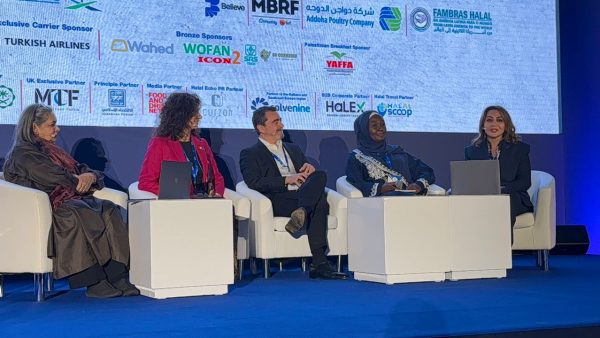
The Women Farmers Advancement Network (WOFAN), established in 1993, supports over 1.2 million rural farmers across 10 northern states in Nigeria.Additionally, over 80 per cent of the members of the nongovernmental organisation are women. WOFAN Director of Strategies, Innovation and Sustainability, Hajia Maimuna Lawal, stated this on Thursday at the London Halal Forum, during a panel discussion. Hajia Lawal said the organisation works with rural farmers’ groups, who are merged into functional commodities groups as processors, producers and aggregators with a large team that is working to support them in order to see farming as a business. ‘’One intresting thing about us is that 80 percent of our members are women, because you know women feels most of the marginalisation, and so what we’ve done in order to promote equity is to bring out this women and we also have groups that are physically challenged, we have about 60,000 of them and they are also put together into functional groups wher they can also earn income,’’ she said. She appreciated the opportunity to participate in the panel discussion with a theme Women, Leadership, and Cultural Diplomacy- The Art of Driving Inclusive Growth, moderated by Mrs. Natavan Mammadova, the Secretary General of Maida Nazir Organisation for Women Empowerment. SolaceBase reports that other panellists include Mrs Noorjehan Bilgrami, owner of KOEL, Mrs Rasamina Gurbatova, owner and designer at RESM and Mr Kerim Ture, Founder of Modanisa and SalamBooking. Maimuna explained that several crops are produced by the organisation members, and those that are ready for export are Sesame, Groundnut, Rossel, Soya bean, Garlic and Ginger. She noted that WOFAN works with over 1, 560 extension workers who also educate the farmers to produce qualitative crops using innovations and good agricultural practices. ‘’ I want to assure you all that we are ready for partnership in terms of export.’’ Gurbatova, the designer at RESM, the first Azerbaijani national jewelry brand, said the aim of her collection is to present and exhibit the beauty and cultural diversity of every region of her country, noting that her work presents a modernist interpretation of ancient Azerbaijani ornamental patterns and symbols.
Abuja – The Women Farmers Advancement Network (WOFAN) has organized a two-day training and demonstration workshop focused on the use of Information and Communication Technologies (ICTs) in agriculture practices and climate change adaptation. Attendees were trained on the use of various ICT-led agricultural applications, including Survey123, the RiceAdvice app, and moisture meters. The training which took place in Abuja, had participants drawn from FCT, Nasarawa, Benue, Southern Kaduna, and Adamawa states. During the event, Yahaya Yusuf of Sane Konsult facilitated on the use of ArcGIS Survey123 application for farm mapping. He explained the objectives of the training, which aimed to equip the Extension Workers with the skills required for GIS Mapping, in addition to understanding the framework of the software for effective mapping of cooperative farms in the WOFAN-ICON 2 project ahead of input distribution. Yahaya explained that the ArcGIS Survey123 is a tool used to collect data via mobile devices, both online/offline. “It uploads data securely for further analysis and visualization,” he said. Hajia Marya Lawal, the ICON-2 FCT Team Lead, emphasized the need for proper storage with the right moisture content. She added that ICT-led agricultural practices are essential in this digital era and urged participants to ensure effective step-down to other extension workers and community partners. Jatau Solomon, another facilitator, presented on RiceAdvice, an Android-based decision support tool for smallholder rice farmers. He explained that the software is designed to assist extension workers in advising farmers on good agronomy practices ahead of the farming season, which can improve the way farmers cultivate their lands and increase revenue generation. Solomon highlighted that the objective of RiceAdvice is to improve the livelihoods of smallholder rice farmers, increase their productivity, and sustainably integrate them into the rice value chain through tailor-made recommendations on nutrient management. The RiceAdvice application helps farmers identify the best combination of fertilizers to use based on nutrient requirements and fertilizer prices, and helps farmers make better-informed decisions through specifically trained extension agents or service providers. The app is downloadable at no cost. During the event, participants were provided with Android phones, moisture meters, and GPS devices to support and backup their data and farmers’ details. The training event successfully equipped extension workers with essential skills to effectively use ICT-led agricultural applications and devices, further enabling them to communicate these technologies to farmers in their respective communities.
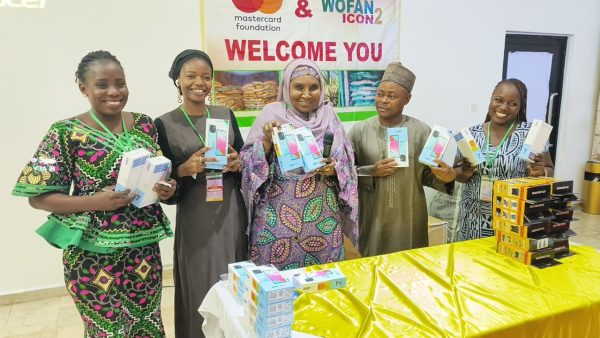
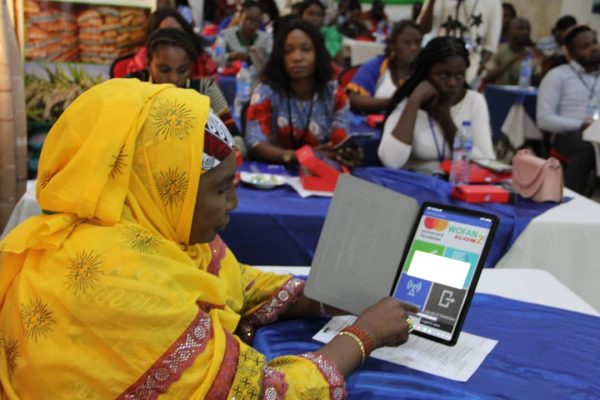
ABUJA, 27 January 2023– As part of the Integrated Community-led Network of Hope (ICON2) project activities, the Women Farmers Advancement Network (WOFAN), in partnership with the Mastercard Foundation, has trained over 600 extension workers on the use of the ICON 2 Commcare app across 10 northern states in Nigeria. The 13-day training commenced on Wednesday, January 11, 2023, and ended on Friday, February 27, 2023. The training was designed to equip participants with the necessary operational skills needed to enable farmers carry out accurate input distribution The ICON-2 Commcare app is a software as a service (SaaS) hosted on the CommCare platform which helps organizations achieve their monitoring and evaluation goals. This innovative project management software was designed to track and manage the implementation of WOFAN’s project efforts among the farmers in their respective regions, which would in turn help the management make informed decisions. The software’s functionalities include the collection of farmers’ bio-data through farmer registration, field mapping, input distribution, and surveys. It allows users to create data collection forms, track project progress, and generate reports and dashboards to easily view project performance. It also enables users to monitor project implementation in real-time and make changes as needed. In addition, the ICON 2 Commcare software provides advanced mobile features such as offline data collection, case management, and automated reminders to ensure that project progress is tracked accurately. Participants received instructions on areas such as best communication practices with farmers, customer service, problem-solving, and conflict resolution. Additionally, the training included interactive activities, such as role-playing and team-building exercises, to help participants gain a better understanding of the software. They were also issued tablets configured to contain the Commcare app, as well as power banks to allow for extended use. Miss Biem Ruth, a participant from the Federal Capital Territory, said, “the tablets we were given today would be a great tool for creating a database of farmers, which would help us to better understand the needs of the farmers, target areas for improvement, and ensure that farmers in each state have access to the resources they need.” “The intended impact of this training is to build a strong relationship between the extension workers and the farmers, increase the accuracy of data related to farmlands through geo-mapping, aid farmers carry out accurate input distribution, create a well-trained group of advisors to help the farmers, and enable WOFAN to efficiently and effectively measure and evaluate their projects live,” said Hajia Salamatu Garba, WOFAN’s Executive Director and Country Director of the ICON 2 Project. “Additionally, this training will help farmers gain a better understanding of the latest advancements in agricultural technology and better equip them to make informed decisions about their farms,” she said. The ICON 2 project is funded by the Mastercard Foundation to support 675,000 youths, across 10 Nigerian states over 5 years to develop and maintain sustainable livelihoods and have an improved quality of life, in line with the Mastercard Foundation’s bold Young Africa Works-Nigeria (2021-2030) strategy to enable 10 million youth in Nigeria, (7 million young women) to secure dignified and fulfilling employment. About WOFAN The Women Farmers Advancement Network (WOFAN) is a Nigerian non-governmental organization established to improve and promote the economic, social, and political empowerment of rural women and youth in Nigeria. About Mastercard Foundation The Mastercard Foundation works with visionary organizations to enable young people in Africa to access dignified and fulfilling work.