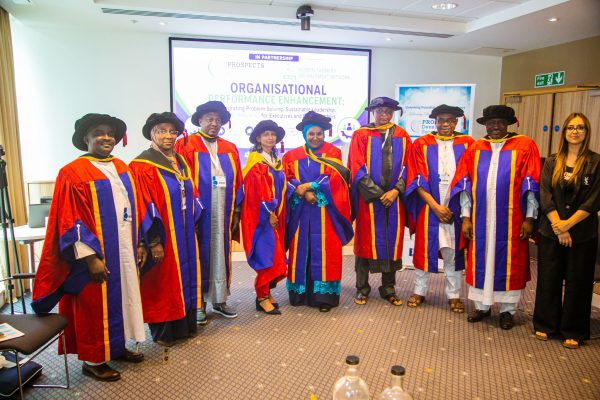
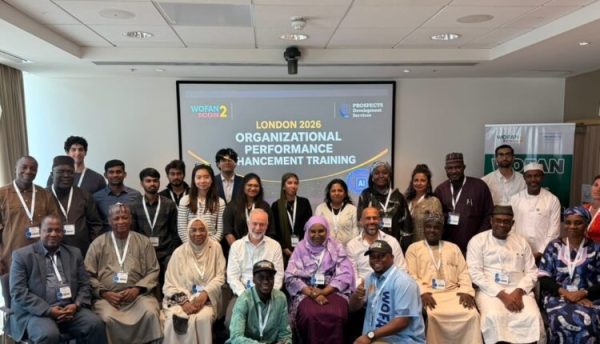
Congratulations to the Vice-Chancellor of Bayero University, Kano, Professor Haruna Musa, FSI, the Pro-Chancellor, AVM Saddik Ismaila Kaita (Rtd.), the Deputy Vice-Chancellor (Academics), Professor Ahmad Muhammad Tsauni, and the Head of the Digital Media Unit, Dr. Nura Garba, on the successful completion of a one-week intensive executive training on Artificial Intelligence, Organisational Performance Enhancement and Sustainable Leadership in London, organised by Prospects Development Services (PDS), United Kingdom, in collaboration with the Women Farmers Advancement Network (WOFAN). Also participating in the high-level programme were the Vice-Chancellor of Northwest University, Kano, Professor Amina Salihi Bayero, the Vice-Chancellor of Capital City University, Professor Yusuf Bala Daraja, Chairman of WOFAN Board, Professor Sani Miko, Dr Saleh Umar Anka, publisher of Solacebase Newspapers, Abdullatif Abubakar Jos and Madam Iyabo, as well as WOFAN team members. We celebrate this remarkable achievement and are confident that the knowledge and skills acquired will contribute significantly to strengthening institutional leadership, advancing innovation and accelerating the responsible adoption of artificial intelligence in higher education and beyond. Special thanks to the Executive Director and Global Advocate of WOFAN, Hajiya Dr Salamatu Garba
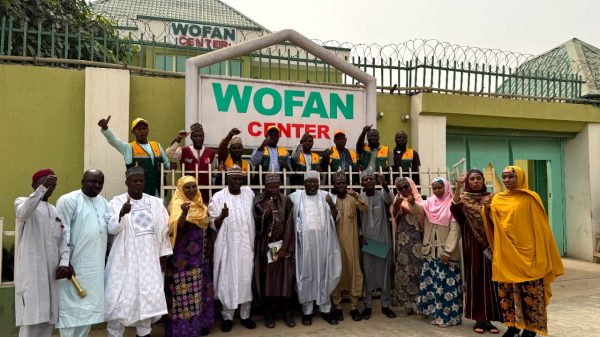
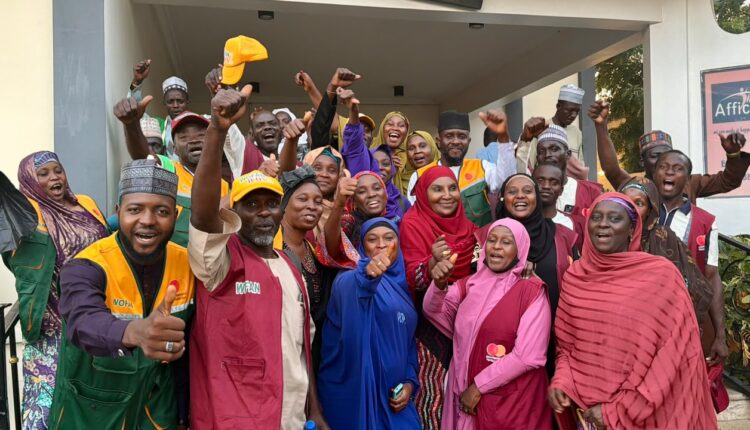
The five-day Executive Training on Organisational Performance Enhancement: Integrating Problem Solving, Sustainable Leadership and Artificial Intelligence Innovation for Executives and Board Members, organised by Prospects Development Services (PDS), United Kingdom, in collaboration with the Women Farmers Advancement Network (WOFAN), concluded in London on Friday with participants committing to translate the knowledge acquired into practical reforms across their institutions. The closing ceremony marked not only the end of an intensive week of learning but also the beginning of a coordinated effort to strengthen organisational performance through leadership development, innovative problem-solving approaches and the responsible adoption of artificial intelligence. Participants drawn from youths with leadership focus within the ages of 18- 35yrs , headship and managerial leadership of universities, government ministries and WOFAN’s international internship programme pledged to cascade the knowledge gained to colleagues within their organisations, creating a multiplier effect that would extend the benefits of the training beyond those who attended. As part of the implementation strategy, WOFAN announced how it would followup on the established monitoring framework to track the progress of each participating group and assess how the lessons from the programme are being applied within their respective institutions. One of the immediate outcomes of the training is an agreement by participants from Bayero University, Kano, Capital City University and Northwest University, Kano, to organise a one-day workshop on organisational performance enhancement, leadership and artificial intelligence for headship of various segments of their Universities in collaboration with WOFAN. The initiative is expected to *acquaint* more university staff to emerging AI tools and leadership practices can enhance organisational performance and decision making processes, while promoting institutional innovation and Inclusivity. The internship participants, comprising postgraduate students from different countries such as Turkiye, Bangladesh, United Kingdom, Saudi Arabia, Paskistan, etc, also resolved to continue developing their leadership capacities and deepen their knowledge of artificial intelligence to enhance their leadership journeys. They expressed appreciation to WOFAN for the opportunity and pledged to remain engaged with the organisation’s future capacity-building initiatives. Participants from government ministries equally committed to introducing the concepts of organisational performance enhancement, AI-driven productivity and problem-solving techniques within their various ministries to improve service delivery. In her closing remarks, the Group Board Chair and Global Advocate of WOFAN, Hajiya Dr. Salamatu Garba, described the five-day programme as an intensive and rewarding learning experience that brought together participants especially young dynamic youths with a shared vision of strengthening leadership capacity and transforming workplaces through innovation. Dr. Garba also revealed plans to establish a WOFAN Alumni Network for all its international professional development programmes so that it would bring together beneficiaries of the organisation’s various training programmes to encourage continuous learning, collaboration and mentorship. She explained that the deliberate inclusion of university vice-chancellors in the training was aimed at ensuring that the knowledge gained would be institutionalised through staff development programmes and replicated across Nigerian universities. She expressed profound appreciation to Prospects Development Services for partnering with WOFAN to deliver the programme and paid special tribute to the facilitators for their inspiring and practical presentations. Speaking on behalf of the participating Vice-Chancellors, the Vice-Chancellor of Bayero University, Kano, Professor Haruna Musa, fsi, described the training as highly impactful and intellectually enriching. He observed that developing countries such as Nigeria require stronger collaboration among academia, industry and government, noting that the programme had reinforced the importance of the Triple Helix model in addressing contemporary development challenges. Professor Musa commended the facilitators for delivering practical and evidence-based sessions and expressed optimism about future advanced courses on artificial intelligence. He expressed profound appreciation to Hajiya Dr. Salamatu Garba for her visionary leadership, invaluable contributions and results-driven strategy, which he said were instrumental to the successful organisation of the programme and its anticipated long-term impact. Chairman of the Technical Advisory Board of WOFAN , Professor Sani Miko, said the programme had significantly enhanced the capacity of participants from universities, government ministries and the internship programme. According to him, the leadership component would strengthen strategic decision-making among senior university administrators, including vice-chancellors, deputy vice-chancellors and governing council members, while the artificial intelligence sessions would enable institutions to streamline workflows, improve efficiency, reduce operational costs and optimise the use of available resources. Professor Miko noted that participants had been assigned practical post-training responsibilities, particularly the obligation to transfer the knowledge acquired to colleagues within their organisations, thereby ensuring a sustainable multiplier effect. Lead facilitator for AI concept of the training, Dr. Katrina Beta, expressed appreciation to Prospects Development Services and WOFAN for the opportunity to facilitate the artificial intelligence sessions. She praised participants for their enthusiasm, curiosity and active engagement throughout the programme. Dr. Beta observed that the practical examples contributed by participants from their respective organisations enriched discussions and demonstrated how artificial intelligence can be adapted to different institutional contexts. She encouraged participants to continue learning, noting that AI is evolving rapidly and requires continuous professional development. The interns also expressed gratitude to WOFAN for the opportunity to participate in the programme and pledged to share the knowledge gained with their colleagues.
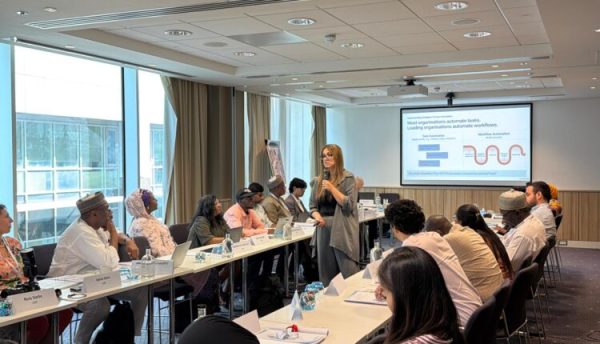
Artificial Intelligence (AI) emerged as a defining theme of the Executive Training on Organisational Performance Enhancement: Integrating Problem Solving, Sustainable Leadership and Artificial Intelligence Innovation for Executives and Board Members, as participants acquired practical knowledge and hands-on skills to transform organisational performance through responsible AI adoption. The AI sessions, held on Wednesday, 8th and Thursday, 9th July 2026, formed part of the week-long executive programme organised by Prospects Development Services (PDS), United Kingdom, in partnership with the Women Farmers’ Advancement Network (WOFAN), at the Royal Institution, London. The participants were conducted on a tour of the Royal Institution of London, an organisation for scientific education and research, based in the City of Westminster, which was founded in 1799 by the leading British scientists of the age, including Henry Cavendish and its first president, George Finch. SolaceBase reports that, facilitating the sessions, digital transformation and business management expert, Dr Ketrina Beta, challenged participants to see Artificial Intelligence not as a replacement for human intelligence but as a powerful assistant capable of enhancing decision-making, increasing productivity and improving service delivery across public and private sector organisations. She explained that institutions which strategically integrate AI into their operations can complete tasks that once took hours or days within minutes, enabling leaders to devote greater attention to innovation, strategic planning and value creation. Dr Beta also emphasised that the success of AI depends on its responsible and ethical application. She warned against uploading sensitive organisational information into AI platforms, noting that poor data governance could expose institutions to privacy and security risks. She further stressed that AI-generated outputs should never be implemented without critical human review, reminding participants that while AI may generate recommendations, accountability ultimately rests with the user and the organisation. Using practical demonstrations, case studies, live AI applications and group assignments, Dr. Beta guided participants through six key modules designed to equip executives with practical competencies for AI-driven organisational transformation. She explained AI-Driven Organisational Performance and Decision-Making by demonstrating how AI can analyse information, identify patterns and support leaders in making faster, evidence-based decisions. The Intelligent Process Automation and Performance Improvement module showed how repetitive administrative tasks can be automated to improve efficiency, reduce errors and free employees for higher-value responsibilities. During the Responsible AI, Fairness and Trust session, participants explored how organisations can minimise bias, ensure transparency and build public confidence through ethical AI practices. On Data Governance, Privacy and Accountability, the trainer highlighted the importance of protecting organisational information, complying with data governance principles and maintaining human responsibility for every AI-assisted decision. The AI Agents for Workflow Automation module demonstrated how intelligent AI assistants can automate routine workflows, coordinate multiple tasks and significantly improve operational efficiency. Throughout the training, participants carried out practical exercises using a range of AI platforms, including ChatGPT, Microsoft Copilot, Gemini, DeepSeek and NotebookLM, where they developed prompts, tested AI capabilities and explored real-life organisational applications. Speaking during the session, the Executive Director and Global Advocate of WOFAN, Dr Salamatu Garba, described the facilitator, Dr Beta, as an accomplished expert in digital transformation whose practical approach to AI would equip participants with skills that could immediately improve performance within their respective organisations. She encouraged participants to fully engage in the interactive exercises, expressing confidence that the knowledge acquired would translate into improved productivity, innovation and service delivery. The Vice-Chancellor of Bayero University, Kano, Professor Haruna Musa, said the training broadened his understanding of how AI can be strategically deployed to improve institutional efficiency and organisational performance, particularly within the realities of resource-constrained universities. Similarly, the Deputy Vice-Chancellor (Academics), Bayero University, Kano, Professor Ahmad Muhammad Tsauni, said the practical sessions provided valuable insights into how AI could simplify institutional processes and enhance productivity. Deputy Director at the Federal Ministry of Agriculture and Food Security, Iyabo Lawal Mustapha, said the training equipped her with practical AI skills that would improve efficiency and service delivery in the Ministry. Editor-inChief, SolaceBase Online newspapers, Abdullateef Abubakar Jos, noted that sessions afforded participants the opportunity to understand how AI contributes to organisational performance and its usage for forecasting, planning and decision-making. An intern, Sekina Sahin, described the prompt engineering sessions as particularly valuable, saying they had deepened her understanding of how to maximise the capabilities of AI tools. Dr Nura Garba, Communication Specialist at the Centre for Dryland Agriculture, Bayero University, Kano, said the sessions strengthened his understanding of the ethical application of AI in organisational communication, digital media and strategic decision-making. Data analyst Verni Vijayarajah said the training expanded her knowledge of Microsoft Copilot and AI-powered analytical tools for validating and interpreting complex datasets more efficiently. Mr Rajan Naibagkar described the sessions as enlightening and inspiring, noting that the practical exposure to AI tools would significantly enhance his academic work and professional practice. Also contributing to the sessions, Dr Matthew Bennett emphasised that universities must prioritise teaching the ethical use of Artificial Intelligence. He argued that as AI becomes more accessible, higher education institutions must redesign their assessment methods to evaluate students’ critical thinking and originality rather than their ability to generate AI-produced content. The sessions also attracted the participation of representatives of the Accreditation Service for International Schools, Colleges and Universities (ASIC), one of the regulatory bodies associated with Prospects Development Services. Mr Sue Huggard and Dr Lawrence Watson visited the training and interacted with participants. By the end of the two-day intensive programme, participants agreed that the training had fundamentally reshaped their understanding of Artificial Intelligence, exposing them to practical tools, ethical considerations and innovative applications capable of transforming organisational workflows, leadership effectiveness and institutional performance.
Prospects Development Services (PDS), United Kingdom, an outstanding training and leadership organisation, has partnered with WOFAN to commence a week-long executive training programme on “Organisational Performance Enhancement: Integrating Problem Solving, Sustainable Leadership and Artificial Intelligence Innovation for Executives and Board Members.” Delivering the course overview on Monday, the Founder and Chief Executive Officer of PDS UK, Bayode Tokumbo Hambolu, said the training aims to equip participants with a deeper understanding of the key drivers of organisational performance and institutional effectiveness, while exposing them to structured problem-solving approaches for addressing complex strategic and operational challenges. He added that participants would also explore how AI can be leveraged to enhance organisational innovation, productivity, risk management and service delivery across both public and private institutions. Hambolu noted that PDS had assembled a team of highly experienced facilitators to deliver the programme and congratulated participants who travelled from different countries such as Turkiye, India, Pakistan, Saudi Arabia, the United States and other countries to attend the international training. SolaceBase reports that the Executive Director of WOFAN, Dr Salamatu Garba, welcomed participants from diverse professional and institutional backgrounds, describing the programme as a unique opportunity for knowledge sharing, networking and cross-cultural collaboration. She urged participants to actively engage in all sessions to maximise the benefits of the training. Also speaking, the Vice-Chancellor of Bayero University, Kano, Professor Haruna Musa, described Artificial Intelligence as one of the defining technologies shaping the future of higher education and institutional management. He said he looked forward to gaining practical insights into the opportunities and challenges associated with AI and how it can be harnessed to improve organisational performance. The Vice Chancellor expressed optimism that the knowledge acquired during the programme would be shared with staff and students of the University to enhance teaching, research and administrative efficiency. Earlier, the Director of Strategy, Innovation and Sustainability at WOFAN, Hajiya Maimuna El-Labib Lawal, welcomed participants and introduced members of the WOFAN delegation.
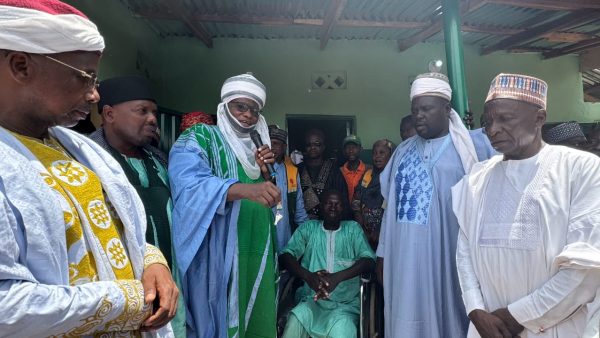
A humanitarian intervention by the Women Farmers Advancement Network (WOFAN) has transformed the life of a spinal cord patient and brought critical development projects to Warwade community in Birnin Kudu Local Government Area of Jigawa State. The intervention, which followed the public exposure of the patient’s condition through a radio programme aired on Aminci Radio Kano, culminated in the reconstruction of his dilapidated home, the commissioning of a borehole with more than six water collection points, and the inauguration of five new WOFAN groups comprising four women’s groups and one men’s group, forming a cluster in the community. SolaceBase reports that the beneficiary, Zuladaini Attahir, called into a radio programme focused on Persons With Disabilities (PWDs), where he lamented his health condition and the daily challenges he’s facing. Speaking during the commissioning ceremony on Monday, Aminu Adam Gama, a journalist with Aminci Radio Kano and anchor of the PWD programme, explained how the intervention came about. According to him, Zuladaini called into the live programme and revealed that he had been battling a spinal cord condition for more than 16 years. “He explained that he had no means of livelihood and that his elderly mother was forced to beg in neighbouring villages to feed him. He appealed for assistance during the programme. “The following day, I travelled to Birnin Kudu, met him, conducted an interview, and documented his situation through videos and photographs. “I used my contacts as a journalist to reach out to many individuals and organisations that I believed could assist him, but none did anything beyond making promises. “However, when I contacted the Board Chair of WOFAN Group, Dr Salamatu Garba, describing the situation, she immediately agreed to help. She connected me with her representatives, who visited the community and assessed the situation. “Today, we are witnessing the outcome of that intervention. WOFAN rebuilt his home, installed solar power to enable him to generate income by charging mobile phones, provided food items for him, and also constructed a borehole for the community, which had long suffered from a lack of access to clean water,” he said. Moved by the situation Board Chair of WOFAN Group, Dr Salamatu Garba, directed immediate intervention to improve the welfare of the patient and address some of the pressing needs of the community. Represented at the event by the District Head of Aujara, Alhaji Aminu Dan Mallam, Dr Garba said the organisation’s response was driven by its commitment to supporting vulnerable persons and promoting sustainable community development. He noted that while the initial intervention focused on providing decent shelter for the spinal cord patient, WOFAN also identified the need for improved access to clean water and economic empowerment opportunities for women in the area. As part of the intervention, WOFAN rebuilt Zuladaini’s house, replacing the old structure that had become unsafe and unsuitable for habitation. The organisation also installed a solar power system to enable him to earn income through mobile phone charging services. Geographic Reference In addition, WOFAN constructed a borehole equipped with more than six water collection points to provide clean and safe drinking water for residents, reducing the burden of water scarcity and improving public health in the community. The water supply was also connected directly to Zuladaini’s residence. The organisation further inaugurated five new community groups, four for women and one for men, to strengthen participation in its empowerment programmes. The groups are expected to benefit from capacity-building initiatives, financial inclusion programmes, and livelihood support designed to improve household incomes and promote self-reliance. Speaking at the event, the Chairman of Persons with Disabilities in Birnin Kudu Local Government Area, Mallam Adamu Abdullahi, commended WOFAN’s support for PWDs. Health According to him, WOFAN had previously provided members of the association with 30 bags of fertiliser and other farming equipment to support their agricultural activities. He also praised the organisation for assisting Zuladaini and constructing the borehole, noting that the community had suffered for years from inadequate access to water. Abdullahi prayed for God’s continued blessings upon the founder of WOFAN and the organisation’s members. Also speaking, the Chairperson of Small-Scale Traders in Birnin Kudu Local Government Area, Sadiya Ibrahim, said WOFAN had supported members of her association with rice and start-up capital. “WOFAN supported us with rice and business capital, which enabled us to start our businesses. Today, we are self-reliant and able to support ourselves,” she said. Newspapers She described the intervention as life-changing and expressed gratitude to WOFAN for its continued support to vulnerable groups. In his remarks, Aminu Siraj, Chairman of Logistics Operators and Tricycle Riders in Birnin Kudu Local Government Area, highlighted how WOFAN’s intervention had improved the livelihoods of members of his association. Anatomy “WOFAN supported us by providing logistics tricycles. Each tricycle costs more than N3 million in the market. We were asked to contribute only a small percentage of the amount as a group before receiving the machines. “Today, these tricycles are operating effectively and generating at least N30,000 daily. The proceeds are being deposited into our group account, which has 30 members. We have recovered our initial investment and are now making profits,” he said. Siraj prayed for God’s continued guidance and support for WOFAN and its founder, noting that the organisation had positively changed many lives. He also commended the role of the media in bringing attention to Zuladaini’s plight, saying the report served as the catalyst for the interventions now benefiting both the patient and the wider community. Hospitals & Treatment Centers Speaking emotionally at the event, Zuladaini Ibrahim expressed gratitude to WOFAN and all those who contributed to the intervention. “I am very proud and happy today. I am overwhelmed by what has happened. We have nothing to offer the Founder of WOFAN except prayers. I urge everyone here to continue praying for her and the organisation,” he said. He thanked the WOFAN team, Aminu Adam Gama of Aminci Radio Kano, his ward head, and other traditional leaders for their support. In her remarks, Zuladaini’s mother, Rakiya Ibrahim, thanked the WOFAN Founder…
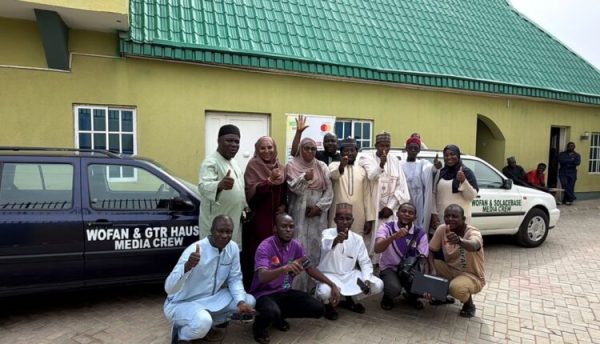
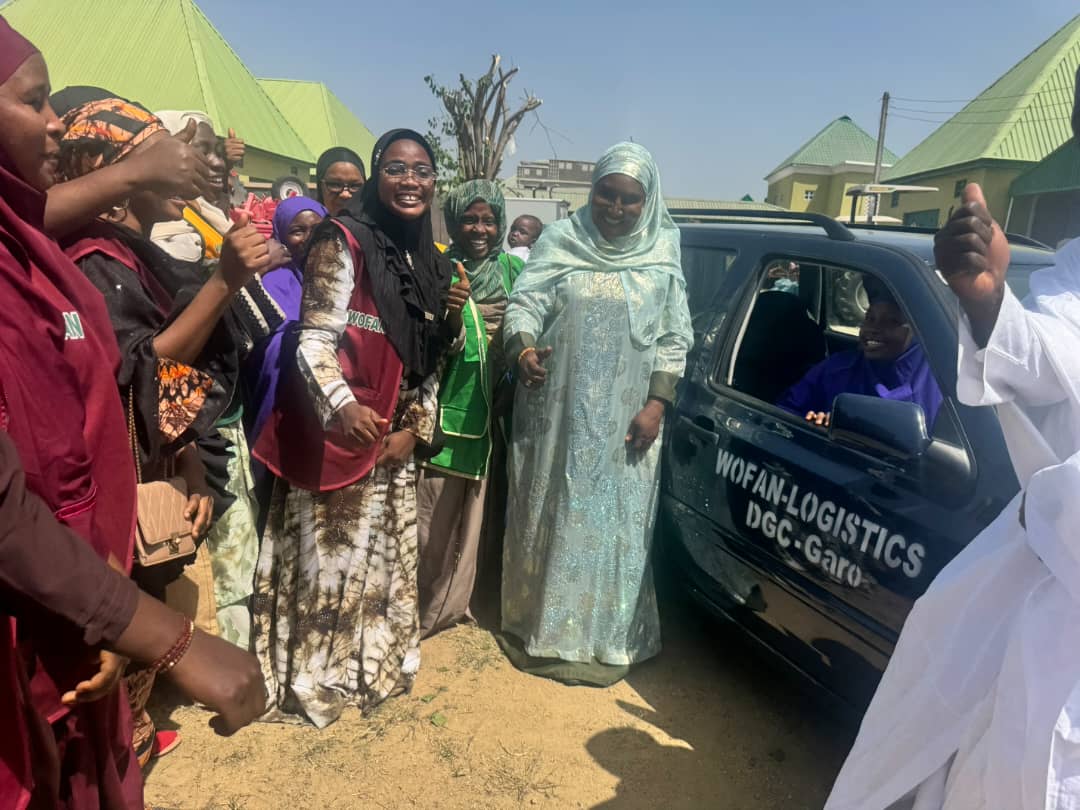
As part of its commitment to strengthening partnerships and enhancing media coverage of development initiatives in conducive and dignifying situations, the Women Farmers Advancement Network (WOFAN) has donated two vehicles to both SolaceBase and GTR Hausa online newspapers. Speaking during the presentation of the vehicles in Kano on Wednesday, the Board Chair of WOFAN Group, Dr Salamatu Garba, described journalists as critical partners in societal development who carry out their daily functions under harsh and difficult circumstances, of which such contributions are often underappreciated. Speaking further, she noted that the media plays a vital role in informing the public with vital awareness messages, promoting accountability, and amplifying the impact of development programmes. According to her, the token gesture was aimed at easing the transportation challenges faced by journalists and improving their efficiency in carrying out their duties. “We are proud of the work journalists do. They are our friends and partners whom society deeply relies on while they help in giving visibility to our activities and the impact we create in communities. We understand the mobility challenges many journalists face, and this is our own way of supporting them. We pray that God continues to guide, protect and assist them in their service to society,” she said. Dr Garba further highlighted WOFAN’s contributions to improving livelihoods across Nigeria through women and youth empowerment, agricultural development, financial inclusion, skills acquisition programmes, and initiatives aimed at reducing poverty and creating sustainable economic opportunities for rural communities. Receiving the vehicle on behalf of SolaceBase, the CEO and Publisher of the newspaper, Alhaji Abdullateef Abubakar Jos, expressed appreciation to WOFAN for its continued support and partnership over the years. “We have always felt the positive impact of WOFAN’s interventions. Our company has benefited from WOFAN’s support in many ways, such as capacity trainings within and outside Nigeria, and we are deeply grateful for this generous gesture. “This vehicle will significantly enhance our operations and encourage us to do even more in serving the public. May Almighty Allah reward Hajiya Salamatu Garba abundantly,” he said. Also speaking, the Publisher of GTR Hausa, Bashir Ahmad Rigasau, thanked WOFAN for its unwavering support to the image of the media personalities. He said WOFAN had stood by his media outfit during its growth journey, including supporting its efforts to establish an office and expand its operations. “We sincerely appreciate WOFAN’s countless support and commitment to our growth. This donation will further strengthen our capacity to deliver quality journalism to our audience,” he said. SolaceBase reports that WOFAN, in another event, presented vehicles to three other journalists who are members of its media team in recognition of their long-serving partnership and contributions to promoting the organisation’s outreach and extension service delivery activities and developmental programmes.
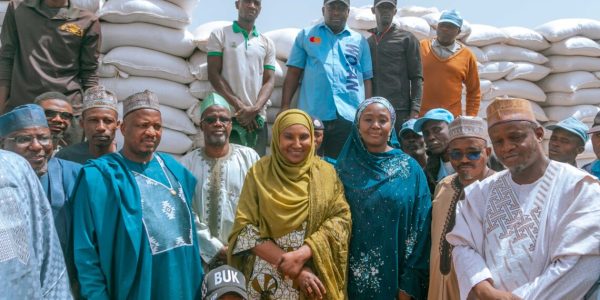
By Nura Garba and Hamza Usman Smiles, relief, and heartfelt prayers from beneficiaries filled the air as Women Farmers Advancement Network (WOFAN), in a strategic collaboration with the Centre for Dryland Agriculture (CDA) and the Faculty of Agriculture, Bayero University, Kano (BUK), launched the Skills Improvement to Boost Livelihood and Nurture Growth (SIBLING) Initiative. This ambitious intervention aims at repositioning agricultural education, strengthening livelihoods, and accelerating youth-driven agribusiness development. The initiative, which was formally unveiled on Tuesday by the Vice-Chancellor, Professor Haruna Musa, fsi, marked a significant milestone in WOFAN’s expanding footprint from rural communities into academic and research ecosystems, while reinforcing CDA’s mandate of translating research into real-world impact. Designed as a two-year pilot programme, SIBLING seeks to strengthen agribusiness training, promote climate-smart agriculture, stimulate innovative student research, and encourage specialisation across key agribusiness value chains. Central to the programme is its livelihood component, which targets neighbouring communities and micro-agro marketers within and outside the university environment. As a first-line intervention under the SIBLING framework, WOFAN distributed 560 bags of rice to 2,617 identified beneficiaries, mainly junior, casual, and outsourced low-ranking staff, prioritising women between the ages of 18 and 35 under its ICON2 initiative. The gesture was aimed at supporting small businesses, easing household food pressure, and reinforcing economic resilience, particularly ahead of the Ramadan season. Declaring the initiative open, the Vice-Chancellor of Bayero University, Kano, Professor Haruna Musa, described SIBLING as a transformative programme for the university community. He said the initiative directly addresses the long-standing gap between theory and practice in agricultural education. “Today marks the beginning of a transformative journey for our students and junior staff,” the Vice-Chancellor said. “This partnership equips our graduates with hands-on skills, improves employability, and makes agribusiness more attractive as a dignified and profitable vocation.” He disclosed that facilities commissioned under the project include rice milling and processing units, briquette-making machines for converting rice husks into fuel, compost production units, and fisheries training sections. These innovations, he said, would promote value addition, youth participation, and sustainable agriculture. Professor Musa commended WOFAN for providing equipment, inputs, and technical expertise, describing the collaboration with CDA as a model for effective university development and organisation partnerships with measurable social impact. In her remarks, the WOFAN Group Executive Board Chair and United Nations POLAC Peace Ambassador, Dr Salamatu Garba, said SIBLING represents a deliberate scaling of WOFAN’s ICON2 project beyond rural communities into centres of learning, innovation, and research. According to her, the initiative is built on a dual focus: empowering students through entrepreneurship-driven agricultural training and strengthening livelihoods among vulnerable groups. “Our students study agriculture, but many lack entrepreneurial exposure. We want to change that,” she said. “Young people between 18 and 35 are the backbone of the economy, and they must be prioritised if agriculture is to become a tool for wealth creation.” She explained that SIBLING would promote climate-smart agriculture, compost and biochar production, briquette making, rainwater harvesting, and circular-economy practices. The programme, she added, would also deploy climate information services, decision-support tools, and artificial intelligence applications to guide precision farming and improve soil management. “At WOFAN, we only take tested and proven innovations to farmers. The time has come to transform agriculture sustainably,” Dr Garba said. Earlier, the Chairman of the Local Organising Committee and Chairman of the Technical Board of Advisers for the WOFAN ICON2 Project, Professor Sani Miko, described the launch as a historic milestone for the university. “In a rapidly changing economy, the gap between skills and market demand determines whether people thrive or struggle,” he said, describing SIBLING as a strategic investment in human capital aligned with the Mastercard Foundation’s vision of creating over 10 million dignified jobs in Nigeria by 2030. On his part, the Director of the Centre for Dryland Agriculture, Professor Sanusi Muhammad Gaya, said the initiative reflects a deepened partnership between WOFAN and CDA rooted in shared vision and collective responsibility. “Our goal is not to train job seekers, but to nurture innovators and entrepreneurs who will strengthen food systems and drive sustainable economic growth,” he said, adding that the rice distribution underscores the partners’ commitment to inclusivity and compassion. The Dean of the Faculty of Agriculture, Professor Aminu Sulaiman, said the initiative aligns with the faculty’s goal of producing job creators rather than job seekers. He noted that students would receive end-to-end practical exposure across the rice, maize, and groundnut value chains from production to processing, packaging, and marketing. “These facilities are not just machines; they are platforms for enterprise development,” he said. Also speaking, the Chairman of the Non-Academic Staff Union (NASU), BUK branch, Comrade Abdullahi Nasiru Abdulrafiu, expressed appreciation to WOFAN, noting that nearly 90 per cent of the beneficiaries were NASU members. Goodwill messages were presented by the former Vice-Chancellor, Aliko Dangote University of Science and Technology, Professor Shehu Alhji Musa, the immediate past Director of CDA, Professor Jibrin Mohammed Jibrin and NASU-BUK Chairman, Comrade Abdullahi Nasiru Abdulrafiu. According to many beneficiaries, this intervention came at a critical moment in their lives. “This support came at the right time, especially with Ramadan approaching,” said Zainab Umar, a junior staff member. “It has reduced the burden on my family in ways words can’t explain.” Aisha Ismaila, a cleaner with one of the outsourced companies, admitted she was initially sceptical. “I thought it was just talk,” she said. “But when we heard Dr Salamatu Garba speak during the launch and we then received the rice, I realised this empowerment is real. This is help we can feel.” A group of five female junior staff members of the Non-Academic Staff Union (NASU) described the distribution as a lifeline, noting that it would significantly bridge food gaps in their households during the fasting period. From neighbouring communities, Saratu Abubakar and Umma Sani could not hide their joy. “We may not have big words,” they said, “but may Allah continue to bless Dr Salamatu Garba for remembering people like us”. The SIBLING launch ceremony drew university management, academic and non-academic staff,…
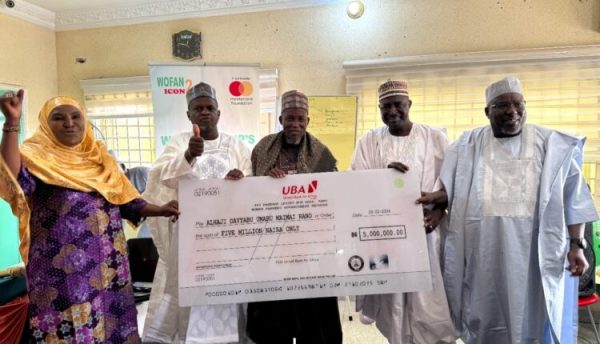
The Women Farmers Advancement Network (WOFAN) has appointed former Director of News at Radio Kano, Dayyab Umar Mai Mai Rano, as its Volunteer Consultant on Communications and Special Duties, marking a new chapter in his career following his retirement from public broadcasting. Dayyab, who spent more than two decades in the media industry, is widely known for his distinguished broadcasting career and his role as a Friday mosque imam in Rano. His appointment was approved by WOFAN’s leadership and governing board in recognition of his 26 years of consistent support in strengthening the organisation’s communication efforts and public image since 2001. At a brief ceremony held on Friday, February 20, 2026, to formally receive him into the new role, the organisation announced start-up support to help him establish a personal office and also presented him with a vehicle to facilitate his official responsibilities, according to SOLACEBASE.Leadership Praises His ContributionsSpeaking at the event, WOFAN Executive Chair and Peace Ambassador of the United Nations POLAC, Salamatu Garba, described Dayyab as a seasoned professional who has played a vital role in strengthening the organisation’s engagement with the public. She explained that he would serve on a volunteer basis under a performance-based remuneration structure for an initial two-year term, focusing on strengthening communication strategies and expanding the impact of WOFAN’s programmes within communities.Chairman of the Technical Advisory Committee of WOFAN ICON 2, Sani Miko, commended Dayyab’s years of dedication, noting that the organisation’s thoughtful transition plan for him reflects its foresight and commitment to supporting long-standing partners.Board member Muhamud Daneji said he first came to know Dayyab through his voice on Radio Kano, where he consistently demonstrated professionalism and adherence to journalistic ethics.Similarly, former Head of the Department of Agriculture at Bayero University Kano, Muhammad Auwal Hussain, attributed Dayyab’s achievements to dedication, integrity, and strong moral values.Expression of GratitudeIn his acceptance remarks, Dayyab expressed deep appreciation to Salamatu Garba, whom he credited with playing a significant role in his academic and professional growth.He said her support enabled him to obtain both his first and master’s degrees, and that he is currently pursuing a PhD, pledging to use his new role to further strengthen WOFAN’s communication capacity and community outreach.
The Women Farmers Advancement Network (WOFAN) has appointed former Director of News at Radio Kano, Dayyab Umar Mai Mai Rano, as its Volunteer Consultant on Communications and Special Duties, marking a new chapter in his career following his retirement from public broadcasting. Dayyab, who spent more than two decades in the media industry, is widely known for his distinguished broadcasting career and his role as a Friday mosque imam in Rano. His appointment was approved by WOFAN’s leadership and governing board in recognition of his 26 years of consistent support in strengthening the organisation’s communication efforts and public image since 2001. At a brief ceremony held on Friday, February 20, 2026, to formally receive him into the new role, the organisation announced start-up support to help him establish a personal office and also presented him with a vehicle to facilitate his official responsibilities, according to SOLACEBASE.Leadership Praises His ContributionsSpeaking at the event, WOFAN Executive Chair and Peace Ambassador of the United Nations POLAC, Salamatu Garba, described Dayyab as a seasoned professional who has played a vital role in strengthening the organisation’s engagement with the public. She explained that he would serve on a volunteer basis under a performance-based remuneration structure for an initial two-year term, focusing on strengthening communication strategies and expanding the impact of WOFAN’s programmes within communities.Chairman of the Technical Advisory Committee of WOFAN ICON 2, Sani Miko, commended Dayyab’s years of dedication, noting that the organisation’s thoughtful transition plan for him reflects its foresight and commitment to supporting long-standing partners.Board member Muhamud Daneji said he first came to know Dayyab through his voice on Radio Kano, where he consistently demonstrated professionalism and adherence to journalistic ethics.Similarly, former Head of the Department of Agriculture at Bayero University Kano, Muhammad Auwal Hussain, attributed Dayyab’s achievements to dedication, integrity, and strong moral values.Expression of GratitudeIn his acceptance remarks, Dayyab expressed deep appreciation to Salamatu Garba, whom he credited with playing a significant role in his academic and professional growth.He said her support enabled him to obtain both his first and master’s degrees, and that he is currently pursuing a PhD, pledging to use his new role to further strengthen WOFAN’s communication capacity and community outreach.
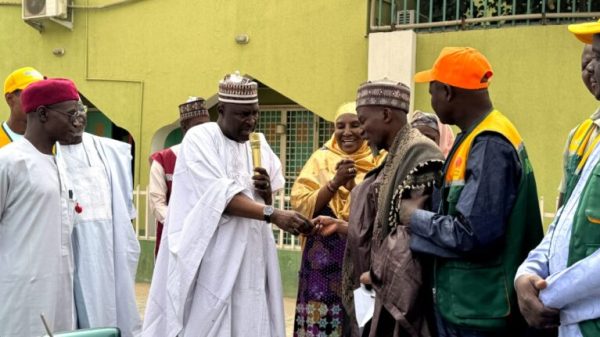
An international non-for profit organization, the Women Farmers Advancement Network (WOFAN) has appointed Mallam Dayyab Umar Mai Mai Rano as its Communication and Special Duties( volunteer) Consultant, marking the beginning of a new chapter in his career following his retirement from Kano State Radio Corporation, Radio Kano, after putting in over two decades of service in the broadcasting industry. SolaceBase reports that the appointment, approved by WOFAN’s Management and Board, comes after Dayyab’s 26 years of dedicated and continuous service in supporting the organisation’s communication efforts and enhancing its visibility across numerous programs and events since 2001 to date. At a brief ceremony held on Friday, 20th February 2026, to mark his assumption of duty, WOFAN announced a startup grant to enable him establish a personal office that will support his new responsibilities. In addition, the organization presented him with a car to facilitate his official engagements. Speaking at the event, WOFAN Group Executive Board chair and United Nations POLAC peace ambassador, Dr Salamatu Garba, described Mallam Dayyab as a committed and experienced professional whose contributions over the years have significantly strengthened the organisation’s outreach and public engagement. “Under the new arrangement, he will serve on a volunteer, pay-as-you-work basis for an initial period of two years. His role will focus on boosting WOFAN’s visibility, supporting communication strategies, and assisting in activities involving Dattawan WOFAN and the Group Executive Board Chair.” She expressed confidence that his wealth of experience will continue to add value to WOFAN’s programs and help amplify the impact of its initiatives across communities. She also urged other journalists to emulate Dayyab’s exemplary conduct and professionalism. In his remarks, the Chairman of the Technical Board of Advisers for the WOFAN ICON 2 Project, Professor Sani Miko, commended Dayyab Maimai Rano for his unwavering dedication and selfless service to WOFAN over the years. He also expressed deep appreciation to Dr Salamatu Garba for her humanitarian efforts, noting that her passion for helping others remains exceptional. “Whenever I speak about good people I know, the first person that comes to mind is Hajiya. She is a remarkable woman. While retirement is often a time of celebration in many countries, the situation is quite different in Nigeria, where many civil servants fear life after retirement. However, with the dimension taken by WOFAN, Dayyab has been prepared for retirement well in advance, which demonstrates WOFAN’S foresight and compassion in building its personnel growth and organizational stability” We cannot thank you enough for all the good you have done for us,” he said. Also speaking at the event, a Board Member of WOFAN, Professor Muhamud Daneji, praised Dr Garba for her continued support to Dayyab Rano and described him as a humble and humane individual. “I first knew Dayyab through his voice on Radio Kano, particularly in the popular program Taskar Labarai, but I later met him in person at a WOFAN function. He is a thorough professional who ensures his reports are well verified before going on air. As he assumes his new role in WOFAN, I wish him continued success,” Daneji said. In a similar vein, the immediate past Dean of the Faculty of Agriculture at Bayero University Kano, Professor Muhammad Auwal Hussain, noted that Dayyab’s success over the past 26 years with WOFAN was driven by his strong sense of responsibility, dedication, and fear of God. He advised him to judiciously utilise the grant provided and invest it wisely for a sustainable future. While receiving his letter of appointment, Mallam Dayyab Maimai Rano expressed profound gratitude to Dr. Salamatu Garba, whom he described as a mother figure in his life. He recounted her immense support throughout his personal and professional journey. “When I first met Hajiya, I only had a diploma. With her support, I obtained my degree, a master’s degree, and I am currently pursuing my PhD,” he said. “If I begin to list everything Hajiya has done for me over the years, time will not permit. I truly consider her my mother because she has played that role in my life.” He concluded with prayers for her continued wellbeing. “May God grant her good health, long life, and reward her with Jannatul Firdaus.”