WOFAN, PWDs, inputs, farmers,

WOFAN distributes agric inputs to 3,000 youth farmers’ group in 8 states, FCT

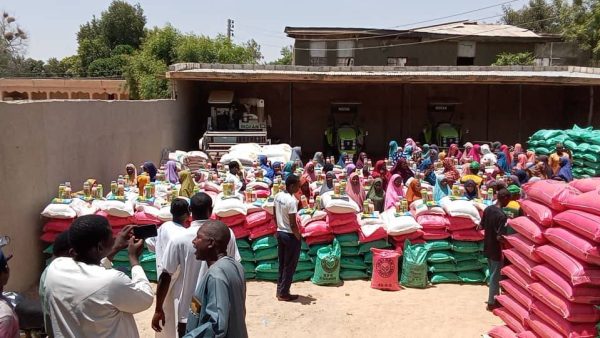
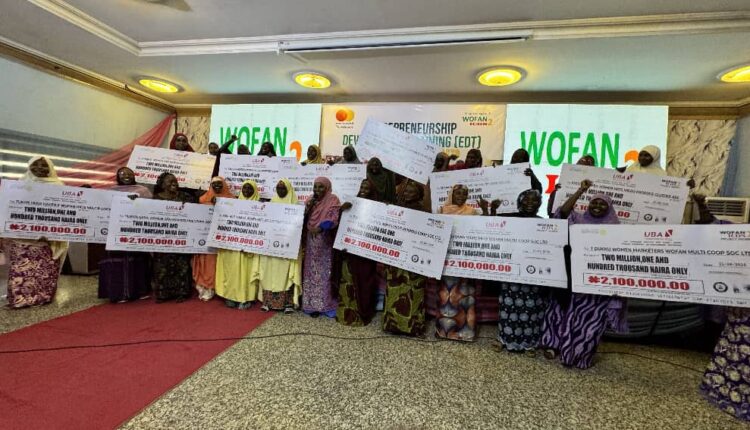
The Women Farmers Advancement Network (WOFAN) has commenced the distribution of essential agricultural inputs to 3,000 youth farmers’ groups across eight northern states and the Federal Capital Territory (FCT). The initiative, launched recently Friday in Kano under the Year 3 activities of the WOFAN-ICON2 Project and funded by the Mastercard Foundation, is aimed  at drawing young Nigerians, especially women, into modern, profitable farming by providing them with agricultural tools, knowledge of best practices, and financial support. Founder and Executive Director of WOFAN, Dr. Salamatu Garba,  said the support is a one-time startup grant designed to empower youth and women with the tools needed to build dignified, sustainable livelihoods. The distributed inputs, she said, are intended to support wet season cultivation of rice, maize, sorghum, and groundnuts across Adamawa, Bauchi, Benue, Gombe, Jigawa, Kaduna, Kano, Nasarawa states, and the FCT. Each youth group received a 50kg bag of improved seeds, four bags of NPK fertiliser, two bags of Urea, and six litres of agrochemicals, sufficient for one hectare of cultivation. “This initiative is not a loan; it’s a startup grant designed to enhance our youths’ interest in farming by providing access to financial services, best agronomical practices, community savings schemes, and modern agricultural tools and technologies,” she said. In total, WOFAN has allocated 300,000 kg of seeds, 1,200 metric tons of NPK fertiliser, 900 metric tons of Urea, and 36,000 litres of pesticides for use in the 2025 dry and wet seasons. At the FCT flag-off, WOFAN’s Business and Coordination Manager, Mr. Taiwo Olawale, highlighted that 80% of the community partners are women.  He stressed that the program is tailored to remove financial barriers that typically prevent young people, particularly women and persons with disabilities, from engaging in productive agriculture. WOFAN Director of Strategies and Innovation, Hajia Maimuna Lawal, added that the grants are structured to allow youth to begin farming without going into debt. “In an economy where raising capital poses significant challenges, the WOFAN-ICON2 initiative provides these grants so that young people can commence farming without incurring debt. The profits they generate can be reinvested in their farms for the next season,” she said. Beneficiaries were also briefed on the program’s objectives and guidelines before receiving the inputs. One of the recipients, Hajiya Khadija Tijjani from Tudun Wada, expressed her appreciation: “This kind of support is life-changing for women like us. Many people don’t believe women can succeed in farming, but this grant gives us a strong starting point.” The WOFAN-ICON2 Project, supported by the Mastercard Foundation, targets 675,000 young Nigerians across nine states over five years.  It aligns with the Foundation’s Young Africa Works strategy (2021–2030), which aims to connect 10 million Nigerian youth, which 7 million of them are women with dignified and fulfilling work.

WOFAN Commences 2025 Rainy Season Input Distribution to Year 3 Farmers

WOFAN has officially commenced the 2025 rainy season input distribution to its Year 3 targeted farmers across nine states: Kaduna, Kano, Jigawa, Benue, Nasarawa, Bauchi, Gombe, and Adamawa. https://web.facebook.com/100004746793964/videos/pcb.3134760146692181/1054338063260571 As part of its continued support for agricultural development and rural transformation, over 4,500 farmers’ groups will receive startup grants including: 24,000 bags of NPK fertilizer 18,000 bags of Urea 300,000 kg of improved seeds This massive distribution is a strategic effort to enhance agri-business capacity, boost food security, and stimulate economic growth across communities in the implementing states. Congratulations to all Year 3 Community Partners — your journey toward agricultural prosperity is well underway!

18,000 WOFAN-ICON2 farmers acquire tractors to boost production, enhance income

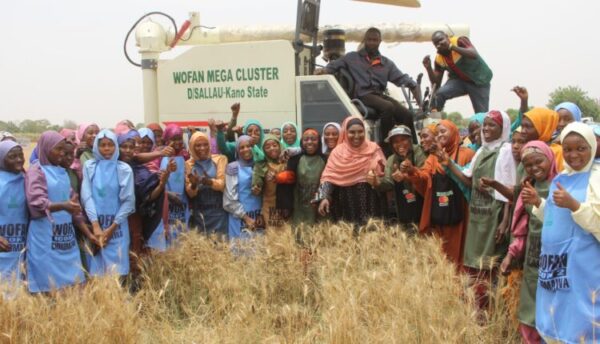
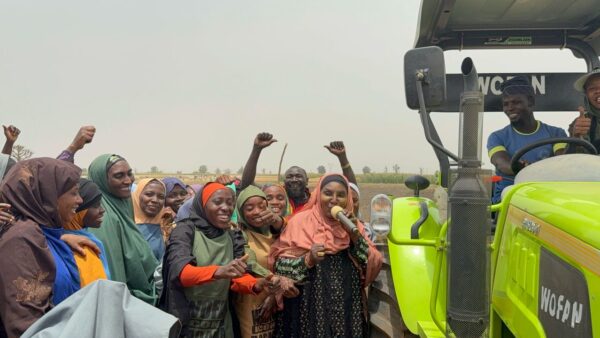
Five WOFAN super clusters have contributed over a period of 2 years( from their raining and dry season farming proceeds) to address their farm input logistic issues .In addition to their 30 tricycle carriers (6per super cluster) given by the WOFAN- ICON2 project, they’ve now owned through *crowd savings*, a 2024 model Dial transport system each to further boost their cluster income generation, creating more dignified jobs and easing the over a decade long problem of moving inputs from farm to the markets.The handing over was headed by the WOFAN technical board members and various cluster and community heads.A big CONGRATULATIONS and really worthy of emulation by the other super clusters!! The machinery was facilitated through WOFAN’s input and equipment revolving scheme, designed to promote mechanization and improve access to modern agricultural tools. Participants in the first two years of the ICON2 Project (2022–2024) formed cooperative groups of 30 members to strengthen their farming operations. These groups received training and input grants, allowing them to pool resources and invest in modern equipment.   The Women Farmers Advancement Network (WOFAN) has supported 18,000 young farmers in Kano and Jigawa States to acquire two multi-crop harvesters and twelve tractors, with the target to boost agricultural productivity and support its mega clusters through the 2024 dry season and beyond. The initiative, under the WOFAN-ICON2 Project, introduced a giant multi-crop harvester capable of covering up to five hectares per hour, significantly enhancing efficiency and yields for smallholder farmers.   The machinery was facilitated through WOFAN’s input and equipment revolving scheme, designed to promote mechanization and improve access to modern agricultural tools. Participants in the first two years of the ICON2 Project (2022–2024) formed cooperative groups of 30 members to strengthen their farming operations. These groups received training and input grants, allowing them to pool resources and invest in modern equipment. At the official handover ceremony held in Dorawar Sallau, Kano State, WOFAN Executive Director, Dr. Salamatu Garba, celebrated the milestone as a result of collective efforts. She explained that each mega cluster, made up of 3,000 farmers from 100 groups, contributed ₦3,000 per member after harvesting across the three farming seasons—rainy, dry, and wheat seasons. This pooled savings amounted to ₦27 million, representing 50 percent of the cost of a multi-crop harvester worth N54 million. In a similar fashion, clusters also raised N9 million (50 percent of the cost) for tractors valued at N18 million each. Twelve tractors have so far been acquired, with allocations going to Bauchi, Gombe, Jigawa, the Federal Capital Territory (FCT), and the Ikara axis. Dr. Garba added that farmers will repay the remaining balance through similar contributions after completing the upcoming farming seasons. Each mega cluster has also received two tractors through the revolving grant scheme to further mechanize their activities. “We thank the Mastercard Foundation for laying the foundation and enabling this achievement. Their support under the ICON2 Project provided essential labor-saving equipment like power tillers and hand-operated harvesters. This eased farm work and attracted more youth—especially women—who previously avoided farming due to its labor intensity,” she said. According to Dr. Garba, the project has significantly improved productivity among the 675,000 farmers targeted over the five-year span. With farm sizes expanding from one hectare in 2022 to between three and four hectares now, the move toward mechanized farming has also improved market access, financial inclusion, and income generation for participants. Representing the Bebeji Mega Cluster, Women Cluster Leader Hajia Rafa’atu Salis Bagauda expressed excitement over the acquisition of a multi-crop harvester. She noted that a trained team of four drivers and six maintenance personnel per cluster had undergone rigorous training in machinery operation, minor repairs, and routine checks. These teams were also linked with verified spare parts dealers, while plans are underway to establish local spare part outlets to further improve access and affordability. “This is the first time our community owns a multi-crop harvester—and it’s led by women. It will ease harvesting and serve as a new source of income through rentals. We feel empowered. Thank you, WOFAN. Thank you, Dr. Salamatu. Thank you, Mastercard Foundation,” she said. Sadiya Bala of the Kadawa Mega Cluster in Kano, which received a tractor after making a 50 percent down payment, pledged that her group would contribute ₦3,000 per member after each farming season in 2025 to fully repay the balance. She also promised that the women would master operating the tractors and harvesters themselves by next year. “These tractors are modern and user-friendly. Insha Allah, we, the women, will be driving and operating them ourselves by this time next year,” she noted.  

18,000 WOFAN-ICON2 farmers acquire tractors, multi-crop harvesters to boost production, enhance income

The Women Farmers Advancement Network (WOFAN) has supported 18,000 young farmers in Kano and Jigawa States to acquire two multi-crop harvesters and twelve tractors, aiming to boost agricultural productivity and support its mega clusters through the 2024 dry season and beyond. SolaceBase reports that the initiative, under the WOFAN-ICON2 Project, introduces a giant multi-crop harvester capable of covering up to five hectares per hour, significantly enhancing efficiency and yields for smallholder farmers. The machinery was made accessible through WOFAN’s input and equipment revolving scheme, designed to promote mechanization and improve access to modern agricultural tools. Participants in the first two years of the ICON2 Project (2022–2024) formed cooperative groups of 30 members to strengthen their farming operations. These groups received training and input grants, allowing them to pool resources and invest in modern equipment. At the official handover ceremony held on Thursday at Dorawar Sallau,  Garun Malam local government area,  Kano State, WOFAN Executive Director, Dr. Salamatu Garba, described the milestone achievement as a collective effort. She explained that each mega cluster, made up of 3,000 farmers from 100 groups, contributed ₦3,000 per member after harvesting across the three farming seasons—rainy, dry, and wheat seasons. This pooled savings amounted to ₦27 million, representing 50% of the cost of a multi-crop harvester worth ₦54 million. According to her, in a similar way, clusters also raised ₦9 million (50% of the cost) for tractors valued at ₦18 million each. Twelve tractors have so far been acquired, with allocations going to Bauchi, Gombe, Jigawa, the Federal Capital Territory (FCT), and the Ikara axis in Kaduna. Dr. Garba added that farmers will repay the remaining balance through similar contributions after completing the upcoming farming seasons. Each mega cluster has also received two tractors through the revolving grant scheme to further mechanize their activities. “We thank the Mastercard Foundation for laying the foundation and enabling this achievement. The foundation support under the ICON2 Project provided essential labor-saving equipment like power tillers and hand-operated harvesters. This eased farm work and attracted more youth—especially women—who previously avoided farming due to its labor intensity,” she said. She noted that the project has significantly improved productivity among the 675,000 farmers targeted over the five-year span. With farm sizes expanding from one hectare in 2022 to between three and four hectares now, the move toward mechanized farming has also improved market access, financial inclusion, and income generation for participants. Representing the Bebeji Mega Cluster, Women Cluster Leader Hajia Rafa’atu Salis Bagauda expressed excitement over the acquisition of a multi-crop harvester. She noted that a trained team of four drivers and six maintenance personnel per cluster had undergone rigorous training in machinery operation, minor repairs, and routine checks. ‘’These teams were also linked with verified spare parts dealers, while plans are underway to establish local spare part outlets to further improve access and affordability, ‘’Bagauda said. “This is the first time our community is owning a multi-crop harvester—and it’s led by women. It will ease harvesting and serve as a new source of income through rentals. We feel empowered. Thank you, WOFAN. Thank you, Dr. Salamatu. Thank you, Mastercard Foundation,” she noted proudly. Sadiya Bala of the Kadawa Mega Cluster, also in Garun Mallan in Kano, which received a  tractor after making a 50% down payment, promised that her group would contribute ₦3,000 per member after each farming season in 2025 to fully repay the balance. She also promised that the women would master operating the  tractors and harvesters themselves by next year. “These tractors are modern and user-friendly. Insha Allah, we, the women, will be driving and operating them ourselves by this time next year,” she declared. The Chief Imam of Dorawar Sallau, Mallam Alhassan Haruna, also commended Dr. Garba for her unwavering support to the community and the nation. He offered prayers for her continued guidance and protection in her efforts to uplift humanity. Funded by the Mastercard Foundation, the WOFAN-ICON2 Project aims to support 675,000 youth, including 70% women, across nine Nigerian states over five years, as part of the Young Africa Works–Nigeria strategy (2021–2030), which seeks to secure dignified and fulfilling employment for 10 million youth. This development represents a major step forward in WOFAN’s mission to empower women farmers and promote agricultural transformation. With modern machinery, targeted training, and a robust maintenance structure, the initiative is poised to strengthen food security and rural livelihoods across Nigeria.

Driving Change: Super Clusters Invest in Sustainable Farm Logistics

Five WOFAN super clusters have contributed over a period of 2 years( from their raining and dry season farming proceeds) to address their farm input logistic issues .In addition to their 30 tricycle carriers (6per super cluster) given by the WOFAN- ICON2 project, they’ve now owned through *crowd savings*, a 2024 model Dial transport system each to further boost their cluster income generation, creating more dignified jobs and easing the over a decade long problem of moving inputs from farm to the markets.The handing over was headed by the WOFAN technical board members and various cluster and community heads.A big CONGRATULATIONS and really worthy of emulation by the other super clusters!!

Promoting climate-smart agriculture through farmers’ empowerment scheme

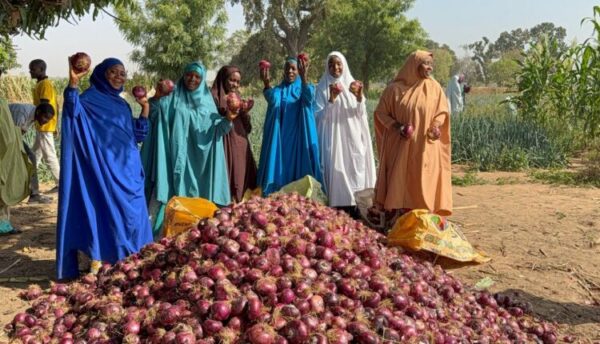
Women-led farming clusters under the Women Farmers Advancement Network (WOFAN) have begun harvesting vegetables, while clusters of persons with disabilities (PWDs) are preparing for wheat harvesting in Garun Malam Local Government Area of Kano State as a result of a shift in platting seasons, making ample opportunity of irrigation farming facilities and trainings by WOFAN to its farmers, This initiative is part of WOFAN – ICON2 project initiative funded by the Mastercard Foundation initiatives partnership with WOFAN. This innovative two-system irrigation program, which has provided employment opportunities for over 1,800 young men and women across Kano and Jigawa states was backed up with a series of capacity-building trainings on irrigation farming and distribution of over 24 solar-powered water pumps and 48 solar spraying equipment to 60 groups of PWDs and youths to ensure smooth operations backed up with practicable irrigation farming in line with adjusting to climatic changes and mitigating natural disasters such as floods and drought. SolaceBase reports that this initiative will result in 3–4 harvests per year, directly benefiting farmers by increasing income, improving family nutrition, promoting partnership among the male and female genders as well as providing inclusivity for gender and people with disability thereby,  creating dignified agribusiness-led job opportunities. Additionally, it will help bridge gaps in agricultural value chains, promote diversity and inclusivity, and boost food security amidst climate change challenges. Speaking at the grand harvesting ceremony on Thursday in Kano, WOFAN-ICON2 Country Director, Dr. Salamatu Garba, highlighted the initiative’s impact in ensuring year-round farming and creating sustainable livelihoods for rural farmers. She noted that most farmers in the region are subsistence farmers who struggle to feed their families beyond two to three months after the rainy season harvest. This economic hardship often forces them to migrate to urban areas for menial jobs, leading to increased crime, family instability, and other social challenges. Dr Garba, represented by WOFAN’s Monitoring and Evaluation Officer, Sadik Hassan, emphasized the importance of boosting farmers’ financial resilience. “WOFAN’s initiative has empowered farmers to cultivate an additional three crop cycles between two rainy seasons through irrigation farming. This does not only increase household income but also creates dignified job opportunities, strengthens family bonds, and ensures women and persons with disabilities are actively involved in sustainable farming,” she explained. This aligns with the Mastercard Foundation’s Young Africa Works Strategy, which aims to create 30 million dignified jobs in Africa, including 10 million in Nigeria, with a focus on farmers—particularly young women, persons with disabilities, and small-scale female youth entrepreneurs aged 18–35. “As part of this initiative, 300 persons with disabilities (PWDs) in Kano, organized into two clusters, are set to harvest their five-hectare wheat farm under the WOFAN-ICON 2 Project in partnership with Mastercard foundations’ supported ‘We Can Work’ program. These farmers are expected to yield up to two tons per hectare, equivalent to 40 bags,” Hassan stated. He added that WOFAN’s support has enabled them to engage in profitable farming, ensuring that no group is left behind in agricultural development. During the event, WOFAN officials inspected several farms, including those cultivating tomatoes, onions, and wheat. Hassan explained that women-led cooperative groups in Garun Malam have been actively engaged in farming activities all year round, harvesting their produce three to four times annually. Instead of waiting for the dry season, these farmers utilize the transition period between rainy seasons to cultivate vegetables such as tomatoes and onions. The initiative also provides employment for farm labourers, mostly women, who earn between ₦4,000 and ₦5,000 daily from harvesting activities. Kaulat Ayuba Adam, a farm labourer working on a tomato farm in Garun Malam, shared how the program has transformed her life. Besides farming, she also sells “Awara” (soybean cake) in her community. “I work on the farm in the early morning, earning between ₦2,000 and ₦6,000 per day, depending on the workload. By 10:00 AM, I return home and start preparing for my business,” she said. Similarly, Saliha Ibrahim, who works on an onion farm, also doubles as a food vendor. She explained that the farming job has boosted her income and improved her financial stability. “I am not just a farm labourer; I also run a food business. This job allows me to make extra money in the morning before I start my business in the afternoon. WOFAN and the Mastercard Foundation have provided incredible support, and we are benefiting immensely,” she said. To ease the transportation of farm produce, WOFAN has introduced logistics tricycles, significantly reducing the cost of moving crops from remote farms to markets and warehouses. Aisha Aliyu, speaking on behalf of her farming cluster, praised WOFAN and the Mastercard Foundation for their comprehensive support, which includes training, fertilizers, and improved seeds. “In the past, our biggest fear after harvest was how to transport our produce. But now, thanks to WOFAN, logistics tricycles are readily available to take our crops to the market, making our work much easier and increasing our profits,” she said. Abdulrahman Hassan, one of the logistics loaders in Garun Malam, expressed his gratitude, revealing that before WOFAN’s intervention, he struggled to feed his family. “Now, not only can I provide for my family, but I am also able to assist others. This opportunity has changed my life,” he said. Persons with disabilities farming on land provided by WOFAN expressed their appreciation, noting that the initiative has given them financial independence and confidence. Lawan Ali Kura, a wheat farmer in Garun Malam, speaking on behalf of his cluster, confirmed that they are set to begin harvesting and are excited about the progress they have made with WOFAN’s support. “We are grateful to WOFAN and the Mastercard Foundation for empowering us through agriculture. We now have a source of income and are looking forward to a successful harvest,” he said. With continued support from WOFAN and its partners, these farmers are not only securing their livelihoods but also contributing to food security and economic growth in their communities.

IWD: WOFAN Pioneers Holistic Approach to Women’s Empowerment in Agriculture

The Women Farmers Advancement Network (WOFAN) has inaugurated a marketing hub for women processors and empowered 450 Persons with Disabilities (PWDs) with start-up kits. SolaceBase reports that this initiative aims to enhance their vocational skills and provide them with disability aids, enabling them to engage in dignified and profitable employment. Speaking at the event on Thursday, the Country Director of the WOFAN-ICON2 Project, Dr. Salamatu Garba, emphasized that the marketing hub would enable women to take control of their marketing processes and apply the negotiation skills they acquired through WOFAN. She highlighted that this initiative would empower women by giving them control over their resources, increasing their profitability, and amplifying their voices on issues that affect them. She added that the initiative aligns with the objectives of the WOFAN-ICON2 Project under the Mastercard Foundation, which seeks to create sustainable employment opportunities for youth, women, and PWDs across ten Nigerian states. which is a five-year program. Represented by WOFAN’s Desk Officer for Kano State, Alhaji Dayyabu Abubakar stressed that the hub not only promotes economic inclusion by providing accessible business infrastructure but also addresses broader community needs. He noted that the Karfi marketing hub is the second of its kind in Kura Local Government Area (LGA), following the establishment of a similar facility in Kura Market. Kura Market, one of the largest ethical markets in Kano, trades over 500 truckloads of grains daily to various destinations within and beyond Nigeria. “With this new hub in Karfi, Kura now boasts of two historic marketing hubs. The facility includes three shops allocated to women processors who are WOFAN members, supporting their businesses,” he explained. He further detailed that the marketing hub consists of three shops: one serving as an office where members can discuss their concerns and business strategies within Karfi Market, while the other two are designated for business operations. The establishment of the marketing hub and its associated facilities underscores WOFAN’s commitment to empowering PWDs, promoting self-reliance, and improving the overall quality of life within the community. The District Head of Karfi, Alhaji Magaji Shehu, represented by Jamilu Magaji, congratulated the beneficiaries, noting that the initiative would not only benefit individuals but also positively impact the entire community. He prayed for divine guidance for the beneficiaries as they expand their business ventures and expressed gratitude to Dr. Salamatu Garba for her unwavering support for vulnerable communities. One of the beneficiaries, Hasiya Usaini, who lives with a disability, expressed her gratitude for the support and assured that she would use the funds wisely. “I am very happy with this capital. I will invest it carefully to ensure it grows,” she said. Another beneficiary, Rakiya Rabi’u, also appreciated the assistance, thanking WOFAN and Dr. Salamatu Garba for their continued support of the people of Kura. Similarly, Sule Shehu Abdullahi acknowledged WOFAN’s efforts in assisting persons with disabilities and expressed his confidence in utilizing the capital effectively. “With WOFAN’s support, I now have the funds to invest and earn a livelihood,” he said.

IWD: WOFAN empowers 54,000 women across nine states with rice distribution initiative

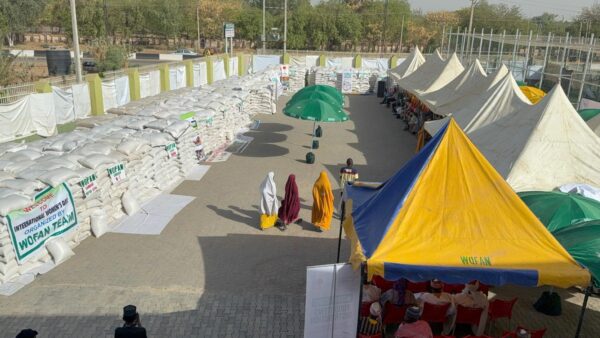
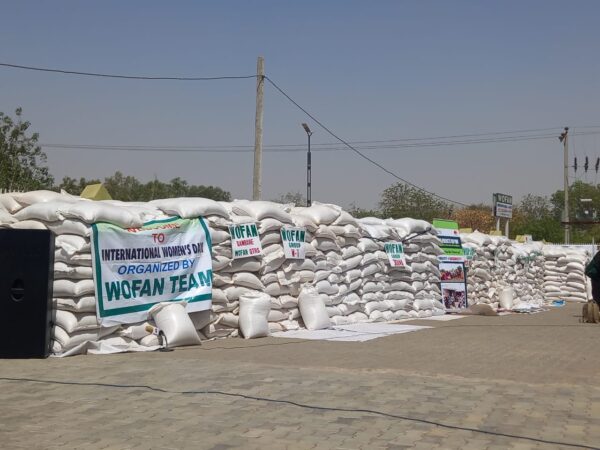
As part of its commitment to women’s empowerment, the Women Farmers Advancement Network ( WOFAN) has launched a transformative initiative to support 54,000 underserved women in agro-marketing. This effort, rolled out under its Mini Project Initiative to mark International Women’s Day (IWD) 2025, aims to boost family incomes and strengthen financial inclusion. The initiative, which prioritizes widows and street food vendors, addresses key gaps in the agricultural value chain by providing essential resources and business opportunities. Speaking at the launch in Kano, Dr. Salamatu Garba, Country Director of WOFAN-ICON2 Project, emphasized the need for action beyond advocacy. “We must move beyond discussions and take meaningful steps to uplift women by equipping them with confidence, opportunities, and economic independence,” she stated. At the core of this initiative is the distribution of 54,000 bags of  rice to small-scale female traders who typically sell less than half a portion of rice daily.   Dr. Garba explained that the distribution would be executed in three phases to ensure effective reach across the nine states targeted by WOFAN. “By providing this support, WOFAN aims to expand their businesses, helping them diversify and secure stable income streams,” she noted. This initiative aligns with the Mastercard Foundation’s goal of creating 10 million dignified jobs in Africa by 2030, including opportunities for one million Nigerian youths aged 18–35. Beyond rice distribution, WOFAN is integrating these traders into the broader rice value chain, linking producers, processors, aggregators, and mini agro-marketers through its logistics network. “We are creating a sustainable agricultural cycle where farmers receive inputs, cultivate their crops, and women at our processing centres refine the rice using modern equipment. The processed rice is then redistributed to smallholder traders, ensuring economic growth at every level,” Dr. Garba explained. A critical aspect of WOFAN’s approach is financial inclusion, a longstanding barrier for many women entrepreneurs. To address this, WOFAN has facilitated the opening of 90,000 bank accounts for previously unbanked women in partnership with UBA and other financial institutions. This enables them to access ATM cards, cashless transactions, and digital banking tools, empowering them to conduct business more efficiently. “Introducing POS systems in marketplaces ensures that these women can receive payments seamlessly, enhancing financial security and ease of doing business,” she added. The launch event was attended by traditional leaders, community elders, and partner organizations, who praised WOFAN’s efforts. Professor Sani Miko, Chair of WOFAN’s Technical Advisory Board, highlighted the initiative’s broader impact. WOFAN is working towards reaching 675,000 farmers and processors in the next five years. This initiative ensures that small-scale marketers—who are crucial in the agricultural value chain—are not left behind,” he said. He also commended Dr. Garba’s dedication to supporting underserved communities, urging beneficiaries to make the most of the opportunity and extend help to others. Other beneficiaries, including Hajiya Khadija Dogon Bauchi, Bala Abdullahi (Chairman, WOFAN PWDs Group, Kano), and Abdulmajid Yahuza Sulaiman (Chairman, Kano Logistics Loaders under WOFAN), expressed gratitude for WOFAN’s unwavering support. “Dr. Garba’s initiatives have given us hope and opportunities we never imagined,” Bala Abdullahi shared.

WOFAN empowers 54,000 women in agro-marketing initiative

As part of its commitment to women’s economic empowerment, the Women Farmers Advancement Network (WOFAN) marked the 2025 International Women’s Day (IWD) with a large-scale initiative aimed at transforming the livelihoods of 54,000 underserved women in agro-produce marketing across nine states. The initiative, which supports widows and street food vendors, seeks to bridge gaps in the agricultural value chain by providing essential resources and fostering financial inclusion. Speaking at the launch event in Kano, Dr. Salamatu Garba, Country Director of the WOFAN-ICON2 Project, emphasized the need for tangible actions to uplift women. “We must go beyond discussions and take meaningful steps to provide women with confidence, opportunities, and economic independence,” she said. At the core of the initiative is the distribution of 54,000 bags of rice to small-scale female traders who typically sell less than half a portion of rice daily. Dr. Garba noted that the distribution will take place in three phases to ensure all targeted beneficiaries receive their share. The program aligns with the Mastercard Foundation’s goal of creating 10 million dignified jobs in Africa by 2030, including one million for Nigerian youth aged 18-35. Beyond rice distribution, WOFAN is integrating these traders into the rice value chain by connecting producers, processors, aggregators, and marketers through its mini-logistics riders initiative. “This initiative is not just about food aid; it’s about embedding women into a sustainable agricultural cycle that strengthens their businesses and boosts economic independence,” Dr. Garba explained.   A major component of WOFAN’s strategy is integrating women into the formal banking system. In partnership with UBA and other financial institutions, WOFAN has facilitated the opening of 90,000 bank accounts for underprivileged women, providing them with ATM cards and digital payment solutions. Additionally, the introduction of POS systems in marketplaces ensures that female traders can conduct seamless cashless transactions. “By equipping women with negotiation, marketing, and digital sales skills, we are preparing them to navigate modern financial landscapes and expand their businesses,” Dr. Garba added. Dr. Garba highlighted WOFAN’s efforts in creating a closed-loop agricultural system. Farmers receive essential inputs such as fertilizer and seeds, cultivate and harvest crops, and women at WOFAN’s processing centers refine the rice using modern equipment. The processed rice is then redistributed to smallholder farmers and traders to stimulate business growth. “This initiative goes beyond aid—it is a sustainable model that strengthens every segment of the agricultural process,” she stated. The event was attended by traditional leaders, community representatives, and stakeholders who commended WOFAN’s impact. Professor Sani Miko, Chair of WOFAN’s Technical Advisory Board, emphasized the importance of including marketers in the agricultural value chain. “WOFAN aims to reach 675,000 farmers and processors in the next five years. However, we have seen that marketers—who are a crucial link in the value chain—are often neglected. This initiative ensures they are empowered,” he said. Community leaders and beneficiaries expressed their gratitude for the support provided by WOFAN, with many pledging to extend assistance to others.

IWD: WOFAN empowers 54,000 women in agro- produce marketing across nine states with rice distribution initiative to boost family income

The Women Farmers Advancement Network (WOFAN) has marked 2025 International Women’s Day (IWD) with a groundbreaking initiative aimed at transforming the economic prospects of 54,000 underserved women in agro-marketing under its Mini project initiative to mark the 2025 International Women’s Day (IWD). This effort, which includes widows and street food vendors, seeks to bridge the gap in the agricultural value chain by providing critical resources and financial inclusion opportunities. Speaking at the event on Saturday in Kano, the Country Director WOFAN- ICON2 Project, Dr. Salamatu Garba, emphasized the importance of moving beyond discussions to tangible action. Dr Salamatu reiterates that the total rice value will be carried out in three separate batches to ensure it reaches all the targeted food vendors and agro-marketers. “ By providing this support, WOFAN aims to enhance their business potential, allowing them to expand and diversify their income streams. “The initiative aligns with the Mastercard Foundation’s mission to create 10 million dignified job opportunities in Africa by 2030, including opportunities for one million Nigerian youths aged between  18-35,” Dr. Garba noted. Beyond rice distribution, WOFAN is pioneering a holistic approach to women’s empowerment by integrating these traders into entire rice value chain structure and make a cycle of marketing linkages between the producers, processors, aggregates, the mini- agro marketers as well as the WOFAN mini logistic riders initiative, thereby magnifying a sustainable agricultural cycle. The occasion was graced by traditional leaders, group representatives, collaborators and Elders who all congratulated and advised the recipients of the inking grant on putting into practice the skills and knowledge learnt from their training with WOFAN and the financial inclusion opportunity WOFAN laid down by linking them to financial institutions A critical component of WOFAN’s initiative is its newly launched mini logistics project, designed to help farmers transport their produce efficiently to the market. Dr. Garba highlighted how WOFAN has successfully created a closed-loop system: this should be another news story to give it relevance. “Farmers received essential agricultural inputs such as fertilizer and seeds. They cultivated and harvested their crops. Women at WOFAN’s processing centers refined the rice using modern equipment. The processed rice is now being redistributed to smallholder farmers and traders to stimulate business growth.” By addressing gaps in agricultural logistics and empowering women to take ownership of the value chain, WOFAN is demonstrating what accelerated action truly looks like. “This initiative goes beyond aid—it is a sustainable model that strengthens every segment of the agricultural process,” Dr. Garba stated. She noted that beneficiaries could reinvest their earnings into other business ventures, such as purchasing eggs, grinding mills, or expanding into vegetable sales. Recognizing that financial exclusion has long been a barrier for women in business, WOFAN has taken significant steps to integrate them into the formal banking system. Through targeted training in negotiation, marketing, and digital sales, WOFAN is equipping women with the skills needed to navigate modern financial landscapes. “In partnership with UBA and other financial institutions, we have facilitated the opening of 90,000 bank accounts for underprivileged women, enabling them to access ATM cards and engage in seamless cashless transactions,” Dr. Garba revealed. She added that the introduction of POS systems in marketplaces further ensures that these women can receive payments efficiently, thereby enhancing financial security and ease of doing business. Dr. Garba underscored that every aspect of WOFAN’s initiative—from agricultural support to financial inclusion—is interconnected. “This is not just about distributing rice; it’s about creating an ecosystem where women can build sustainable livelihoods and gain economic independence,” she concluded. On his part, WOFAN’s Technical Advisory Board Chair, Professor Sani Miko, said, “WOFAN is working to target  675,000 farmers and processors in the next five years; however, it has discovered that the marketers—who are an essential link in the agricultural value chain—are often left out. This initiative ensures they are included and supported.’’ He commended Dr. Garba for her unwavering dedication to supporting the less privileged. He urged beneficiaries to use the holy month of Ramadan as an opportunity to pray for her. “Every time she calls me, the first thing she asks is, ‘Professor, what more can we do to help people?’ That is always our conversation. Finding a woman like her is rare,” he said. He encouraged beneficiaries to extend help to those in need whenever possible. Hajiya Khadija Dogon Bauchi praised Dr. Garba for her tireless commitment to empowering women. “She has been a pillar of support for women like us, ensuring that we have better job opportunities and financial stability. We are truly grateful,” she expressed. Bala Abdullahi, the Chairman of WOFAN’s Persons with Disabilities (PWDs) group in Kano, also expressed his gratitude on behalf of the PWDs. “Dr. Garba’s efforts have given us hope and opportunities that we never imagined. We sincerely pray for her continued good health and success,” he said. Abdulmajid Yahuza Sulaiman, Chairman of Kano Logistics Loaders under WOFAN, vowed that his group would remain committed to supporting others. “The impact WOFAN has had on our lives is beyond words. We are determined to pay it forward by assisting those in need within our communities,” he pledged. With this initiative, WOFAN is not only celebrating International Women’s Day but also setting a precedent for impactful, action-driven empowerment strategies that uplift women across Nigeria.