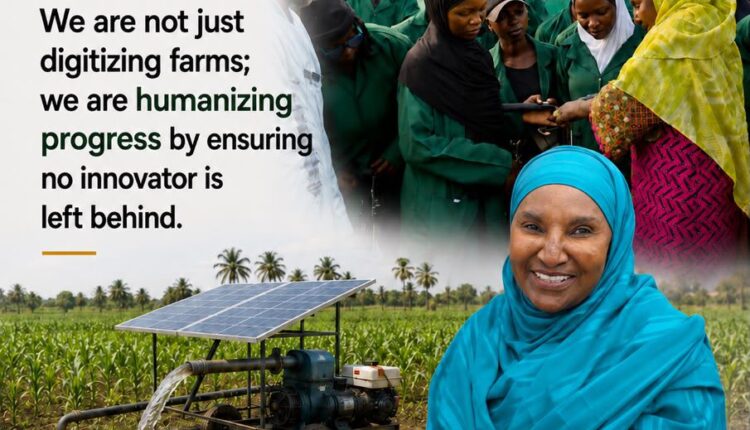
The Centre for Drylands Agriculture (CDA), Bayero University, Kano (BUK), has appointed Hajia (Dr.) Salamatu Garba, Founder and Executive Board Chair of WOFAN Group, as the Chairperson of its Sectoral/Industry Advisory Board. The appointment, which is for an initial three-year term, recognises Dr. Garba’s outstanding leadership and extensive expertise in agricultural development, particularly her long-standing commitment to improving the livelihoods of women and youth. She is widely known for her passion and persistence in promoting the transformation of subsistence farming into agripreneurship among young women and youths in Nigeria and beyond. Dr. Garba has devoted decades to empowering women and young people across dryland communities, contributing significantly to sustainable agricultural development at both national and international levels. Her wealth of experience and visionary leadership are expected to strengthen collaboration between academia and industry, drive innovation, and advance sustainable agricultural practices within dryland ecosystems. The appointment is seen as a strategic move by the CDA to deepen industry engagement and enhance the practical impact of its research and capacity-building initiatives. WOFAN Group has congratulated Dr. Garba on the appointment, expressing confidence that her tenure will be impactful and contribute meaningfully to the advancement of dryland agriculture and inclusive agribusiness development.
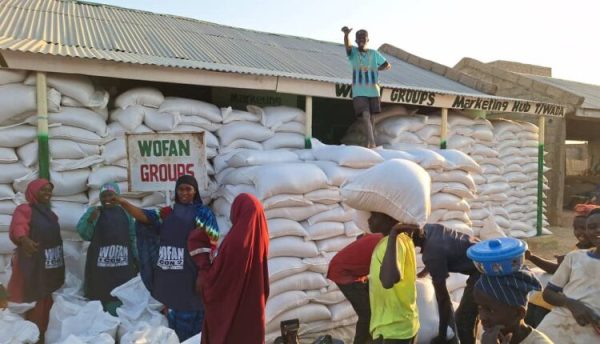
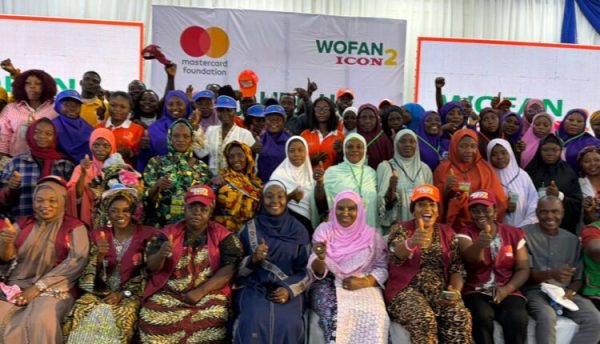
The Women Farmers Advancement Network (WOFAN), through its WOFAN-ICON2 Project, has continued to transform rural communities and strengthen local economies through its over 105 marketing hubs established across different parts of the country, creating thousands of jobs for women, youths and vulnerable groups. Speaking on the impact of the initiative, the WOFAN Group Executive Board Chair, Dr Salamatu Garba, said the marketing hubs were designed not only as trading centres but as development platforms that link smallholder farmers to structured and reliable markets which create dignified jobs that are inclusive of women, youths and people with disabilities. According to her, the hubs have opened up new economic opportunities for people who were previously excluded from formal market systems, particularly women processors who only marketed their produce through middlemen that limit them to just marginal profit and ample visibility in the crop value chains. “Today, these hubs have become vibrant centres of economic activity where youths work as traders, loaders and service providers, while women are deeply involved in processing and value addition,” Dr Garba said. In his remarks, a male youth mega cluster leader for the WOFAN- ICON2 project, Tasiu Ibrahim, stated that community male youths have become great gender inclusion advocates. ‘’This is achieved through the provision of the modern rice and grain processing machines, as well as solar-powered lighting, as an enabler in providing jobs for youths and women to work both day and night in a safe environment, increasing productivity, income and peaceful coexistence,’’ he said. SolaceBase reports that across the hubs, young people who were once idle are now fully engaged in productive activities. Instead of being involved in criminal activities, many youths have now commenced working on shifts at the marketing hubs, earning a living through legitimate businesses. Also, persons with disabilities are productively engaged in jute bag production, while many women process agricultural produce either at WOFAN centres or from their homes before supplying to different hubs, where their goods are bought and paid for instantly, either in cash or through bank transfers. One of the community partners of the project, Fatima Ibrahim from Daurawar Sallau in Garin Mallam Local Government Area, Kano State, said women play a major role in the success of the WOFAN marketing hubs. She noted that while many men now focus mainly on farming, women are involved in both farming and processing, which improves the quality of products and attracts more customers. She explained that WOFAN provides machines and equipment for processing rice and other farm produce, which are later supplied to hubs in Kura, Karfi, Chiromawa and Tudun Wada. “Even today, if WOFAN demands 100,000 bags of rice, we have them ready,” she said, adding that the hubs have made women financially independent as marketers, off- takers and commodity marchants from all parts of Nigeria all look out for the WOFAN marketing hubs as quality of produce is always assured because WOFAN consistently train and supervice them with ample extension delivery services. Similarly, Isma’il Ibrahim Chiromawa said WOFAN’s intervention has brought unprecedented development to the area. He stated that the organisation expanded the market, supported traders with capital and provided rice-processing machines, which attracted more customers and transformed their businesses. Another community partner, Muhammad Auwal, said the presence of WOFAN has restored hope to many young people. He explained that youths now work in organised day and night shifts at the hubs because the centres are equipped with solar-powered lights that provide reliable lighting, allowing them to operate safely and productively even at night. WOFAN, through its ICON2 Project supported by the Mastercard Foundation, has played a key role in expanding the organisation’s development impact. The project has empowered tens of thousands of women, youths and persons with disabilities by providing essential farming inputs such as improved seeds, fertilisers and agro-chemicals to boost both wet and dry season farming across several states, including Adamawa, Bauchi, Benue, Gombe, Jigawa, Kaduna, Kano, Nasarawa and the Federal Capital Territory. The project also promotes inclusion by distributing starter packs to female produce marketers, enabling small businesses to grow and thrive. In addition, it has provided hearing aids and related medical support to people living with hearing impairments, helping to improve their economic participation and overall quality of life. In line with the Mastercard Foundation’s Young Africa Works–Nigeria Strategy, the WOFAN ICON2 Project aims to create dignified and sustainable employment opportunities for young people, with a strong focus on women and persons with disabilities.
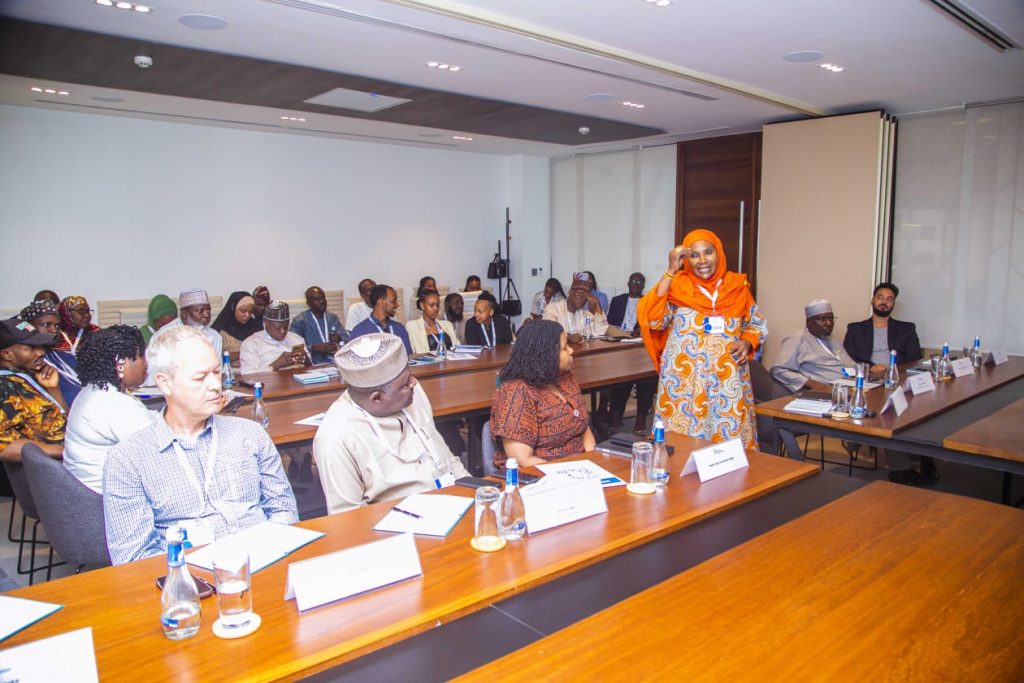
The Women Farmers Advancement Network (WOFAN) has officially unveiled its strategic plans for the upcoming fourth year of the WOFAN-ICON2 project, alongside a leadership transition announced during its 2025Year-End Review Meeting held in Abuja in December 2025 At the event, WOFAN’s Executive Director, Dr Salamatu Garba, highlighted the organization’s commitment to enhancing its operations through a newly revised leadership structure and targeted initiatives for Year Four of the ICON2 project. SolaceBase reports that this strategic evolution follows WOFAN’s expanded engagement in global networks and international policy initiatives aimed at empowering women, youth, and persons with disabilities across Africa, Europe, and the Arab regions. Dr. Garba announced that daily leadership responsibilities for the WOFAN-ICON2 project will now be managed by Hajiya Maimuna Lawal, who will serve as the Director of Strategy, Innovation, and Sustainability, alongside Mr. Taiwo Olawale, the Business Development and Coordination Manager. According to her, together, they will oversee the organization’s day-to-day operations. Additional key appointments include Hajiya Maryam Lawal as Gender Specialist and FCT Team Lead, Abdulrasheed Abdulazeez as Financial Manager, and Dr Haruna Zakari as the Regional Agronomist within the ten operational states of the WOFAN-ICON2 project. Dr. Garba will transition to the position of Executive Board Chair and Regional Head of the Global WOFAN Alliance Program, where she will focus on enhancing empowerment support and promoting inclusivity in gender, financial engagement, and trade on a global scale. All leadership appointments will take effect on January 5, 2026. Expressing confidence in the newly appointed leadership, Dr Garba praised their professionalism and dedication, noting that they are long-standing staff members of WOFAN with over 18 years of experience, thereby demonstrating a steadfast commitment to advancing the organisation’s mission. The review meeting served to assess the successes achieved under the WOFAN-ICON2 project over the past three years, while also outlining plans for interventions in Year Four. These initiatives are set to prioritize the needs of persons with disabilities (PWDs), logistics service providers, and micro agro-marketers, and will clarify the roles of extension workers from Years One to Three, ensuring all stakeholders are aligned with the new phase of implementation. In his remarks, Mr. Taiwo Olawale further elaborated on WOFAN’s revolving schemes, which include the WOFAN Startup Grant, input produce grants, logistics riders’ revolving scheme, and a heavy-duty machinery revolving scheme featuring tractors and combine harvesters. He emphasized that these initiatives have significantly contributed to the business growth of community partners and underscored the importance of proper reporting and accountability. In her remarks, Hajiya Maimuna Lawal expressed her gratitude to the Executive Director for her exemplary leadership, unwavering support, and commitment to humanitarian efforts. She provided a comprehensive overview of the WOFAN-ICON2 project and acknowledged the progress made despite challenges such as climate change and fluctuations in market prices. Hajiya Maimuna urged partners to enhance market access and value-added initiatives while outlining the key objectives of the meeting. Maimuna emphasized that, as part of its efforts to sustain, strategize and transform its network for growth and inclusivity, the organization will continue its capacity-building initiatives. This includes conducting training sessions for extension workers and community partners on essential topics such as food hygiene, financial literacy, value addition, and food processing. Hajiya Maimuna concluded by highlighting the critical role of mentorship and guidance in ensuring organizational sustainability, assuring stakeholders that WOFAN is well-positioned for ongoing growth and impactful contributions. Additionally, Mr Abdulrasheed Abdulazeez underscored the significance of proper documentation and effective utilization of WOFAN’s reporting platforms, emphasizing the need for financial alignment with the activity framework. He advised participants on best reporting practices, including the necessity of using clear and informative photographs that accurately represent project activities, noting that effective visual communication is vital for transparency and impactful storytelling.