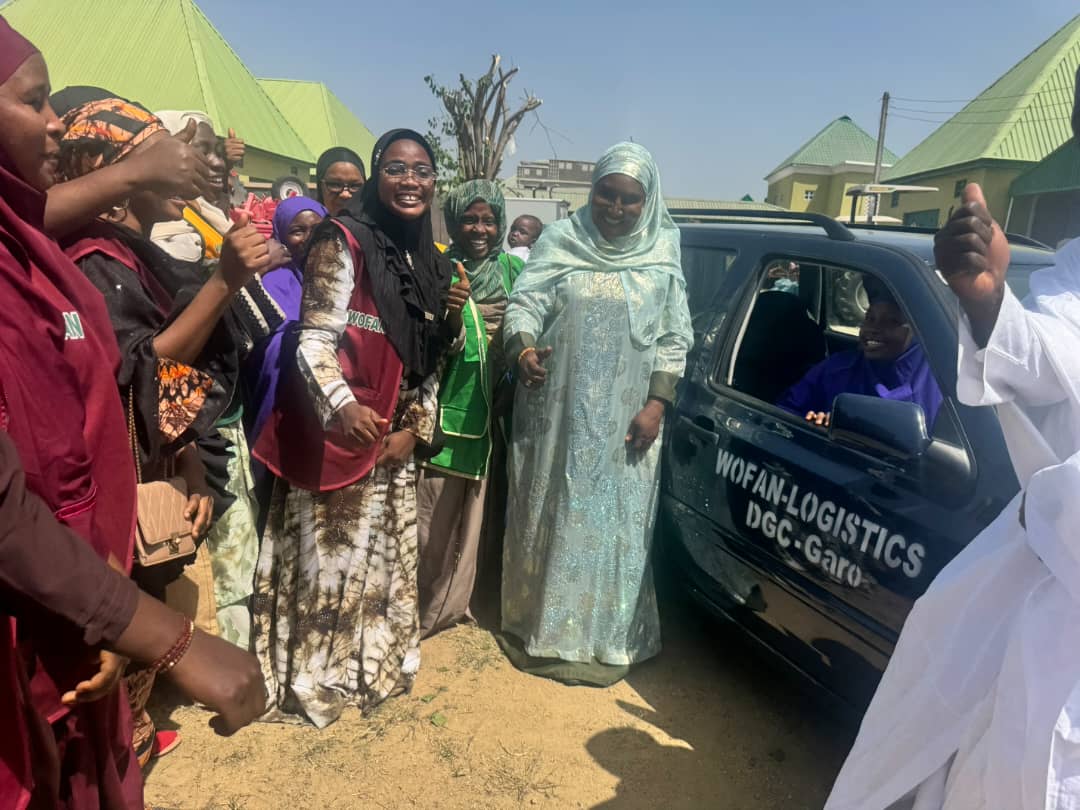
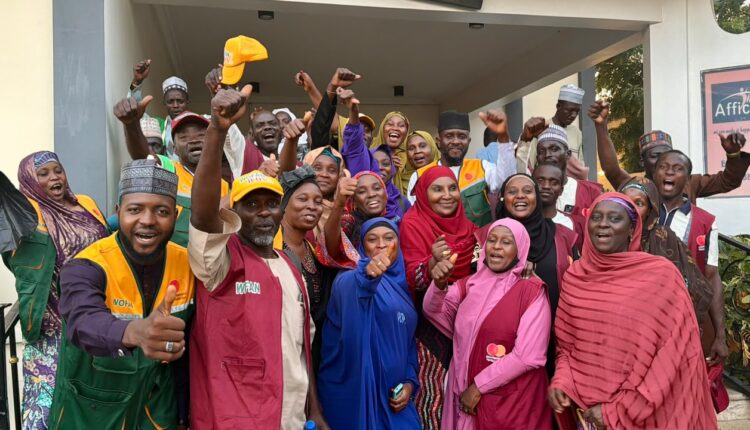
The Centre for Dryland Agriculture (CDA), Bayero University, Kano, in collaboration with the Women Farmers Advancement Network (WOFAN) and the Faculty of Agriculture, has concluded plans to train 300 Agriculture students annually in agribusiness, value addition, processing, and production under the SIBLING Project. The initiative, which targets 300–400 level students of the Faculty of Agriculture, was disclosed during a courtesy visit to the Vice-Chancellor, Professor Haruna Musa, fsi, by a joint delegation from WOFAN, CDA and the Faculty of Agriculture, led respectively by WOFAN’s Executive Director, Dr Salamatu Garba, the CDA Director, Professor Sanusi Gaya Mohammed, and the Dean of Agriculture, Professor Muhammad Auwal Hussain. Under the project, CDA has allocated a two-hectare demonstration plot, while the Faculty of Agriculture has provided 25 hectares for large-scale production and training activities. The programme also includes practical exposure to agricultural value chains and entrepreneurship. Receiving the delegation, the Vice-Chancellor commended the partnership, describing it as a strategic intervention for youth and women empowerment, particularly noting that 180 out of the 300 trainees are women. He emphasized the need to prioritise wives of junior staff, the less privileged, and surrounding communities, adding that the initiative would strengthen town-and-gown relations and promote inclusive development. Earlier, Professor Sanusi Gaya Mohammed highlighted the long-standing collaboration between CDA and WOFAN, noting that the partnership had recently expanded to include access to a national storage facility secured through the National Storage Productivity Institute of Nigeria. He added that WOFAN has also committed to providing processing machinery to support hands-on training for students. In her remarks, Dr Salamatu Garba said the initiative was designed to change the narrative of women and youth participation in agriculture through practical skills, access to land, inputs, and guaranteed markets. She revealed plans to introduce processing and packaging of agricultural produce, including a proposed “CDA/WOFAN Rice” brand for sale within the university community. She explained that women participants would be allocated plots from the designated farmland, with WOFAN providing land preparation, inputs at subsidised rates, and immediate purchase of harvested produce. Outstanding students, she added, would receive start-up support, including equipment, storage facilities, and small grants. The Chairman of the WOFAN Board, Professor Sani Miko, thanked the Vice-Chancellor for supporting what he described as a credible and sustainable partnership, noting that the SIBLING initiative is driven by research outputs aimed at transforming livelihoods through commercial agriculture.
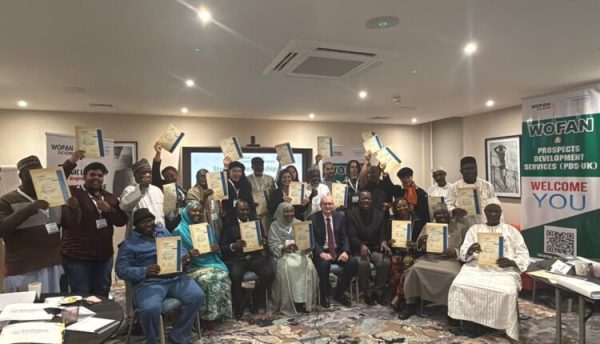
This is a follow-up to my article published on August 20th, 2025, with a slightly different title, “Salamatu-WOFAN on Climate Change: Turning Adversity into Prosperity,” featured in this column. WOFAN, under the ICON 2 project funded by the Mastercard Foundation, organized a high-level training workshop for selected key stakeholders at the Hyatt Place Hotel on Whitechapel Road, East London, United Kingdom, from 18th to 21st November 2025. The training was conducted by Prospects Development Services, a well-regarded UK-based capacity-building and educational consultancy firm, proudly owned by Nigerian Dr. Bayode T. Hambolu. The stakeholders from the private and public sectors in Nigeria, China, the UK, and India included academia- and university-based experts, legal and financial specialists, agriculturalists, interns, and a leading media expert. The theme of the training was “Strategic Leadership in Regenerative Agriculture and Positioning for Carbon Credit and Financing.” The team of stakeholders was carefully chosen to address the complex needs of the carbon market and financing. The researchers are responsible for providing the essential technologies (smart agricultural practices) to reduce carbon emissions, combat the effects of climate change, and enhance resilience and adaptation. Legal experts will develop the legal and policy framework needed for the market to succeed, while financial experts will create methods for buying and selling carbon credits. Media specialists will promote awareness and educate the public about the availability of the carbon market and its potential to help farmers earn extra income as bonuses. They will also aim to improve farmers’ productivity and profitability by adopting smart agricultural practices. The interns are to study the complexity of the carbon market to become experts and facilitators of carbon trade, provide the necessary support to the public, and become future experts in the carbon market. What is the carbon market and how does it work? Carbon market is a hybrid marketing system – virtual and physical; carbon markets are trading systems in which carbon credits are sold and bought. Companies or individuals can use carbon markets to offset their greenhouse gas emissions by purchasing carbon credits from entities that reduce or remove greenhouse gas emissions. Farmers can reduce or eliminate greenhouse gas emissions by adopting climate-smart agricultural (CSA) practices, which can also increase their productivity and profit margins. Adoption of CSA practices can generate carbon offsets through carbon dioxide sequestration, resulting in carbon credits that are valued in US dollars. One tradable carbon credit equals one tonne of carbon dioxide or the equivalent amount of a different greenhouse gas reduced, sequestered, or avoided. When a credit is used to reduce, sequester, or avoid emissions, it becomes an offset and is no longer tradable. Climate change is real, and its effects have no borders, just as wind naturally blows in all directions. However, the leading causes of climate change are greenhouse gas emissions and poor agricultural practices, which can be controlled or regulated. Developed countries are the major culprits in greenhouse gas emissions, driven by their heavy industries and technological advancement. For these countries to be considered “developed countries,” they cannot forgo their activities to lose their status and are thus ready to pay for carbon credits. In contrast, citizens of developing nations, who remain customers of the high technologies produced by developed countries, may not even benefit from reductions in carbon footprints, as they rarely engage in practices that mitigate greenhouse gas emissions. It is based on this premise that WOFAN, under the ICON 2 project with financial support from the MasterCard Foundation, organized two high-level workshops in France and the United Kingdom, and key stakeholders’ interaction in Nigeria, from July to November 2025. The UK workshop focused on strengthening Participants’ understanding of carbon markets, climate-smart agriculture (CSA), and how WOFAN can position itself to generate certified carbon credits using international best practice and the emerging Nigerian Carbon Market framework. At the workshop, stakeholders identified WOFAN to. be a champion and advocate of climate change resilience and adaptation in Nigeria, and thus, its strengths were identified: an extensive network of large farmers across many states, a functional extension system, strong digital tools, extensive experience, and access to improved or climate-smart agricultural technologies such as regenerative agriculture, compost, and tree planting. Similarly, additional gaps requiring attention for WOFAN to succeed in empowering farmers to be involved in carbon market were also identified: lack of baseline carbon data (such as soil carbon, methane profile, water use, and farming practices), enforcement of farmer compliance, negotiation skills in the carbon market to protect farmers’ interests when working with developers, verifiers, and buyers of carbon credits, and other technical skill gaps. A few case studies of efforts and success stories made by organizations and countries across the globe in establishing carbon markets and financing were discussed and analyzed. The Green Hydrogen – DRI-Steel Project, Stegra, Sweden, was among the case studies. The project objective was to develop a renewable, near-zero-emissions iron and steel plant. The project started in 2022, was validated in 2023, was in the developmental phase from 2023 to 2024, and is currently being executed through 2026. The financing model comprises a 4.2 billion Euro loan, 2.1 billion Euro in equity, and 350 million Euro in public grants. They will produce 2.5 million metric tons of steel per year, create over 5,000 jobs, and achieve a 95% reduction in carbon emissions. Another case study was “Valuing the forest,” a global capital coalition project. The goal is to provide a worldwide framework to measure, value, and report the natural carbon capital within the forestry sector, enabling the creation of natural capital as an asset class and nature-linked financial instruments. The stakeholders involved in this project included 18 forestry companies covering 22 million hectares, as well as small and medium-sized enterprises. A financing model comprises a grant from the Global Secretariat of the Taskforce for Nature-Related Financial Disclosures (TNFD), contributions from each participating forest owner through the International Sustainable Forestry Coalition, and other sources. Where are we in Nigeria? Nigeria, with over 30 million hectares of forested area, can make a case…
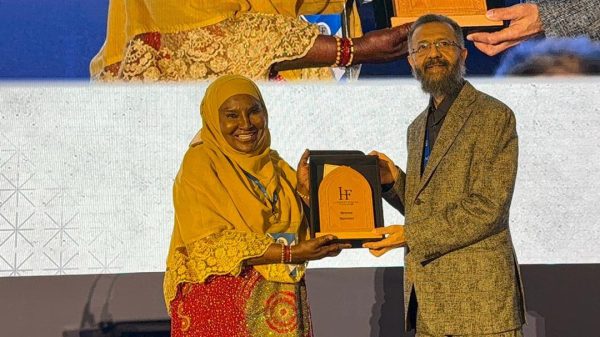
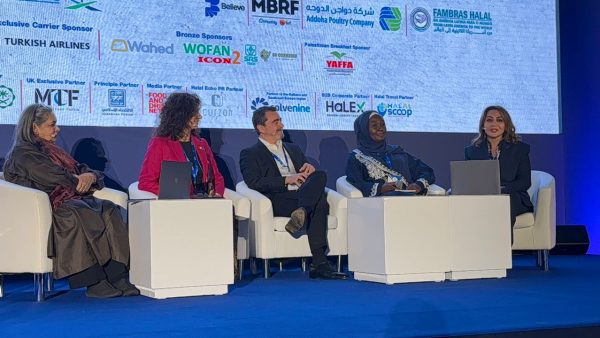
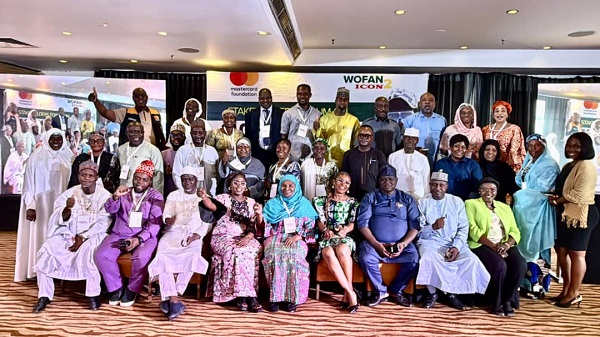
Women Farmers Advancement Network (WOFAN) has joined a global network in driving Strategic Leadership in Regenerative Agriculture and positioning for Carbon Revenue at a four-day training in London. The training attended by WOFAN board members, strategic partners that include a global network of CSOs, academia, policy makers, national assembly members, private sectors, media and entrepreneurs, focused on strengthening capacity to drive regenerative agriculture, climate-smart innovation, and carbon market readiness. Also on the sidelines of the training, participants took part in the London Halal Forum with WOFAN having a pavilion at the venue, with Director of Strategies, Innovation and Sustainability ( SIS), Hajia Maimuna Lawal, was among the panellists, on a discussion that centred on ‘’Women, Leadership and Cultural Diplomacy, The Art of Driving Inclusive Growth.’’ Similarly, the London Halal Forum honoured WOFAN, considering its activities targeted towards human development, especially support to rural farmers, women, youth and people with disabilities and the award was received by the WOFAN-ICON2 Project Country Director, Dr Salamatu Garba. SolaceBase reports that throughout the four days, participants engaged in deep discussions, hands-on group work, and scenario-based exercises that clarified how WOFAN and relevant stakeholders can position themselves as national trailblazer in climate action, food security, and rural transformation. Ford poised that some of the consideration in adopting this initiative of regenerative agriculture are evidence based practices design, whereby one needs to select practices with proven results, carbon focused energy, this addresses baseline measurement for emission, economic transformation which translate to shifting farmers from raw output to value added product, governance and accountability, which is all about building systems for monitoring, reporting and verification, so that soil carbon, water use, biodiversity and emissions can be tracked. In addition, he talked about scaling, which is the use of farmers cooperatives, digital tools, micro finance, and extension services to grow adoption rapidly that align with intervention with national food security and climate policies. Also, a multidisciplinary consultant and trainer, Prof. Abe Abrahami, dwells on Regenerative Agriculture, Possible Partnership, Opportunities and Way forward for Nigeria. Prof. Abrahami gave a comparison and study of Regenerative Agriculture development in Nigeria with Morocco, Egypt, Israel and Turkey Speaking at the end of the sessions, Country Director, WOFAN-ICON2 Project, Dr. Salamatu Garba said the training has increased the understanding of many of the participants on Regenerative Agriculture, Climate Change adaptation and Carbon Revenue, with the need to set baseline in commencing the process and creating awareness. ‘’With the intensive training we had, I am sure we would pick from most of the ideas postulated and look at what best suit our own environment for the betterment of our farmers, ‘’Garba said. ‘’Also part of our efforts is to look at how we are going to drive the awareness and sensitize stakeholders on Regenerative Agriculture, Climate Change Adaptation and the Carbon Revenue.’’ ‘’Our vision and values at WOFAN are in line with what the Halal objectives are with what was read out during the London Hala Forum we attended yesterday, when you look at organic farming, if you put the two side by side, both Halal and organic farming, that has to do with standardization, which is what we stand for, henceforth, WOFAN will be pro Halal as well as pro organic farming to save the environment, that will be our slogan.’’ ‘’Therefore, we have decided we have some very important steps to take and then continue to talk to our own facilitators, consultants and enablers on how we need to go about the process.’’ Dr Salamatu Garba, a UN Peace Ambassador, used the occasion to appreciate the participation of the professors from academia, the National Assembly members, policy makers, media team for their commitment to the training, the training coordinator, Prospects Development Services and the facilitators who made understanding of the sessions seamless. Also speaking, the Dean, Faculty of Agriculture, Bayero University Kano, Prof. Muhammad Auwal Hussain, said the training has opened a new frontier, which will be thoroughly examined on how it can be scaled down to the benefit of farmers through agricultural extension workers. On his part, WOFAN Board Chairman, Prof Sani Miko, said the training, which is a follow-up to the sessions had in Paris, France, in July 2025, has created a strategy and plan to capture carbon, food security and influence policy makers on carbon reduction financing ‘’Some of the knowledge acquired at this training would be used to support the government in the policy formulation and to making the law that will guide Regenerative Agriculture, Climate Smart Agriculture and the issue of Carbon Revenue, ‘’Miko noted. On his part, an environmental expert and director of climate change, Kano State Ministry of Environment and Climate Change, Dr. Saleh Anka said the four-day engagement significantly strengthened WOFAN’s capacity to lead the transition to regenerative, climate-smart agriculture across Nigerian communities, build sustainable revenue streams through high-integrity carbon markets and enhance food security, water resilience, and climate readiness at community level. The participating countries include participants from India, Tunisia, Algeria, UK, Malaysia, Egypt and Nigeria. The training was organized by Prospects Development Services, UK and sponsored by WOFAN/ICON2 Project with the support of Master Card Foundation.
By Prof. M.K. Othman This is a follow-up to my article published on August 20th, 2025, with a slightly different title, “Salamatu-WOFAN on Climate Change: Turning Adversity into Prosperity,” featured in this column. WOFAN, under the ICON 2 project funded by the Mastercard Foundation, organized a high-level training workshop for selected key stakeholders at the Hyatt Place Hotel on Whitechapel Road, East London, United Kingdom, from 18th to 21st November 2025. The training was conducted by Prospects Development Services, a well-regarded UK-based capacity-building and educational consultancy firm, proudly owned by Nigerian Dr. Bayode T. Hambolu. The stakeholders from the private and public sectors in Nigeria, China, the UK, and India included academia- and university-based experts, legal and financial specialists, agriculturalists, interns, and a leading media expert. The theme of the training was “Strategic Leadership in Regenerative Agriculture and Positioning for Carbon Credit and Financing.” The team of stakeholders was carefully chosen to address the complex needs of the carbon market and financing. The researchers are responsible for providing the essential technologies (smart agricultural practices) to reduce carbon emissions, combat the effects of climate change, and enhance resilience and adaptation. Legal experts will develop the legal and policy framework needed for the market to succeed, while financial experts will create methods for buying and selling carbon credits. Media specialists will promote awareness and educate the public about the availability of the carbon market and its potential to help farmers earn extra income as bonuses. They will also aim to improve farmers’ productivity and profitability by adopting smart agricultural practices. The interns are to study the complexity of the carbon market to become experts and facilitators of carbon trade, provide the necessary support to the public, and become future experts in the carbon market. What is the carbon market and how does it work? Carbon market is a hybrid marketing system – virtual and physical; carbon markets are trading systems in which carbon credits are sold and bought. Companies or individuals can use carbon markets to offset their greenhouse gas emissions by purchasing carbon credits from entities that reduce or remove greenhouse gas emissions. Farmers can reduce or eliminate greenhouse gas emissions by adopting climate-smart agricultural (CSA) practices, which can also increase their productivity and profit margins. Adoption of CSA practices can generate carbon offsets through carbon dioxide sequestration, resulting in carbon credits that are valued in US dollars. One tradable carbon credit equals one tonne of carbon dioxide or the equivalent amount of a different greenhouse gas reduced, sequestered, or avoided. When a credit is used to reduce, sequester, or avoid emissions, it becomes an offset and is no longer tradable. Climate change is real, and its effects have no borders, just as wind naturally blows in all directions. However, the leading causes of climate change are greenhouse gas emissions and poor agricultural practices, which can be controlled or regulated. Developed countries are the major culprits in greenhouse gas emissions, driven by their heavy industries and technological advancement. For these countries to be considered “developed countries,” they cannot forgo their activities to lose their status and are thus ready to pay for carbon credits. In contrast, citizens of developing nations, who remain customers of the high technologies produced by developed countries, may not even benefit from reductions in carbon footprints, as they rarely engage in practices that mitigate greenhouse gas emissions. It is based on this premise that WOFAN, under the ICON 2 project with financial support from the MasterCard Foundation, organized two high-level workshops in France and the United Kingdom, and key stakeholders’ interaction in Nigeria, from July to November 2025. The UK workshop focused on strengthening Participants’ understanding of carbon markets, climate-smart agriculture (CSA), and how WOFAN can position itself to generate certified carbon credits using international best practice and the emerging Nigerian Carbon Market framework. At the workshop, stakeholders identified WOFAN to. be a champion and advocate of climate change resilience and adaptation in Nigeria, and thus, its strengths were identified: an extensive network of large farmers across many states, a functional extension system, strong digital tools, extensive experience, and access to improved or climate-smart agricultural technologies such as regenerative agriculture, compost, and tree planting. Similarly, additional gaps requiring attention for WOFAN to succeed in empowering farmers to be involved in carbon market were also identified: lack of baseline carbon data (such as soil carbon, methane profile, water use, and farming practices), enforcement of farmer compliance, negotiation skills in the carbon market to protect farmers’ interests when working with developers, verifiers, and buyers of carbon credits, and other technical skill gaps. A few case studies of efforts and success stories made by organizations and countries across the globe in establishing carbon markets and financing were discussed and analyzed. The Green Hydrogen – DRI-Steel Project, Stegra, Sweden, was among the case studies. The project objective was to develop a renewable, near-zero-emissions iron and steel plant. The project started in 2022, was validated in 2023, was in the developmental phase from 2023 to 2024, and is currently being executed through 2026. The financing model comprises a 4.2 billion Euro loan, 2.1 billion Euro in equity, and 350 million Euro in public grants. They will produce 2.5 million metric tons of steel per year, create over 5,000 jobs, and achieve a 95% reduction in carbon emissions. Another case study was “Valuing the forest,” a global capital coalition project. The goal is to provide a worldwide framework to measure, value, and report the natural carbon capital within the forestry sector, enabling the creation of natural capital as an asset class and nature-linked financial instruments. The stakeholders involved in this project included 18 forestry companies covering 22 million hectares, as well as small and medium-sized enterprises. A financing model comprises a grant from the Global Secretariat of the Taskforce for Nature-Related Financial Disclosures (TNFD), contributions from each participating forest owner through the International Sustainable Forestry Coalition, and other sources. Where are we in Nigeria? Nigeria, with over 30 million hectares of forested area, can…
The Islamic Chamber Halal Services (ICHS), a Halal executive arm of the Islamic Chamber of Commerce and Development, has honoured Women Farmers Advancement Network (WOFAN) at the ongoing Halal London Forum 2025.The London Halal Forum 2025 is a two-day global event which opened on Thursday, November 20th holding in London. The international event organisers said WOFAN, a humanitarian and nongovernmental organisation, was recognised for its activities that cut across support for women, youth and people with disabilities, which has spanned over three decades. It said WOFAN, as a partner at the Halal Forum, has objectives that aligned with the core values of the Islamic Chamber Halal Services. The organisation said the forum focuses on excellence, innovation and investment, which will connect key stakeholders to unlock the next chapter in the halal economy. SolaceBase reports that the London Halal Forum is a global platform inspired by the strategies of the Makkah Halal Forum. Speaking shortly with journalists after receiving the award, Founder of WOFAN and Country Director, WOFAN-ICON2 Project, Dr. Salamatu Garba who appreciated the honour said ‘’We now realised that all the activities we have been embarking upon in the last thirty years fit into the vision and the values of Halal inclusivity of women and youth as well as people living with disabilities which are aimed at uplifing humanity.’’ ‘’This award is dedicated to rural women who continue to till the soil in other to feed the nation.’’ Dr. Garba noted that the award has shown that WOFAN is now operating at a global level, ”Now we will ensure that some of our agricultural products like pepper of different species produced in Zaria, Kaduna State and other places, this is an opportunity to create linkage for them so that they get good returns on their efforts. ‘’For us to key into the Halal market, our items need to be standardised, regularised and certified, because there is certification before going into the Halal program, ‘’she said. She added that to actualise all these,’’ WOFAN will immediately ensure that some extension workers, companies and start-ups are trained on the quality of what it takes to have products that are halal qualified to go into the international market.’’ ‘’Hence, with this, since we know that the awareness is low among our people, we would embark on sensitization as we have the right product, such as garlic, ginger and roselle.
The Women Farmers Advancement Network (WOFAN), established in 1993, supports over 1.2 million rural farmers across 10 northern states in Nigeria.Additionally, over 80 per cent of the members of the nongovernmental organisation are women. WOFAN Director of Strategies, Innovation and Sustainability, Hajia Maimuna Lawal, stated this on Thursday at the London Halal Forum, during a panel discussion. Hajia Lawal said the organisation works with rural farmers’ groups, who are merged into functional commodities groups as processors, producers and aggregators with a large team that is working to support them in order to see farming as a business. ‘’One intresting thing about us is that 80 percent of our members are women, because you know women feels most of the marginalisation, and so what we’ve done in order to promote equity is to bring out this women and we also have groups that are physically challenged, we have about 60,000 of them and they are also put together into functional groups wher they can also earn income,’’ she said. She appreciated the opportunity to participate in the panel discussion with a theme Women, Leadership, and Cultural Diplomacy- The Art of Driving Inclusive Growth, moderated by Mrs. Natavan Mammadova, the Secretary General of Maida Nazir Organisation for Women Empowerment. SolaceBase reports that other panellists include Mrs Noorjehan Bilgrami, owner of KOEL, Mrs Rasamina Gurbatova, owner and designer at RESM and Mr Kerim Ture, Founder of Modanisa and SalamBooking. Maimuna explained that several crops are produced by the organisation members, and those that are ready for export are Sesame, Groundnut, Rossel, Soya bean, Garlic and Ginger. She noted that WOFAN works with over 1, 560 extension workers who also educate the farmers to produce qualitative crops using innovations and good agricultural practices. ‘’ I want to assure you all that we are ready for partnership in terms of export.’’ Gurbatova, the designer at RESM, the first Azerbaijani national jewelry brand, said the aim of her collection is to present and exhibit the beauty and cultural diversity of every region of her country, noting that her work presents a modernist interpretation of ancient Azerbaijani ornamental patterns and symbols.
Key stakeholders in Nigeria’s agricultural sector have renewed calls for the swift passage of the Agricultural Extension Service Delivery Revitalisation Bill, describing it as a crucial policy instrument for modernising the country’s agricultural system, improving productivity, and strengthening food security. The appeal was made during a one-day Stakeholders’ Advocacy Planning Meeting on the Agricultural Extension Service Delivery Revitalisation Bill held in Abuja. Country Projects Director for the WOFAN ICON2 Project and Founder of the Women Farmers Advancement Network (WOFAN), Dr. Salamatu Garba, said the meeting was convened to bridge the gaps identified during the formulation of the bill and ensure wider stakeholder participation. “We realised there isn’t enough awareness on the procedure of getting a bill passed and ensuring it involves every stakeholder. “This meeting brings together the legislative body, past executives, farmers, the media, and other sectors so that we are all on the same page as the bill nears finalisation.” She noted that once enacted, the bill would address critical challenges facing farmers, including the shortage of qualified extension workers and the weak linkages between farmers and researchers. “At the moment, there’s a huge gap between extension workers and farmers. Without proper advisory support, farmers cannot adapt to climate change or meet national food security needs,” she added. Garba explained that the proposed legislation, derived from Nigeria’s agricultural policy, would help strengthen services and improve working conditions for extension agents and research institutions. Also speaking, Hajia Maimuna Lawal, WOFAN’s Director of Strategies, Innovation and Sustainability, said the bill seeks to modernise extension services through digital innovation, gender balance, and inclusivity. “Only 15 percent of Nigeria’s extension workers are women, yet 70 percent of the agricultural labour force is provided by women,” Lawal noted. “We’re using this opportunity to drive gender and youth inclusion into the bill. When passed, we will change the narrative from the groundnut pyramids of the 1960s to new pyramids of rice, maize, and ginger, powered by modernised extension services.” Director of Extension, Federal Ministry of Agriculture and Food Security, Olawumi Ayodele, disclosed that the ministry is collaborating with WOFAN to ensure smooth legislative passage of the bill. “Policies without legal backing often face challenges in implementation. Legalising parts of the national extension policy will ensure that all stakeholders adhere to clear timelines and responsibilities,” he said. The Executive Director of the National Agricultural Extension and Research Liaison Services (NAERLS), Prof. Sani Ahmed, expressed concern over Nigeria’s low agricultural funding despite its commitments under the Maputo (2003) and Malabo (2014) Declarations, which recommend allocating at least 10 percent of national budgets to agriculture. “In over two decades, Nigeria met that target only once,” he said. “Recent surveys show one extension agent serves an average of 6,466 farm families, compared to the FAO-recommended ratio of one agent to 500–800 families. In some states, the ratio is as high as one to 24,000.” On his part, Prof. Ahmad Sani Miko attributed the weakness of the agricultural extension system to inadequate funding and poor state-level commitment following the withdrawal of World Bank support in the early 1990s. “With the passage of this bill, funding, staffing, and extension capacity will improve at both national and sub-national levels,” he said. Former Minister of Environment and CEO of Global Support for Clean Energy, Hon. Halima Alao, commended WOFAN for its sustained advocacy for agricultural empowerment, innovation, and inclusivity. “The bill presents a strategic opportunity to standardise and modernise extension services across Nigeria in line with global best practices,” Alao stated. “It will strengthen linkages between research and farmers, promote ICT-driven advisory services, and increase the participation of women and youth.” She stressed the urgency of expanding and professionalising the extension workforce, noting that with only about 7,000 public extension agents serving over 40 million farm households, the service coverage deficit exceeds 98 percent. “Strengthening extension services is essential to bridge knowledge gaps, boost productivity, and enhance national food security,” she added.
Agriculture stakeholders on Thursday converged in Abuja, brainstorming on efforts to ensure the passage of the Agricultural Extension Service Delivery Revatilaization Bill before the National Assembly. The one-day advocacy planning meeting held in Abuja was organised by the promoter of the Bill, WOFAN, through the WOFAN-ICON2 Project supported by the Mastercard Foundation. Speaking at the event, Country Director for the WOFAN ICON2 Project and Founder of Women Farmers Advancement Network (WOFAN), Dr. Salamatu Garba said the meeting aimed at addressing gaps observed in carrying all stakeholders along to ensure speedy passage of the bill so as to support and develop the agricultural sector. Dr Garba said it was identified that there was a paucity of awareness on the procedure towards the passage of the bill, which has passed first reading at the National Assembly. ‘’We realised that we need to bring together the legislative body, the farmers, researchers, policy makers, media, CSOs and others so that all of us will be on one page and we would all be concerned with the success of the bill, ‘’Salamatu Garba said. “At the moment, there’s a huge gap between extension workers and farmers. Without proper advisory support, farmers cannot adapt to climate change or meet national food security needs,” she said. Furthermore, she said the bill, derived from Nigeria’s agricultural policy, will help improve services and create better conditions for extension workers and research institutions. Speaking on the importance of the bill, Dr Salamatu Garba, who is also a UN Peace Ambassador, said the pains of the farmers will be reduced when the gap in the numbers of extension workers is addressed and the advice they give to support farmers. ‘’If farmers don’t get the appropriate advice, how can we adapt to climatic changes, how do we meet the food security needs of the country? So with the passage of this bill, it will lead to improving the condition of services of extension workers and research institutes, which means that better services will be provided to farmers and they will be able to use the right quantities of inputs and seedlings.’’ In a remark, a Former Minister of Environment, Housing and Urban Development, Arc. Halima Tayo Alao commended WOFAN for its consistent commitment to agricultural empowerment, innovation, and inclusivity. Arc. Halima, who is currently the Chief Executive Officer of Global Support for Clean Energy, said the Agricultural Extension Service Delivery Revatilaization Bill presents a strategic opportunity to standaize and modernise extension services across Nigeria in line with global best practices. ‘’To fully realise this vision, stakeholders must work collaboratively to ensure the bill strengthens linkages among research institutions, extension services, encourages greater participation of women and youth in agriculture, integrates ICT and digital extension tools for wider and timely knowledge dissemination and ensures stable financing.’’ She underscored the urgency of expanding and professionalising the extension workforce, noting that with only about 7,000 public extension agents serving over 40 million farm households, the service coverage deficit exceeds 98 percent. “Strengthening extension services is essential to bridge knowledge gaps, boost productivity, and enhance national food security,” she said. Also speaking, Director of Strategies, Innovation and Sustainability at WOFAN, Hajia Maimuna Lawal, said the proposed legislation aims to modernise extension services through digital innovation and inclusivity. “Only 15 percent of Nigeria’s extension workers are women, yet 70 percent of the agricultural labor force is provided by women,” Lawal noted. “We’re using this opportunity to drive gender and youth inclusion into the bill. When passed, we will change the narrative from the groundnut pyramids of the 1960s to new pyramids of rice, maize, and ginger, powered by modernised extension services.” On his part, Director of Extension, Federal Ministry of Agriculture and Food Security, Dr Olawumi Ayodele, said the ministry is collaborating with WOFAN to ensure seamless legislative passage. “Policies without legal backing often face challenges in implementation. Legalizing parts of the national extension policy will ensure that all stakeholders adhere to clear timelines and responsibilities.” The Executive Director of the National Agricultural Extension and Research Liaison Services (NAERLS), Prof. Sani Ahmed, decried Nigeria’s poor funding of agriculture despite commitments under the Maputo (2003) and Malabo (2014) Declarations, which recommend at least 10 percent of national budgets for agriculture. “In over two decades, Nigeria met that target only once,” he said. “Recent surveys show one extension agent serves an average of 6,466 farm families, compared to the FAO-recommended ratio of one agent to 500–800 families. In some states, the ratio is as high as one to 24,000.” Prof Sani blamed the poor agricultural system on inadequate funding and poor state-level commitment following the withdrawal of World Bank support in the early 1990s. “With the passage of this bill, funding, staffing, and extension capacity will improve at both national and sub-national levels,” he added.
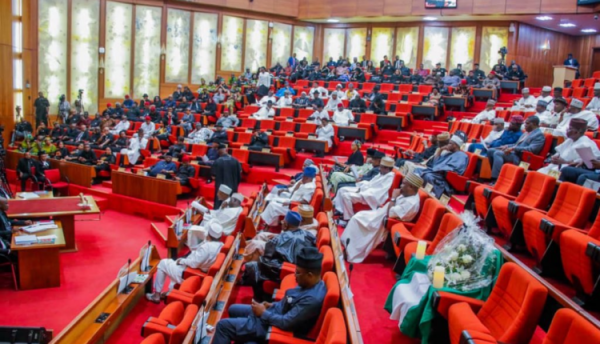
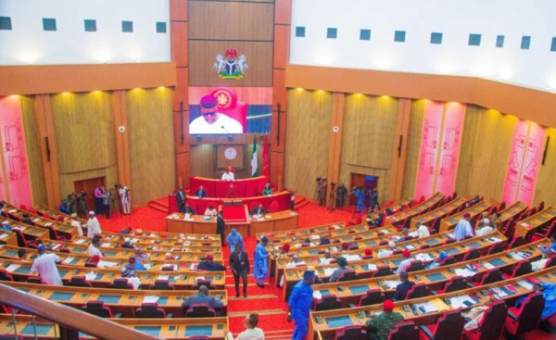
Nigeria may soon cut down its $2 billion annual rice import bill as the Senate Committee on Agricultural Production, Services, and Rural Development advanced deliberations on the proposed Rice Council Development Bill, aimed at transforming the nation’s rice industry and driving food self-sufficiency. SolaceBase reports that the bill, sponsored by Senator Adamu Aliero, seeks to establish the Rice Development Council of Nigeria, which would coordinate research, regulate production standards, support farmers, and promote innovations across the rice value chain. Stakeholders say the Council could turn Nigeria into Africa’s rice powerhouse, create millions of jobs, and strengthen national food security. Speaking at the public hearing on the bill and two others, the Cassava Inclusion and Flour Production Bill and the National Food Reserve Agency Bill, on Monday, Senate President Godswill Akpabio, represented by Senator Mohammed Monguno, said the initiatives align with President Bola Tinubu’s Renewed Hope Agenda for agricultural and economic transformation. “The Rice Development Council of Nigeria Bill represents our economic firepower, poised to create millions of jobs, reduce foreign exchange spending on importation, and make Nigeria Africa’s rice powerhouse. “By passing this bill, we will drive research, innovation, and value chain development, ensuring our children inherit a prosperous future”, Akpabio said. Akpabio emphasized that the three agricultural bills under consideration have the potential to reshape Nigeria’s food system. The cassava inclusion bill, he said, would create employment opportunities and stimulate agro-industrial growth, while the food reserve agency bill would serve as a critical buffer against food shortages caused by climate change, insecurity, and global economic disruptions. Chairman of the Senate Committee, Senator Salihu Mustapha, described rice as the staple that graces nearly every Nigerian table, yet lamented that the sector remains beset by inefficiencies despite the country’s capacity to produce more than seven million metric tonnes annually. “This bill heralds the birth of a dedicated council to orchestrate research, extension services, and value chain innovations, from flood-resistant seeds to modern milling technologies,” Mustapha said. “It promises to slash our $2 billion import dependence, ignite agro-industrial hubs across the North and South, and elevate our farmers from subsistence to commercial stardom”, he noted. Mustapha added that the Rice Council would foster inclusivity by ensuring the active participation of women and youth in agribusiness. “In essence,” he said, “it is a blueprint for turning paddy fields into prosperity engines and positioning Nigeria as Africa’s rice powerhouse.” The proposal received strong backing from industry stakeholders, including the Women Farmers Advancement Network (WOFAN). WOFAN expressed strong support for the Rice Council bill, stressing that it will create millions of job opportunities for women and youth. Hajia Maryam Lawal, who spoke on behalf of the organization, enjoined the Senate to pass the Rice Council bill to grow the rice value chain and enhance food security. Hajia Lawal noted that WOFAN had strongly supported the bill since 2020, when stakeholders along the rice value chain first proposed it . “WOFAN worked with CARF, RIMAN, RIPAIN and other stakeholders on the Rice Council bill from 2020 to 2023 when the bill was passed by the 9th Senate. However, the President’s assent was delayed until the bill lapsed, and it had to be re-presented in 2024. We are therefore confident that the 10th Senate will pass it again and this time around, it will be signed into law accordingly”, she said. Also, the Rice Millers Association of Nigeria (RIMAN), whose National Chairman, Peter Dama, called the bill a “timely intervention” that could unlock Nigeria’s untapped potential in rice production. Dama, in a detailed presentation, said establishing the Rice Council would help address systemic challenges across the sector, from inadequate irrigation and insecurity in farmlands to price instability and lack of mechanization. He recommended a holistic review of the production system backed by large-scale government and private sector investments in irrigation infrastructure, input subsidies, mechanization, and market regulation to prevent exploitation during scarcity. “There should be deliberate promotion of climate-smart agricultural production innovations, including research for high-yield resilient seeds and renewable energy to power irrigation,” Dama added. He stressed that rice’s global importance, as both a food staple and economic commodity, makes it imperative for Nigeria to prioritize the sector. “Rice is not just a meal on the table; it is a political and economic staple. It plays a role in palliatives for distressed communities, contributes to national GDP, and provides livelihoods for millions”, he said. Dama outlined multiple advantages that would flow from the bill’s passage, including increased food security, economic growth, support for farmers, improved quality standards, reduced import dependence, and enhanced competitiveness in both local and international markets. “A Rice Council will bring about coordination and collaboration in the absence of a properly structured rallying point for rice value chain actors in Nigeria,” he said. “It will encourage private sector engagement, facilitate training for farmers and millers, and enhance fortification programs to address micronutrient deficiencies” he noted. RIMAN also proposed several amendments to strengthen the bill. One key recommendation is the inclusion of financial institutions such as NIRSAL, Bank of Agriculture (BOA), Bank of Industry (BOI), National Agricultural Insurance Corporation (NAIC), and the National Agricultural Development Fund (NADF) on the Rice Council’s governing board. “Since the Central Bank of Nigeria has moved out of agricultural development financing, it should be removed from the board, and these specialized financial institutions should be included to ensure sustainable funding,” Dama said. The association further recommended the creation of six geopolitical zonal offices for the Rice Council to enhance regional representation, program implementation, and stakeholder engagement. “Decentralized offices will facilitate the council’s ability to implement programs, monitor progress, and respond to regional issues promptly. It will also foster collaboration, improve data collection, and ensure policies are tailored to the unique needs of each zone”, Dama noted. RIMAN proposed the establishment of seven technical committees within the Council, including units for Industry Development, Research and Development, Quality Control, Marketing and Trade, Rice Fortification, Donor Alignment and Finance, and Women, Youth, and Gender Equity. These, the group said, will ensure inclusivity and operational efficiency. Dama…
Nigeria may soon reduce its $2 billion annual rice import bill as Senate Committee on Agricultural Production, Services, and Rural Development advanced deliberations on the Rice Council Development Bill, a proposal to transform the sector and achieve food self-sufficiency. Sponsored by Senator Adamu Aliero, the bill seeks to establish Rice Development Council of Nigeria, to coordinate research, regulate production standards, support farmers, and promote innovations across the rice value chain. Experts say the initiative could make Nigeria Africa’s rice powerhouse, create jobs, and strengthen food security. Speaking at a public hearing on the bill with the Cassava Inclusion and Flour Production Bill and National Food Reserve Agency Bill, Senate President, Godswill Akpabio, represented by Senator Mohammed Monguno, said the measures align with President Bola Tinubu’s Renewed Hope Agenda for agricultural and economic transformation. “The bill represents our economic firepower, poised to create millions of jobs, reduce foreign exchange spending on importation, and make Nigeria Africa’s rice powerhouse. By passing this bill, we will drive research, innovation, and value chain development, ensuring our children inherit a prosperous future,” he said. He added that the three agricultural bills can reshape Nigeria’s food system. While the cassava inclusion bill would stimulate agro-industrial growth and employment, food reserve agency bill would provide a safety net against shortages caused by climate change and global disruptions. Committee Chair, Salihu Mustapha said rice is a staple on every table but lamented inefficiencies in the sector despite capacity to produce over seven million metric tonnes annually. “This bill heralds a dedicated council to orchestrate research, extension services, and value chain innovations, from flood-resistant seeds to modern milling technologies. “It promises to slash our $2 billion import dependence, ignite agro-industrial hubs in North and South, and elevate our farmers from subsistence to commercial stardom.” Mustapha also noted that the council would ensure inclusivity by engaging women and youth in agribusiness. “It is a blueprint for turning paddy fields into prosperity engines and positioning Nigeria as Africa’s rice powerhouse,” he added. He however called for collective commitment among all stakeholders, government, private sector, and local farmers to ensure the bill’s success. The Rice Millers Association of Nigeria (RIMAN) backed the proposal, describing it as a timely intervention that could unlock Nigeria’s full potential in rice production. He emphasised that rice is both a food and an economic staple. “Rice is not just a meal on the table; it is a political and economic staple. It plays a role in palliatives for distressed communities, contributes to national GDP, and provides livelihoods for millions.” RIMAN proposed key amendments, including the inclusion of financial institutions like NIRSAL, Bank of Agriculture (BOA), Bank of Industry (BOI), NAIC, and the National Agricultural Development Fund (NADF) on the Council’s governing board, replacing the Central Bank of Nigeria, which no longer funds agricultural development directly. The association also recommended six zonal offices to enhance regional program delivery and seven technical committees for areas such as research, quality control, marketing, rice fortification, and gender equity. Dama aligned the initiative with the National Rice Development Strategy II (2020–2030) and urged the conversion of the existing Rice Desk in the Federal Ministry of Agriculture and Food Security into a full-fledged council for stronger coordination. The Women Farmers Advancement Network (WOFAN), also reiterated its support for the proposed Rice Council Development Bill, describing it as a game-changer that will generate millions of job opportunities for women and youth across the rice value chain. Speaking on behalf of the organisation, Hajia Maryam Lawal urged the Senate to ensure the bill’s swift passage, noting that it would not only strengthen the rice industry but also enhance national food security. Hajia Lawal recalled that WOFAN had been actively involved in developing the bill since 2020, working alongside key stakeholders including CARF, RIMAN, and RIPAIN. “WOFAN worked with CARF, RIMAN, RIPAIN, and other stakeholders on the Rice Council Bill from 2020 to 2023 when it was passed by the 9th Senate. However, the President’s assent was delayed until the bill lapsed and had to be re-presented in 2024. We are therefore confident that the 10th Senate will pass it again, and this time around, it will be signed into law accordingly,” she said. She emphasised that the establishment of the Rice Council would help drive inclusive growth by empowering women and youth to take on active roles in agribusiness and value chain development.