Salamatu-WOFAN on Carbon Financing: Turning adversity into prosperity-Prof. M.K. Othman

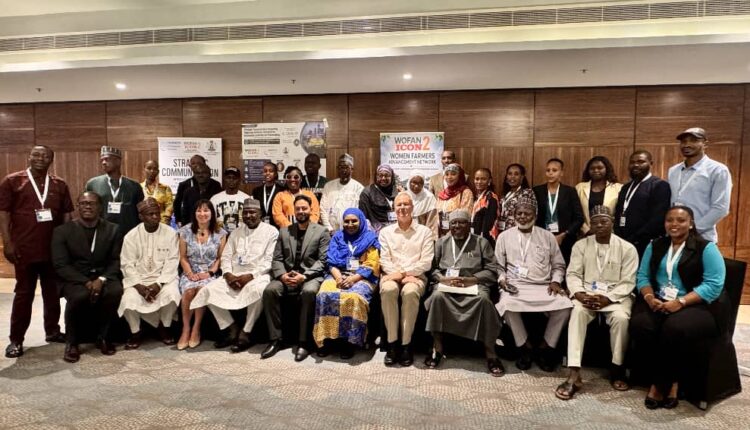
This is a follow-up to my article published on August 20th, 2025, with a slightly different title, “Salamatu-WOFAN on Climate Change: Turning Adversity into Prosperity,” featured in this column. WOFAN, under the ICON 2 project funded by the Mastercard Foundation, organized a high-level training workshop for selected key stakeholders at the Hyatt Place Hotel on Whitechapel Road, East London, United Kingdom, from 18th to 21st November 2025. The training was conducted by Prospects Development Services, a well-regarded UK-based capacity-building and educational consultancy firm, proudly owned by Nigerian Dr. Bayode T. Hambolu. The stakeholders from the private and public sectors in Nigeria, China, the UK, and India included academia- and university-based experts, legal and financial specialists, agriculturalists, interns, and a leading media expert. The theme of the training was “Strategic Leadership in Regenerative Agriculture and Positioning for Carbon Credit and Financing.” The team of stakeholders was carefully chosen to address the complex needs of the carbon market and financing. The researchers are responsible for providing the essential technologies (smart agricultural practices) to reduce carbon emissions, combat the effects of climate change, and enhance resilience and adaptation. Legal experts will develop the legal and policy framework needed for the market to succeed, while financial experts will create methods for buying and selling carbon credits. Media specialists will promote awareness and educate the public about the availability of the carbon market and its potential to help farmers earn extra income as bonuses. They will also aim to improve farmers’ productivity and profitability by adopting smart agricultural practices. The interns are to study the complexity of the carbon market to become experts and facilitators of carbon trade, provide the necessary support to the public, and become future experts in the carbon market. What is the carbon market and how does it work? Carbon market is a hybrid marketing system – virtual and physical; carbon markets are trading systems in which carbon credits are sold and bought. Companies or individuals can use carbon markets to offset their greenhouse gas emissions by purchasing carbon credits from entities that reduce or remove greenhouse gas emissions. Farmers can reduce or eliminate greenhouse gas emissions by adopting climate-smart agricultural (CSA) practices, which can also increase their productivity and profit margins. Adoption of CSA practices can generate carbon offsets through carbon dioxide sequestration, resulting in carbon credits that are valued in US dollars. One tradable carbon credit equals one tonne of carbon dioxide or the equivalent amount of a different greenhouse gas reduced, sequestered, or avoided. When a credit is used to reduce, sequester, or avoid emissions, it becomes an offset and is no longer tradable. Climate change is real, and its effects have no borders, just as wind naturally blows in all directions. However, the leading causes of climate change are greenhouse gas emissions and poor agricultural practices, which can be controlled or regulated. Developed countries are the major culprits in greenhouse gas emissions, driven by their heavy industries and technological advancement. For these countries to be considered “developed countries,” they cannot forgo their activities to lose their status and are thus ready to pay for carbon credits. In contrast, citizens of developing nations, who remain customers of the high technologies produced by developed countries, may not even benefit from reductions in carbon footprints, as they rarely engage in practices that mitigate greenhouse gas emissions. It is based on this premise that WOFAN, under the ICON 2 project with financial support from the MasterCard Foundation, organized two high-level workshops in France and the United Kingdom, and key stakeholders’ interaction in Nigeria, from July to November 2025. The UK workshop focused on strengthening Participants’ understanding of carbon markets, climate-smart agriculture (CSA), and how WOFAN can position itself to generate certified carbon credits using international best practice and the emerging Nigerian Carbon Market framework. At the workshop, stakeholders identified WOFAN to. be a champion and advocate of climate change resilience and adaptation in Nigeria, and thus, its strengths were identified: an extensive network of large farmers across many states, a functional extension system, strong digital tools, extensive experience, and access to improved or climate-smart agricultural technologies such as regenerative agriculture, compost, and tree planting. Similarly, additional gaps requiring attention for WOFAN to succeed in empowering farmers to be involved in carbon market were also identified: lack of baseline carbon data (such as soil carbon, methane profile, water use, and farming practices), enforcement of farmer compliance, negotiation skills in the carbon market to protect farmers’ interests when working with developers, verifiers, and buyers of carbon credits, and other technical skill gaps. A few case studies of efforts and success stories made by organizations and countries across the globe in establishing carbon markets and financing were discussed and analyzed. The Green Hydrogen – DRI-Steel Project, Stegra, Sweden, was among the case studies. The project objective was to develop a renewable, near-zero-emissions iron and steel plant. The project started in 2022, was validated in 2023, was in the developmental phase from 2023 to 2024, and is currently being executed through 2026. The financing model comprises a 4.2 billion Euro loan, 2.1 billion Euro in equity, and 350 million Euro in public grants. They will produce 2.5 million metric tons of steel per year, create over 5,000 jobs, and achieve a 95% reduction in carbon emissions. Another case study was “Valuing the forest,” a global capital coalition project. The goal is to provide a worldwide framework to measure, value, and report the natural carbon capital within the forestry sector, enabling the creation of natural capital as an asset class and nature-linked financial instruments. The stakeholders involved in this project included 18 forestry companies covering 22 million hectares, as well as small and medium-sized enterprises. A financing model comprises a grant from the Global Secretariat of the Taskforce for Nature-Related Financial Disclosures (TNFD), contributions from each participating forest owner through the International Sustainable Forestry Coalition, and other sources. Where are we in Nigeria? Nigeria, with over 30 million hectares of forested area, can make a case…
WOFAN joins global networks in driving strategic leadership in Regenerative Agriculture, positioning for Carbon Revenue

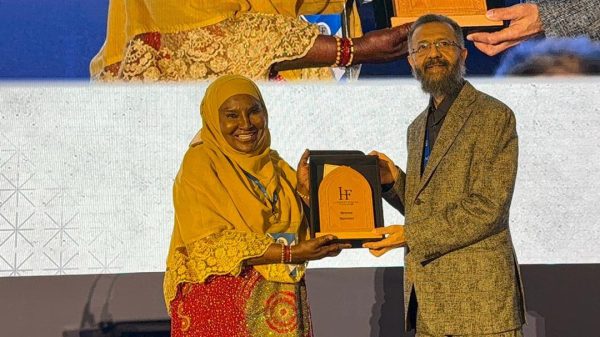
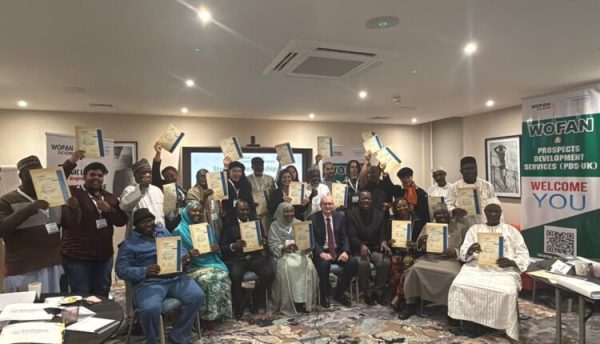
Women Farmers Advancement Network (WOFAN) has joined a global network in driving Strategic Leadership in Regenerative Agriculture and positioning for Carbon Revenue at a four-day training in London. The training attended by WOFAN board members, strategic partners that include a global network of CSOs,  academia, policy makers, national assembly members, private sectors, media and entrepreneurs, focused on strengthening capacity to drive regenerative agriculture, climate-smart innovation, and carbon market readiness. Also on the sidelines of the training, participants took part in the London Halal Forum with WOFAN having a pavilion at the venue, with  Director of Strategies, Innovation and Sustainability ( SIS), Hajia Maimuna Lawal, was among the panellists, on a discussion that centred on ‘’Women, Leadership and Cultural Diplomacy, The Art of Driving Inclusive Growth.’’ Similarly, the London Halal Forum honoured WOFAN, considering its activities targeted towards human development, especially support to rural farmers, women, youth and people with disabilities and the award was received by the WOFAN-ICON2 Project Country Director, Dr Salamatu Garba. SolaceBase reports that throughout the four days, participants engaged in deep discussions, hands-on group work, and scenario-based exercises that clarified how WOFAN and relevant stakeholders can position themselves as national trailblazer in climate action, food security, and rural transformation. Ford poised that some of the consideration in adopting this initiative of regenerative agriculture are evidence based practices design, whereby one needs to select practices with proven results, carbon focused energy, this addresses baseline measurement for emission, economic transformation which translate to shifting farmers from raw output to value added product, governance and accountability, which is all about building systems for monitoring, reporting and verification, so that soil carbon, water use, biodiversity and emissions can be tracked. In addition, he talked about scaling, which is the use of farmers cooperatives, digital tools, micro finance, and extension services to grow adoption rapidly that align with intervention with national food security and climate policies. Also, a multidisciplinary consultant and trainer, Prof. Abe Abrahami, dwells on Regenerative Agriculture, Possible Partnership, Opportunities and Way forward for Nigeria. Prof. Abrahami gave a comparison and study of Regenerative Agriculture development in Nigeria with Morocco, Egypt, Israel and Turkey Speaking at the end of the sessions, Country Director, WOFAN-ICON2 Project, Dr. Salamatu Garba said the training has increased the understanding of many of the participants on Regenerative Agriculture, Climate Change adaptation and Carbon Revenue, with the need to set baseline in commencing the process and creating awareness. ‘’With the intensive training we had, I am sure we would pick from most of the ideas postulated and look at what best suit our own environment for the betterment of our farmers, ‘’Garba said. ‘’Also part of our efforts is to look at how we are going to drive the awareness and sensitize stakeholders on Regenerative Agriculture, Climate Change Adaptation and the Carbon Revenue.’’ ‘’Our vision and values at WOFAN are in line with what the Halal objectives are with what was read out  during the London Hala Forum we attended yesterday, when you look at organic farming, if you put the two side by side, both Halal and organic farming, that has to do with standardization, which is what we stand for, henceforth, WOFAN will be pro Halal as well as pro organic farming to save the environment, that will be our slogan.’’ ‘’Therefore, we have decided we have some very important steps to take and then continue to talk to our own facilitators, consultants and enablers on how we need to go about the process.’’ Dr Salamatu Garba, a UN Peace Ambassador, used the occasion to appreciate the participation of the professors from academia, the National Assembly members, policy makers, media team for their commitment to the training, the training coordinator, Prospects Development Services and the facilitators who made understanding of the sessions seamless. Also speaking, the Dean, Faculty of Agriculture, Bayero University Kano, Prof. Muhammad Auwal Hussain, said the training has opened a new frontier, which will be thoroughly examined on how it can be scaled down to the benefit of farmers through agricultural extension workers. On his part, WOFAN Board Chairman, Prof Sani Miko, said the training, which is a follow-up to the sessions had in Paris, France, in July 2025, has created a strategy and plan to capture carbon, food security and influence policy makers on carbon reduction financing ‘’Some of the knowledge acquired at this training would be used to support the government in the policy formulation and to making the law that will guide Regenerative Agriculture, Climate Smart Agriculture and the issue of Carbon Revenue, ‘’Miko noted. On his part, an environmental expert and director of climate change, Kano State Ministry of Environment and Climate Change, Dr. Saleh Anka said the four-day engagement significantly strengthened WOFAN’s capacity to lead the transition to regenerative, climate-smart agriculture across Nigerian communities, build sustainable revenue streams through high-integrity carbon markets and enhance food security, water resilience, and climate readiness at community level. The participating countries include participants from India, Tunisia, Algeria, UK, Malaysia, Egypt and Nigeria. The training was organized by Prospects Development Services, UK and sponsored by WOFAN/ICON2 Project with the support of Master Card Foundation.

Salamatu-WOFAN on Carbon Financing: Turning Adversity into Prosperity

By Prof. M.K. Othman This is a follow-up to my article published on August 20th, 2025, with a slightly different title, “Salamatu-WOFAN on Climate Change: Turning Adversity into Prosperity,” featured in this column. WOFAN, under the ICON 2 project funded by the Mastercard Foundation, organized a high-level training workshop for selected key stakeholders at the Hyatt Place Hotel on Whitechapel Road, East London, United Kingdom, from 18th to 21st November 2025. The training was conducted by Prospects Development Services, a well-regarded UK-based capacity-building and educational consultancy firm, proudly owned by Nigerian Dr. Bayode T. Hambolu. The stakeholders from the private and public sectors in Nigeria, China, the UK, and India included academia- and university-based experts, legal and financial specialists, agriculturalists, interns, and a leading media expert. The theme of the training was “Strategic Leadership in Regenerative Agriculture and Positioning for Carbon Credit and Financing.” The team of stakeholders was carefully chosen to address the complex needs of the carbon market and financing. The researchers are responsible for providing the essential technologies (smart agricultural practices) to reduce carbon emissions, combat the effects of climate change, and enhance resilience and adaptation. Legal experts will develop the legal and policy framework needed for the market to succeed, while financial experts will create methods for buying and selling carbon credits. Media specialists will promote awareness and educate the public about the availability of the carbon market and its potential to help farmers earn extra income as bonuses. They will also aim to improve farmers’ productivity and profitability by adopting smart agricultural practices. The interns are to study the complexity of the carbon market to become experts and facilitators of carbon trade, provide the necessary support to the public, and become future experts in the carbon market. What is the carbon market and how does it work? Carbon market is a hybrid marketing system – virtual and physical; carbon markets are trading systems in which carbon credits are sold and bought. Companies or individuals can use carbon markets to offset their greenhouse gas emissions by purchasing carbon credits from entities that reduce or remove greenhouse gas emissions. Farmers can reduce or eliminate greenhouse gas emissions by adopting climate-smart agricultural (CSA) practices, which can also increase their productivity and profit margins. Adoption of CSA practices can generate carbon offsets through carbon dioxide sequestration, resulting in carbon credits that are valued in US dollars. One tradable carbon credit equals one tonne of carbon dioxide or the equivalent amount of a different greenhouse gas reduced, sequestered, or avoided. When a credit is used to reduce, sequester, or avoid emissions, it becomes an offset and is no longer tradable. Climate change is real, and its effects have no borders, just as wind naturally blows in all directions. However, the leading causes of climate change are greenhouse gas emissions and poor agricultural practices, which can be controlled or regulated. Developed countries are the major culprits in greenhouse gas emissions, driven by their heavy industries and technological advancement. For these countries to be considered “developed countries,” they cannot forgo their activities to lose their status and are thus ready to pay for carbon credits. In contrast, citizens of developing nations, who remain customers of the high technologies produced by developed countries, may not even benefit from reductions in carbon footprints, as they rarely engage in practices that mitigate greenhouse gas emissions. It is based on this premise that WOFAN, under the ICON 2 project with financial support from the MasterCard Foundation, organized two high-level workshops in France and the United Kingdom, and key stakeholders’ interaction in Nigeria, from July to November 2025. The UK workshop focused on strengthening Participants’ understanding of carbon markets, climate-smart agriculture (CSA), and how WOFAN can position itself to generate certified carbon credits using international best practice and the emerging Nigerian Carbon Market framework. At the workshop, stakeholders identified WOFAN to. be a champion and advocate of climate change resilience and adaptation in Nigeria, and thus, its strengths were identified: an extensive network of large farmers across many states, a functional extension system, strong digital tools, extensive experience, and access to improved or climate-smart agricultural technologies such as regenerative agriculture, compost, and tree planting. Similarly, additional gaps requiring attention for WOFAN to succeed in empowering farmers to be involved in carbon market were also identified: lack of baseline carbon data (such as soil carbon, methane profile, water use, and farming practices), enforcement of farmer compliance, negotiation skills in the carbon market to protect farmers’ interests when working with developers, verifiers, and buyers of carbon credits, and other technical skill gaps. A few case studies of efforts and success stories made by organizations and countries across the globe in establishing carbon markets and financing were discussed and analyzed. The Green Hydrogen – DRI-Steel Project, Stegra, Sweden, was among the case studies. The project objective was to develop a renewable, near-zero-emissions iron and steel plant. The project started in 2022, was validated in 2023, was in the developmental phase from 2023 to 2024, and is currently being executed through 2026. The financing model comprises a 4.2 billion Euro loan, 2.1 billion Euro in equity, and 350 million Euro in public grants. They will produce 2.5 million metric tons of steel per year, create over 5,000 jobs, and achieve a 95% reduction in carbon emissions. Another case study was “Valuing the forest,” a global capital coalition project. The goal is to provide a worldwide framework to measure, value, and report the natural carbon capital within the forestry sector, enabling the creation of natural capital as an asset class and nature-linked financial instruments. The stakeholders involved in this project included 18 forestry companies covering 22 million hectares, as well as small and medium-sized enterprises. A financing model comprises a grant from the Global Secretariat of the Taskforce for Nature-Related Financial Disclosures (TNFD), contributions from each participating forest owner through the International Sustainable Forestry Coalition, and other sources. Where are we in Nigeria? Nigeria, with over 30 million hectares of forested area, can…

WOFAN Trains Farmers, Stakeholders In Safety, Conflict Resolution

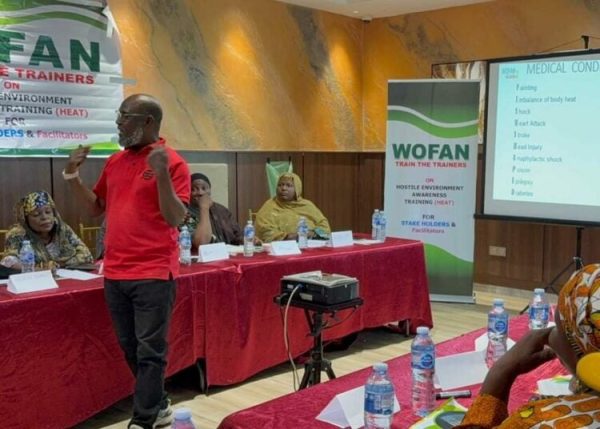
The Women Farmers Advancement Network (WOFAN) has organised a three-day safety, prevention, and security awareness and management training under its ICON2 project to improve the safety and precautions of farmers and agricultural extension workers against farm and domestic accidents. The workshop, tagged Hostile Environment Awareness Training (HEAT) was to equip participants with essential first aid, emergency response and conflict management skills. Speaking during the training, WOFAN’s country project director, Dr Salamatu Garba, emphasised the critical need for such an initiative, noting that the organisation brought together its stakeholders, including field officers, farmers and media personnel, to address life-threatening incidents often overlooked on farms and in rural communities. “This is one of the rare trainings we do for all staff, everyone actually needs this, irrespective of status, we are looking at both home and farm accidents, as well as first aid before taking victims for emergency care,” Garba said. She described the training as a wake-up call to real dangers encountered on the field, such as fainting, fires, sharp object injuries, broken limbs or sudden attacks. “From the farm, if there is an accident, we are working on developing an app that allows the extension worker or supervisor to press an emergency button. It should alert the nearest hospital, road safety agency, or relevant emergency service,” she added. The training also focused on strengthening community conflict resolution skills, particularly between livestock and crop farmers. “We work with both groups and encourage mutual respect. We even urge journalists to stop using divisive terms like ‘herdsmen’ and instead say that livestock farmers’ language matters, it fosters peace,” Dr Garba said. The HEAT training is part of WOFAN’s broader strategy to improve rural resilience and ensure food security through safe farming practices. Dr Garba noted that follow-up training and retraining would continue in phases, cascading knowledge from national to state and grassroots levels. Also speaking at the training, Hajia Maimuna Lawal, the project director on strategies and innovation, described the program as timely and life-saving and as creating WOFAN’s consciousness about tackling security and risk management. For her part, “WOFAN’s focal person in Adamawa State, Mrs Petuniya Kefas, said, “The training has helped me personally. There are things I used to do wrong when responding to accidents, but now I know the right steps. It’s important to assess and stabilise the victim before rushing to the hospital. “ Mrs Kefas said she plans to replicate the training across rural areas in Adamawa, ensuring that women farmers are empowered with practical emergency response skills. “We’ll gather them and train them just like we were trained. We’ll even invite experts to demonstrate. That way, they can help themselves and save lives,” she added. The WOFAN-ICON2 project continues to support innovation in agriculture, rural development and safety awareness, especially for women and youth farmers who form the backbone of Nigeria’s food production system. One of the facilitators, Mallam Malami Kaoje, called for more caution as he sought the immediate assistance of emergency units, experts, and first aiders. The MasterCard Foundation is partnering with organisations to create a five-year programme targeting 675,000 farmers. The goal is to create 10 million jobs in Africa and 1 million jobs in Nigeria.

WOFAN trains farmers, others on first aid, conflict resolution

Women Farmers Advancement Network (WOFAN) has conducted a three-day training on farm and domestic accident prevention, first aid management, and conflict resolution. Organised under ICON2 Project, Hostile Environment Awareness Training (HEAT), it brought together farmers, field officers, and media stakeholders to build capacity on safety protocols, emergency response, and peaceful coexistence in rural communities. Speaking at the workshop, WOFAN’s Country Project Director, Dr. Salamatu Garba, noted importance of the initiative in addressing often-overlooked safety challenges on farms and in homes. She stressed that the training was designed for all staff, regardless of role or status, as accidents can happen anywhere from farms to households. “This is one of our few all-inclusive trainings. Everyone needs to understand how to handle emergencies from minor injuries to life-threatening situations before help arrives,” Dr. Garba said. She noted that WOFAN is developing a app to streamline emergency response, allowing agricultural extension workers to instantly alert nearby hospitals, road safety officials, or emergency services. The training also addressed community conflict management, especially between crop and livestock farmers. Dr. Garba stressed respectful language in reporting, urging journalists to use terms like “livestock farmers” instead of “herdsmen” to promote peace and mutual understanding. “Language matters. It can either build or break communities. We want peace, not polarisation,” she added. WOFAN’s Director of Strategies and Innovation, Hajiya Maimuna Lawal, said the training underscores WOFAN’s commitment to risk management and rural safety. Petuniya Kefas, focal person in Adamawa, shared how the training changed her approach to emergency situations.

WOFAN inaugurates fourth marketing hub in Kano to support women processors

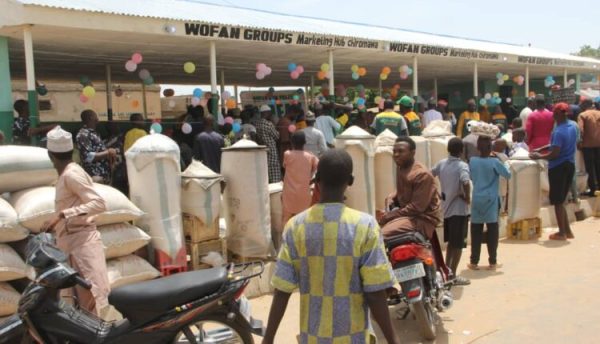
The Women Farmers Advancement Network (WOFAN) has inaugurated a new marketing hub for women processors in Chiromawa community, Garun Mallam Local Government Area of Kano State. SolaceBase reports that the hub, the fourth of its kind in the state, is part of WOFAN’s ongoing efforts to support women processors by improving their access to dignified and profitable employment opportunities. Previously, WOFAN had established a related marketing hub in Tudun Wada, Kura, and Karfi. Where it has turned into a trading hub for women transacting farm-produced and other items, with nothing less than exporting over 50 trailers of goods daily to some parts of Nigeria and even neighbouring countries such as the Niger Republic. Speaking at the event on Thursday, the Country Director of the WOFAN-ICON2 Project, Dr. Salamatu Garba—represented by WOFAN’s Finance Officer, Mr. Abdulrasheed Abdulazeez—emphasized that the hub will empower women to take control of their marketing processes and apply the negotiation skills they have gained through WOFAN programs. She noted that the initiative aims to give women greater control over their resources, increase their profitability, and strengthen their voices on matters that affect them. “This facility is designed to enhance vocational skills, promote self-reliance, and create a supportive environment for rural women to process and market their agricultural produce effectively,” he said. The Chiromawa hub marks the fourth of such facilities established in Kano State and the third within Garun Mallam LGA, following earlier hubs in Kura, Karfi, and Tudun Wada. Dr. Salamatu Garba added that Chiromawa Market, which trades over 100 truckloads of grains daily to various states and beyond, now hosts this impactful mini-project to support women-led businesses through aggregation points. “This initiative not only improves the livelihoods of women processors but also strengthens local economies and food systems,” he added.Best restaurants near me She further explained that the project aligns with the goals of the WOFAN-ICON2 Project, funded by the Mastercard Foundation. The five-year program aims to create sustainable employment opportunities for youth, women, and persons with disabilities (PWDs) across ten Nigerian states. Also speaking at the event, WOFAN’s Kano State Desk Officer, Alhaji Dayyabu Abubakar, highlighted that the hub promotes economic inclusion by providing accessible infrastructure for business operations while addressing broader community needs. He explained that the Chiromawa marketing hub consists of three shops: one serves as an office for members to discuss their concerns and plan strategies, while the other two are dedicated to business activities. In his remarks, the leader of Chiromawa Market, Malam Mustapha Haruna, said the initiative would not only benefit individual women but also bring positive changes to the entire community. He prayed for divine guidance for the beneficiaries as they grow their businesses and expressed deep appreciation to Dr. Salamatu Garba for her consistent support to vulnerable communities.SolaceBase reports that