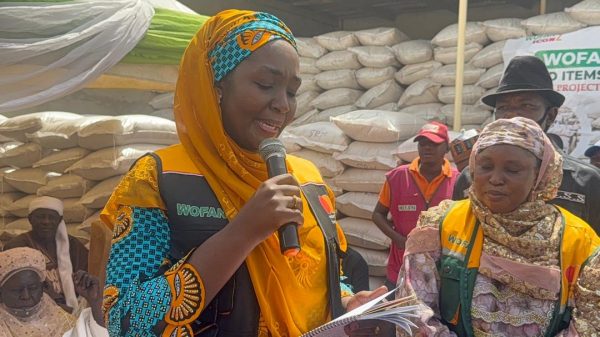
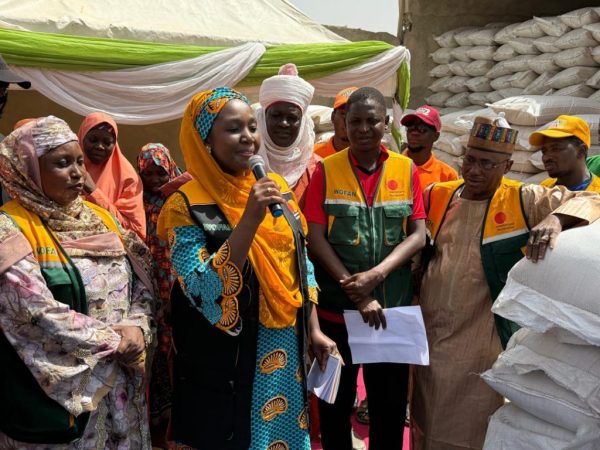
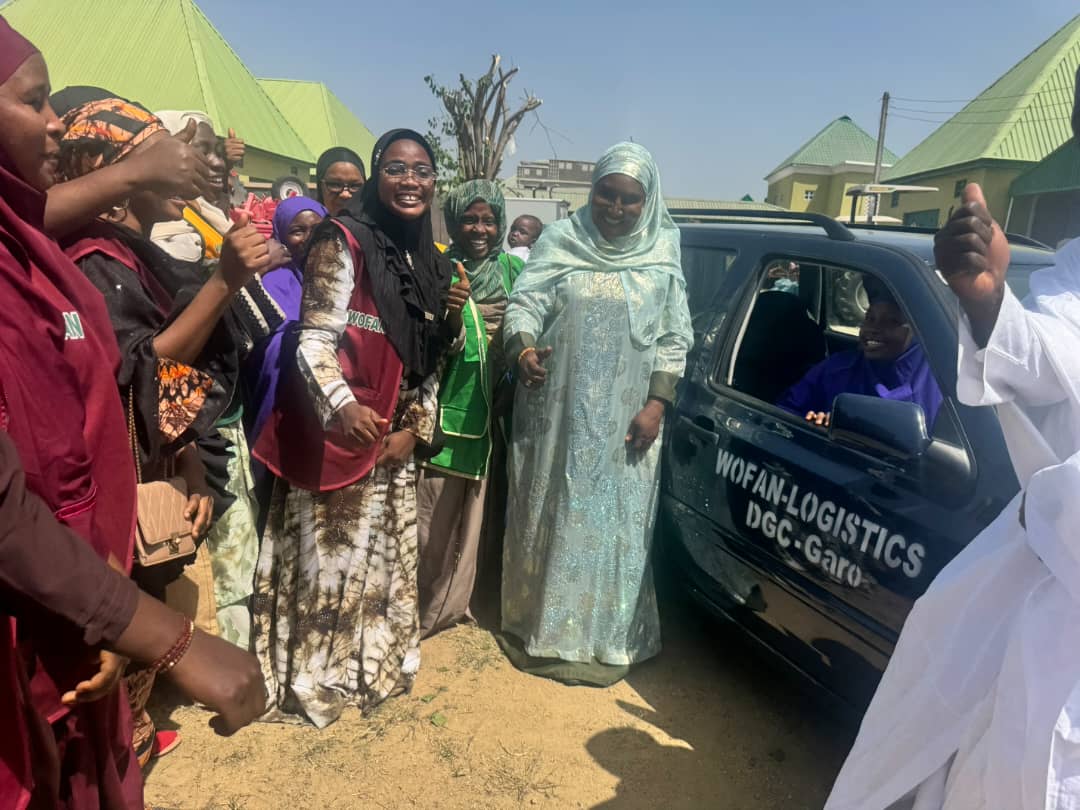
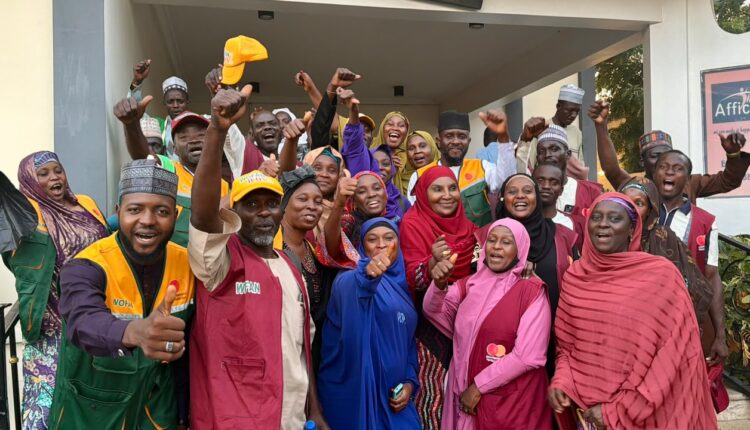
The Women Farmers Advancement Network (WOFAN), through its WOFAN-ICON2 Project, has established more than 105 marketing hubs across Nigeria, creating thousands of jobs and expanding economic opportunities for women, youths and persons with disabilities. The initiative, supported by the Mastercard Foundation, is designed to connect smallholder farmers and processors to structured markets while promoting value addition, financial inclusion and sustainable employment in rural communities. Speaking on the impact of the hubs, WOFAN Group Executive Board Chair and Country Director of the WOFAN-ICON2 Project, Dr Salamatu Garba, said the facilities were more than trading centres, describing them as development platforms that connect farmers to reliable markets and create dignified employment. Garba, who was represented at the inauguration by WOFAN Finance Officer, Abdulrasheed Abdulazeez, said the hubs had opened opportunities for women processors who previously depended on middlemen to sell their products, often receiving limited profits and having little influence over the value chains. “Today, these hubs have become vibrant centres of economic activity where youths work as traders, loaders and service providers, while women are deeply involved in processing and value addition,” she said. She spoke during the inauguration of a new marketing hub for women processors in Chiromawa, Garun Mallam Local Government Area of Kano State. The Chiromawa facility is the fourth WOFAN marketing hub in Kano State, following similar interventions in Tudun Wada, Kura and Karfi. The hubs have become centres for the trading of agricultural commodities, with the Tudun Wada hub reportedly facilitating the movement of more than 50 trailers of goods daily to other parts of Nigeria and neighbouring Niger Republic. Also, Hajia Maimuna Lawal Strategies, Innovation and Sustainability SIS) at WOFAN, said the new hub would enable women to take greater control of their marketing activities and apply negotiation skills acquired through WOFAN programmes. She said the initiative would improve women’s profitability, strengthen their participation in decision-making and contribute to the development of local economies and food systems. The Chiromawa Market leader, Mustapha Haruna, welcomed the intervention, saying it would benefit not only women beneficiaries but the wider community. WOFAN Kano State Desk Officer, Dayyabu Abubakar, said the hub was designed to promote economic inclusion by providing accessible infrastructure for women-led businesses. He explained that the facility comprises three shops, with one serving as an office where members can discuss challenges and develop business strategies, while the other two are dedicated to commercial activities. Meanwhile, youth leaders and community partners said the marketing hubs had helped reduce idleness among young people by providing legitimate employment opportunities. A youth mega-cluster leader, Tasiu Ibrahim, said the provision of modern rice and grain-processing machines, coupled with solar-powered lighting, had enabled women and youths to work in shifts during the day and at night. Community partners also said women had become increasingly involved in both farming and processing, while persons with disabilities were engaged in activities such as jute-bag production. The WOFAN-ICON2 Project has also provided improved seeds, fertilisers, agro-chemicals, processing equipment and starter packs to beneficiaries across Adamawa, Bauchi, Benue, Gombe, Jigawa, Kaduna, Kano, Nasarawa and the Federal Capital Territory. The five-year project aligns with the Mastercard Foundation’s Young Africa Works–Nigeria Strategy and seeks to create sustainable employment opportunities, particularly for women, youths and persons with disabilities.
The Women Farmers Advancement Network (WOFAN) has disclosed that more than 105 marketing hubs established under its WOFAN-ICON2 Project are creating jobs, improving market access and strengthening income opportunities for women, young people and persons with disabilities across Nigeria. Supported by the Mastercard Foundation, the initiative provides smallholder farmers and agro-processors with organised platforms to sell their produce, undertake value addition and participate more effectively in agricultural value chains. Speaking at the inauguration of a marketing hub for women processors in Chiromawa, Garun Mallam Local Government Area of Kano State, WOFAN Group Executive Board Chair and Country Director of the WOFAN-ICON2 Project, Dr Salamatu Garba, said the facilities were designed to go beyond conventional marketplaces. Garba, who was represented by WOFAN Finance Officer, Abdulrasheed Abdulazeez, said the hubs were increasingly serving as economic centres where farmers, processors, traders and service providers could earn sustainable livelihoods. She noted that many women processors previously relied heavily on middlemen to dispose of their products, a situation that reduced their earnings and limited their bargaining power within agricultural value chains. “Today, these hubs have become vibrant centres of economic activity where youths work as traders, loaders and service providers, while women are deeply involved in processing and value addition,” she said. The newly inaugurated Chiromawa facility brings the number of WOFAN marketing hubs in Kano State to four, with similar facilities already operating in Tudun Wada, Kura and Karfi. WOFAN said the hubs have grown into important agricultural trading points, connecting producers and processors with buyers within and outside their communities. At the Tudun Wada hub, for instance, more than 50 trailers of agricultural commodities are reportedly transported daily to different parts of Nigeria and the neighbouring Niger Republic. Also speaking, WOFAN’s Strategies, Innovation and Sustainability representative, Hajia Maimuna Lawal, said the Chiromawa hub would give women greater control over the sale of their products and provide an opportunity to put into practice the business and negotiation skills acquired through WOFAN programmes. Lawal said improved access to markets would help women secure better returns for their products, participate more actively in economic decision-making and contribute to stronger local food systems. Chiromawa Market leader, Mustapha Haruna, described the establishment of the facility as a significant intervention that would have an impact beyond its direct beneficiaries. He said increased commercial activities generated by the hub would also create opportunities for other residents and businesses within the community. WOFAN Kano State Desk Officer, Dayyabu Abubakar, said the facility was specifically structured to encourage economic inclusion and provide accessible business infrastructure for women entrepreneurs. According to him, the hub has three shops, including an office where members can meet to identify challenges, exchange ideas and develop strategies to improve their businesses. The remaining two shops are dedicated to commercial activities. Youth representatives and community partners also said the intervention was contributing to efforts to tackle unemployment and idleness among young people by creating productive economic opportunities. A youth mega-cluster leader, Tasiu Ibrahim, said modern rice and grain-processing equipment provided through the project, alongside solar-powered lighting, had made it possible for women and young people to operate in shifts during both daytime and evening hours. Community partners said the intervention had also encouraged more women to participate in farming, processing and other agricultural businesses, while persons with disabilities were being supported to engage in income-generating activities, including jute-bag production. Beyond the establishment of marketing hubs, the WOFAN-ICON2 Project has distributed improved seeds, fertilisers, agrochemicals, processing machinery and business starter packs to beneficiaries. The intervention currently covers Adamawa, Bauchi, Benue, Gombe, Jigawa, Kaduna, Kano and Nasarawa states, as well as the Federal Capital Territory. The five-year WOFAN-ICON2 Project is aligned with the Mastercard Foundation’s Young Africa Works–Nigeria Strategy and focuses on expanding sustainable livelihood and employment opportunities, particularly for women, youths and persons with disabilities.
At a time when Nigeria is searching for practical solutions to youth unemployment, food insecurity and the widening gap between classroom learning and industry realities, the Skills Improvement to Boost Livelihood and Nurture Growth (SIBLING) Project at Bayero University, Kano (BUK), has emerged as a compelling example of what can be achieved when academia and the private sector work together with a shared vision. The initiative, spearheaded by the Women Farmers Advancement Network (WOFAN) in partnership with Bayero University through the Centre for Dryland Agriculture (CDA) and the Faculty of Agriculture, is redefining agricultural education by moving beyond theory to practical and from farm gates to the corridors of industries, thereby transforming agricultural theories, upscaling from classroom learnings to hands-on, simple, modern technologies that promote enterprise development. Rather than limiting students to conventional classroom instructions. The project immerses them in modern farming techniques, agribusiness management, value addition and entrepreneurship, equipping them with skills that can translate directly into sustainable livelihoods, labour employers and dignified agribusiness owners after graduation. The significance of the SIBLING Project extends far beyond the boundaries of Bayero University. It presents a practical roadmap for addressing some of Nigeria’s most pressing challenges: graduate unemployment, low agricultural productivity, poor agricultural extension services and inadequate exposure of students to real-world enterprise. This approach will further make agribusiness a pathway to attracting our youths, especially to get attracted to farming and see it beyond tilling the soil with hoes and cutlasses. Moreso, this will attract Financial institutions into supporting more of agribusiness since the returns will be more profitable with a high turnover rate at this time when agriculture remains one of Nigeria’s greatest economic opportunities. According to Dr Salamatu, “universities must become centres of innovation, production and entrepreneurship rather than institutions that merely award certificates”. One of the defining strengths of the initiative is the depth of commitment demonstrated by its partners. Through the collaboration, WOFAN has invested substantially in agricultural inputs, mechanisation, infrastructure and technical support, while Bayero University has provided land, technical expertise, institutional backing and academic integration, a model that brings together research institutions, private and public sectors that eventually will attract the financial institutions to rally round the initiative. The result is a partnership where both institutions contribute mutually and complementary strengths, share risks and profits towards a common objective—developing graduates who are capable of creating jobs rather than merely seeking them. Such exposure builds confidence, enhances employability and encourages graduates to view agriculture as a profitable business venture instead of a last resort. It is therefore unsurprising that the project has attracted widespread recognition from government officials, educational stakeholders and professional bodies. The visit by the Honourable Minister of Education, Dr Tunji Alausa, alongside the Honourable Minister of State for Education, Professor Suwaiba Said Ahmad, underscored the Federal Government’s appreciation of the project’s enormous potential. Their commendation reflected growing national recognition that innovative partnerships such as SIBLING can significantly strengthen Nigeria’s higher education system and agricultural value chain. Similarly, the Bayero University Alumni Association deserves recognition for publicly applauding the initiative. The Association’s endorsement reflects the confidence of graduates who appreciate the value of practical education and understand the importance of preparing today’s students for tomorrow’s economic realities. Alumni support further reinforces the credibility and sustainability of such transformative programmes. Read Also:BUK receives N40m agricultural mechanization equipment to boost practical skills under WOFAN-CDA SIBLING project {PHOTOS} The success of the SIBLING Project offers an important lesson for universities across Nigeria. Higher education institutions should actively pursue strategic partnerships with credible private sector organisations, development agencies and agricultural enterprises to bridge the persistent gap between academic learning and practical application. While government funding remains indispensable, sustainable development increasingly depends on collaborative models that combine public institutions’ intellectual resources with private sector innovation, investment and implementation capacity. Every federal, state and private university with programmes in agriculture, environmental sciences or related disciplines should study the SIBLING model with a view to adapting it to their local contexts. Such partnerships have the potential to transform university farms into thriving centres of research, commercial production, innovation and entrepreneurship while producing graduates who possess marketable skills and practical experience. The National Universities Commission (NUC), relevant ministries and university governing councils should also encourage policies that reward institutions capable of establishing productive partnerships with industry. Academic excellence today must not be measured solely by publications and graduation statistics but also by the capacity of universities to solve societal problems, stimulate economic growth and empower graduates with practical skills. As Nigeria continues to seek lasting solutions to food insecurity and youth unemployment, there is another urgent policy issue that deserves immediate legislative attention. The National Assembly should expedite action on the Agricultural Extension Bill. A modern and comprehensive legal framework for agricultural extension services would strengthen collaboration among universities, research institutions, extension professionals, farmers and private sector organisations. Passage of the bill would provide a stronger institutional foundation for initiatives such as the SIBLING Project by promoting knowledge transfer, improving access to agricultural innovations, encouraging technology adoption and creating structured mechanisms for scaling successful models across the country. It would also reinforce the role of universities as active contributors to national agricultural development rather than passive centres of instruction. Read Also:Agriculture Extension Services bill is designed to promote agric development in Nigeria-Minister Agricultural extension remains the bridge between research findings and practical application. Without an effective extension system supported by law and adequate funding, many groundbreaking innovations developed by universities and research institutions fail to reach farmers and rural communities where they are needed most. Strengthening this system would multiply the impact of initiatives like SIBLING and ensure that successful innovations are replicated nationwide. Special commendation must go to the Founder, Chief Executive Officer and Global Advocate of WOFAN, Dr Salamatu Garba, whose vision, commitment and unwavering belief in the transformative power of agriculture continue to inspire meaningful change. Through WOFAN, she has consistently championed programmes that empower women, youths and vulnerable communities while promoting sustainable agricultural development across Nigeria and beyond. The SIBLING Project…
In every generation, society is blessed with individuals who understand that true greatness is measured not by what one possesses but by what one gives. Dr. Salamatu Garba, the visionary founder and Director of Women Farmers Advancement Network (WOFAN), has continued to demonstrate that development is most meaningful when it uplifts institutions and communities alike. Through the Sibline Integrated Farms and Innovation Limited (SIBLINE) Project, her interventions have strengthened Bayero University, Kano by providing modern agricultural equipment worth millions of naira, supporting practical training for students, sponsoring senior management staff to the United Kingdom for advanced training on Artificial Intelligence, and extending life changing infrastructure to neighbouring communities through the provision of water facilities, road networks and a pedestrian bridge across the ever bust Gwarzo Road. These initiatives portray a philosophy that sees education, innovation and community welfare as inseparable pillars of sustainable development. There are people who speak about changing the world, and there are those who quietly change it one life, one institution and one community at a time. Their names are not merely written in reports or commemorative plaques. They become woven into the daily experiences of ordinary people whose lives are transformed by simple but meaningful acts of kindness. Such individuals understand a timeless truth that civilisation advances not only through governments and public policies but also through the generosity of men and women who recognise that every neighbour deserves an opportunity to flourish. Dr. Salamatu Garba, the Director of Women Farmers Advancement Network (WOFAN), belongs to this rare class of visionary leaders whose philosophy of development extends beyond organisational success into the wider society. Her approach reflects the enduring belief that prosperity becomes meaningful only when it is shared and that institutions grow stronger when communities grow alongside them. For years, WOFAN has earned national and international recognition for empowering women, strengthening agricultural value chains and creating economic opportunities for thousands of families. Yet behind these remarkable achievements lies a deeper conviction that development should never stop at the boundaries of a project. It should flow naturally into schools, universities, neighbourhoods and every place where hope seeks a helping hand. That conviction has found practical expression through the Sibline Integrated Farms and Innovation Limited (SIBLINE) Project, whose interventions have continued to strengthen Bayero University, Kano while simultaneously improving the lives of neighbouring communities. Universities occupy a unique place in every society. They are the workshops where ideas are refined, discoveries are made and future leaders are prepared. Supporting a university therefore means investing in generations yet unborn. Recognising this reality, the SIBLINE Project provided Bayero University with modern farming implements worth millions of naira to strengthen practical agricultural education and research. In an era where agriculture is increasingly driven by technology, mechanisation and innovation, such intervention represents much more than the donation of equipment. It is an investment in knowledge. It is an investment in food security. It is an investment in the young minds who will one day transform Nigeria’s agricultural landscape. For students of the Faculty of Agriculture, learning extends beyond lecture halls. Every practical demonstration, every experiment conducted on the farm and every opportunity to handle modern agricultural equipment enriches their understanding and prepares them for real life challenges. Knowledge becomes more meaningful when theory meets practice. Seeds planted in classrooms blossom into innovation only when nurtured by practical experience. By supporting practical agricultural training, Dr. Salamatu Garba has helped create an environment where students are better equipped to develop solutions for contemporary agricultural challenges. The beneficiaries are not merely today’s undergraduates but countless farmers and communities who will benefit from their knowledge in years to come. Education, however, does not remain static. The world is experiencing a technological revolution powered by Artificial Intelligence, digital innovation and data driven decision making. Institutions that fail to embrace these changes risk falling behind in a rapidly changing global environment. Understanding this emerging reality, the SIBLINE Project sponsored senior management staff of Bayero University to participate in a specialised workshop on Artificial Intelligence in the United Kingdom. The significance of this gesture extends beyond international travel. It demonstrates confidence in the capacity of Nigerian universities to compete on the global stage. It acknowledges that university leaders must continuously acquire new knowledge if they are to provide effective leadership in an increasingly digital world. Artificial Intelligence is redefining education, research, governance, agriculture, healthcare and industry. Exposing university administrators to international best practices creates opportunities for institutional transformation and encourages fresh thinking capable of positioning Bayero University among globally competitive institutions. Great institutions are built by leaders who never stop learning. Just as rivers remain fresh because they continue to flow, leadership remains relevant because it continually embraces new knowledge. Dr. Salamatu Garba understands this enduring principle. Yet perhaps the greatest beauty of her philosophy lies in the refusal to separate the university from its surrounding communities. Too often, institutions of higher learning exist beside communities that struggle with inadequate infrastructure and limited social amenities. Sustainable development demands a different approach. Communities and universities are partners in progress. Each depends on the other. A university cannot thrive where neighbouring communities suffer neglect, just as communities benefit immensely when educational institutions flourish. It is within this philosophy of shared prosperity that the SIBLINE Project extended its humanitarian interventions to Danbare community. Access to clean water remains one of humanity’s most fundamental needs. Water sustains life, preserves health and restores dignity. Every drop supplied to a household represents relief for families who would otherwise travel long distances in search of this precious resource. By providing water facilities to Danbare, Dr. Salamatu Garba transformed what many often consider an ordinary infrastructure project into an extraordinary investment in human wellbeing. Children now have more time for school instead of spending hours searching for water. Women are relieved of daily burdens that consume valuable time and energy. Families enjoy healthier living conditions. Entire communities experience renewed hope. The intervention did not stop there. Road infrastructure remains one of the strongest…
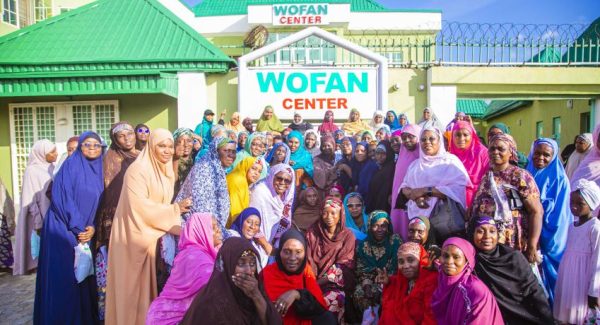
The Bayero University, Kano Staff Wives Association (BUKSWA) has unveiled a new strategic direction aimed at improving the livelihoods of its members through a partnership with the Women Farmers Advancement Network (WOFAN). The partnership initiative was discussed during a strategic meeting held on Monday, 3 August 2026, at the WOFAN Secretariat, where members of the association met with WOFAN’s Founder and Global Advocate, Hajiya Dr. Salamatu Garba, to explore areas of collaboration under the second component of the Skills Improvement to Boost Livelihood and Nurture Growth (SIBLING) Project currently ongoing with Bayero Un8versity,. Speaking on behalf of the Chairperson of the association, the Secretary, Hajiya Halima Sadiya Mahmoud, said BUKSWA was revived in 2024 after years of inactivity through the support of the immediate past Vice-Chancellor of Bayero University, Professor Sagir Adamu Abbas, and the commitment of his wife, Hajiya Binta Saji, who played a leading role in repositioning the association. She explained that the association’s renewed leadership identified several socio-economic challenges affecting members, including unemployment, widowhood and financial hardship among the wives of serving and retired staff. These findings informed the association’s decision to seek strategic partnerships that would create sustainable livelihood opportunities through agriculture and entrepreneurship. According to her, BUKSWA has prioritised organizational growth and leadership direction to boost economic sources of its members through agricultural produce processing and other agribusiness ventures as key areas for empowerment. She commended WOFAN for inviting the association to develop a comprehensive concept note that would serve as the framework for the proposed collaboration. The Assistant Chairperson of the association, Hajiya Binta Saji, noted that BUKSWA comprises employed women, unemployed wives of staff and vulnerable members whose spouses are retired or deceased. She said the proposed partnership would provide targeted interventions that respond to the specific needs of each category. Members also reflected on lessons from the association’s previous operations, identifying weak accountability, poor communication, ineffective leadership coordination and limited support for members’ businesses as challenges that the revived association is determined to address. Responding, Dr. Salamatu Garba said WOFAN was committed to building partnerships capable of delivering measurable and sustainable impact. She explained that the meeting provided an opportunity to reflect together and understand the association’s vision, membership structure and priority areas before the commencement of any intervention. She advised the association to strengthen its organisational structure across Bayero University campuses, maintain an accurate membership database and classify members according to their preferred agricultural value chains, including poultry, fisheries and crop processing. She also encouraged wider sensitisation to ensure broad participation when the programme begins. The meeting ended with resolutions for the association to complete its restructuring process, prepare a detailed concept note and identify viable agricultural value chains ahead of the formal rollout of the partnership. WOFAN expressed optimism that implementation of the new intervention could commence before the end of August 2026. Earlier, WOFAN Communication facilitator , Hajiya Nafisa Ahmad Murtala, welcomed participants and explained that the initiative with BUKWAS is a separate component of the SIBLING Project of the CDA- BUK launched in July 2026 which is a research and student focused programme currently being implemented in collaboration with Bayero University while the Women- led BUKWAS version is addressing more on addressing socio- economic needs of the members and boost their group cohesion and luvelihood improvement
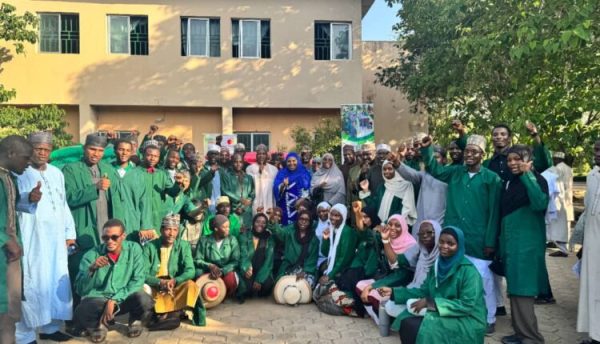
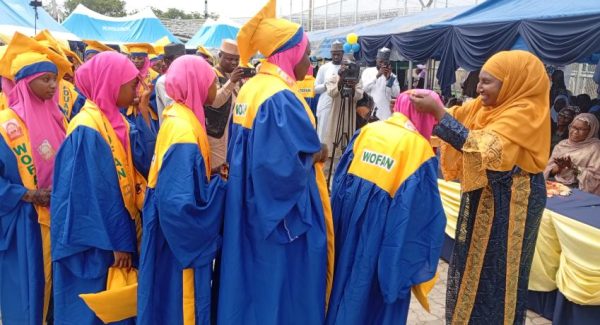
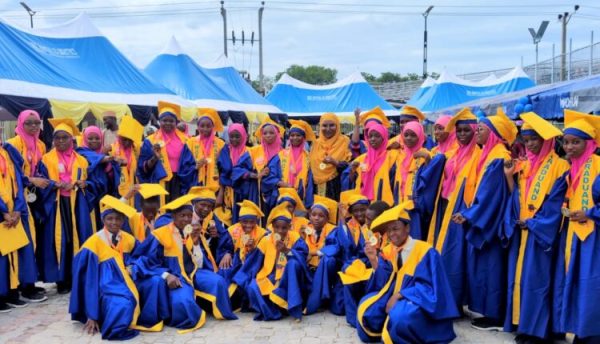
The Vice-Chancellor of Bayero University, Kano (BUK), Professor Haruna Musa, fsi, has reaffirmed the University’s strong partnership with the Women Farmers Advancement Network (WOFAN), describing the organisation as a strategic partner in advancing education, entrepreneurship, agriculture and community development. Speaking at the WOFAN Schools Graduation and Prize-Giving Ceremony held on Saturday, August 1, 2026, the Vice-Chancellor, represented by the Deputy Vice-Chancellor (Academics), Professor Ahmad Muhammad Tsauni, congratulated the Founder and Executive Director of WOFAN, Hajiya Dr. Salamatu Garba, on the successful graduation of 158 pupils and students across the Nursery, Primary and Secondary Schools. Professor Haruna praised Dr. Salamatu Garba’s unwavering commitment to community development, particularly through initiatives that continue to transform lives through quality education, skills development and youth empowerment. He specifically acknowledged the longstanding collaboration between Bayero University and WOFAN under the SIBLING Project, which equips university students with practical agricultural and entrepreneurship skills. According to him, the University remains fully committed to sustaining the partnership, having put in place measures to ensure the long-term success of the initiative. “The partnership between Bayero University and WOFAN has become a model for empowering young people through education, agriculture and entrepreneurship. We value this collaboration and will continue to support its sustainability,” he said. The Vice-Chancellor also congratulated the graduating students, their parents and teachers for their dedication and sacrifices, urging the graduands to remain disciplined and pursue excellence as they advance to the next stage of their education. Earlier, the Chairman of the WOFAN Board of Trustees, Professor Sani Miko, called on parents to complement the efforts of the school by instilling sound moral values and discipline in their children. He noted that the modest fees charged by the school should encourage parents to support the institution’s vision through active participation in their children’s upbringing. Professor Miko also commended Dr. Salamatu Garba for constructing the pedestrian bridge that now provides safe and easy access to the school, describing it as another testament to WOFAN’s commitment to community development. Also speaking, WOFAN Board member, Professor Mahmoud Ibrahim Daneji, said the institution distinguishes itself by integrating academic excellence with vocational and entrepreneurship training. He encouraged the graduating students to embrace skills acquisition alongside formal education to become self-reliant and productive members of society. In her remarks, the Founder and Executive Director of WOFAN, Hajiya Dr. Salamatu Garba, described quality education as a shared responsibility that requires the collective commitment of schools, parents and the wider community. She urged parents to support the school’s policies, including adherence to the 8:00 a.m. gate closure, stressing that discipline remains an essential ingredient for academic excellence and character development. Several dignitaries who attended the ceremony applauded WOFAN’s investment in education and community development. Among them were the Kacallan Kano and Hakimin Garun Malam, Alhaji Muhammad Ibrahim; the Royal Father of the Day and Hakimin Bebeji, Alhaji Sarki Yusuf Bayero; and the Chairman of the Parents-Teachers Association (PTA), Alhaji Musa Kalla, who appreciated parents for their continued support towards the academic and moral development of their children. Also present were the immediate past Dean, Faculty of Agriculture, Professor Muhammad Auwal Hussaini and former Ambassador of Nigeria to Brazil, Professor Ahmad Muhammad Makarfi. The ceremony featured colourful cultural displays, student performances and the presentation of prizes and awards to outstanding pupils and students from the Nursery, Primary and Secondary sections, marking another milestone in WOFAN’s commitment to nurturing future leaders through quality education and skills development.
WOFAN Comprehensive School and Islamiyya have reaffirmed its commitment to raising academically excellent, disciplined and morally upright future leaders as it graduated pupils and students of the 2025/2026 academic session. The annual speech, prize-giving and graduation ceremony was held on Saturday in Kano. The event brought together education stakeholders, parents, members of the school’s governing board, teachers, traditional leaders and other invited guests to celebrate academic excellence, good character and the successful completion of another academic session of 158 graduands across three categories of students: Nursery, Primary and Junior Secondary sections. Speaking at the ceremony, the Proprietress of the school and Founder of the Women Farmers Advancement Network (WOFAN), Dr Salamatu Garba, urged parents to strengthen their partnership with the school by ensuring their children arrive early for classes. She said the school begins academic activities early every morning and announced that students arriving after 8:00 a.m. would no longer be admitted into the school premises, stressing that punctuality is essential for discipline and effective learning. She further appealed to parents to pay close attention to their children’s behaviour and moral upbringing, noting that character development is as important as academic achievement. The School Principal, Mallam Hussaini Auwal, congratulated the graduating students and urged them to uphold the values of integrity, discipline and hard work instilled in them throughout their years in the school. He reminded the graduates that they would always remain ambassadors of WOFAN Comprehensive School and encouraged them to protect the institution’s reputation through exemplary conduct. Auwal also appealed to parents to continue supporting their children’s education by providing the necessary learning materials and closely monitoring their academic progress. The principal further announced that the school’s Senior Secondary section had successfully advanced to Senior Secondary II (SS II), describing the development as another milestone in the institution’s growth. He added that the school was at an advanced stage of securing accreditation from the West African Examinations Council (WAEC) and the National Examinations Council (NECO), which would enable students to sit for their external examinations within the school. Earlier, the Headmaster of the Primary Section, Mallam Muhammad Nazifi Muhammad Kamal, described the occasion as a celebration of excellence, perseverance, leadership and good character rather than academic success alone. He encouraged the graduating pupils to remain humble, determined and committed to lifelong learning, while commending teachers for their dedication and sacrifices in shaping the future of the children. In his remarks, the Chairman of WOFAN Technical Advisers, Professor Sani Miko, emphasized that parents have responsibilities beyond paying school fees. He urged them to monitor their children’s homework, encourage regular attendance, ensure punctuality, and actively participate in Parent-Teacher Association (PTA) activities. According to him, WOFAN Comprehensive School places equal emphasis on academic excellence and character development. Also speaking, the Chairman of the Parent-Teacher Association (PTA), Musa Kalla, commended Dr Salamatu Garba for her sustained investment in quality education. He particularly praised the construction of a pedestrian bridge within the school premises, describing it as a significant contribution to the safety of pupils, staff and parents. Kalla urged parents and students to make proper use of the bridge and encouraged parents to reinforce discipline at home by monitoring their children’s academic activities and ensuring compliance with school rules. He congratulated students who received awards and encouraged those who did not win prizes to remain focused, assuring them that dedication and hard work would eventually earn recognition. Representing the Vice-Chancellor of Bayero University Kano, Professor Haruna Musa, the Deputy Vice-Chancellor (Academic), Professor Ahmad Muhammad Tsauni, congratulated the Proprietress, management, staff and students on the successful graduation ceremony. He described Bayero University Kano as a proud partner of WOFAN in advancing quality education, entrepreneurship and agricultural development. Educational Resources In their separate remarks, the District Head of Bebeji, Alhaji Sarki Yusuf Bayero, and the District Head of Garun Mallam, Alhaji Muhammad D. Ibrahim, congratulated the graduating students and commended Dr Salamatu Garba for her remarkable contributions to improving the lives of less-privileged members of society through education and empowerment. Speaking on behalf of the graduating students, Rahama Abdulhadi Ibrahim, a JSS III graduate, expressed happiness over completing her junior secondary education and commended the school for equipping students with entrepreneurial and vocational skills. Similarly, Abdulhafiz Mustapha, who graduated from Primary Five and will proceed to Primary Six, expressed gratitude to his teachers and parents for their support and pledged to remain committed to his studies. The ceremony featured the presentation of graduation certificates to graduating pupils and students, awards for outstanding academic performance and exemplary conduct, as well as colourful cultural displays by learners.
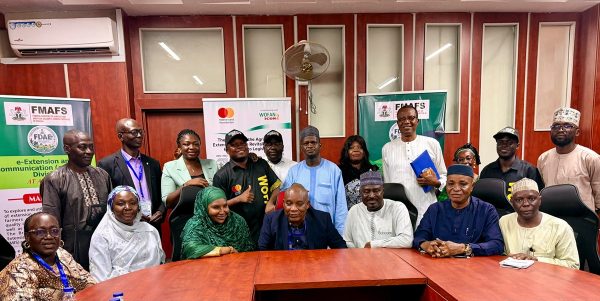
The Women Farmers Advancement Network (WOFAN) briefed the newly appointed Director of the Federal Department of Agricultural Extension at the Federal Ministry of Agriculture and Food Security, Dr. Samaila Taye, on the progress of the proposed Agricultural Extension Bill and called on the department to support ongoing efforts to ensure its passage into law. The advocacy meeting brought together stakeholders in the agricultural sector, who reviewed the bill’s status and described it as a key legislative framework for repositioning Nigeria’s agricultural extension system, increasing farm productivity and enhancing national food security. The stakeholders recalled that the agricultural extension policy was endorsed and adopted as a national document during the African Forum on Extension in 2023, paving the way for the development of the bill. Addressing the meeting, WOFAN Group Chair and Global Advocate for Africa, Europe and the Arab Region, Dr. Salamatu Garba, said the proposed legislation has reached its final phase after undergoing legal reviews and extensive stakeholder consultations across the country. She explained that although legal experts had completed their work, stakeholders resolved to conduct a final review to identify and address any outstanding issues before the bill proceeds to the next stage of the legislative process. Garba noted that the bill was developed through an inclusive process involving at least 14 consultative meetings with state commissioners of agriculture, the Federal Ministry of Agriculture and Food Security, research institutions, development partners and other relevant organisations. She said the broad consultations were aimed at ensuring that the proposed law reflects the collective input of key actors responsible for agricultural extension and rural development. Legal Providing an update on the legislative process, she disclosed that the bill had successfully passed its first reading in both chambers of the National Assembly and is awaiting further legislative consideration. While acknowledging concerns over the limited time available before the end of the current legislative session, Garba expressed optimism that the bill could still be enacted before the present National Assembly expires. She added that even if the process extends into the next assembly, the widespread support already secured from stakeholders would guarantee continuity. Garba also praised President Bola Ahmed Tinubu’s administration for placing agriculture and food security among its priorities, expressing confidence that the government would back the legislation because of its potential to transform extension service delivery and improve farmers’ productivity. Government She stressed that strengthening agricultural extension should receive the same national attention as security, insisting that sustainable food production is fundamental to national stability. The WOFAN Group Chair lamented the decline of extension services in Nigeria, saying many farmers have been left without adequate technical guidance, modern farming knowledge and access to improved technologies. Africans& Diaspora She explained that the bill would provide a legal framework to revitalise extension services by clearly defining the responsibilities of federal, state and local governments, outlining the roles of farmers and research institutions, improving coordination and equipping extension workers to promote climate-smart agricultural practices. Garba further stated that the proposed legislation complements the recently approved National Agricultural Policy and would modernise agricultural advisory services nationwide. Responding, the Director of the Federal Department of Agricultural Extension, Dr. Samaila Taye, commended WOFAN for its sustained advocacy on agricultural reforms, describing the organisation as a valuable partner in advancing Nigeria’s agricultural development agenda. He assured the delegation of the department’s full commitment to supporting the legislative process, noting that the proposed law aligns with its core responsibilities. LegislativeBranch Taye said the bill has the potential to become a landmark piece of legislation, adding that Nigeria could emerge as one of the first countries to establish a dedicated legal framework for agricultural extension service delivery. He noted that the legislation will clarify the responsibilities of the three tiers of government, eliminate duplication of roles, professionalise extension services and ensure that only qualified personnel provide advisory support to farmers. “The impact of this bill will be far-reaching. It will strengthen coordination, provide a clear direction for extension delivery and ensure that farmers receive quality advisory services from competent professionals,” he said. Also speaking, Chairman of WOFAN’s Technical Advisory Board, Professor Sani Miko, described the draft legislation as the outcome of wide-ranging collaboration involving government institutions, universities, research organisations, development partners, private sector operators and extension professionals across the country. In her remarks, WOFAN Director of Strategies, Innovation and Sustainability, Hajia Maimuna Lawal, said the bill includes provisions for Information and Communication Technology (ICT), e-extension platforms and other digital tools aimed at making extension services more efficient, accessible and sustainable. She urged lawmakers to give priority to the bill, expressing confidence that its passage would strengthen agricultural knowledge transfer, improve farmers’ access to innovation and contribute significantly to increased agricultural productivity and food security in Nigeria.
The Women Farmers Advancement Network (WOFAN) has paid an advocacy visit to the newly appointed Director of the Federal Department of Agricultural Extension, Dr. Samaila Taye, to brief him on the progress of the Agricultural Extension Bill and seek the department’s support for its speedy passage into law. The visit brought together key stakeholders in Nigeria’s agricultural sector to review the status of the proposed legislation, which they described as a critical instrument for revitalising the country’s agricultural extension system, improving food production and strengthening national food security. Recall that the the draft policy was approved and turned into a national document during the African Forum on Extension 2023. Speaking during the meeting, WOFAN-Group Chair and Global Advocate ( Africa, Europe and Arab region), Dr. Salamatu Garba, informed the new director that the draft bill has reached its final stage after undergoing legal scrutiny and extensive consultations with stakeholders across the country. She explained that although the legal team had completed its review, stakeholders agreed to undertake one final assessment to identify and address any outstanding gaps before forwarding the bill for further legislative action. Garba said the proposed legislation has enjoyed broad stakeholder participation, with no fewer than 14 consultation meetings involving commissioners of agriculture, the Federal Ministry of Agriculture and Food Security, development partners, research institutions and other relevant organisations. According to her, the consultations were designed to ensure that every critical stakeholder contributed to developing a comprehensive legal framework for agricultural extension services in Nigeria. Updating the new director on the legislative process, Garba disclosed that the bill has already passed its first reading in both the Senate and the House of Representatives and is awaiting the next stage of consideration. She acknowledged concerns over the limited legislative calendar ahead of the next general election but expressed confidence that the bill could still be passed before the expiration of the current National Assembly. She added that even if the process extends beyond the current assembly, the broad ownership of the bill by stakeholders would ensure continuity. Garba also commended President Bola Tinubu’s commitment to agriculture and food security, expressing optimism that the administration would support the legislation because of its potential to improve farmers’ productivity and guarantee sustainable food production. She stressed that strengthening agricultural extension services deserves the same level of national attention as security matters, noting that food security and national security are inseparable. The WOFAN WOFAN-Group Chair and Global Advocate lamented that Nigeria’s agricultural extension system has deteriorated over the years, leaving farmers without adequate technical support, training and access to improved farming technologies. She explained that the proposed legislation would establish a legal framework for rebuilding extension services, clearly define the responsibilities of the federal, state and local governments, specify the roles of farmers and research institutions, improve coordination and equip extension workers to promote climate-smart agriculture at the grassroots. Garba further noted that the bill aligns with the recently approved National Agricultural Policy, describing it as a major reform that would modernise agricultural advisory services across the country. Responding, Dr. Taye commended WOFAN for its sustained advocacy and described the organisation as a strategic partner in Nigeria’s agricultural transformation. He assured the delegation that the Federal Department of Agricultural Extension would fully support the process, noting that the proposed legislation falls squarely within the department’s statutory mandate. Describing the bill as potentially historic, Taye said Nigeria could become one of the first countries to enact a dedicated law governing agricultural extension service delivery. According to him, the legislation will clearly define the responsibilities of the three tiers of government, eliminate overlaps, professionalise extension services and ensure that only qualified personnel provide advisory services to farmers. “The impact of this bill will be enormous. It will provide direction for extension delivery, improve coordination and ensure that only qualified personnel provide these services to farmers,” he said. Also speaking, Chairman of WOFAN’s Technical Advisory Board, Professor Sani Miko, described the draft bill as the product of extensive collaboration among government agencies, academia, research institutions, development partners, private sector organisations and extension practitioners nationwide. Similarly, WOFAN Director of Strategies, Innovation and Sustainability, Hajia Maimuna Lawal, said the bill contains provisions promoting Information and Communication Technology (ICT), e-extension platforms and other digital innovations that will make agricultural advisory services more efficient, sustainable and responsive to farmers’ needs. She urged lawmakers to prioritise the legislation, expressing confidence that its eventual passage would strengthen knowledge transfer, expand farmers’ access to innovation and significantly boost agricultural productivity and food security across Nigeria.
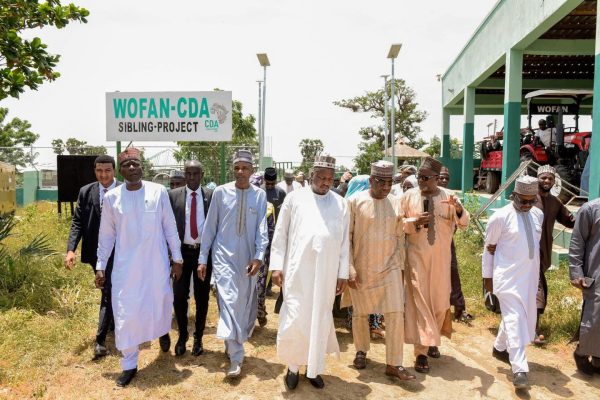
The Minister of Education, Dr Tunji Maruf Alausa, has commended the Women Farmers Advancement Network (WOFAN) and the Centre for Dryland Agriculture (CDA), Bayero University, Kano, for investing in practical agricultural training aimed at equipping students with employable skills and promoting entrepreneurship. Dr Alausa gave the commendation on Tuesday, 21-7-2026, during an inspection visit to the WOFAN–CDA SIBLING Project site at Bayero University, Kano. He was accompanied by the Minister of State for Education, Professor Suwaiba Sa’id Ahmad. SolaceBase reports that the ministers were received by the Director of the Centre for Dryland Agriculture, Professor Sanusi Gaya Mohammed, who briefed them on the objectives of the SIBLING (Skills Improvement to Boost Livelihood and Nurture Growth) initiative and conducted them round the Centre’s screen house and practical training facilities. The Vice-Chancellor of Bayero University, Professor Haruna Musa, alongside other principal officers of the university, also joined the inspection. Meanwhile when contacted by journalists on the target of the project and importance of the minister’s visit, on Wednesday, WOFAN Founder and Group Executive Board Chair, Dr. Salamatu Garba, described the project as a practical response to the proposed National Agricultural Extension Bill currently before the National Assembly, which has passed through the first and second reading and supported by all stakeholders of agricultural institutions, development practitioners, Farmers sponsored by WOFAN. Garba emphasised that the visit shows the symbiotic relations and collaboration of the Ministry of Agriculture and Education in improving agriculture as a course of study. She said WOFAN and its partners decided to commence implementation of the proposed legislation’s vision while remaining hopeful for its final passage, stressing that the initiative demonstrates how collaboration among the private sector, public institutions, and universities can strengthen Nigeria’s agricultural extension system. According to her, the project is designed to bridge the gap between classroom learning and practical experience by exposing students to modern agricultural technologies, mechanisation and agribusiness value chains. “We are giving students hands-on experience across integrated farming systems, including crop production, poultry, fisheries, waste-to-wealth initiatives, fabrication and value addition. Our goal is to produce agricultural graduates who will become job creators and agripreneurs, rather than job seekers. Moreso she further stated that it will also provide skilled agricultural extension service providers that will heavily reduce the huge challenges of shortage of extension workers facing the agricultural sector, she said. Garba noted that WOFAN had invested in agricultural equipment, processing centres, poultry and fishery sections, including providing facilities for climate-smart, integrated farming systems, logistics and linkages to markets to boost productivity and train students in sustainable ways of addressing problems of climate change-related issues She expressed optimism that the ministers’ visit would further strengthen support for the Agricultural Extension Bill, which she described as critical to improving food production and agricultural advisory services across the country. Also speaking, former Dean of the Faculty of Agriculture at Bayero University, Kano and Chairman of the Elders Forum for the SIBLING Programme, Prof. Muhammad Auwalu Hussaini, said the partnership had addressed longstanding funding constraints affecting practical agricultural training in universities. He explained that WOFAN’s support has enabled students to access modern equipment such as solar-powered sprayers and other farm implements that universities could hardly procure through conventional funding. “The partnership has significantly improved the practical learning environment for our students by providing facilities that enhance their knowledge and technical competence,” he said. Chairman of WOFAN’s Technical Board, Prof. Sani Miko, described the collaboration as a model for integrating academic knowledge with practical industry experience. He said the project combines the strengths of universities in manpower development with the private sector’s expertise in investment and resource management. According to him, demonstration farms and commercial production units established under the initiative will expose students to real-life agricultural production systems and address the skills gap identified among agricultural graduates. “This partnership is bringing life into the training system. It provides students with opportunities to learn by doing, while also supporting efforts to ensure the Agricultural Extension Bill becomes law,” he said. Prof. Mahmoud Ibrahim Daneji of Bayero University’s Department of Agricultural Extension, who serves as Climate Change Desk Officer for the WOFAN ICON2 Project, urged students participating in the programme to embrace climate-smart agriculture. He said changing weather patterns have made it necessary for future farmers and extension workers to adopt environmentally sustainable farming practices. Daneji noted that the equipment provided under the SIBLING initiative would enable students to combine classroom knowledge with practical skills while promoting responsible environmental management. He also called on relevant stakeholders to expedite the passage of the Agricultural Extension Bill, saying the legislation would clearly define the roles of government, educational institutions and the private sector in strengthening Nigeria’s agricultural extension services. The WOFAN–CDA SIBLING Project, which was flagged off on 17 February 2026 and provided input support to commence 50 hectares wet season farming by agriculture students of Bayero University, Kano, is a collaborative initiative designed to provide practical agricultural training, promote agripreneurship and prepare students for careers in modern agriculture through hands-on learning and access to mechanised farming technologies.