WOFAN Convenes National Dialogue On Promotion Of Peace, Climate-Smart Agriculture

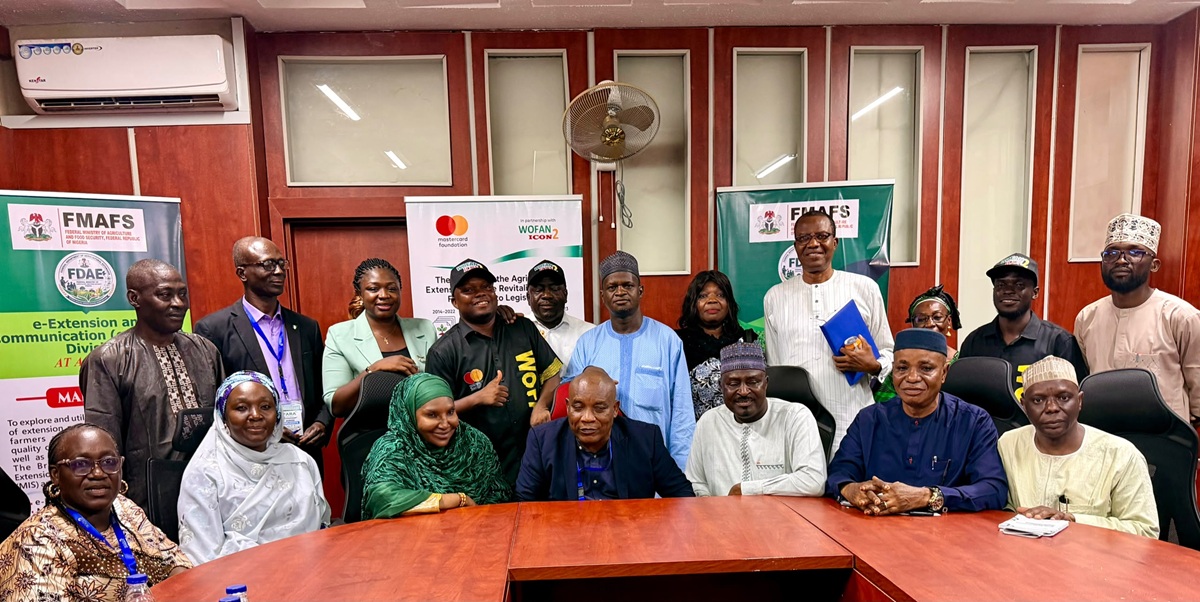
The Women Farmers Advancement Network (WOFAN), has convened a national dialogue on promotion of peace-building and climate-smart agriculture to boost food and nutrition security as well as enhance economic growth in Nigeria. Speaking at the opening ceremony of the event in Abuja,the Executive Director of WOFAN, Hajia Salamatu Garba, explained that there is interconnectivity between conflicts and climate change-related issues, which have adverse effects on the wellbeing of the citizenry. Garba stated that WOFAN is working with the Mastercard Foundation to support and empower 675,000 women and youths across the nine selected States in Nigeria, over a period of five years. She explained that the WOFAN ICON 2 project, funded by the Mastercard Foundation, would support 675,000 women and youths across nine States to develop and maintain sustainable livelihoods and improved quality of life, in line with the Foundation’s bold Young Africa Works-Nigeria (2021-2030) Strategy. It would be recalled that, WOFAN, a Nigerian non-profit organisation, dedicated to empowering smallholder farmers, particularly women and youth, works with them across nine states of Kano, Jigawa, Kaduna, Benue, Nassarawa, Plateau, Bauchi, Adamawa, Gombe and the Federal Capital Territory (FCT), Abuja. Speaking on the essence of peaceful co-existence between crop farmers and livestock farmers,Garba, who is also UN-POLAC Ambassador of peace, urged journalists to desist from ethnic profiling or wrong labelling of a particular ethnic group, to de-escalate conflicts between crop farmers and livestock farmers in Nigeria. According to her, the use of “herdsmen or herders” has negative connotation in the country, adding that effective communication plays critical role in resolving conflicts between crop farmers and livestock farmers. She assured that the recommendations from the National Dialogue would be harmonised and transmitted to the legislative arm for legal framework. In her submission, Mrs. Winnie Lai-Solarin, Director of Animal Husbandry Services, Federal Ministry of Livestock Development, stressed the importance of livestock farming to Nigeria’s economy. Lai-Solarin added that without livestock farming, there would not be food and nutrition security. She, therefore, advised participants to see livestock farmers as key stakeholders in the nation’s economic development, in view of the fact that livestock sector currently worth over N33trillion. In his remarks, Professor Tijjani Muhammad-Bande, former Vice Chancellor of Usmanu Danfodiyo University, Sokoto, who lauded the initiative of the national dialogue, stressed the need for food and nutrition security to be addressed together, so as to meet the Sustainable Development Goal(SDG) number 2 of ending hunger by 2030. Also speaking, the United Nations Positive Livelihood Award Centre (UN-POLAC)Deputy President, Prof. Joseph Legend, underscored the need for dialogue among the warring parties to find a lasting and enduring peace. Legend pointed out that in situations where arms and ammunition could not solve, that focused group discussions would help in resolving issues. Chairman of Kwali Traditional Council, Luka Ayedoo Nizassan, in his remarks, commended WOFAN’s Executive Director for her efforts in championing initiatives that benefit Nigerians. He said, “I want to use this platform to first congratulate the Chief Executive Officer of WOFAN, for undertaking a very courageous initiative, one that ideally should have been led by the government.” Nizassan, who is the Etsu of Kwali,emphasised the relationship between food security, economic growth, agricultural productivity and peace. According to him, “If one of these sectors is underperforming, it affects the entire system. “That is why this gathering is so crucial and timely. Agriculture in Nigeria contributed 25.75% to employment in 2024 and has a significant impact on our Gross Domestic Product(GDP). “However, employment opportunities in agriculture are declining, and its contribution to GDP has stagnated, due to conflicts, climate change, and other pressing challenges. We must take actionable steps to address these issues. “As traditional rulers, we are at the forefront of every conflict and directly experience the consequences of food insecurity.   “When people are hungry, they come to our palaces first, even before going to political offices. “Hunger and economic hardship affect us all. That is why we must be part of this cause,” he explained. Alhassan Yahaya, National President, Nigeria Union of Journalists(NUJ), called for full implementation of UN 1325 Resolution in Nigeria, which underscores the need for women to be involved in the decision-making processes, peace-building and conflict resolution to guarantee peace and security in the country. Yahaya assured that NUJ would collaborate and support WOFAN to promote peaceful co-existence in the country.

Details

Women farmers, journalists, traditional rulers push for sustainable agriculture

The Women Farmers Advancement Network (WOFAN), a non-governmental organisation (NGO), has partnered with the Nigerian Union of Journalists (NUJ) and traditional leaders to promote peace building and enhance climate smart agriculture aimed at boosting economic growth. Speaking at a one-day ‘National Dialogue on Promoting Peace Building and Climate Smart Agriculture as Catalysts for Economic Growth and Food Security in Nigeria,’ which held in Abuja on Wednesday, Salamatu Garba, WOFAN founder and a United Nations peace ambassador, said the partnership seeks to create enhanced food security, national economy and an enabling environment for businesses.“We are looking at cross-cutting issues and using the climate resource limitation that we have to see how addressing that can promote peace, increase food security, and then boost our national economy.” She stressed that proper language is needed to safeguard lives and put agriculture in its proper place.“We are looking at the use of language, and advocating that rather than call pastoralists and the livestock farmers herdsmen, we should call them livestock farmers or poultry farmers.” She said if the public wants the media to do realistic justice, they must cater to their welfare.“I am yet to hear of insurance packages for media people.”“Our partners, the Mastercard Foundation are spearheading the WOFAN ICON 2 project, which is a five-year partnership program, targeting 675,000 farmers with a vision to add 10 million jobs in Africa in the next five years, and 1 million in Nigeria.” In his remarks, Tijjani Muhammad Bande, president of the 74th United Nations General Assembly (UNGA) and former vice chancellor of Uthman Dan fodio University, Sokoto, lauded the initiative of the national dialogue, stressing the need to address food and nutrition security together so as to meet the Sustainable Development Goal 2 of ending hunger by 2030. Also, Joseph Legend, deputy president, United Nations Positive Livelihood Award Centre (UN-POLAC), said focus group discussions and cordial relationships can help proffer solution to several problems in many occasions. In his remarks, Luka Ayedoo Nizassan, Etsu Kwali and chairman, Kwali Traditional Council, commended WOFAN’s executive director for her efforts in championing initiatives that benefit Nigerians. The traditional ruler emphasised the relationship between food security, economic growth, agricultural productivity, and peace. He said, “If one of these sectors is underperforming, it affects the entire system. That is why this gathering is so crucial and timely. Agriculture in Nigeria contributed 25.75 percent to employment in 2024 and significantly impacted our GDP. However, employment opportunities in agriculture are declining, and its contribution to GDP has stagnated due to conflicts, climate change, and other pressing challenges. We must take actionable steps to address these issues.” He noted that they are at the forefront of every conflict and directly experience the consequences of food insecurity. “When people are hungry, they come to our palaces first, even before going to political offices. Hunger and economic hardship affect us all. That is why we must be part of this cause,” he added. Also speaking, Isa Radda of the Department of Sociology, Bayero University, Kano, said the event was about the relationship between climate and agriculture, noting that there is a need for farmers to adopt smart practices without harming the environment.

Details

Experts seek media collaboration, others to address climate-conflict challenges

Experts have emphasised the need for enhanced media collaboration, policy reforms, and multi-stakeholder engagement to address climate-related conflicts, strengthen food security, and stabilize Nigeria’s economy. This call was made during a national dialogue organized by the Women Farmers Advancement Network (WOFAN) ICON2 Project in partnership with the MasterCard Foundation. Speaking at the event, Hajiya Garba Salamatu, Country Project Director of WOFAN ICON2, highlighted the growing link between climate-induced resource shortages, security challenges, and agricultural productivity. She stressed that a comprehensive and inclusive approach to these issues could foster peace, boost food security, and drive economic growth. A key discussion at the forum focused on the media’s role in conflict resolution. Salamatu underscored the impact of language in shaping public narratives and cautioned against terms that frame pastoralists and crop farmers as adversaries. She advocated for more neutral language, such as “livestock farmers” and “poultry farmers,” to promote inclusivity and reduce tensions. She also addressed the welfare of journalists, emphasizing the risks they face while reporting on sensitive topics. To protect media personnel from potential threats and ethical compromises, she called for stronger safety measures, including insurance coverage. The dialogue also recognized traditional rulers as key players in grassroots peacebuilding. Participants explored their role in mediating disputes between farmers and pastoralists, leveraging their influence to maintain harmony in communities. Professor Sadiq Isah of Bayero University, Kano, noted that the program aims to equip farmers with climate-smart agricultural practices that enhance productivity while minimizing environmental harm. However, he stressed that insecurity remains a significant barrier to agricultural success, advocating for dialogue-driven solutions to foster stability. The MasterCard Foundation, through its five-year initiative, is partnering with stakeholders to support 675,000 farmers, with the broader goal of creating 10 million jobs across Africa, including one million in Nigeria. In his remarks, the President of the 74th United Nations General Assembly (UNGA) and former Vice-Chancellor of Usmanu Danfodiyo University, Sokoto, Prof. Tijjani Muhammad-Bande, commended the initiative. He emphasized the need to integrate food and nutrition security efforts to meet the Sustainable Development Goal (SDG) of ending hunger by 2030. Similarly, United Nations Positive Livelihood Award Centre (UN-POLAC) Deputy President, Prof. Joseph Legend, highlighted the importance of peacebuilding. He noted that while weapons may not always resolve conflicts, focus group discussions, friendly dialogue, and relationship-building can be more effective in fostering lasting peace. The Etsu Kwali and Chairman of the Kwali Traditional Council, Luka Ayedoo Nizassan, lauded WOFAN’s Executive Director for spearheading initiatives that benefit Nigerians. “I want to use this platform to commend the CEO of WOFAN for undertaking this courageous initiative—one that ideally should have been led by the government,” he said. Reflecting on Nigeria’s agricultural policies, he remarked: “Nigeria is 65 years old, yet we only established the Ministry of Livestock in 2023. What have we done in the past 62 years? This effort from the private sector is commendable.” The traditional ruler emphasized the interconnectedness of food security, economic growth, agricultural productivity, and peace. “If one of these sectors underperforms, the entire system is affected. That is why this gathering is both crucial and timely. Agriculture contributed 25.75% to employment in 2024 and significantly impacts our GDP. However, conflicts, climate change, and other challenges have caused stagnation. We must take actionable steps to address these issues,” he urged. He further noted that traditional rulers are often the first point of contact during crises, directly experiencing the consequences of food insecurity. “When people are hungry, they come to our palaces before going to political offices. Hunger and economic hardship affect us all. That is why we must be part of this cause,” he added.

Details

Experts advocate Media, policy reforms to tackle climate-conflict in agriculture

A high-level dialogue on peacebuilding and climate-related resource conflicts has underscored the urgent need for media collaboration, policy reforms, and multi-stakeholder engagement to enhance food security and national economic stability. The dialogue was organized by Women Farmers Advancement Network (WOFAN) ICON2 Project in partnership with the MasterCard Foundation.   Speaking at the meeting, Hajiya Garba Salamatu, the Country Project Director of WOFAN ICON2 emphasized the connection between climate-induced resource limitations, security challenges, and food production.  She stressed that addressing these issues holistically could promote peace, improve food security, and boost Nigeria’s economy. She emphasized the importance of addressing cross-cutting issues between peace building and climate change to promote food security and boost the national economy. One of the key discussions at the event centered on the role of the media in conflict resolution.  Salamatu highlighted the impact of language in shaping narratives, cautioning against using terms that may portray pastoralists and crop farmers as adversaries.  Instead, she advocated for more neutral and inclusive terminology, such as “livestock farmers” and “poultry farmers,” to foster a more positive perspective. She also noted the importance of media welfare, pointing out the risks journalists face in covering sensitive issues. Salamatu called for better protection measures, including insurance coverage for media personnel, to ensure their safety and reduce the likelihood of compromise. The role of traditional leaders was another focal point, given their influence in maintaining peace at the grassroots level.    Participants explored how these leaders, as custodians of community relations, could mediate disputes between farmers and pastoralists. Professor Sadiq Isah from Bayero University, Kano who was one of the participants further emphasized that the program aims to help farmers adopt smart agricultural practices that maximize productivity without harming the environment.  He noted that insecurity remains a significant barrier to agricultural success and stressed the need for dialogue-driven solutions to promote stability. The meeting concluded with a commitment to prioritizing actionable recommendations in both peacebuilding and climate change mitigation.  Key legislative bodies are expected to play a role in translating these discussions into enforceable policies, ensuring long-term impact.   As stakeholders move forward, the focus will be on strategic collaboration, including media sensitization, legislative backing, and community-led interventions, to create a sustainable framework for addressing climate-related conflicts in Nigeria’s agricultural sector. The MasterCard Foundation is partnering with organizations to create a five-year program targeting 675,000 farmers, with the goal of creating 10 million jobs in Africa and 1 million jobs in Nigeria. Prof. Tijjani Muhammad Bande, President of the 74th United Nations General Assembly (UNGA) and former Vice-Chancellor of Uthman Dan Fodio University, Sokoto, has commended the national dialogue initiative, highlighting the importance of addressing food and nutrition security together. He emphasized that achieving this is crucial to meeting Sustainable Development Goal 2, which aims to end hunger by 2030. Similarly, Prof. Joseph Legend, Deputy President of the United Nations Positive Livelihood Award Centre (UN-POLAC), underscored the role of dialogue in peacebuilding. He noted that while ammunition may not always resolve conflicts, focus group discussions and fostering friendly, cordial relationships often provide more effective solutions. The Etsu Kwali and Chairman, Kwali Traditional Council, Luka Ayedoo Nizassan in his remarks, commended WOFAN’s Executive Director for her efforts in championing initiatives that benefit Nigerians.    “I want to use this platform to first congratulate the CEO of WOFAN. She is undertaking a very courageous initiative—one that ideally should have been led by the government,” he stated. “This is a commendable effort from the private sector. Nigeria is 65 years old, and we only established the Ministry of Livestock in 2023. What have we done in the last 62 years? She deserves another round of applause,” he added. The Traditional Ruler emphasized the relationship between food security, economic growth, agricultural productivity, and peace.  He said: “If one of these sectors is underperforming, it affects the entire system. That is why this gathering is so crucial and timely. Agriculture in Nigeria contributed 25.75% to employment in 2024 and has a significant impact on our GDP. “However, employment opportunities in agriculture are declining, and its contribution to GDP has stagnated due to conflicts, climate change, and other pressing challenges. We must take actionable steps to address these issues.”   As traditional rulers, he noted that they are at the forefront of every conflict and directly experience the consequences of food insecurity. “When people are hungry, they come to our palaces first, even before going to political offices. Hunger and economic hardship affect us all. That is why we must be part of this cause,” he added. Furthermore, the United Nations Positive Livelihood Award Centre (UN-POLAC) Deputy President, Professor Joseph Legend, while noting the path to peacebuilding, maintained situations where ammunitions cannot help in addressing issues, focus group discussion may be the way forward, as well as a cordial relationship do on many occasions.

Details

WOFAN, Stakeholders Advocate Peacebuilding To Drive Food Security

The Women Farmers Advancement Network (WOFAN), in collaboration with the Mastercard Foundation and UN-POLAC, including traditional rulers, has called for peacebuilding initiatives to be integrated into climate-smart agriculture policies as a means to enhance food security and economic growth in Nigeria.The stakeholders also agreed that peacebuilding must be at the heart of agricultural policy to ensure a resilient and thriving farming sector. They urged the government to engage traditional leaders, legislative bodies and media organisations in developing actionable solutions backed by legal frameworks to harmonise existing peace and climate initiatives.   Speaking at the National Dialogue on the Promotion of Peacebuilding and Climate-Smart Agriculture in Abuja yesterday, WOFAN Country Director Dr. Salamatu Garba emphasised the urgent need to address insurgency-related and climate-induced conflicts that threaten food production and national stability.Dr Garba stressed that sustainable job creation depends on a secure and enabling environment, calling on policymakers and traditional leaders to resolve conflicts between farmers and improve governance structures. She particularly highlighted the critical role of media in shaping narratives that can either fuel or de-escalate conflicts and called for improved welfare for journalists covering sensitive issues.She said, “We are looking at cross-cutting issues related to peacebuilding and how that can promote peace, increase food security, and boost our national economy. “Insecurity is not just about insurgency but also about climate-related conflicts; we must engage the media constructively to help drive positive change and de-escalate tensions. “We must move beyond discussions and implement strategies ensuring peace and food security”. WOFAN’s Technical Advisory Board Chair, Professor Sani Miko, stressed that agriculture cannot thrive without peace. He lamented the rising insecurity that has significantly hindered farming activities and warned that without stability, Nigeria’s agricultural sector remains at risk. On his part, Etsu of Kwali, Luka Ayedu, provided a broader economic perspective, highlighting agriculture’s substantial contribution of 25.75% to Nigeria’s employment sector. He called for collaborative efforts among stakeholders to safeguard and grow this vital industry. Adding an international perspective, United Nations-POLAC DCP II and Minister of Environment, State of Birland, Prof. Joseph Legend Mfon, stressed the need for a firm policy and legal framework to support Nigeria’s transition toward climate-smart agricultural practices. “Peacebuilding is a global consensus requiring global participation; we must integrate peace initiatives into agricultural policies to drive sustainable development”, Mfon said. Professor Sadiq Isah Radda, a professor of Sociology at Bayero University Kano, elaborated on how farmers can maximize yields while managing environmental impacts. The professor called for practical, implementable blueprints that align agricultural production with national security efforts. “We can invest in farming equipment and capacity building, but if security challenges persist, food security will remain unattainable,” Radda warned. The Mastercard Foundation, through its WOFAN ICON 2 project, aims to support 675,000 farmers in Nigeria under a five-year partnership. They aim to create one million jobs in Nigeria as part of an initiative to generate 10 million jobs across Africa.

Details

WOFAN, UN- POLAC engage stakeholders to address farmers, pastoralists conflict to boost food security, national economy

The Women Farmers Advancement Network (WOFAN) has called on journalists to adopt a patriotic and well-informed reportage style to support food security and peace-building efforts in Nigeria. This appeal was made at a one-day National Dialogue on Promoting Peace building and Climate Smart Agriculture as Catalysts for Economic Growth and Food Security in Nigeria held in Abuja on Wednesday. The national dialogue that had in attendance traditional leaders, media professionals, Agriculture Researchers and development partners was convened to discuss the role of the media in addressing climate-related conflicts and agricultural insecurity. Speaking at the event, WOFAN-ICON2 Project Country Director Dr. Salamatu Garba emphasized the need for a collaborative approach to tackling food security challenges. “We are examining the intersection between peace-building, climate-related resource limitations, and how addressing these issues can promote peace, enhance food security, and boost our national economy. Dr. Garba underscored the critical role of language in conflict resolution, urging journalists to reconsider terminologies when reporting on farmer-pastoralist clashes. She advocated a shift from labeling herders as ‘antagonistic groups’ to referring to them as ‘livestock farmers,’ similar to how crop farmers are identified. “Rather than calling them herdsmen, can we instead refer to them as livestock farmers or poultry farmers, just as we identify maize and rice farmers? This shift in language can be the beginning of promoting a more balanced narrative and reduce hostilities between communities,” she explained. She also stressed the importance of journalists’ welfare, noting that many operate in challenging conditions without adequate protection. Dr. Garba called for insurance packages for media professionals covering security-sensitive issues to ensure their safety while gathering and disseminating information. “Sending journalists into conflict zones without proper protection is like sending soldiers to the battlefield unarmed. If we expect them to fulfill their roles effectively, we must also prioritize their safety,” she emphasized. At the event, which also examined the role of traditional leaders in peace-building. Dr. Garba highlighted that community leaders, as custodians of cultural heritage and local governance, should be actively involved in resolving conflicts between farmers and livestock owners. “Traditional leaders are the first to know when new individuals arrive in a community and are often responsible for settling disputes. Their role in conflict resolution cannot be overlooked,” she emphasized. She further advocated for policy harmonization, urging relevant legislative bodies to support legal frameworks that reinforce sustainable agricultural practices and security. SolaceBase reports that the national dialogue was organized by the WOFAN-ICON2 project, supported by the Mastercard Foundation in partnership with Federal Ministry of Agriculture and Food Security,Federal Ministry of Budget and Economic Planning, National Cereals Research Institute, Badeggi, HEDA Resource Centre, UN-POLAC, NAERLS, SolaceBase Communication and Express Radio. WOFAN-ICON2 Project is a five-year initiative supported by the Mastercard Foundation, which aims to empower 675,000 farmers and strengthen Nigeria’s food security. On his part, The president of the 74th United Nations General Assembly(UNGA) and former Vice Chancellor Uthman Dan fodio University, Sokoto,  Prof. Tijjani Muhammad Bande lauded the initiative of the national dialogue emphasizing the need for food and nutrition security to be addressed together so as to meet the Sustainable Development Goal number 2 of ending hunger by 2030. ‘’It is not possible for us to be discussing food security in agriculture value chain without nutrition security, as they coexist,’’ Bande noted. He said the method of involving key stakeholders as partners in this journey of finding a sustainable solution to farmers’ conflict is very important. He implored the gathering to develop actionable recommendations to resolving farmer-pastoralist conflicts. He commended the idea of involving the media as participants and not just for the event coverage for them to be well equipped to inform the public. Also, United Nations Positive Livelihood Award Centre (UN-POLAC) Deputy President, Prof. Joseph Legend, while stating the road to peacebuilding, said situations where ammunitions cannot help in addressing issues, focus group discussion can help, as well as friendly and cordial relationship do on many occasions. The President of the Nigeria Union of Journalists (NUJ), Comrade Alhassan Yahaya, assured that journalists would play their part in promoting responsible reporting and fostering peace in Nigeria. “I want to take this opportunity to appreciate WOFAN for its collaboration on this important occasion. This is also a moment to remind ourselves of our crucial role as stakeholders in promoting peace and development. I assure you that we are making significant progress toward achieving our shared objectives,” he stated. He emphasized that achieving lasting peace in Nigeria requires the full implementation of UN Resolution 1925. “This resolution, adopted by Nigeria in the year 2000, highlights the importance of women’s inclusion in decision-making processes and peace-building efforts. Ensuring their participation in these engagements will contribute significantly to stability and sustainable development. At the same time, the media has a critical role to play in shaping public discourse and ensuring that these principles are upheld. I reaffirm our commitment to collaborating closely to achieve these objectives.” He further stressed the NUJ’s focus on two key issues: nationalism and media professionalism. “For us to effectively carry out our duties as journalists, we need a peaceful and stable country. By working together, we can shape a better narrative and contribute meaningfully to national progress,” he added. In his remarks, Etsu Kwali and Chairman, Kwali Traditional Council, Luka Ayedoo Nizassan commended WOFAN’s Executive Director for her continuous efforts in spearheading initiatives that benefit Nigerians. “I want to use this platform to first congratulate the CEO of WOFAN. She is undertaking a very courageous initiative—one that ideally should have been led by the government,” he stated. Read Also:Agriculture Extension Services bill is designed to promote agric development in Nigeria-Minister “This is a commendable effort from the private sector. Nigeria is 65 years old, and we only established the Ministry of Livestock in 2023. What have we done in the last 62 years? She deserves another round of applause,” he added. The Etsu Kwalli emphasized the intricate relationship between food security, economic growth, agricultural productivity, and peace. “If one of these sectors is underperforming, it affects the…

Details

WOFAN Women Groups Step up Their Rice Business Through Value Addition in Gombe

WOFAN ICON2 women groups in Lajangara, Gombe State have taken their rice processing business to a new level of value addition and profit through improved packaging. For years, the women processors of Lajangara, Gombe State have struggled to make sustainable income from their rice processing business. That was before they started participating in the WOFAN ICON2 Project in 2022. Before the ICON2 intervention, they were forced to sell their poorly processed rice individually at low prices, leaving them with minimal profits despite their hard work. However, their fortunes changed when the Women Farmers Advancement Network (WOFAN), through the WOFAN-ICON2 Project, introduced them to quality parboiling techniques during the second Year of the implementation of the Project. The Project had supported the young women in the community between the ages of 18 and 35 years to form groups of 30 members each. Through capacity building on group dynamics and management, the Project further supported them to form a network of clusters up to mega cluster level. Then, the groups received training on improved parboiling techniques. And the Project built and equipped a makeshift center for group processing at mega cluster level. Essential processing equipment, including rice destoners, polishers, hammer mills, parboiling pots, and stoves were also installed in the center and the women received training on the operation and basic maintenance of the equipment. With hands-on training and continuous support, these women have now mastered modern parboiling techniques, allowing them to produce high-quality, well-packaged rice that meets and surpasses market standards. The impact has been remarkable. They added a new layer of value to their processed rice in January 2025 when they started packaging the rice in beautifully branded polypropylene bags in diverse weights, starting from 1kg to 10kg. With the packaged rice proudly branded WOFAN Lajangara Rice, the packaged rice has now become a favorite in Lajangara and environs. Lajangara citizens are not just proud of the packaged rice because it promotes the name of the community, they love it because the rice is destoned and has the distinct aroma of parboiled rice which they love so much. Malam Abdul Lajangara is one of the community members buying the new WOFAN Lajangara Rice. He said he loves the rice because he can buy 2kg of the well processed which means he does not have to trek the whole of the local market to get good rice in small measures. “Of course, I am proud that the rice bears the name of my community. But I am even happier because the rice is very neat and is also neatly packaged. I can buy 2kg that is stone and dust free without having to trek the whole of the market. You see, it is not only good for the table, but also pocket-friendly”’ Malam Lajangara enthused. Previously, the women of Lajangara sold their processed rice at the common market price, struggling to make ends meet. Today, with the new packaging, buyers are willingly paying up to N500 more than the common market price as the women are proudly selling their well-packaged 5kg bags of rice at a premium price of N7,000, significantly boosting their earnings and financial independence. The success of the Lajangara women has not gone unnoticed. Their neatly packaged and branded rice has caught the attention of the Local Government Chairman, who requested a sample for evaluation. Impressed by the innovation and resilience of the women, the Chairman has expressed interest in placing a bulk order in preparation for Ramadan, further cementing their place as key players in the local rice market. Speaking on their recent successes, the Leader of Lajangara Clusters, Naomi Iliya disclosed that the simple value addition they made to their processed rice has turned their rice business around and they are making more money now. She expressed profound gratitude for the life-changing impact of the WOFAN-ICON2 Project. She said, “We never imagined that our rice business could grow this much. We decided to bag our rice in branded bags after learning how to add value to our products at a training organized by WOFAN in January. And that decision has proven to be a transformative one. Before, we had no choice but to sell our paddy rice at very low prices, barely making a profit. But now, with the knowledge and equipment WOFAN provided, we are not just selling rice, we are selling quality. Our rice has become very popular and our profits have increased. We can now support our families better. WOFAN-ICON2 has truly transformed our lives and we are forever grateful.” The WOFAN ICON2 Project is funded by the Mastercard Foundation to support 675,000 youths, across nine Nigerian states, over a 5-year period to develop and maintain sustainable livelihoods and have an improved quality of life, in line with the Mastercard Foundation’s bold Young Africa Works-Nigeria (2021-2030) strategy to enable 10 million youth in Nigeria (including 7 million young women) to secure dignified and fulfilling employment.

Details

WOFAN team attends AI training in Dubai to boost workplace efficiency, food security

As digital transformation reshapes industries worldwide, a team from the Women Farmers Advancement Network (WOFAN) has attended a three-day AI awareness and sensitization training in Dubai. Organized by Prospects Development Services, the training aimed to deepen participants’ understanding of Artificial Intelligence (AI) and explore its integration into workplaces as a stepping stone to sustaining future jobs and opportunities. SolaceBase correspondent who was part of the team reports that the event, held from January 25th to 27th, 2024, brought together participants from six countries—Nigeria, Pakistan, Tanzania, Morocco, Sri Lanka, and Ethiopia. Discussions focused on the application of AI in sustainable agriculture and food security, particularly through e-extension services, a digital approach that Nigeria is actively promoting to enhance farming practices. Speaking at the event, WOFAN-ICON2 Project Country Director and United Nations Peace Ambassador, Dr. Salamatu Garba, emphasized that the training aligns with WOFAN-ICON2 Project objectives to promoting sustainable, transparent and inclusive solutions to women and farmers’ livelihood improvement needs. She noted that the training gave participants a deeper understanding of AI and also realize their live dreams of integrating emerging technologies into their workplaces and communities. “The sessions provided an opportunity for the WOFAN team to engage with experts on how AI-powered e-extension services can improve agricultural productivity, streamline resource management, and provide real-time solutions for farmers,” Dr. Garba stated. “The program also highlighted the importance of youth participation in AI-driven innovations, stressing that acquiring digital skills will be crucial in securing future employment.” She also shared her personal journey with AI, revealing that she initially skeptical with reservations about the technology. However, her perspective has evolved, and she now sees AI’s transformative potential, particularly in rural communities to promote more effective e-extension services.   “I plan to incorporate AI, robotics, and management into the curriculum of our community-based schools. This will give young people in rural areas access to cutting-edge knowledge and skills,” she explained, expressing hope that this initiative will inspire other institutions to adopt similar innovations. In his opening remarks, Chief Executive Officer,Prospects Development Services, Mr. Bayode Hambolu, commended WOFAN’s forward-thinking approach to AI adoption. He highlighted AI’s transformative potential across industries, particularly in agriculture and workplace efficiency. “Artificial intelligence is no longer just about report writing; it’s transforming farming, harvesting, and controlling crop diseases,” he remarked, expressing optimism about future collaborations with WOFAN to empower Nigerian youth through advanced AI training. AI specialist and consultant, Dr. Katarina Beta, one of the key resource persons at the training, provided insights into the opportunities and challenges AI presents in today’s job market. According to Dr Beta, AI is creating new opportunities in fields such as data analysis, programming, robotics engineering, healthcare, digital marketing, cybersecurity, and precision agriculture. However, she also warned of disruptions in traditional roles, particularly in clerical work, administrative jobs, manufacturing, customer service, retail, and transportation. Read Also:Kano approves new climate change policy She urged participants to embrace AI as a tool for social and economic progress, emphasizing the need for continuous learning and upskilling to remain relevant in an AI-driven world. The training covered a wide range of topics, including understanding the AI ecosystem, machines and strategies learned for implementing AI in organizations. Each session combined theoretical knowledge with practical group activities, fostering collaboration and innovation among participants. A highlight of the program was a study tour of Dubai’s Museum of the Future, a globally recognized hub for technological advancements. The museum provided an interactive experience, showcasing cutting-edge developments in AI, robotics, and sustainability. Participants explored groundbreaking ideas, such as intelligent systems for daily life enhancement and innovative tools addressing global challenges, further deepening their appreciation of AI’s potential to drive development and improve livelihoods. Several participants who spoke to SolaceBase expressed appreciation for the training, stating that the knowledge gained will be instrumental in their respective fields. They noted that the program broke barriers and built bridges across the six participating countries, fostering international collaboration in AI adoption. With AI rapidly transforming industries worldwide, WOFAN’s engagement in the Dubai training underscores its dedication to innovation, agricultural advancement, and digital empowerment, ensuring that Nigerian farmers and agripreneurs remain at the forefront of global technological advancements.  

Details