Agricultural extension service bill scales through first reading in Senate

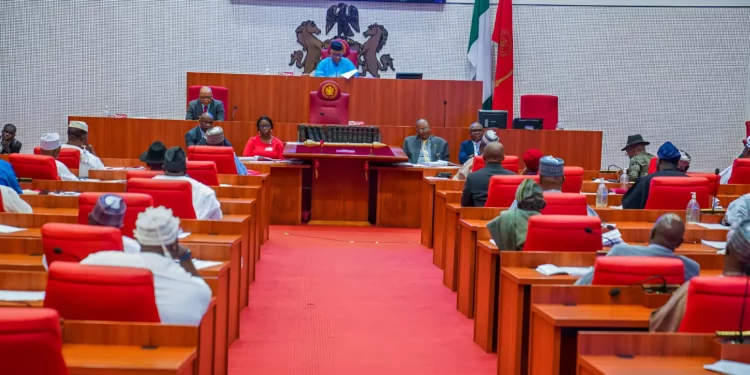
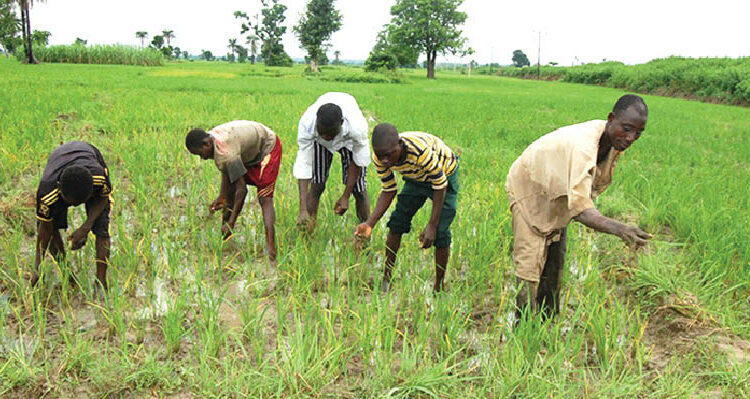
The Senate took another positive step towards improving the country’s agricultural sector as the Agricultural Extension Service Bill, 2024 (SB. 646), sponsored by Senator Saliu Mustapha, passed its first reading. The (WOFAN-ICON-2) and agricultural extension stakeholders sponsored Agricultural Extension Service Bill, (SB.646) has passed the first reading at the floor of the Nigerian Senate. The bill aims to strengthen agricultural extension services that will support smallholder farmers to improve productivity and ensure food security in the Nation. Furthermore, the bill targets to strengthen the capacity of extension workers to deliver advanced, technology-driven, and demand-oriented services. Senator Saliu Mustapha, who represents Kwara Central at the National Assembly while speaking with journalists on the objectives of the bill,said it aims to ensure the effective implementation of the National Agricultural Extension Policy and Strategy and to establish a legal framework for sustainable agricultural extension services in Nigeria. The Lawmaker further noted that the bill will further create a sustainable, harmonized, pluralistic, and demand-driven e-agricultural extension system that will ensure efficient service delivery across the agricultural value chain. Recall that the Minister of State for Agriculture and Food Security, Senator Aliyu Abdullahi during a technical update meeting held in Abuja recently, commended the efforts of WOFAN-ICON2 project, NAERLS and other stakeholders in putting the draft bill together. Senator Abdullahi who contributed effectively during the meeting also noted that with about 70 per cent of the population are involved in agriculture and further emphasized that it is important to ensure they receive the kind of technical support they need to be able to achieve optimal outputs and good income. “Extension Agents don’t just show farmers Good Agronomic Practices, they step down successful research results and new innovative techniques to farmers for improved outputs. “So, Extension Agents are very positive additions to how farmers are supposed to operate. And so, to me the proposed bill will be a game changer.’’

Details

Agricultural Extension Service Bill Scales First Reading

The Agricultural Extension Service Bill, 2024 (SB. 646) has passed its first reading on the floor of the Senate. The bill sponsored by Senator Saliu Mustapha, representing Kwara Central, aimed to strengthen agricultural extension services and support smallholder farmers to improve productivity and ensure food security. The (WOFAN-ICON-2) and agricultural extension stakeholders sponsored bill also targets to strengthen the capacity of extension workers to deliver advanced, technology-driven, and demand-oriented services. Senator Mustapha while speaking on the objectives of the bill noted that it will ensure the effective implementation of the National Agricultural Extension Policy and Strategy and to establish a legal framework for sustainable agricultural extension services in Nigeria. The lawmakers further noted that the bill will further create a sustainable, harmonised, pluralistic, and demand-driven e-agricultural extension system that will ensure efficient service delivery across the agricultural value chain. LEADERSHIP recalled that the minister of State for Agriculture and Food Security, Sabi Abdullahi  during a  technical update meeting held in Abuja recently, commended the efforts of WOFAN-ICON2 project, NAERLS  and other stakeholders in putting the draft bill together. Senator Abdullahi who contributed effectively during the meeting also noted that about 70 per cent of the population are involved in agriculture and further emphasised that  it is important to ensure they receive the kind of technical support they need to be able to achieve optimal outputs and good income. The minister said, “Extension Agents don’t just show farmers Good agronomic practices, they step down successful research results and new innovative techniques to farmers for improved outputs. Extension Agents are very positive additions to how farmers are supposed to operate. And so, to me the proposed bill will be a game changer.’’ Speaking on the development, WOFAN- ICON2 country director, Dr Salamatu Garba said, “this effort of reading the bill is quite timely because it’s time to support our agricultural  research institutions,  as our  country cannot achieve much if the institutions  are not supported enough to  produce  desired extension workers to boost food security.’’

Details

Minister hails proposed extension service delivery bill as Game Changer for Nigeria’s agricultural sector

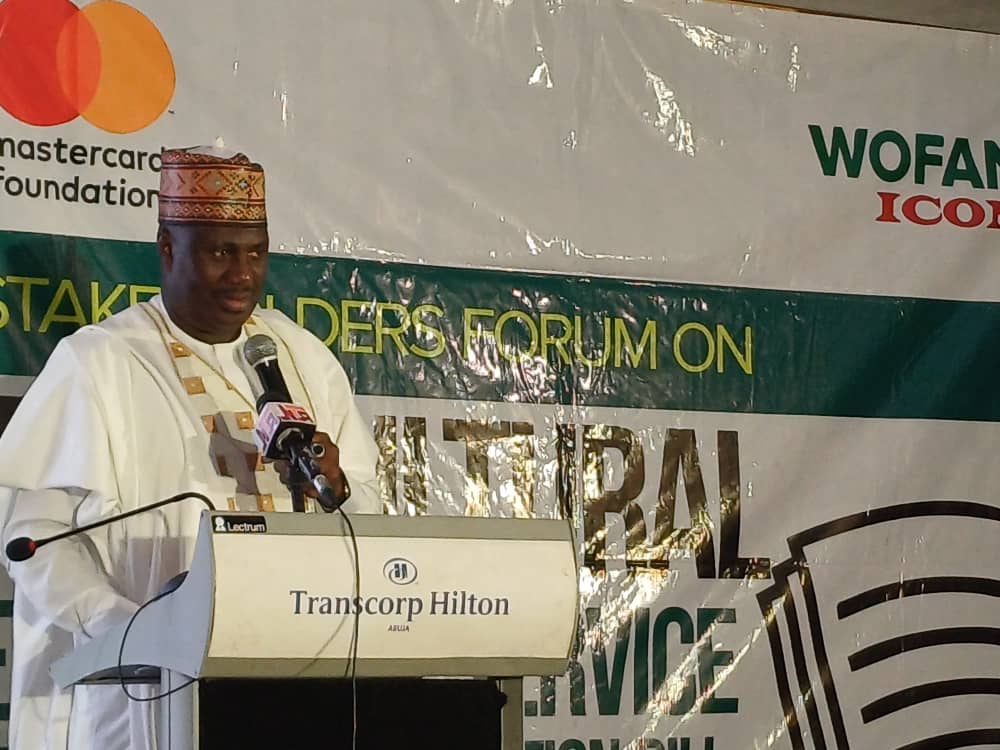
The proposed Nigeria Agricultural Extension Services Bill, which has passed through first reading on the floor of the House of Representatives, has been hailed as a very necessary addition to supporting a sustainable and resilient agricultural system in Nigeria. SolaceBase reports that the Minister of State for Agriculture and Food Security, Senator Aliyu Sabi Abdullahi made this declaration at the technical update meeting held in Abuja on Friday to review stakeholders’ feedback on the proposed bill and further finetune it. He noted that with about 70% of the population involved in agriculture, it is important to ensure they receive the kind of technical support they need to be able to achieve optimal outputs and good income. He declared that this is where Extension Agents become very important, stressing that having the right extension delivery system legislation will boost sustainable and resilient agriculture in the country.  The Minister of State for Agriculture and Food Security, Senator Aliyu Sabi Abdullahi speaking at the event in Abuja on Friday. “Our visionary President, His Excellency President Bola Ahmed Tinubu desires a country where no man or woman goes to bed hungry. This means food should be available all over the place. So, how to produce this food is what Extension Agents are designed to help you achieve”, he said. The Minister added that Extension Agents don’t just show farmers Good Agronomic Practices, they step down successful research results and new innovative techniques to farmers for improved outputs. “So, Extension Agents are very positive additions to how farmers are supposed to operate. And so, to me the proposed bill will be a game changer, and I think with this, Nigeria will begin to show that we are serious with our Agriculture.” In her remarks, Country Director of the WOFAN ICON2,  Mastercard Foundation funded Project, Dr Salamatu Garba stressed that an efficient extension service system will benefit not only farmers who will have improved outputs if they get good extension support but also good income from agriculture will also attract more people, especially youths, to agriculture. This, she noted will have the triple effect of reducing youth unemployment while increasing food production and ultimately improving food sufficiency and food security. Dr Salamatu said, “Efficient extension service delivery system will help farmers improve outputs. This will in turn lead to enhanced income and enhanced income from agriculture will attract more people, especially youths, to agriculture. This will reduce youth unemployment, and with more people involved in food production, Nigeria will achieve food sufficiency and, ultimately, food security. She explained that the (WOFAN-ICON2) Project is a five-year intervention which seeks to create decent and sustainable employment opportunities for 675,000 youth between 18 and 35 years old as part of Mastercard Foundation’s Young Africa Works (YAW) strategy with the main goal of ensuring that the young participants living across 10 Nigerian states have improved quality of life. Speaking earlier, the Executive Director of the National Agricultural Extension Research and Liaison Services (NAERLS), Prof. Emmanual Ikani used the computer hardware and software analogy to describe how important extension service is to the success of agriculture. “No matter how beautiful your computer is, it is useless without an operating system or software. No matter how beautiful research results and agricultural technologies are, if there is no extension delivery system to disseminate them to farmers, then the results and technologies will just gather dust. This is the gap which this bill will plug; it will provide the necessary legal framework for a sustainable extension delivery system that will translate research results and technologies into successes for farmers”, he explained. The meeting was attended by experts and specialists as well as stakeholders from the Ministry of Agriculture and Food Security, Ministry of Budget and Economic Planning, national and international non-governmental organizations (NGOs); scholars; media, researchers; women and youth-led agribusiness value chain actors as well as diversity and inclusion advocates.

Details

WOFAN Hands Over Skills Acquisition Equipment to Special Education Centre in Bauchi

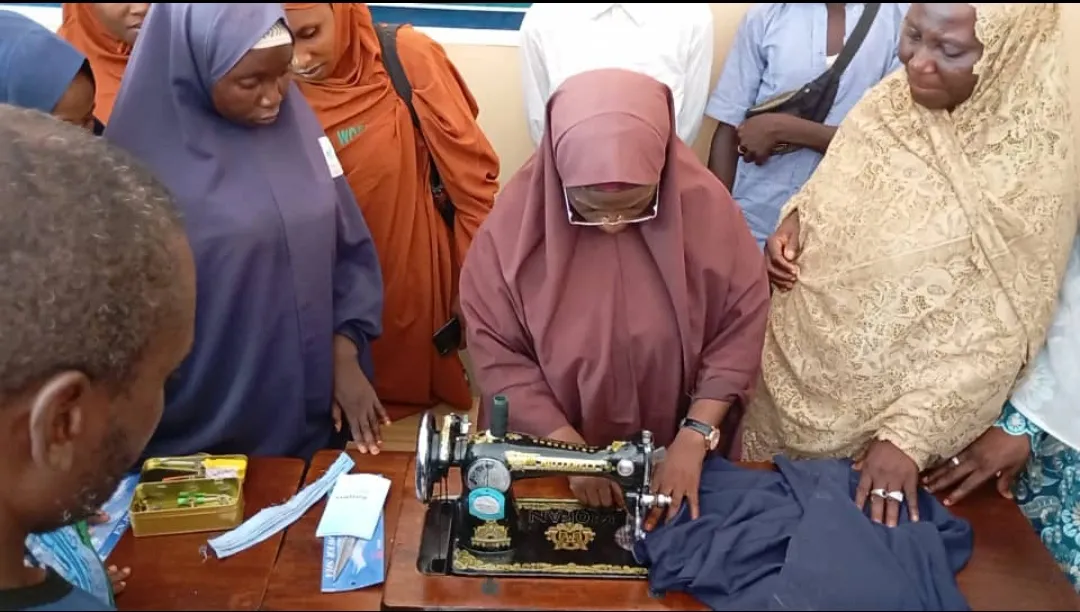
By Muhammad Sani Muazu In a significant move aimed at empowering students with disabilities, the Women Farmers Advancement Network (WOFAN) has donated skills acquisition equipment to the Special Education Centre in Bauchi under its WOFAN ICON 2 Project. The equipment, which includes materials for welding, carpentry, and tailoring, is intended to provide students with the practical skills needed to become self-reliant after their education. During the handing-over ceremony, Hajiya Asabe Yahaya Muhammad, the Principal of the Special Education Centre, expressed her deep appreciation for WOFAN’s continued support. “We really appreciate this gesture,” she said, noting that the students were excited about the equipment and had already begun organizing themselves into various skill groups, including welding, tailoring, and carpentry. “These students are very happy, they are anxious to start.” Hajiya Asabe stressed the importance of vocational skills for students with disabilities, particularly given the challenges they face in securing employment after graduation. “Getting good results does not matter, what really matters is that they have something to do with their hands,” she emphasized. She noted that many former students now on teaching practice could benefit from such skills as they transition into the workforce. “They will graduate and wait for government jobs, which are not forthcoming, but with these skills, they can be self-reliant.” Shafi’u Haladu, the State Team Lead for the WOFAN ICON 2 Project in Bauchi, explained the rationale behind the donation. “In our community, even for those without disabilities, it is difficult to find work after secondary school. For people living with disabilities, it’s even harder,” he said. The skills acquisition program is designed to address this issue by equipping students with practical skills that will enable them to become financially independent. Haladu highlighted the various sections established at the school under the project, including welding and fabrication, carpentry, and tailoring. He also noted that WOFAN had previously collaborated with the school on agricultural initiatives, cultivating one hectare of maize with the students, with plans to continue farming during the dry season. Both the school and the organization see these initiatives as vital steps in preparing students for life beyond education. “We chose this school because of their peculiarities as persons with disabilities,” Haladu added. “Now, when these students graduate, they will have something to do with their lives.” As Nigeria faces increasing unemployment, especially among graduates, the Principal urged the public to prioritize skill acquisition. “The certificate is no longer working now; it is our hands that can work,” she stated, sharing inspiring stories of blind students excelling in fields such as solar panel repair and shoemaking. The WOFAN ICON 2 Project continues to make strides in supporting marginalized communities, and this donation represents another milestone in the organization’s efforts to empower young people through vocational training.

Details

Salamatu-WOFAN Succor: Story of Amadu and his neglected community

By Prof. MK Othman Even a stone-hearted devil cannot but must be undoubtedly empathetic to the plight of Mallam Amadu Yakubu, a devastatingly physically challenged person living in one of the most neglected communities in Jigawa state. Amadu lives in Kudai, a suburb of Dutse, which is the state capital of Jigawa State. Amadu’s limbs, the two hands and legs, are crippled, born with disability. And he can neither walk nor use his hands to do any physical work for his livelihood. He crawls with difficulty moving even for a short distance, except when carried to aid his movement. Despite his disability, Amadu acquires a large, ambitious heart to be a lawyer or journalist. This ambition made Amadu think of going to school, which made him skilful in writing with the fingers of his legs. The day Amadu started practising writing with his mouth and finally settled to write with his legs, his father wept. Amadu’s perseverance, resilience, and determination far outweighed his disability and relegation to the lowest level of society, and he thus became proficient in leg writing. My readers may recall my article on World Peace Day celebrated in Kudai, Nigeria, and London, the United Kingdom. Amadu Yakubu, a young tetraplegic man, was instrumental in WOFAN’s celebration of World Peace Day at Kudai hamlet. Despite Amadu’s physical constraints, his journey exemplifies the human spirit’s quest for dignity through hard effort. His narrative, along with the stories of other community members, made a strong connection leading to WOFAN’s marvellous work, impacting tens of thousands of lives in the rural communities of Jigawa state. Amadu went through primary school and attended junior secondary school, writing and passing all the classroom examinations with his legs alongside his 68 able-body classmates.  Being from a neglected community with little or no necessary infrastructure, Amadu has to abandon his tall ambition but vow not to be a beggar, as many people in his condition do. He prefers to earn a living through his mastery of writing with legs that attract the sympathy of passersby who donate token financial gifts to him. Through the meagre earnings, Amadu marries his loving wife and acquires three healthy children whom he takes care of. Today, Amadu is triumphant against his birth disabilities, a shining example of how physically challenged persons can use their brains to live a happy and harmonious life of responsibility as husband and father. One cannot but be flabbergasted when watching Amadu use his disabled legs and head to perform ablution, a prerequisite ritual for observing five daily prayers. With proper support, Amadu can reach his zenith of attaining his desired barrister or famous journalist status to serve society like other abled bodies. Unfortunately, Amadu lives in Kudai, a forgotten and grossly neglected community in the Dutse Local Government Area. Kuddi, like thousands of suburb communities near state capitals, such as Rijiyar Zaki, Kurna Asabe in Kano state, Abukur, Dandagoro in Katsina state, Rigasa, Mararabar Jos, Dankande in Kaduna state, and several other areas in Nigeria, are grossly neglected and hardly enjoy government presence in terms of infrastructure and good governance. Sometimes, one begins to think about whether the meaning of governance has changed in Nigeria from serving the people with public funds to lining up the pockets of politicians and unscrupulous civil servants. People in such areas live without pipe-borne water, electricity, roads, drainage systems, and security, and they are only visited during electioneering campaigns to be given handouts and empty promises. The areas are overwhelmed with challenges of poverty, such as malnutrition, illiteracy, poor access to healthcare, quality food, and other necessities of life. So, Amadu and his neighbourhoods accepted their fates as everyday life in Nigeria until WOFAN discovered him pitiful video clip showcasing Amadu manipulating a pen with his legs to legibly write on paper. Dr. Salamatu Garba Kano, a benevolent personality, the founder of the Women Farmers Advancement Network (WOFAN), and the Country Director of the ICON 2 Project in Nigeria was severely touched when she saw a video clip of Amadu strenuously struggling to perform ablution as if it were film scrip from Kennywood. Dr. Salamatu immediately launched a manhunt for Amadu to receive succor. WOFAN is a women-dominated NGO with 80% women and 20% men. It is famously known for providing hope to the hopeless and respite to downtrodden masses. Over the past thirty years, WOFAN has made significant progress in ending hunger, reducing poverty, and empowering young people and vulnerable populations economically. WOFAN began with innumerable triumphs and, through entrepreneurship and capacity building along the agricultural value chains in 10 states in Nigeria, has conservatively improved the lives of almost seven million Nigerians. WOFAN has affected and empowered 150,000 people annually on average over the last five years, which is a countable list of accomplishments. Right now, WOFAN is working on an Integrated Community-led Network of Hope Scale-up (ICON2) project that will reach 675,000 people in the 18–35 age range over the course of three years. The ICON 2 initiative in Nigeria is funded by the Master Card Foundation. The project execution scorecard is astonishing, as WOFAN exceeded its annual objective of 225,000 individuals by empowering 327,686 (146%) women and youth in the project’s first year. The beneficiaries were 17,500 ultra-poor people, 12,750 people with disabilities (PWD), and 6,100 internally displaced people (IDP) from ten states. Through the project intervention, WOFAN increases the productivity of smallholder farmers with an increased rice yield from an average of 1.5 tons/ha to 5 tons and maize from 1.8 tons/ha to 6 tons/ha, among many stable crops on over 100,000 hectares of farmland across the ten project implementation states. When WOFAN launched a manhunt for Amadu, his condition was found to be as bad as in the video clip. Still, he had the insatiable capacity to survive the hostile terrain of Kudai like other healthy people. WOFAN’s discovery of Amadu greatly blessed the entire Kudai community.  WOFAN made the Kudai community to play host to 2024 World Peace Day which attracted…

Details

CSSN honors WOFAN founder, Dr Salamatu over contribution to human development

The Executive Director,  Women Farmers Advancement Network (WOFAN), Hajiya Salamatu Garba, has been honoured by the Crop Science Society of Nigeria (CSSN) for her remarkable contributions to humanity and her tireless efforts in empowering women and youth. The CSSN Chairman, Professor M.I Uguru said the recognition comes following her decades of dedicated service in community development and awareness, especially in agriculture. SolaceBase reports that Dr Salamatu, a trained plant pathologist and advocate for gender equality, received the accolade on Monday at CSSN’s 9th national conference, holding at Bayero University, Kano. Commending her efforts, the Chairman of the occasion, and former House of Representatives member, Honorable Munir Babba Danagundi, also described her as a great pillar in agriculture, adding that she deserved the award. He stated, “The WOFAN CEO, Hajiya Salamatu, is a very great pillar in agriculture. I have never seen a person who got funding and used it appropriately like her.” In response to the accolade, she expressed happiness that society recognized WOFAN’s contributions to human development and creating opportunities. She said, “I am actually very excited, and this, of course, reminds me of my journey so far since I established WOFAN around 1993.” SolaceBase recalled that in 2017, Dr. Salamatu was awarded the ‘Rare Gem Award’ from the United Nations Information Services, and more recently, she received the Value4Her Award as part of the AGRA-USAID Africa Agripreneurs of the Year Awards (WAYA 2021). The honour distinguished her among over 2,500 applicants from 21 African countries, recognizing her leadership in establishing more than 5,000 fully registered women- and youth-led agribusinesses across Nigeria, with 80% of participants being women. Dr. Garba founded WOFAN in March 1993 to address the challenges faced by rural women and youth in Northern Nigeria, while she was still serving as a university lecturer. Under her leadership, WOFAN has made significant strides in advancing the economic, social, and political empowerment of millions of rural women and youths across Africa, transforming agriculture into viable agribusinesses. The organization has facilitated access to finance and technical knowledge, creating positive linkages across agricultural value chains. WOFAN has also made substantial contributions to community infrastructure, constructing and maintaining hundreds of water and sanitation facilities in schools and health centres across Northern Nigeria. Additionally, it has built and donated 12 community schools, Islamiyah schools, and mosques to support the educational and spiritual needs of underprivileged families. In February 2022, Salamatu was recognized by Bayero University’s Centre for Dryland Agriculture (CDA) with an Outstanding NGO Award for her contributions to agricultural development. She was appointed Chairperson of the Board of Trustees for Farm Radio International, Canada, in November 2021, overseeing policy and programmatic performance in Nigeria as part of the global Farm Radio network. Dr. Garba has served as the national consultant for the UNDP’s food security initiatives across seven Nigerian states from 2017 to 2021. Currently, she is the Country Project Director for the Nigeria Mastercard-funded five-year WOFAN-ICON2 project, which spans 10 states. She holds a Master’s degree from Ahmadu Bello University, Zaria, and a PhD in Gender and Development from the University of Wolverhampton, UK. Additionally, she earned a PhD in Sociology of Peace from the United Nations Institute of Peace and Conflict Resolution (UN-POLAC), which led to her recognition as a UN Ambassador of Peace for her efforts in promoting peace and improving livelihoods. Salamatu remains steadfast in her commitment to empowering rural communities and advocating for sustainable agricultural practices through her extensive work. The recent event celebrating her achievements was attended by a diverse audience, many of whom praised her dedication and tireless advocacy for development.

Details

Women, PWDs Receive Agricultural, Skills Intervention In Kano

A non governmental organization, Women Farmers Advancement Network (WOFAN) has launched a community intervention in Dumaji Garun Malam Local Government Area of Kano State, in commemoration of World Food Day and International Rural Women’s Day. Speaking at the occasion, the executive director WOFAN, Dr. Salamatu Garba explained that, Dumaji community is unique as it started with a group of women who were farm labourers earning N120 per week after working tirelessly on people’s farms. She stressed that, the women were mobilized, trained and linked with extension workers after advocating for farm land from the traditional leaders. “After the advocacy, the Women were given one hectare where they cultivated about 40 bags out of the profit they sourced for in another farm which was leased out to them, at the end of the day, these women became independent”. Dr. Salamatu pointed out that a women center equipped with modern rice and maize processing machines, a solar powered multipurpose dryer to reduce post harvest losses and increase income was provided under the icon 2 project. The executive director explained that, a solar powered marketing hub for PWDs equipped with 124 phone charging and phone repair gadgets was set up in Dumaji community. Dr. Salamatu highlighted that, PWDs that have transformed into extension workers and peer leaders received 4 customized electric motorcycles to assist their movements from one place to another. “At WOFAN we believe in the dignity of human beings if you support PWDs no matter how small, it builds their confidence and brings out their best potentials”. She noted that, the program will take place across ten States in the federation from 12th to 16th October 2024. “Other Interventions commissioned in Dumaji community includes solar powered borehole to serve Dumaji community, school, and mosque and 24 tricycle loaders”. The district head of Garun, Malam Alhaji Abubakar Sarkin Fulanin Ja’idinawa, represented by the ward head of Yadakwari, Alhaji Dan’iya Ibrahim, commended the intervention and reiterated the traditional institute’s commitment to providing all the necessary support to achieve the desired objectives. Some of the visually impaired beneficiaries, Barrister Aminu A. Kura, Abdulmutallif Iliyasu, and Bashir Idris Abubakar Kura, urged PWDs to desist from begging and strive for self-reliance. The event organized by WOFAN in collaboration with the master card foundation under the icon 2 project featured an exhibition of household items and farm products made by PWDs and women. “The solar powered center with charging points will serve the community and provide dignified job for PWDs” Hajiya Salamatu highlighted that, PWDs that have transformed into extension workers and peer leaders received customized electric motorcycles to assist their movements from one place to another. “WOFAN Donated 4 electric motor cycles to outstanding PWDs who have scaled up and transformed into peer leaders and extension workers to aid their mobility” “At WOFAN we believe in the dignity of human beings if you support PWDs no matter how small it builds their confidence and brings out their best potentials” She noted that, the program will take place across ten states in the federation from 12th to 16th October 2024. “Other Interventions commissioned in Dumaji community includes solar powered borehole to serve Dumaji community, school, and mosque” “WOFAN Launched 24 units of tricycle loaders to support agro produce labourers and transform their businesses from farm labourers to managers of agro- logistic systems. The district head of Garun Malam Alhaji Abubakar Sarkin Fulanin Ja’idinawa, represented by the ward head of Yadakwari Alhaji Dan’iya Ibrahim, commended WOFAN for the intervention and reiterated the traditional institute’s commitment to providing all the necessary support to achieve the desired objectives. Some of the visually impaired beneficiaries, Barrister Aminu A. Kura, Abdulmutallif Iliyasu, and Bashir Idris Abubakar Kura, urged PWDs to desist from begging urged them to strive for self-reliance. The event organized by WOFAN in collaboration with the master card foundation under the icon 2 project featured an exhibition of household items and farm products made by PWDs and women.

Details

CSSN Awards WOFAN’s Dr. Salamatu Garba for Human Dev.

The Executive Director, Women Farmers Advancement Network (WOFAN), Hajiya Dr. Salamatu Garba, has been honoured by the Crop Science Society of Nigeria (CSSN) for her remarkable contributions to humanity and her tireless efforts in empowering women and youth. The CSSN Chairman, Professor M.I Uguru said the recognition comes following her decades of dedicated service in community development and awareness, especially in agriculture SolaceBase reports that Dr Salamatu, a trained plant pathologist and advocate for gender equality, received the accolade at CSSN’s 9th national conference, holding at Bayero University, Kano Commending her efforts, the Chairman of the occasion, and former House of Representatives member, Honorable Munir Babba Danagundi, also described her as a great pillar in agriculture, adding that she deserved the award. “The WOFAN CEO, Hajiya Salamatu, is a very great pillar in agriculture. I have never seen a person who got funding and used it appropriately like her” Hajiya Salamatu expressed happiness that society recognized WOFAN’s contributions to human development and creating opportunities. “I am actually very excited, and this, of course, reminds me of my journey so far since I established WOFAN around 1993” SolaceBase recalled that in 2017, Dr. Salamatu was awarded the ‘Rare Gem Award’ from the United Nations Information Services, and more recently, she received the Value4Her Award as part of the AGRA-USAID Africa Agripreneurs of the Year Awards (WAYA 2021). The honour distinguished her among over 2,500 applicants from 21 African countries, recognizing her leadership in establishing more than 5,000 fully registered women- and youth-led agribusinesses across Nigeria, with 80% of participants being women. Dr. Salamatu founded WOFAN in March 1993 to address the challenges faced by rural women and youth in Northern Nigeria, while she was still serving as a university lecturer Under her leadership, WOFAN has made significant strides in advancing the economic, social, and political empowerment of millions of rural women and youths across Africa, transforming agriculture into viable agribusinesses The organization has facilitated access to finance and technical knowledge, creating positive linkages across agricultural value chains. WOFAN has also made substantial contributions to community infrastructure, constructing and maintaining hundreds of water and sanitation facilities in schools and health centres across Northern Nigeria. Additionally, it has built and donated 12 community schools, Islamiyah schools, and mosques to support the educational and spiritual needs of underprivileged families In February 2022, Salamatu was recognized by Bayero University’s Centre for Dryland Agriculture (CDA) with an Outstanding NGO Award for her contributions to agricultural development. She was appointed Chairperson of the Board of Trustees for Farm Radio International, Canada, in November 2021, overseeing policy and programmatic performance in Nigeria as part of the global Farm Radio network. Dr. Garba has served as the national consultant for the UNDP’s food security initiatives across seven Nigerian states from 2017 to 2021. Currently, she is the Country Project Director for the Nigeria Mastercard-funded five-year WOFAN-ICON2 project, which spans 10 states. She holds a Master’s degree from Ahmadu Bello University, Zaria, and a PhD in Gender and Development from the ”university of Wolverhampton, UK. Additionally, she earned a PhD in Sociology of Peace from the United Nations Institute of Peace and Conflict Resolution (UN-POLAC), which led to her recognition as a UN Ambassador of Peace for her efforts in promoting peace and improving livelihoods. Salamatu remains steadfast in her commitment to empowering rural communities and advocating for sustainable agricultural practices through her extensive work. The recent event celebrating her achievements was attended by a diverse audience, many of whom praised her dedication and tireless advocacy for development.

Details

Women Farmers Launch Interventions in Kano State

In commemoration of World Food Day and International Rural Women’s Day, a group known as Women Farmers Advancement Network (WOFAN) has launched a community intervention in Dumaji community of Garun Malam local government Area of Kano state north west Nigeria. It was a collaborative initiative with the Mastercard Foundation under the Icon 2 project. At an event in Dumaji community, the Executive Director Women Farmers Advancement Network WOFAN Dr. Salamatu Garba explained that, the community was unique as it started with a group of women who are farm labourers earning N120 per week after working tirelessly on people’s farms. She stressed that, WOFAN has mobilized, trained, linked them with extension workers and advocated for farm land from the traditional leaders where a hectre was given to each of them. She said, “the women cultivated about 40 bags from the one hectre out of the profit they sourced for another farm which was leased out to them, at the end of the day these women became independent”. Dr Garba pointed out that, a women center equipped with modern rice and maize processing machines, a solar powered multipurpose dryer to reduce post harvest losses and increase income was provided under the icon 2 project. She explained that, a solar powered marketing hub for People’s with disability PWDs equipped with 124 phone charging and phone repair gadgets was set up in Dumaji community. “The solar powered center with charging points will serve the community and provide dignified job for PWDs”. The executive director highlighted that, PWDs have transformed into extension workers and peer leaders received customized electric motorcycles to assist their movements from one place to another. “WOFAN Donated 4 electric motor cycles to outstanding PWDs who have scaled up and transformed into peer leaders and extension workers to aid their mobility” “At WOFAN we believe in the dignity of human beings if you support PWDs no matter how small it builds their confidence and brings out their best potentials”. “Other Interventions commissioned in Dumaji community includes solar powered borehole to serve Dumaji community, school, and mosque”. “WOFAN Launched 24 units of tricycle loaders to support agro produce labourers and transform their businesses from farm labourers to managers of agro- logistic systems.” The district head of Garun Malam Alhaji Abubakar Sarkin Fulanin Ja’idinawa, represented by the ward head of Yadakwari Alhaji Dan’iya Ibrahim, commended WOFAN for the intervention and reiterated the traditional institute’s commitment to providing all the necessary support to achieve the desired objectives. Some of the visually impaired beneficiaries, Barrister Aminu Kura, Abdulmutallif Iliyasu, and Bashir Idris Abubakar Kura, urged PWDs to desist from begging but to strive for self-reliance. The theme for the International Day of Rural Women is “Rural Women Cultivating Good Food for All” which highlights the essential role that rural women and girls play in the food systems of the world.

Details

World food Rural women Day:WOFAN Launches Intervention in Dumaji

The Women Farmers Advancement Network (WOFAN) launched a community intervention in Dumaji Garun Malam Local Government Area, Kano, in commemoration of World Food Day and International Rural Women’s Day. This initiative was made possible through their collaboration with the Mastercard Foundation under the Icon 2 project. Speaking at the occasion, the executive director WOFAN Hajiya Dr. Salamatu Garba explained that, Dumaji community is unique as it started with ” a group of women who were farm labourers earning N120 per week after working tirelessly on people’s farms. She stressed that, WOFAN mobilized, trained , linked them with extension workers and advocated for farm land from the traditional leaders where one hecter was given to them. “The women cultivated about 40 bags from the one hecter out of the profit they sourced for another farm which was leased out to them, at the end of the day these women became independent” Hajiya Salamatu pointed out that a women center equipped with modern rice and maize processing machines, a solar powered multipurpose dryer to reduce post harvest losses and increase income was provided under the icon 2 project. The executive director explained that, a solar powered marketing hub for PWDs equipped with 124 phone charging and phone repair gadgets was set up in Dumaji community. “The solar powered center with charging points will serve the community and provide dignified job for PWDs” Hajiya Salamatu highlighted that, PWDs that have transformed into extension workers and peer leaders received customized electric motorcycles to assist their movements from one place to another. “WOFAN Donated 4 electric motor cycles to outstanding PWDs who have scaled up and transformed into peer leaders and extension workers to aid their mobility” “At WOFAN we believe in the dignity of human beings if you support PWDs no matter how small it builds their confidence and brings out their best potentials” She noted that, the program will take place across ten states in the federation from 12th to 16th October 2024. “Other Interventions commissioned in Dumaji community includes solar powered borehole to serve Dumaji community, school, and mosque” “WOFAN Launched 24 units of tricycle loaders to support agro produce labourers and transform their businesses from farm labourers to managers of agro- logistic systems. The district head of Garun Malam Alhaji Abubakar Sarkin Fulanin Ja’idinawa, represented by the ward head of Yadakwari Alhaji Dan’iya Ibrahim, commended WOFAN for the intervention and reiterated the traditional institute’s commitment to providing all the necessary support to achieve the desired objectives. Some of the visually impaired beneficiaries, Barrister Aminu A. Kura, Abdulmutallif Iliyasu, and Bashir Idris Abubakar Kura, urged PWDs to desist from begging urged them to strive for self-reliance. The event organized by WOFAN in collaboration with the master card foundation under the icon 2 project featured an exhibition of household items and farm products made by PWDs and women.

Details